



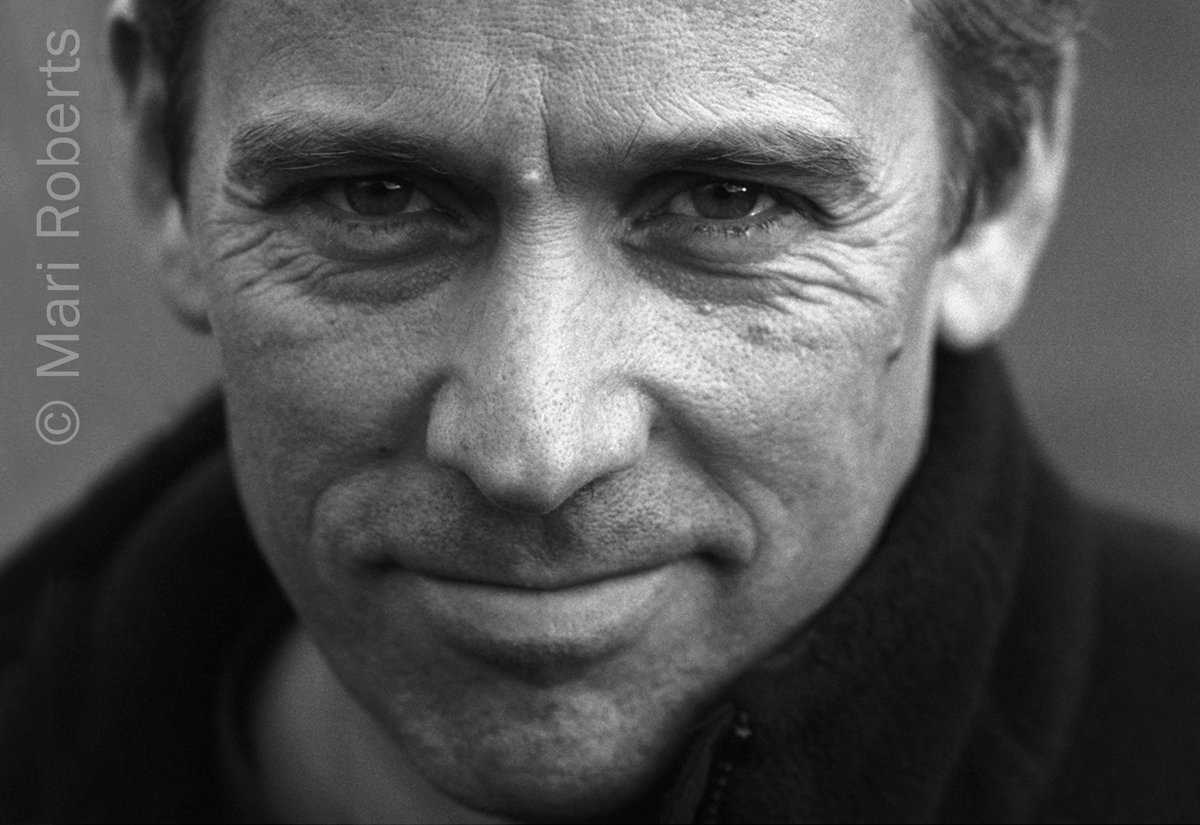
JASPER FFORDE is an English writer who burst onto the literary scene with his first novel, The Eyre Affair, in 2001.
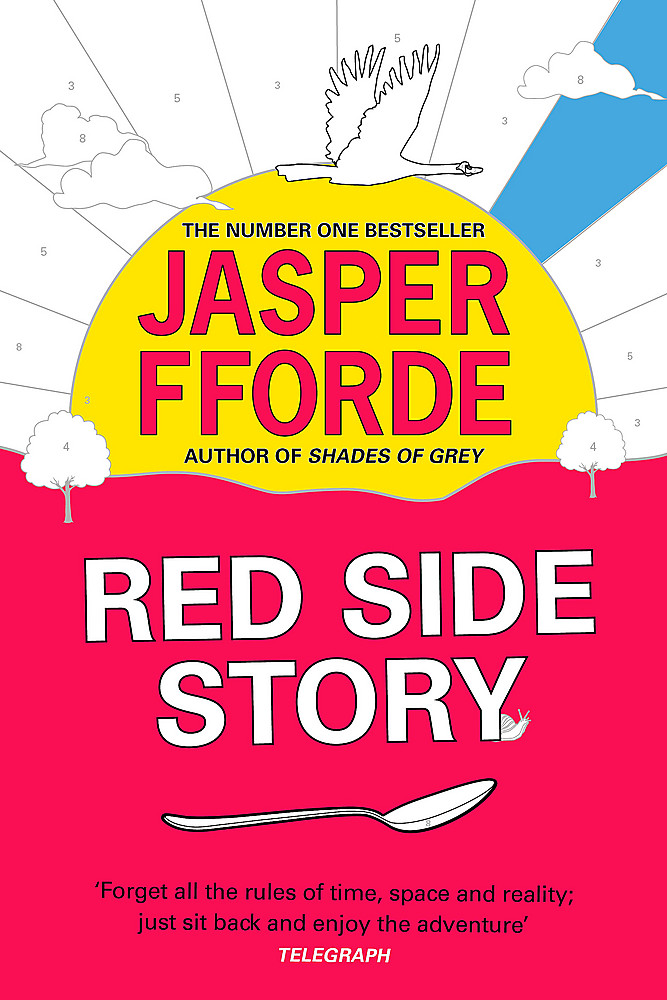
This month he has released the sequel to Shades of Grey, Red Side Story, that features a divided society governed by colour. ROWENA MORCOM talked with the author about how this strange world first emerged.
Jasper Fforde is an author well-known for his wit and very quirky, even wild imagination. His debut novel sets this reputation in stone.
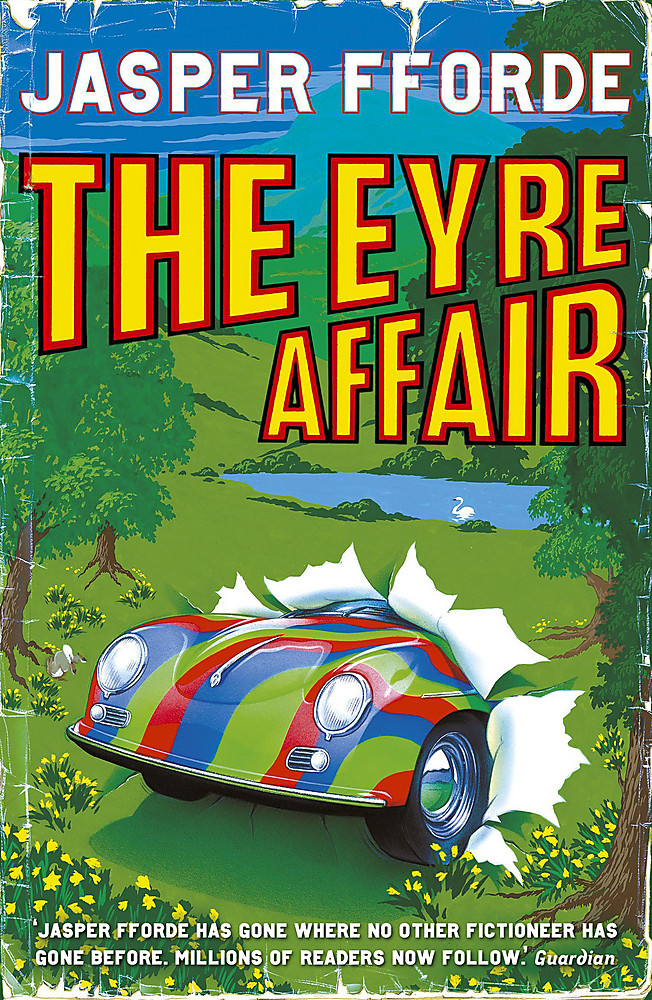 The Eyre Affair is set in an alternate England in 1985. Things are quite different in this time with dodos being able to be created with home-cloning kits. There are no fast jets, computers and, shockingly, people are disappointed overall with the ending of Jane Eyre. Policemen can travel across time and we meet a woman named Thursday Next, a member of SO-27, Swindon’s Literary Detective. She has a pet dodo called Pickwick.
In this world, literature is much more popular and important. Books are so popular that people seek to change their names to that of famous authors. So many, that people have to place numbers after their ‘author’ name, like Gmail email addresses of today.
Things in The Eyre Affair get even crazier as characters from books, and those in real life, can jump in and out of books. Novels have their own police force – Jurisfiction – to ensure that plots in books continue to run as they should. Everything goes to pot when Jane Eyre goes missing from Jane Eyre.
‘Thursday Next’ became a series of books and Fforde went on to write new and different series followed by stand-alone novels. His books are well-known for being peppered with nods to books, literary references and plays on words. He is an incredibly creative writer, who consistently comes up with fantastical, often futuristic concepts, So I asked him how his inventive stories evolve.
‘I have no plan at all, just several ideas that I want to work with, and several loose concepts. Then I just start to write and see where it takes me. It makes the book a little longer to write as I explore blind alleys, but I also stumble upon new and exciting ideas as well – if you have no idea how a Jasper Fforde book is going to turn out, then you are in good company – neither did I.’
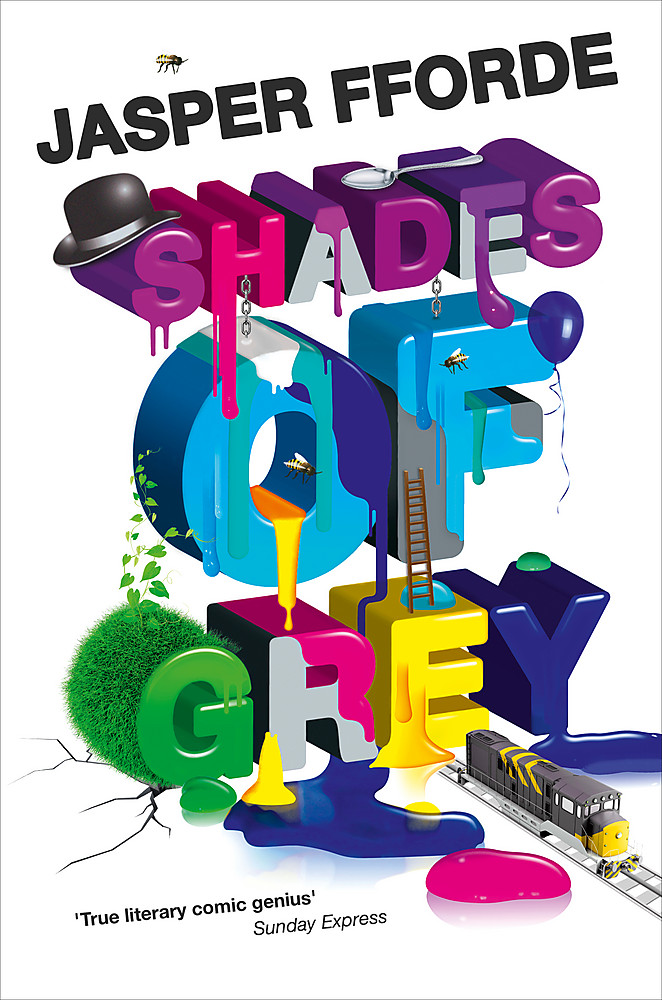 In 2009 Fforde wrote a book called Shades of Grey which appeared to push the boundaries even for his rusted-on readers. This was the first book that didn’t have the immediate success of his previous books.
Fforde tells me, ‘Simply put, it had a tepid response on publication. Up until then I had been writing books about literary detectives and nursery rhymes as crime procedurals. I was, if you like, rearranging the existing furniture around in people’s heads, using much of the landscape that existed already. Writing Shades of Grey was quite a departure for me, and I think I may have turned the ‘speculative fiction’ knob up a little high, resulting in a steep expositional entry for readers. Without the fulsome support, similar to that which the ‘Thursday Next’ series attracted, there seemed little impetus to proceed, so I went on to other projects. But starting about six years ago, the emails started coming in, asking when the sequel would be. The emails didn’t tail off, either – they increased. The book was not an unwanted child after all, so I reread it three times and Red Side Story is the result.’
Red Side Story is set in the UK, but not as we could ever imagine it ourselves. Five hundred years before, ‘Something that Happened’, made this world very different again. Society is now colour-based, the strict levels of hierarchy dictated by the colours you can see, and the economy, health service and citizens’ aspirations all dominated by visual colour, run by the shadowy National Colour in far-off Emerald City. Fforde tells me how the setting of Chromatacia, a world where social class is determined by one’s ability to perceive colour, first emerged.
 ‘I first started writing when I was 27, back in 1988. I wasn’t published until 2001, so those 13 years were really me self-learning the craft. I did this in the main by writing short stories with an odder and odder premise, arguing to myself that given the correct skills and approach, any idea – no matter how daft – could be made to work.
‘One of these was called ‘On Call with Robin Ochre’ and was about Ochre’s work as a feed pipe engineer, bringing colour to a drab world where colour had vanished. It was mostly about an ordinary man doing an extraordinary job in a mundane manner. It was never published – never intended to be – but I always liked the premise, and when I was hunting around for an idea to expand into a speculative fiction book, I took the 3000 word short story and simply ran with it. Most of the ‘Colour Garden’ section in the book comes from that short story, and Robin Ochre does still feature, but not as the protagonist. Some ideas just amuse me in a very special way and, in a nod to Alice in Wonderland and the roses being painted red to satisfy the queen, I thought wouldn’t it be easier to simply pipe the colour in?’
The choice of colour as a force and how it is used in his story came from a system of writing he uses.
‘This is what I call the “Narrative Dare” system of writing. There is no idea too daft or bizarre that can’t be made to work, given the correct approach, and often tricky narrative gymnastics forces one into tight storytelling corners that were never expected – and the way out of the jam often creates new and exciting possibilities by necessity. Constraint is a wonderful tool in writing. Often, the plot will appear once the Narrative Dare has a canvas on which it can work.
‘The Narrative Dare in The Eyre Affair was: “Someone has kidnapped Jane Eyre from the original manuscript and everyone’s book is blank from page 205 onward – and someone has to get her back”. For Shades of Grey it was: “In a post-apocalyptic landscape three world orders from now a society is based entirely on visual colour”.’
Fforde believes colour is everywhere, but nowhere – it only exists because there is something on this planet to perceive it. As Newton observed, colour is not inherent in objects. Rather, the surface of an object reflects some colours and absorbs all the others. We ‘perceive’ only the reflected colours.
‘In the real world, there is no colour at all, simply frequencies. It is a sobering fact that anything which is unobserved has no colour – your basement, perhaps, or something carried in your pocket. Colour is an attribute that we bestow upon the perceived world. When we see a beautiful sunset we should reserve the praise for ourselves. Taking an abstract like Colour and promoting it to the preeminent system of governance to me is just a fine joke. So, the old adage about a tree falling in the forest making no sound is true – but it has no colour, either.’
In the world of Chromatacia, the character of Albert Munsell is the writer of the Rules for this colour-based society. But interestingly Munsell is based on the real person.
Fforde believes colour is everywhere, but nowhere – it only exists because there is something on this planet to perceive it.
‘Albert H Munsell was a real character and quite a genius. He was one of the early proponents of a way to describe colour notationally, rather than by arbitrary names. He founded the Munsell Colour Company which is still active today. As a book, Shades of Grey lends itself to a few primary sources, one of which being Brave New World where the notion of a shadowy, patricidal and deified figure named “Our Ford” relates to Henry Ford, and his production line method of manufacture – something that in Brave New World famously refers to human reproduction. Munsell has nothing to do with social engineering but, like Ford thought he could improve a flawed world. Whoever founded Chromatacia obviously thought a long-dead figure would lend gravitas to the social order, and that’s why he turned up. It had to be someone, and borrowing from the real world adds a frisson of reality. The “Ishihara Test” is real too, named after
Dr Ishihara, who designed those dot-based colour vision tests. Small detail illuminates the whole.’
I wondered if the use of colour, or simply no colour, made it easier to create social divisions.
‘Humans are dismayingly good at creating Social Divisions, so it was really not hard at all, and thereby lies one of the more satirical aspects of the book. Although set “three world orders into the future” it looks very much as though someone who went to a private school in the UK decided to mix that up with some colour to make a sustainable, workable, society – but only so long as you follow the rules.’
Fforde tells me one of the issues of writing the original book was the story behind the names, the meanings of the colours and how he decided the colours that were used in the story.
‘If a world like this did exist, then there would be many, many more names for colours, so I stuck to ones that would be familiar to the reader. Once I had decided which colours were the most “important” in society, then a lot of the roles of these colours slipped easily into place. Secondary and Complimentary colours had their own special meaning, and the Purples were always going to be top as it is more of an upper-class sort of colour, even though purple were the first synthetic dyes discovered. I add “Ultra Violets” to have someone above them, but so long as it all fitted together with some sort of logical order, I was happy. The Greys were always going to be the Worker Bees, no rights, no privileges.’
The books are populated with characters’ literary names tied with colour.
‘They are all colours but they have to roll off the tongue and be matched with the first name to make it all sound plausible. When citizens legally cross marry, I would often double-barrel their names. With the Greys, I simply had to find famous people with the surname Grey and use them – Jane Grey is a nod to Lady Jane Grey, the most misguided person ever to claim the British Throne, Zane Grey to the writer of Westerns. There should have been a Jennifer Grey, too, with some reference to “Baby not being put in the corner”.’
For any writer, imagining yet-to-be invented technologies is an incredibly creative, fun process, but can prove challenging.
‘It’s notoriously hard to come up with new and bold concepts, but easier to see what we have now and bring them forward to a logical technological advancement. The Perpetulite that seems to be the building material of choice – able to become buildings or roads as the need requires – seemed a logical step if you wanted to have something that self-builds and self-maintains yet can also unbuild itself and be reassigned. I think it’s quite amusingly dark that roads in the Shades of Grey timeframe can kill humans long after we have pretty much vanished. But if you design something that self-maintains, it’s going to be around for a very long time.’
Fforde’s imagination is like our ever-expanding universe, it seems to have no bounds. He is working on the eighth – and final – episode of the ‘Thursday Next’ series. It will be called ‘The Dark Reading Matter’.
He says, ‘Other than that, I’m really not sure …’
Whatever it is, we can be assured it will be clever, surprising, and lots of fun.
ABOUT THE AUTHOR
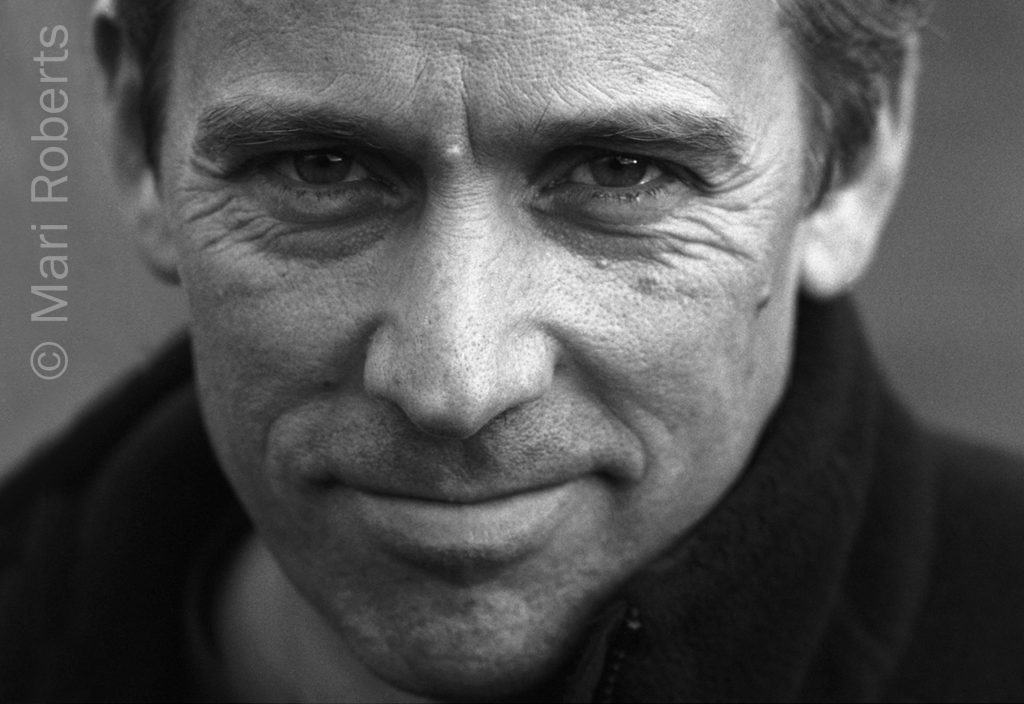 Jasper Fforde spent 20 years in the film business before debuting on the New York Times Bestseller list with ‘The Eyre Affair’ in 2001. ‘Red Side Story’ is his 17th novel.
Fforde’s writing is an eclectic mix of genres, which might be described as a joyful blend of Comedy-SF-thriller-Crime-Satire. He freely admits that he is fascinated not just by books themselves, but by the way we read and what we read, and his reinvigoration of tired genres have won him many enthusiastic supporters across the world.
Amongst Fforde’s output are police procedurals featuring nursery rhyme characters; a four-book series for Young Adults about Magic and Dragons set in a shabby world of failing magical powers,’Shades of Grey’ (2011) a post-apocalyptic dystopia where social hierarchy is based on the colours you can see, ‘Early Riser’ (2018), a thriller set in a world in which humans have always hibernated, and ‘The Constant Rabbit’ (2020), an allegory about racism and xenophobia in the UK.
Fforde was born in England but has recently decided to adopt the nationality of where he lives when he heard that: ‘When you truly love Wales, you are Welsh’.


0 Comments