




First Nations Peoples are advised this book contains depictions and names of deceased people, and content that may be considered culturally sensitive. The themes covered may also cause distress, and language that is not considered appropriate today is used in this book, reflecting the era in which it was first written.
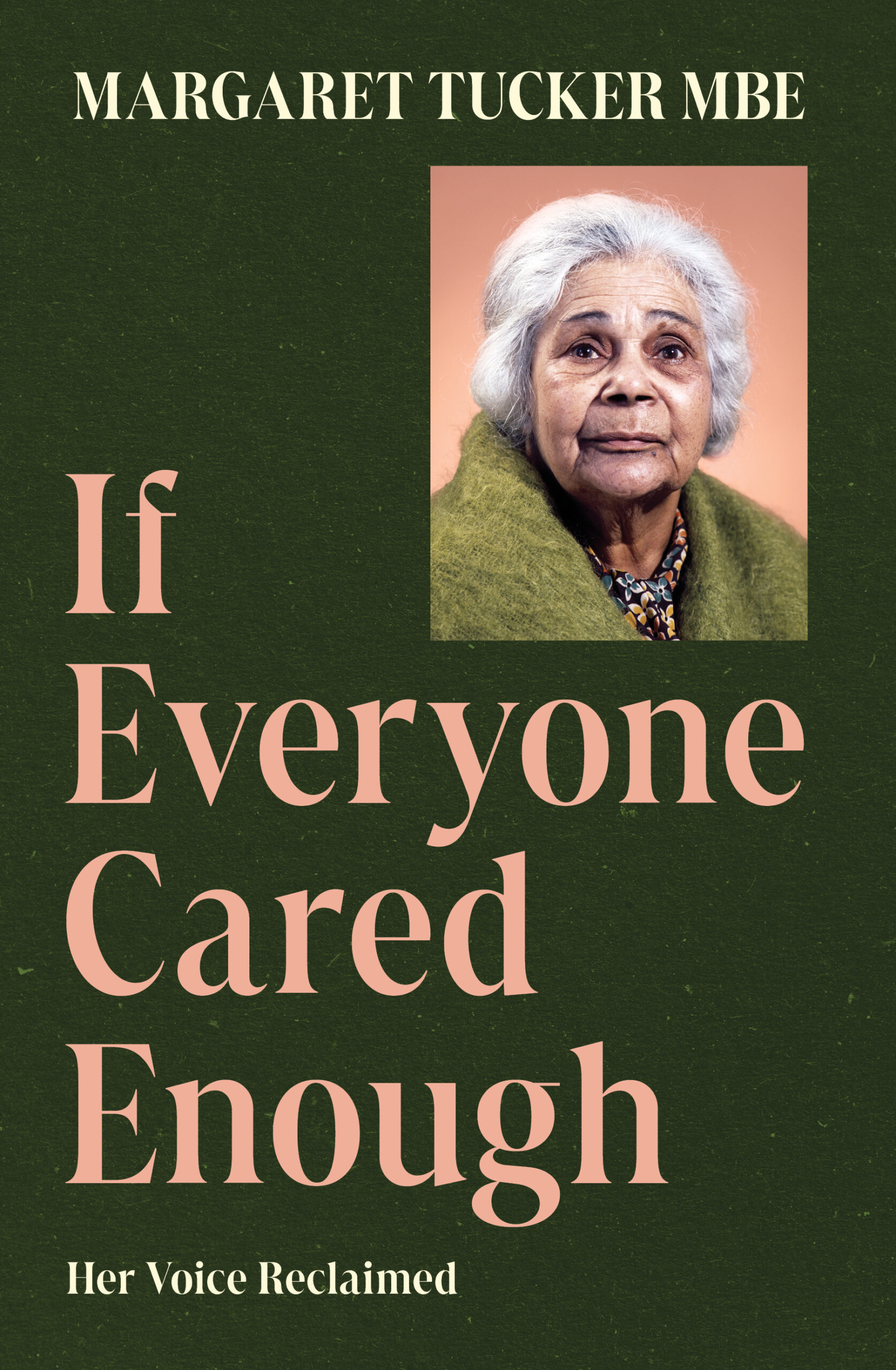
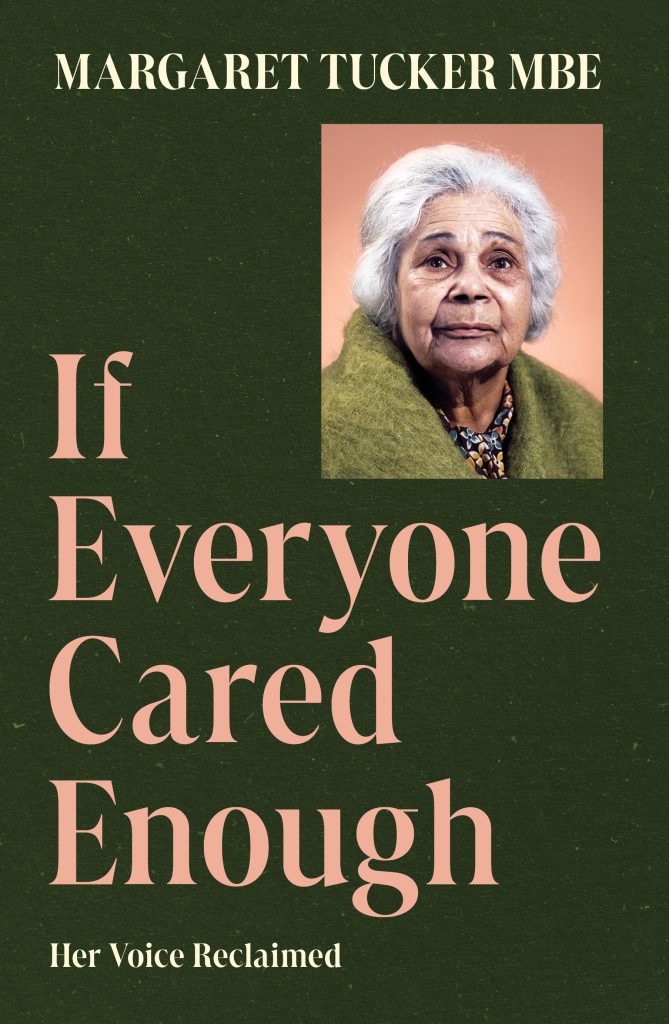
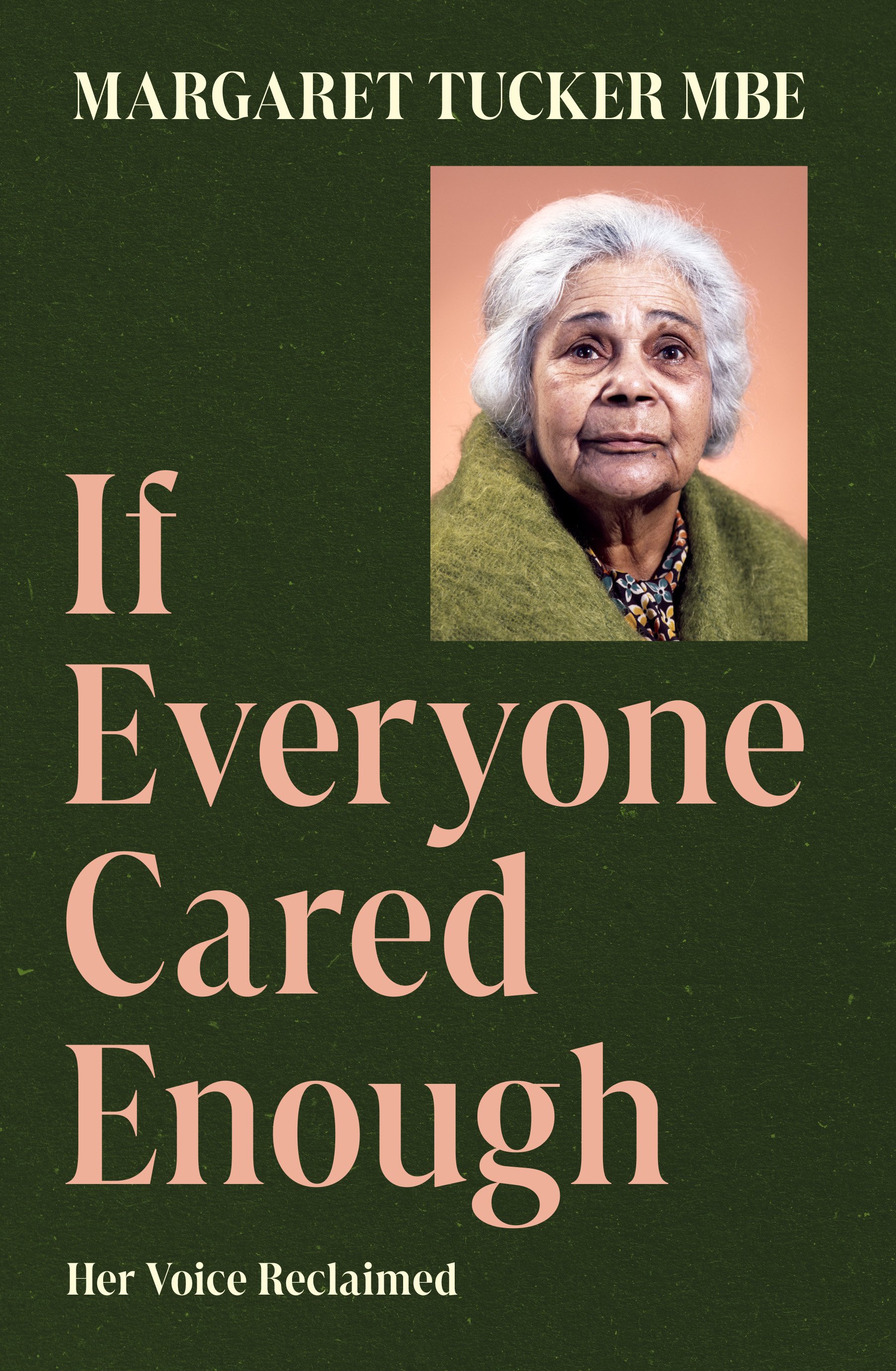
Margaret Lilardia Tucker MBE was a significant Aboriginal activist and one of the first Aboriginal women to publish for mainstream audiences. Her landmark autobiography – If Everyone Cared – has been republished in a new edition titled If Everyone Cared Enough.
Read on for an extract from this important Australian book.
ABOUT THE BOOK
This nationally significant publication aims to reinstate the original words of Aunty Marge, as she was affectionately known, and shed light on the previously omitted descriptions of her culture and personal experiences.
Originally published in 1977, If Everyone Cared was a groundbreaking work that required significant alterations to cater to non-Indigenous readers who had limited knowledge of Aboriginal cultures and the consequences of settler invasion from a First Nations perspective. As a result, Tucker’s tone and content were modified, and her original Aboriginal storytelling voice was altered.
If Everyone Cared Enough draws from the handwritten manuscript held in the collections of the National Library of Australia, allowing readers to experience Tucker’s story as she originally wrote it. The republished autobiography commences with her joyful early memories of swimming, fishing, and learning, but also delves into the abrupt end of her childhood when she was sent to the Cootamundra Domestic Training Home for Aboriginal Girls. Tucker fearlessly recounts the horrors of the training, the cruelty of her first employer, and the profound loneliness, homesickness, and heartache she endured.
Throughout her life, Tucker remained dedicated to fighting for Aboriginal and Torres Strait Islander rights and opportunities. In 1932, she became the treasurer of the Victorian Aborigines League, one of the country’s first Aboriginal organisations. Her tireless efforts were recognised when she was awarded an MBE in 1968.
READ AN EXTRACT
 A policeman and a young man who was the driver were talking to Mr Hill. Mrs Hill came in for a minute, but she did not take any notice of the boys, whom she had surely seen jumping down from the window.
She was very upset about something. She called Eric Briggs and Osley McGee and spoke to them quietly. They left the school through the back door; I cannot quite remember everything that went on, but then the policeman and Mr Hill came into the school. Our school marm seemed to be in a heated argument with her husband. She was very distressed. After a long discussion, it seemed that Mrs Hill was against what Mr Hill and the policeman wanted.
The children were all standing (we always stood up when visitors came and the police were no exception). My sister May and another girl, an orphan, started to cry. Then quite a few children started to cry. They may have heard the conversation. However, I was puzzled to know what they were crying for, until Mr Hill said that all the children should leave the school except Margaret and May Clements and Myrtle Taylor. Myrtle was an orphan reared by Mrs Maggie Briggs, she was the same age as May, about eleven years old and a very fair skinned, pretty child. Her aunt was Eric Brigg’s mother, a descendant of Truganini.
I had forgotten about Brungle and the visit by the gang of men representing the Aboriginal Protection Board. Then it all came to me in a rush! But I did not believe for a moment that my mother would let us go. She would put a stop to us going away! All the children dismissed from school ran home and told their parents about what was happening at school.
I will never forget, when I looked out that schoolroom door, every one of my Moonahcullah mothers, children and babies-in-arms, and a sprinkling of elderly men, standing in groups. The younger ones were away working on homesteads, sheep stations or farms. I started to cry when I saw them all through the schoolroom door. They were not allowed to come in. There were forty or fifty of my people silently or not-so-silently grieving and fighting for us. They did not know what it was all about; but they knew it was something treacherous to our Aboriginal way of living. Not being able to see ahead, we accepted the white person’s world to be a superior world. Around that particular part of Australia, I feel we Aborigines were fortunate in having a kindly lot of white station owners or squatters, homesteaders or whatnot. Our Aboriginal villagers did not worry them, of what I can remember.
There they were, all talking at once: some in the language, some in English, some with angry looks, and some with hopelessness, knowing that they wouldn’t have the last say. Some had tears running down their cheeks, the children’s cries mingling with theirs. Mr Hill demanded that we children leave immediately with the police. The Aboriginal women were very angry.
Her husband, with his face going purple, looked at his watch every few minutes. At last, she came in carrying a tray with glasses of milk and the kind of food we only got at Christmas time.
Mr Hill was in a situation he had never experienced before and he did not take into account that Aboriginal hearts could break with despair and helplessness, the same as any human. Mrs Hill, with tears running down her cheek, made one more valiant attempt to prolong our stay. I did not realise that she had sent our radicals, Eric Briggs and Osley McGee, to race those miles to get my mother. I will never forget her for that. She stood her ground, this red-haired white woman, against her husband, the police and the driver of the car. She said with determination, ‘Well, they cannot go without something to eat. It is lunchtime’. We said, ‘Oh, no thank you Teacher. We are not hungry’.
‘All the same, you children are not going that long journey (first to Deniliquin, then many more miles to Finley, where we would catch the train to Cootamundra) without food,’ she insisted.
She went to her house at the side of the school, taking as long as she dared to prepare something for us to eat. Her husband, with his face going purple, looked at his watch every few minutes. At last, she came in carrying a tray with glasses of milk and the kind of food we only got at Christmas time. It was most delicious looking, but we couldn’t eat it. We were not hungry. She coaxed us to drink the milk and eat something. However, I remember, Mr Hill could not stand it anymore. He said a lot of time was being wasted and that the police officer and driver wanted to leave. We started to cry again, as did most of our schoolmates. Then, like an angel, our mother and the two boys came through the schoolroom door. Little Myrtle’s aunty rushed in with a few other mothers.
Oh, the glad cry of joy. We thought, ‘Everything will be alright now. Mum won’t let us go’. Little Myrtle cuddled up to her aunty. We had our arms around our mother and refused to let go. She still had her apron on and must have run the whole one-and-a-half miles. She arrived just in time, due to that lovely red-headed teacher. As we grasped our mother and hung on to her, she said with determination, ‘They are my children and they are not going away with you’.
The policeman, who was no doubt doing his duty, patted his hand-cuffs, which were in a leather case on his belt. May and I thought it was a revolver.
‘Mrs Clements’, he said, ‘I’ll have to use this if you do not let us take these children, now.’
Thinking the policeman would shoot Mother because she was making such a fuss, we screamed, ‘Oh, we’ll go with him, Mum, we’ll go’. In my heart, I cannot forget any detail. It stands out as though it were yesterday. I could not ever see kittens taken from their mother and drowned without remembering that scene, although it is just on sixty years ago.
However, the policeman must have had a heart, because he allowed my mother to come in the car with us three girls as far as Deniliquin. She had no money and only the clothes she had on. Then the policeman sprung another big shock.
He said we had to go to Deniliquin hospital to pick up Geraldine, who was to be taken as well. The horror on my mother’s face and her heartbroken cry; I try to wipe it from my memory. All she could say was, ‘Oh no, not my baby. Please, let me have her. I will look after her’.
As that policeman walked up the hospital path to get my little sister, May and I sobbed quietly. Mother got out of the car and stood wailing with a hopeless look. Her tears had run dry, I guess. I thought to myself, I will gladly go, if they will only leave our little sister Geraldine with my mother.
‘Mrs Clements, you can have your little girl. She left the hospital with her aunt and uncle early this morning,’ said the policeman.
Mother simply took the policeman’s hand and kissed it, saying, ‘Thank you, thank you’.
Then we were taken around to the police station, where the policeman no doubt had to report. Mother followed him, thinking she could beg once more for us, only to rush out when she heard the car start up. My last memory of her for many years was her waving pathetically, as we waved back. May and I were crying, ‘Goodbye Mum, we’ll be all right, don’t cry—pray, Mum’. But we were too far away for her to hear us.
I heard years later, how after watching us go out of her life, she wandered away from the police station and walked three miles along the road leading out of town to Moonahcullah. She was worn out, with no food, no money, and with her apron still on. She wandered off the road a little, so exhausted that she lay down to rest on some long grass under a tree. That is where old Uncle and Aunty found her the next day.
When they had arrived back at Moonahcullah with little sister, our people told them the whole story. They were immediately offered the loan of a fresh horse to go back to find Mother. They found her, still crying and moaning. They would not have found her, only they heard this moaning and thought it was an animal in pain. Being fond of animals, old Uncle stopped the horse and got out of the buggy to investigate. Aunty heard him talking in the language and protesting about something. She got down from the buggy and hurried to old Uncle’s side.
They found our mother half demented and ill. They gave her water and tried to feed her, but she couldn’t eat. She was ill and wasn’t interested in anything for weeks. She wouldn’t let Geraldine out of her sight. She slowly got better, but I believe for months after, at the first sight of a policeman’s white helmet coming around the bend of the river, she would grab her little girl and run to escape into the bush. Almost all the Aboriginal people who had children on the settlement did likewise.
****************************


0 Comments