




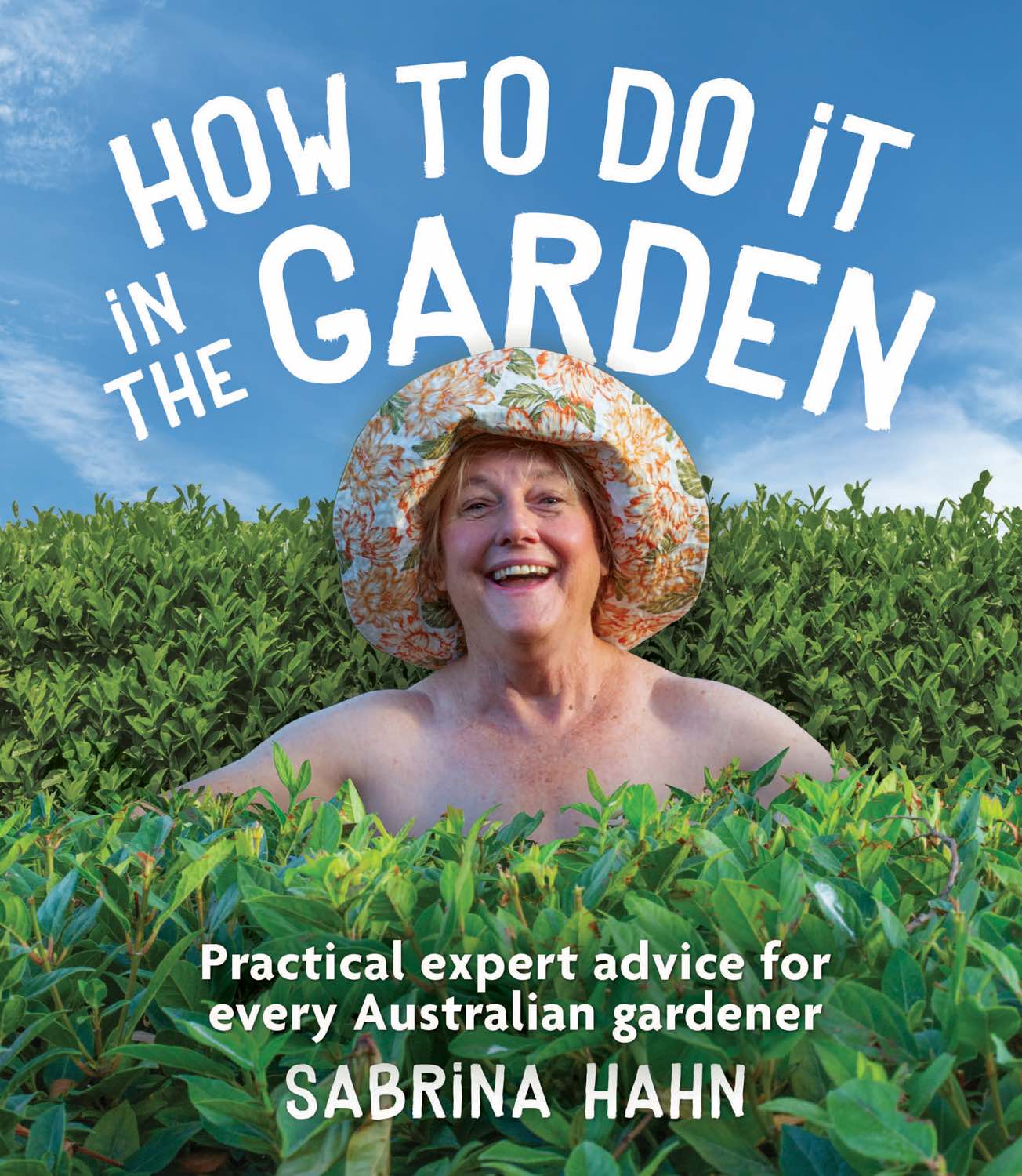
Channelling over three decades of knowledge as a horticultural and garden design expert, SABRINA HAHN knows how to get Australians ‘doing it’ in the garden when it comes to creating and maintaining your green space.
From getting down and dirty preparing your soil to doing it organically with edibles (like nuts, herbs, fruit and veg) to learning how to corral the suckers and chewers in your life (bugs and other pests – what did you think we meant?), you’ll discover just how seductive nature can be.
Focusing on sustainability, biodiversity and managing the effects of climate change, Sabrina’s endless inspiration and practical problem solving will entice you to get things growin’.
In this extract Sabrina tells about the soil beneath our feet.
Talkin’ dirty
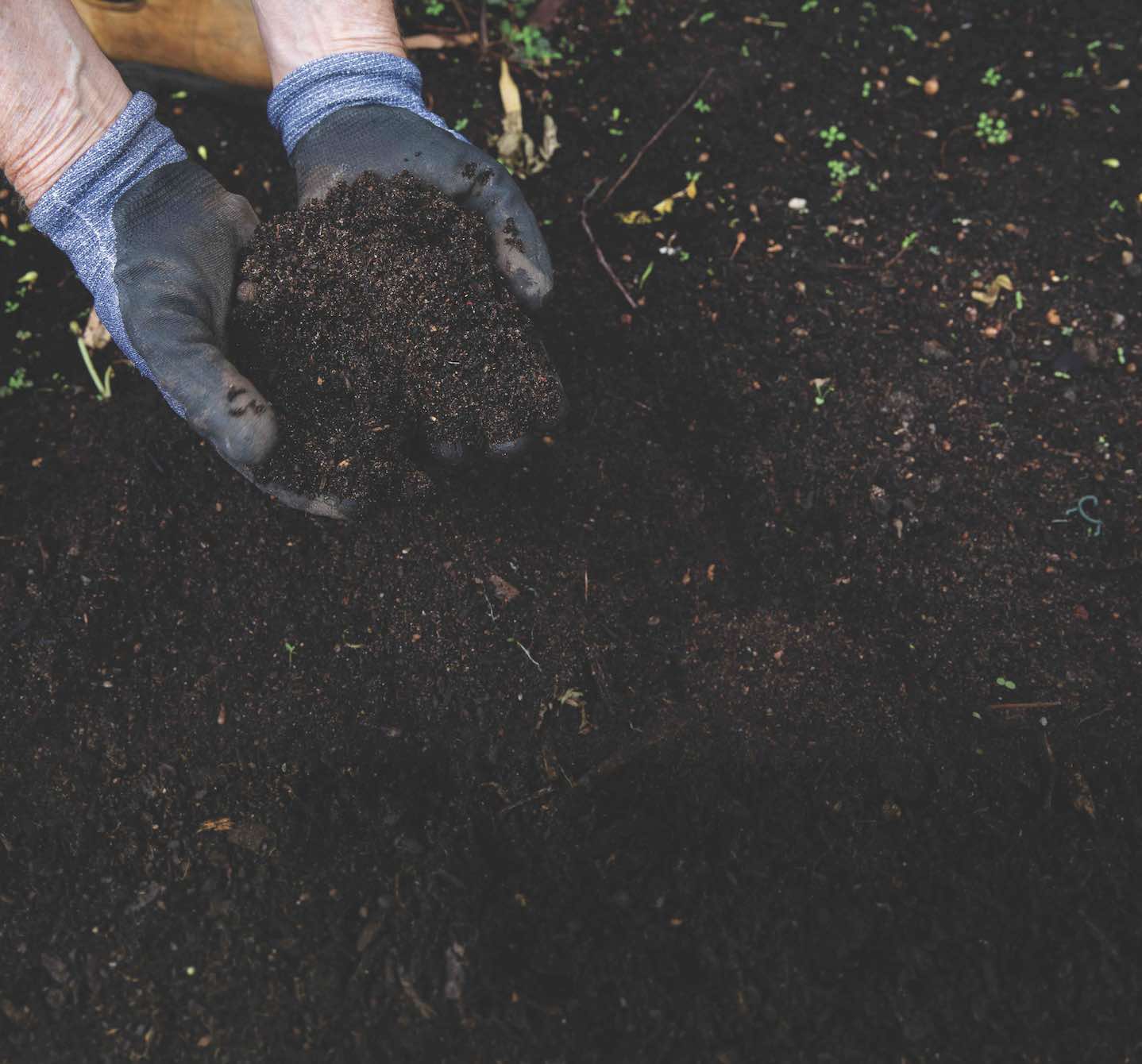
Unless you understand some of the amazing workings that happen in the microscopic world lying beneath your feet, you can’t give the best to your garden, or indeed the planet. The soil that covers our planet is like the skin that covers our bodies – we take it for granted, cover it with all sorts of chemicals, expose it to the elements and swear at it when it becomes old and unable to rejuvenate.
During the 1960s and 70s, we went gung-ho on annihilating pests, weeds and diseases by bombarding the soil and plants with herbicides, insecticides, fungicides and nematicides. We repeatedly wiped out all the beneficial organisms that protected all plant life in the hope it would destroy the few detrimental ones. In the process, we have destroyed much of the biological exchanges that plants have relied upon for millions of years. Basically, we have evicted the worthy and brought in the mutants and hooligans.
The soil is heaving with the bacteria, fungi, protozoa, earthworms, nematodes and microarthropods that feed your plants micronutrients and protect them from the nasties. There are thousands of these interactions happening every minute – if you think technology is amazing, it has nothing on soil biology.
Gardeners must treat their soil with the upmost respect and understand that all chemicals, including fertilisers, disrupt the natural ecosystem and partnerships between plant life and soil biology. Every organism that lives must consume carbon and, in return, leaves a waste product that other organisms can digest. Carbon fuels metabolism, and this remarkable process starts with plants.
When you start gardening, there are many things you need to get personal with, starting with the soil. Get to know your soil – dig it, squeeze it, roll in it, make a dirt cake out of it and smell it. Use all of your senses, because understanding your soil is the foundation of being a gun gardener.
 When we are hot, we sweat; plants do a similar thing through their root systems by exuding carbohydrates and proteins through their roots. It’s a party invitation for soil fungi and bacteria to come and eat the spring rolls, sausages, fairy bread and cake. The invitation gets leaked on the soil food social media sites and before you know it, the whole neighbourhood turns up – the nematodes from next door, protozoa pop in and larger organisms come to feast on secretions. The party goes wild, and larger organisms eat the smaller ones or their waste.
For so long, most gardeners have focused on feeding our plants. But we need to switch our thinking from feeding the plants to feeding the soil. Plants and the microorganisms in soil have been doing this dance for millions and millions of years; it’s a fair exchange between plants that provide secretions to fungi and bacteria, who in turn give their waste back in the form of nutrients.
Before we get dirty, it’s important to understand how the different microorganisms in the soil contribute to the health of your garden and our planet.
Bacteria
Bacteria were the very first forms of life on earth over three billion years ago. They come in three main shapes: oval, rod and spiral. They reproduce rapidly by cell division and are voraciously eaten by protozoa. Bacteria are the world’s greatest decomposers, even more than fungi, and are vital in breaking down pollutants and toxins. Many gardeners use legumes and green manure crops (have a read about green manure on pg. 39) to add nitrogen to the soil, and it is bacteria that carry out the process of converting nitrogen from the atmosphere into nutrients on plant roots. Bacteria don’t travel far and like to hang around plant root systems, keeping vital minerals in the soil.
Fungi
We all know about mushrooms, but most fungi are as invisible as bacteria, growing from spores into threads called hyphae that develop into mycelia (often seen by gardeners in decomposing leaf litter).
Mushrooms are just the fruiting body of the mycelia, which can travel for vast distances in the soil.
Fungi are the champions of transporting nutrients and have the ability to grow very quickly. They have a complex subway system of tunnels that air, water and nutrients use to flow through. Mycorrhizal fungi (a symbiotic plant–fungus relationship) can increase the reach of plant roots by up to 1,000 times in soil.
There are many symbiotic associations between fungi and plant roots. It’s a give-and-take situation, the plant root provides carbohydrates and in return branches out into the soil collecting water and nutrients to root systems.
**********
PLAY A GAME OF ‘KNOW THAT SOIL’
To make your garden sustainable, beautiful and a haven for life, you need to understand what your soil is or isn’t.
- In a glass jar, place 2 cups water and 1 tablespoon fabric softener, then shake.
- Add 2 cups soil from the top 30 cm of your garden and shake until all the particles are suspended in water.
- Leave your soil sample to settle overnight.
When you check your sample, you’ll see sand on the bottom, silt sitting in the middle, clay on the top layer and organic matter floating above it all. It’s the depth of these layers that will show you the composition of your soil.
Why is this important? Once you know the soil profile, you can choose plants accordingly and also remediate the soil if it’s lacking a particular particle necessary for growing specific plants or trees.
ABOUT THE AUTHOR
Sabrina Hahn is a whole lot of Hort with Heart – a master gardener, horticultural professional, award winning radio presenter, podcaster and writer. She has passion for the creation of sustainable landscapes that make cities more liveable. Her aim is to educate listeners in the importance of creating biodiversity in their own backyards. She believes that the diminishing green spaces in urban areas are making our cities sterile hot spots. Urban gardens play a vital role in returning biodiversity into our cities and offering people a space for physical and mental wellbeing.
Sabrina has shared her knowledge and passion for green spaces on ABC radio for 27 years, being one of the earliest pioneers to promote sustainable gardening practices in the media. She is a highly entertaining public speaker, and MC, she writes a twice-weekly gardening column in The West Australian, and also contributes articles for Gardening Australia and Organic Gardener.
Her extensive knowledge on gardening comes from a scientific background of horticulture, soil science, entomology and botany. Sabrina has been awarded a lifetime membership from the Nursery and Garden Industry of Western Australia and nominated for Australian of the Year for her services to the industry.
Sabrina has worked extensively for the past decade in remote Aboriginal communities in the Kimberley developing edible gardens so that Aboriginal people have greater access to healthy food and become more sustainable. She believes the availability of healthy, fresh food will have a positive impact on the health of children in remote areas where fresh vegetables are a luxury. She has formed friendships with women elders in communities to enable them to propagate their own bush tucker and bush medicine plants so that their knowledge is passed on the next generation.


0 Comments