



We believe that rules and laws are in place to protect us. They are what keep our societies from descending into chaos. Without them, how would we know our right from wrong, live comfortably in our communities and be good neighbours to one another?
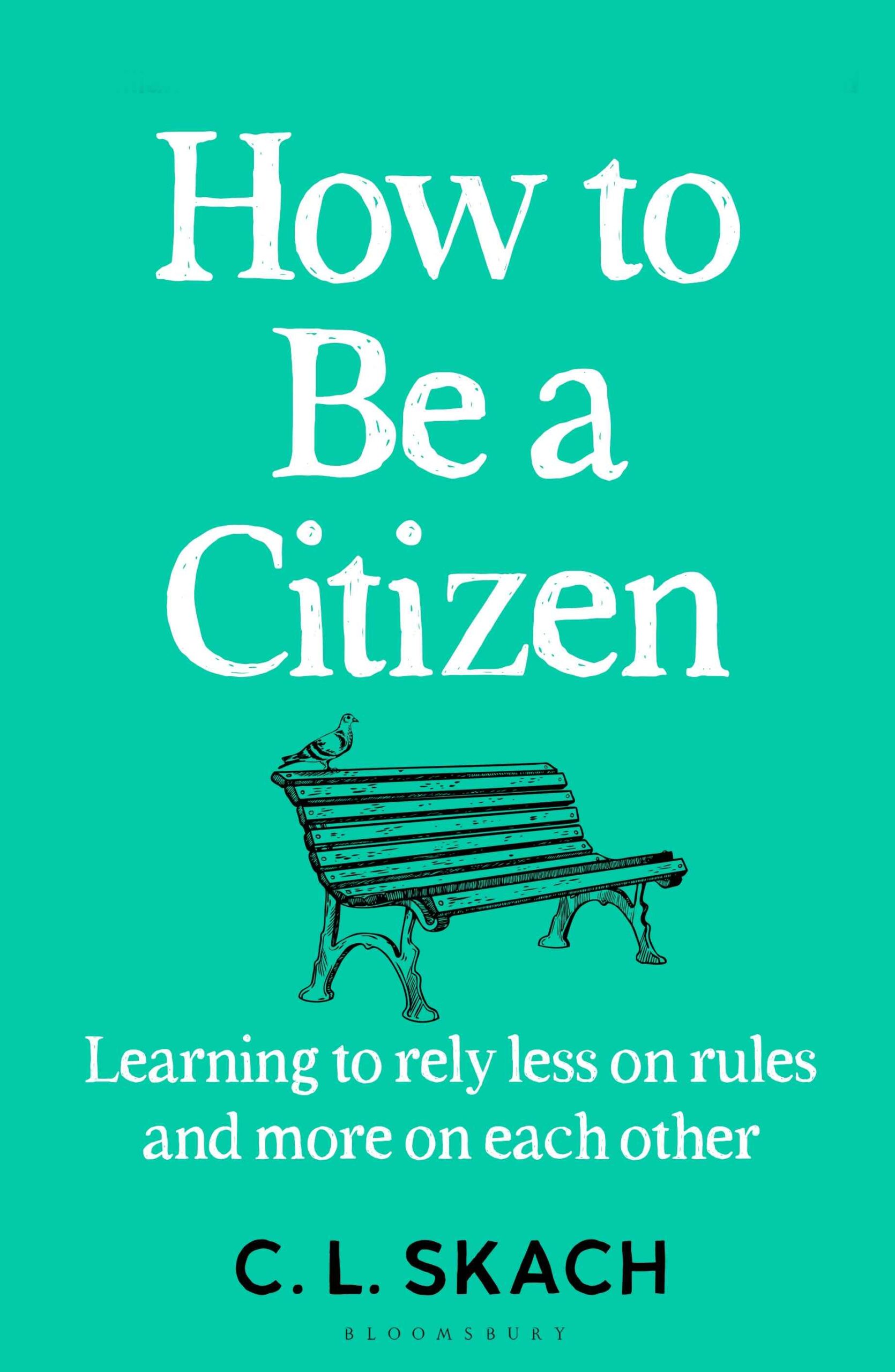
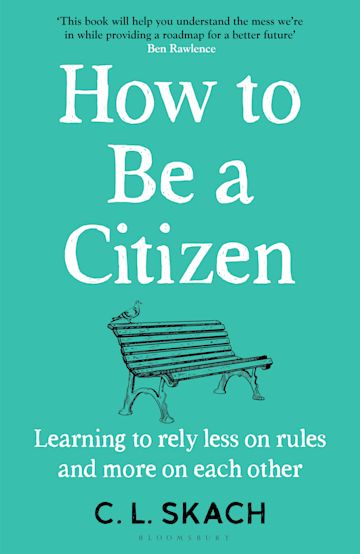
Read on for an extract of How to be a Citizen: Learning to Rely Less on Rules and More on Each Other by C L Skach
ABOUT THE BOOK
C L Skach feels differently. She always believed in the strength of the law – she spent her career in some of the most fractured, war-torn corners of the world, reading and writing constitutions to help fix society. But as she sat alone in a sandbagged trailer in Baghdad after a rocket attack, she admitted what she’d been denying for years: a good society cannot be imposed from above. It comes from leaning less on formal rules, and more on each other.
Skach lays out six ideas, informed by everything from civil wars to civil rights struggles, bystander responsibility to mutual aid in the pandemic, to help us build small societies of our own. These ideas sometimes sound simple: share the vegetables from your garden, spend time on a park bench. But taken together they can amount to real, bottom-up change.
EXTRACT
I can remember the exact day I finally lost my faith in formal rules – in the law. It was around the time I learned to do U-turns in an armoured SUV at fifty miles per hour and lived to eat my day’s ration. It was around the time that I practised dodging explosive devices planted on the roads of Amman, becoming proficient enough to make it back in time for a shower and a glass of Lebanese wine before bed. This was, of course, the easy part. It was the fall of 2008, and I had just graduated from a two-week survival course in the desert, where Jordanian soldiers and UN security forces simulated terrorist activities to prepare me for, among other things, constitution writing. I had flown out to Amman from London, just before my teaching duties were to begin for the academic year. I was the newly appointed Professor of Comparative Government and Law at Oxford, and I would be taking the five-hour flight a few times over the next year, between tutorials and lectures, returning proudly to share my experience with my students.
….
I was eager to go. Not for the money…But as a constitutional scholar, a professor, I thought I had reached the top of my game. As one of my students at Oxford put it, ‘You are writing constitutions, Professor Skach; it doesn’t get any better than this.’ Constitutions are, after all, the most important laws in a democracy, in a country governed by and for the people. They set the rules of the political game, telling us whether a country is unitary or federal; whether it is secular or has an established religious affiliation. They tell us how our political leaders will be chosen, how and when we can change them, who will represent us and make decisions for our governance. And they tell us not only what our rights are as individuals and as members of identity groups, but also how our individual countries order these rights in a hierarchy based on our nation’s values, and how our government is going to protect these rights from being trampled on. That’s why constitutions are often known as ‘higher law’.
….
I tried to imagine what might await me in Iraq. Former colleagues who had been there had shared their stories, embellished with enough detail to elicit envy. Working in a war zone, writing laws and constitutions in particular, was something very few of us had done. The mere thought of participating in some constitutional founding was exciting. Maybe, if they liked what I said, I would be helping to write this higher law. But I really had no idea.
….
I remember, very clearly, that horrific morning. Asleep in my camp in the International Zone, I was awakened at dawn by a terrible sound, followed by a violent shake. Our camp had been hit by a 240mm rocket, meant for our neighbours at the US embassy, but falling short and hitting us hard. My survival instinct and two weeks of training kicked in, and I reached not for my clothes, but for my helmet and metal jacket, snatching up my grab bag: a small sack with basic supplies and cash. I sat there in the darkness, in underwear and protective equipment, in my sandbagged room, waiting. How many were hurt? How many were dead? Would we be captured? Killed? I thought, So this is constitution writing.
A knock at my door made me jump. My colleague, a father of two young children living back in North America, stood there. He was OK and came to see if I was. He told me what had happened, and that we had no more electricity in the camp and no more running water. We were now going to be evacuated by tanks to a local Iraqi school which had recently been converted into a UN base. As we awaited ambulances, the camp’s administrators briefed us on the attack: Three people were dead, thirteen injured. We got off lightly, they said; it could have been much worse, and they remembered when it was. I’ve thought about that moment ever since and will do for the rest of my life. I thought about it later that very day, while sloshing through sewage in the converted Iraqi school, where we, the survivors, shared a very limited supply of bottled water, and the UN’s Bangladeshi cooks – those who survived the attack – tried to put together something for us to eat. I thought about it later again that day, as I climbed into a tank with three heavily armed American soldiers, as they
drove me down sniper alley to Baghdad International Airport. I thought about it as I gratefully sipped the orange Gatorade they handed me and I looked out the tiny window at this cradle of civilisation. I left that alley feeling not only traumatised, but guilty. For at that moment, the faces of the sheiks I had met, of the Iraqi and Kurdish ministers who had welcomed me and given me black lime tea, came back to me, and I realised that nothing or no one could help these people but themselves. No law, no rule. And any constitution that I or others might try to encourage them to adopt might possibly make things worse, and perhaps already had. Because laws and rules and constitutions are in the end much like human-to-human stem cell transplants. Without the pre-transplant conditioning therapy which prepares the patient, especially patients with long-standing medical problems, the complications of introducing foreign bodies can be catastrophic. So, I now thought, it could be with laws. So, it was there, in the tank surrounded by three American soldiers, that my career changed. There I finally acknowledged what I had always felt but suppressed: that higher laws, and rules more generally, can themselves be filled with the seeds of good order’s destruction.

0 Comments