




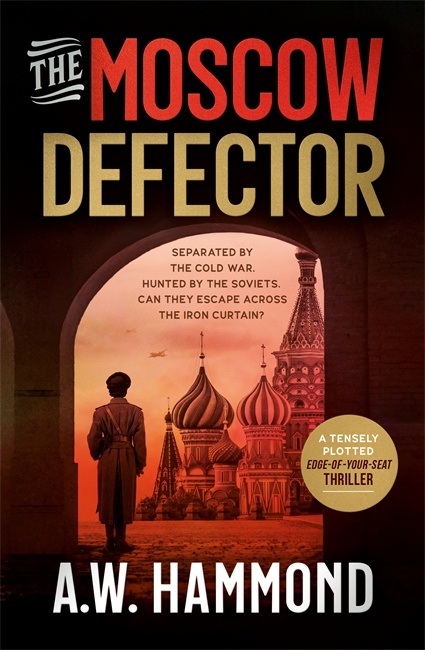
ABOUT THE BOOK
September, 1948. The Iron Curtain has descended. Behind it is the woman he loves.
The Berlin Blockade has begun and Soviet aggression threatens to ignite a new conflict. Auguste Duchene finds himself part of a Cold War that is on the brink of turning hot. Working for the Allies in the besieged city to lure Soviet spies to defect, he’s made an enemy of the Russians who are drawing a net tight around him. Meanwhile, his estranged wife, Sabine, also finds herself under threat in Moscow. With her belief in the communist cause increasingly challenged, her past actions come back to haunt her as Stalin’s agents wield absolute power to expose her.
**********
Berlin
Thursday, 2 September 1948
17
DUCHENE
Through the windows of his second-floor office, he had an excellent view of the city. Or what remained of it. Those buildings that still stood looked like tombstones in a graveyard of rubble. And what trees there might have been to herald the autumn with their red and orange leaves had long since been cut down and burnt as firewood. It was all grey – the skies, the streets and the faces of the starving men and women who moved along them.
The same could not be said of the man who sat across from Duchene. His thin face had a ruddy sheen brought on by deep concentration. The threadbare suit was patched in a few places with offcuts that for the most part matched the dark brown of the original.
On the table beside Duchene lay a packet of cigarettes, a fountain pen and a notebook. The pen and the notebook were there for the theatre; he didn’t need them. Not because his mind was a vice, quite the contrary – he was finding these days that his memory was often foggy and only deep rumination could blow those mists away.
There was no need for pen and paper as the conversation was being recorded. The packet of cigarettes was also not what it seemed.
It was so much more. A temptation. An offer. It said, ‘Speak, be rewarded and use me to barter for supplies on the black market.’
‘Mr Haas. It’s a simple question. How did you learn English?’
Gunter Haas’s eyes shifted their focus from the right side of the wall behind Duchene to the left. It was filled with black and white photographs of the city from twenty years ago – the bright lights of multi-storey coffee houses and jazz clubs, the clamour of Berliners on the street in their best evening wear, Potsdamer Platz at the heart of the city bustling with activity and vitality.
‘Uh, English?’
‘Yes. The language we are speaking, have been speaking for the last half hour. Or we could change to German should you prefer,’ Duchene said in German. ‘Perhaps you’d like a drink?’
‘No, thank you. I learnt English when I was a prisoner in Scotland. They had lessons. It gave me something to do.’
‘The British taught you?’
‘Yes.
‘‘At Prisoner of War Camp 21?’
‘The guards called it the Black Camp.’
‘Why did they call it that?’
‘That should be in my records. It was a camp reserved for Nazis.’
‘And which part of the Nazi party were you?’
 ‘I was a Kriegsmarine. My ship was sunk in the Atlantic and I was captured by the Royal Navy. But I’ve got my denazification clearance certificate. That should also be in my records.’
Duchene flipped to the certificate and its associated survey, all approved by his office as part of the new Allied military bureaucracy.
‘It is. So with this clearance, you were approved as an English translator to work in the Stadthaus and courthouse.’
‘I’m not a Nazi anymore. I’m not sure if I really ever was one.
I didn’t like Hitler. He was bad for our country. But we all had to fight, and if you wanted to do well, you joined the party. That’s how it went.’
‘Yes. So you all say. It’s amazing how many Germans I meet these days say they never supported Hitler or the Nazis, never liked them. I do wonder if you would have said the same thing before you lost a war.’
‘You don’t believe me?’
‘Does it matter? We’ve already moved on from Nazis, haven’t we? That’s not really the problem we’re facing here in Berlin, in
Europe.’
‘No. The Russians.’ Haas glanced at the cigarettes and drummed his fingers on the table.
‘Would you like that drink now?’
‘Drink?’
‘Cognac? Whisky? Coffee maybe? We could have one with a cigarette.’
Haas shifted in his chair.
‘Let’s indulge ourselves just this once. You know the Allies, they have access to plenty of cigarettes. We can each smoke one and be satisfied that there are many more where those came from. We have boxes and boxes of them in our storeroom.’
‘Cognac. If that’s all right.’
Duchene nodded. ‘It is.’ He gestured towards Sylvianne who was transcribing notes at the back of the room. She stopped writing, placed her notebook down on a side table and stood, straightening out her skirt. It was a cool grey that complemented her cornflower blue blouse.
Sylvianne drew attention wherever she went. A tall blonde, she made eye contact readily and offered her smile generously. Which made her a terrible intelligence agent for fieldwork and was why she had been assigned to Duchene’s small team for a desk job. She never showed signs of resenting it.
In the time it took him to unwrap the cigarettes, she had returned with two cognacs. Duchene noted that Haas had been served a double shot.
Duchene slid the cigarettes and his lighter across the table.
Haas extracted a cigarette and rolled it between his fingers, examining the shape of it. The flame of the lighter sprang into life and he lit the tip.
With lighter and packet returned, Duchene lit up as well then tossed them both back onto the desk. He smoked and watched as Haas cradled and smelt the cognac with a similar reverence.
Sylvianne resumed her note-taking.
He smoked and watched as Haas cradled and smelt the cognac with a similar reverence.
‘In the course of your day, what do you translate?’
‘Permits and applications mostly. German to English. To be sent back to the Kommandatura.’
‘Civil papers from the courts?’
Haas dragged on the cigarette. ‘Sure. Some of the time.’
‘So a busy day at the Stadthaus before you return to . . .?’
‘I live in Prenzlauer Berg.’
‘What’s it like living in the Soviet sector?’
‘It is what it is.’
‘I understand they’re offering extra rations to anyone who will join the Communist Party.’
‘They are.’
‘Tempted?’
Haas took another sip of the cognac. ‘Of course. The blockade rations are terrible and there’s barely enough of them. But I haven’t. Not after what they did to the city.’
‘The Allies also attacked your city. But you’re drinking their cognac and smoking their cigarettes.’
‘You keep saying “they” – are you not one of the Allies, Mister . . .?’
‘Weis. As we explained, you’re here for routine questioning.’
‘Is that why there are police officers outside the door?’
‘There are always police when we interview people. So that it’s legal.’ Duchene drew back on the cigarette. ‘What percentage of translation would you be doing across these permits, applications and court papers?’
‘I don’t really –’
‘Approximately?’
‘The court papers take the longest. I already have proforma copies of the permits and applications in English, so I just update those to reflect the specifics of each submission. They are for new businesses mostly. The Americans want us to rebuild.’
‘So 50 per cent? More? On your court papers?’
‘Sure.’
‘Seventy?’
‘Sure.’
‘And these are for civil disputes?’
Haas sighed. ‘Complaints mostly, filed against Allied occupation of houses.’
‘Wealthy Germans.’
‘There are no wealthy Germans left.’
‘Formerly wealthy. Dispossessed of their homes and apartments.’
‘Yes. That sort of thing.’
Duchene gestured again to Sylvianne. ‘Could you please bring me a list of the names of all the administrative judges?’ he asked
her in German.
He turned to Haas. ‘Unless you know them already?’
‘I do.’
‘Let’s get the list and see if Mr Haas is correct. I’ll give you that packet of cigarettes if you are.’
‘There’s Gerdt Schmidt, Jurgen Fischer, Herman Alder and Walter Braun,’ Haas said before Sylvianne had a chance to stand.
‘Are you sure? You can’t change the answer once the list arrives.’
‘I’m right. I’ve translated their findings. All of them.’
‘And these are then published for all to see?’
‘Eventually, I believe. But there are delays from the blockade. They’re about three months behind.’
Sylvianne returned with a manila folder and placed it on the corner of the desk.
‘Thank you. Shall we see if you’re right?’
Duchene scanned down the names and then slid the packet of cigarettes over to Haas.
‘You do know your judges. Do they ever thank you for your work?’
‘I’m just the translator.’
‘That’s a shame. You do so much to assist in the reconstruction and support of the city. I hope that someone thanks you for the work.’
‘The work is thanks enough. I get paid. That’s more than others.’
‘Who do you tend to translate the most?’
‘I don’t really –’
‘If you were to guess. You spend so much time with their words, you must have a sense of who’s producing findings.’
‘That would be Fischer.’
Haas pulled out another cigarette and lit it off the one he had just finished.
‘Fischer. Is he just verbose or does he get to the point?’
‘He gets to the point. He’s the most efficient.’
‘Sounds exactly like the type of judge the city needs. While we’re rebuilding, he keeps the city running. Do you know anything else about the man?’
‘Just his words.’
‘But words can tell so much, don’t you think? Reveal the heart of a man?’
‘They’re findings of law. They’re not poems.’
‘Good point,’ Duchene said. ‘And these are mostly complaints he hears, where the Kommandatura has seized houses and property from citizens? That must have slowed down. They’ve been in the city for three years.’
‘He does more than that. He hears appeals against the decisions of the city council.’
‘So this would be most of the work he does now?’
‘I think so. Yes.’
‘And when you translate these findings, they come to you completed or do you receive them piecemeal?’ Duchene asked.
‘I get them completed. It needs to be the full finding once it’s been delivered.’
‘So the translation gets held up with you before it’s shared with the Kommandatura?’
‘I’m as efficient as I can be. I work hard, into the night.’
‘Does the Russian translator complete their translation first?’
‘There is no Russian translator, only me. I coordinate with the judges’ clerks. I know what they’re hearing in advance and I know when the finding will be delivered. I am ready the day it comes in.
I know my job and I do it well, Mr Weis.’ Haas was sitting forward in his chair, close enough that Duchene could smell the cognac on his breath. He had placed his hands on the desk so that the cuffs of a grey-stained shirt poked out from his jacket.
‘My apologies. I made some assumptions and they were wrong. I didn’t mean to cause offence.’
Haas slumped back into the chair, his eyes returning to wander across the photographs on the wall behind Duchene.
‘I think that’s all I need. Thank you for your time, Mr Haas.’
Duchene reached over and shook his hand.
Haas stood. ‘That’s it?’
‘It is. For now. Please keep that packet of cigarettes. You won them fair and square. Can we provide you with a letter explaining to your employer where you have been this afternoon? I know you take your job seriously.’
‘No.’ His voice was hard. Haas swayed a little on the spot. ‘That’s not necessary.’
‘Good man.’
Haas gulped down the last of the cognac, and Duchene got up and hobbled with him towards the door as Sylvianne opened it.
A policeman stood on guard outside the room. Like Duchene, the rest of his limited staff in the open-plan room outside the office wore civilian clothing. They were busy typing and collating documents. He couldn’t limit Haas from assuming that this was information gathering on the part of the military authorities in the city, but he could do his best to provide the impression that they were fellow Germans who had also been drafted into the role in support of the military governors. Sergeant Bauder was another of those visual cues with the necessary features of authority. He was blond, tall, strong-jawed and broad-shouldered, with a coiled intensity that seemed as though it might spring out of him if called on to act.
‘Thank you again, Mr Haas.’
Hass looked over the typing pool and then blinked back at Duchene.
‘That’s it?’
‘It is, as I said, for now. The men will escort you to a U-Bahn station of your choosing.’
Haas paused at the threshold before starting down the hallway.
‘Captain,’ Duchene nodded to Bauder.
Sergeant Bauder was another of those visual cues with the necessary features of authority. He was blond, tall, strong-jawed and broad-shouldered, with a coiled
‘Herr Weis.’
‘How is your wife? The children?’
‘She is doing what she can for them.’
‘I’ll try to drop by tomorrow. I have some extra rations I can share.’
‘That is not necessary. I’m sure there are others who are more in need.’
‘Without a doubt. But I don’t know them.’
‘Thank you. That is very generous.’
‘To each according to their needs,’ he said, winking back at the policeman. Duchene returned to his seat in the office and took his first sip from the cognac. He opened the bottom desk drawer. It was full of Lucky Strikes, stacked in rows. He took out a new packet and lit a fresh cigarette.
The door to the office swung open and two men in uniform strode in. Colonel Hugo Bloyer seemed to be approaching at a velocity that was going to knock the desk over. Moving quickly beside him was Captain Henri Martin, who had the good sense to plot a route that would avoid an impact with heavy oak.
‘Well, what have you got?’ Bloyer said as his broad frame smacked into the front of the desk.
‘Let’s get some more cognac,’ Duchene said, waving to the orderly.
‘Are we moving on him or not? Feels to me that he didn’t give us anything useful, so I’m not sure why you sent him off with cigarettes and a note from teacher.’
‘But he didn’t accept the note. And that told us a lot.’
Bloyer threw himself down into the chair. His years as a highranking officer had been good to him, filling out his jacket with a firm paunch. Even so, he still carried himself with a vitality and physicality that Duchene envied. He would be nearing sixty, but unlike Duchene seemed to have maintained some physical activity.
These days Duchene was mostly confined to armchairs and slow afternoon walks around his neighbourhood.
Sylvianne arrived with two more cognacs for the officers. Bloyer held his large hand out to receive his glass while Martin accepted his with thanks before placing it on the edge of the desk. He pulled at the edges of his jacket to reset its shape now that he was in the chair before sweeping a manicured hand through his jet-black hair. Unlike Bloyer, who was a career politician, Martin seemed to delight in his role as an intelligence officer and was committed to promoting the urbane air of a secret agent.
‘Captain Duchene,’ Martin said as he picked his glass back up. ‘How about you walk us through what you’ve learnt. Catch us up?’
‘I can, but you’ll need to get someone to find Jurgen Fischer.’
‘The judge?’
‘He’s in danger.’
**********
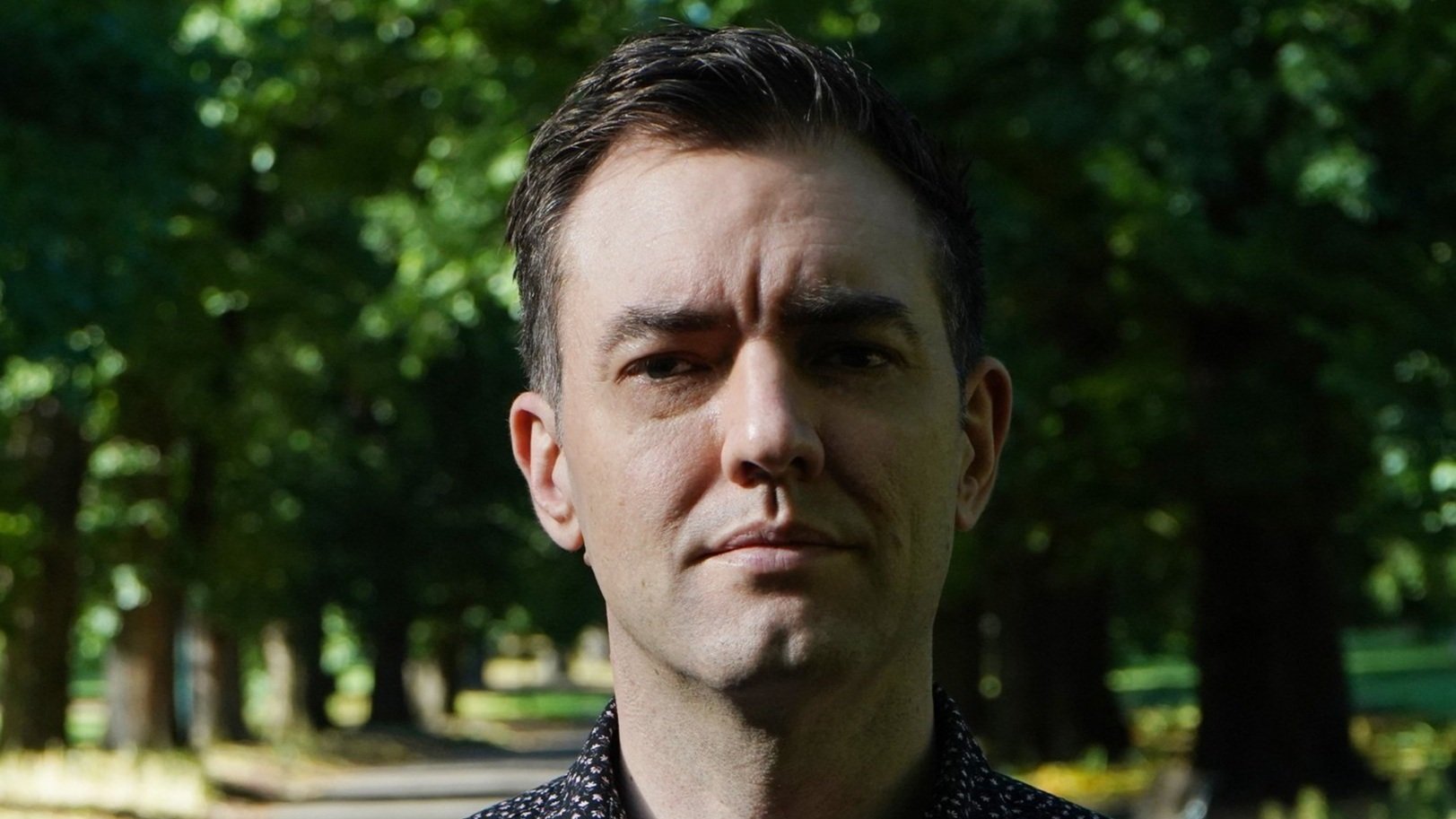
ABOUT THE AUTHOR
A W Hammond was born in South Africa and emigrated to Australia as a child. He has a nomination for the Ned Kelly Award for Best First Crime Novel.
He works at RMIT University and lives in Melbourne with his wife and daughters.


0 Comments