




A young woman is seduced by the glamour of the circus and drawn into dangerous world of violence, cruelty and revenge. For readers of Erin Morgenstern’s The Night Circus and Helen Oyeyemi’s Mr Fox.
Read on for an extract from The Lady. the Tiger, and the Girl Who Loved Death by Helen Marshall.
**********
 In the Beginning

1
“ There is light. At least that’s how the story goes, isn’t it, my love?”
And in the Beginning
2
The girl follows the road past the hidden sunflowers. It was her husband who showed them to her, a field of dry earth that would blossom like cloth-of-gold in the height of summer. Dead now, he must be, though she hasn’t seen his body. Her name is Sara
Sidorova; she is 18 years old and a widow already.
Days pass as she searches the wildwood for his remains. She marks the hours as the sun rises in glory, then sets in a blue gloom. Birch and alder line the dusty track that brought her this way. Skeleton trunks. Alder is good for sleeping, she knows. Feliks taught her that. Before they were married, they’d lie beneath an alder as high as a steeple, listening to waxwings and bluethroats. Now she cares only for the shriek of the mourning birds, her guides in this terrible business.
She knows these woods well, all this beautiful, terrible sliver land. Mountains in the west, the impassable spine between this little world and the next. The lakes, the coastland, wild and dark, the plains, then the forest, the killing zone, and beyond it the border. Nothing here is easy. In Strana, her people say: We are small but we will make you bleed. We are the bone that will choke you if you try to swallow us. Her people say: We are invaded but it will cost you to take us.
Strana. Country.
If this thrice-tenth nation had another name once they have forgotten it as they have forgotten so many things.
She stumbles on, her clothes shredding to rags, her feet bloody, her painted nails gone wretched as talons. On the fifth day she discovers a body in the woods – not her husband. This one is too old, over 40. Tawny hair, thinning near the crown. Big shoulders, a big man. The hole in his woolen gymnasterka seems smaller than a thimble. She could dig out the bullet if she wished, but he is only so much meat now.
Still, needs must.
Sara Sidorova takes the dead man’s knife, misshapen from over- sharpening. His boots, which are too large. A week ago Captain Olender asked her to dance. Once she loved dancing. She knows she will never dance in these stolen boots, even as she hacks strips from the dead man’s uniform and stuffs the rags in her toes.
‘’Juniper, juniper, juniper, my juniper,’’ she sings as she goes about her work. ‘’Under the green pine, lay me down to sleep.’’
Then in the distance – the livid shadows of others approaching: a legion of soldiers. The dead man’s friends? His murderers? They all wear the same jackets, speak the same language, so how could she know? Sara Sidorova vanishes beyond the treeline.
Her grandmother told her a story about the devils in these woods who turn men into smoke. Remembering it, she fits herself between birches bleak as old house – invisible. She doesn’t know these soldiers but she hates them anyway. She never knew hate before, but now it’s an animal inside her.
Storm clouds gather, drench the earth, and then retreat. Afterward, Sara Sidorova trails the legion with nothing but the knife in her hands. She could slit their throats while they slept in the mud if they weren’t so watchful – but they are watchful. And for all the days she has spent learning to hold herself straight, learning never to bend, still she is too weak.
At night, she howls her grief. The soldiers huddle round their campfires, blowing warmth into their hands, pretending it’s the damp that has prickled their skin.
‘Listen, do you hear that?’ says one. Local accent. He is sixteen, maybe. Younger than her and certainly younger than the others. A stripling with a mop of pale blond hair and a delicate, pointed chin.
‘It’s nothing. The wind.’
‘Listen, I said! There’s a tiger in these woods. A man-eater. I heard it tore through a camp not far from here. Gorged itself on the captain and ate everything but his heart.’
The boy is canny but all they see is a coward. Perhaps they’ll kill him on their own.
‘Something is out there,’ he says again.
The old reflex: ‘What kind of man are you then? Are you afraid?’
Soothsayer, prorok, elf-child. Sara Sidorova doesn’t expect anyone will listen to him.
This time she is wrong. Their commander doubles the guard and no one sleeps that night. In the morning they muck out pits and whittle birch spears to lay inside. One among them knows how to hunt a tiger.
At night, she howls her grief. The soldiers huddle round their campfires, blowing warmth into their hands, pretending it’s the damp that has prickled their skin.
The girl’s stolen knife isn’t sharp enough, her body isn’t light enough. She still leaves too many tracks. She abandons them for a time to hunt for cloudberries and the tender shoots of cornflowers. She chances the mushrooms with their delicate fringed veils and wonders whether she might poison herself. If it would matter. What is she living for anyway?
The baby kicks. Her name will be Else, if it’s a girl. If it’s a boy she will have to strangle him.
She hushes her hate. Back to the road.
**********
It’s close to dawn when she makes her second mistake.
All around her, the wildwood is alive, first with warblers and rose- finches, then the rest of the noisy lot. Sara Sidorova moves through the undergrowth, letting the birdsong hide her business. But she isn’t as silent as she thinks. Suddenly, a bullet slams into her shoulder. The crack like thunder comes too late in warning.
She falls in a slow spiral. No pain, not yet.
Was this how it happened, husband? she wonders. Is this how they killed you?
Then there’s wet loam beneath her, sweet smelling. She wants to stay, sleep in her pain now death has come. She puts her thumb to the wound. Her blood is coming out in spurts, and, with it, her fury and helplessness.
The soldier boy’s face hovers over her: pointed chin, fey-blue eyes. ‘I thought you were one of them!’
Sara Sidorova doesn’t believe him. After all, she’s wearing the same jacket he is.
‘You’re just a girl,’ he says though she is older than he is. At eighteen strands of bone-white gleam in the tawny thicket of her hair.
‘I’m sorry,’ he mutters, staring at the knife. ‘Go away!’
‘If I do, you’ll die. Gangrene or blood sickness. I’ve seen it before. Why are you so dirty? Why are you so thin?’
Scarlet smears across his cheek as he tries to wrestle her up. Her belly is cramping, a deep, bleary pain that tightens and loosens. The child mustn’t come yet. Too soon.
‘Leave me alone!’ she hisses, for above all, she doesn’t want him to see the bulge beneath the jacket.
‘I’ll take you with me.’
Now she is fumbling with the blade. She can’t work her right arm properly but all she needs is a bit of cunning.
‘Who are you?’ he cries as she stabs out wildly.
She doesn’t tell him she is the circus master’s daughter.
She doesn’t tell him how loved she was in these parts once. The tiger’s wife.
Instead she whispers: ‘My name is Baba Yaga and I’ll eat you if you stay. I’ll chop up your flesh and grind up your bones. I’ll put a candle in your skull and hang it from my belt as a lantern.’ The knife point scrapes his thigh bone and he staggers away in fright. So young. She almost smiles. Dragging his poor limbs like that, leaving a trail of gore. She’ll find him later if she must.
For now, soft needles beneath her and the world going dark. Noises in the forest, the silken swish of something out there moving. Two golden eyes, like two bad moons. The pale curve of teeth.
‘Hush now, my love. I’m with you,’ says the Tiger.
‘It’s you then, is it?’ asks Sara Sidorova. She feels as if her spirit has already left her body. ‘Old man, Grandfather Death. The devil in the wood.’
‘It was you who loosed me.’
‘I told you to take them and you did. Thank you.’ Somewhere else, her breath whistles between her lips in little gasps but she is smiling now.
‘The boy was right. This wound will kill you.’
But she isn’t afraid. ‘I stuck him. Follow his blood and you’ll find a meal big enough to sate your hunger.’
‘Is that what you want?’
‘I want an ending,’ she says.
‘Good. Come away with me then,’ the beast whispers in her ear.
Sara Sidorova watches as a magnificent, curved claw drags itself through the air, which parts like the stripling’s flesh. Then there is a road – a second road, shimmering black, winding, impossible. That second road becomes a staircase, a great twined chain thrown down to the earth. Inside her the baby moves like a song. Or is it a white bird? Smoke?
Sara Sidorova doesn’t remember standing.
She doesn’t remember setting her feet upon the path, but there, it’s done.
She is walking, then rising upward. She sees the black arc of the heavens, stretched like a widow’s veil above her, the forest beneath now, then all of Strana. She imagines the trembling of small creatures.
‘Welcome, princess,’ says the Tiger.
ABOUT THE AUTHOR
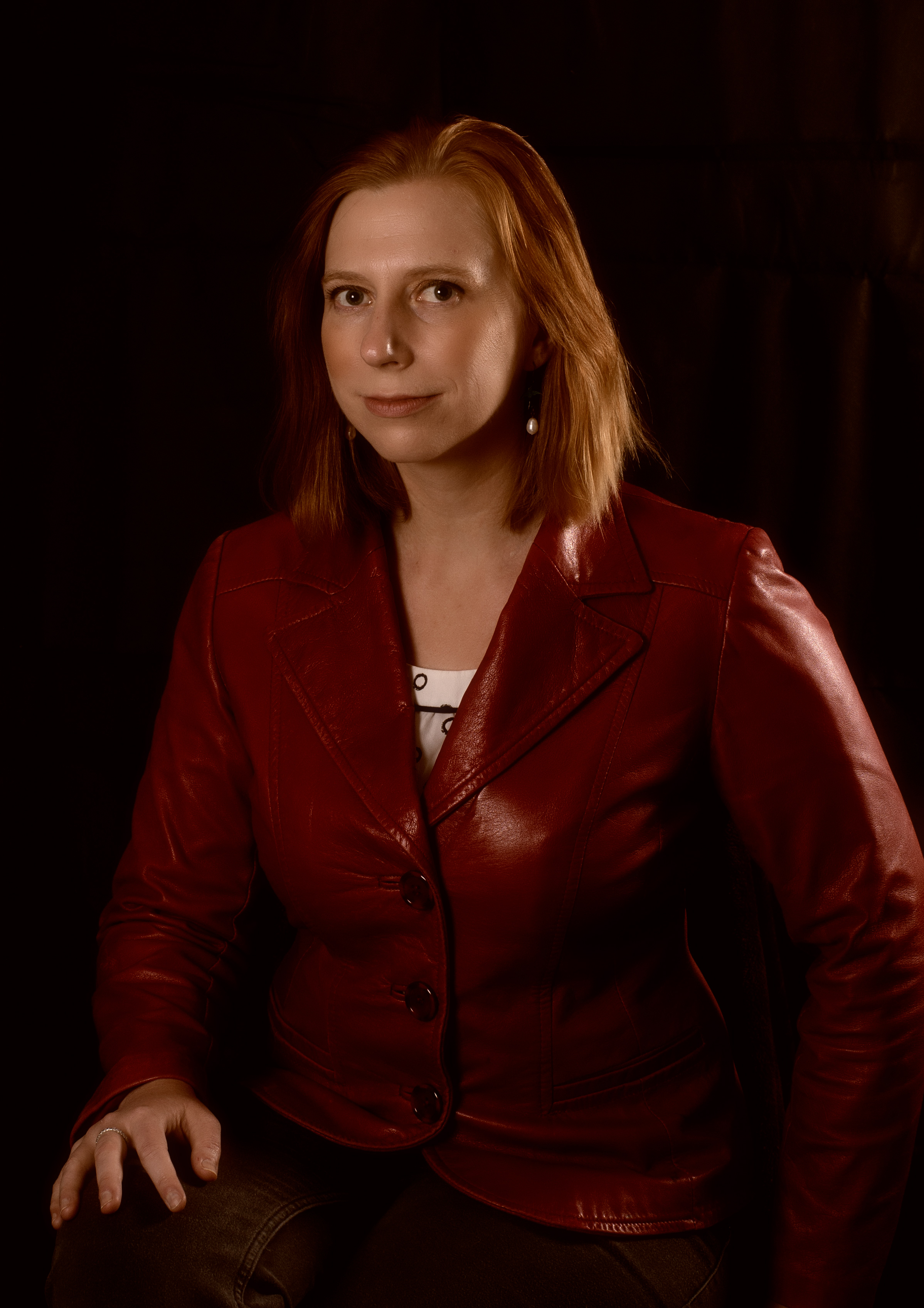
Helen Marshall is a critically acclaimed author, editor, and medievalist. After receiving a PhD from the prestigious Centre for Medieval Studies at the University of Toronto, she spent two years completing a postdoctoral fellowship at the University of Oxford investigating literature written during the time of the Black Death. She is a Senior Lecturer of Creative Writing at the University of Queensland.
Her debut novel The Migration (2019) argued for the need to remain hopeful, even in the worst circumstances. It was one of The Guardian’s top science fiction books of the year and was recently optioned by Clerkenwell Films. In 2020, it was shortlisted for the Sunburst Award for Canadian Literature of the Fantastic and for both the Robert Holdstock Award for best fantasy novel and the August Derleth Award for best horror novel by the British Fantasy Society. It was the second time in the award’s history for a novel to shortlisted for both, and the first time by a female writer.



0 Comments