

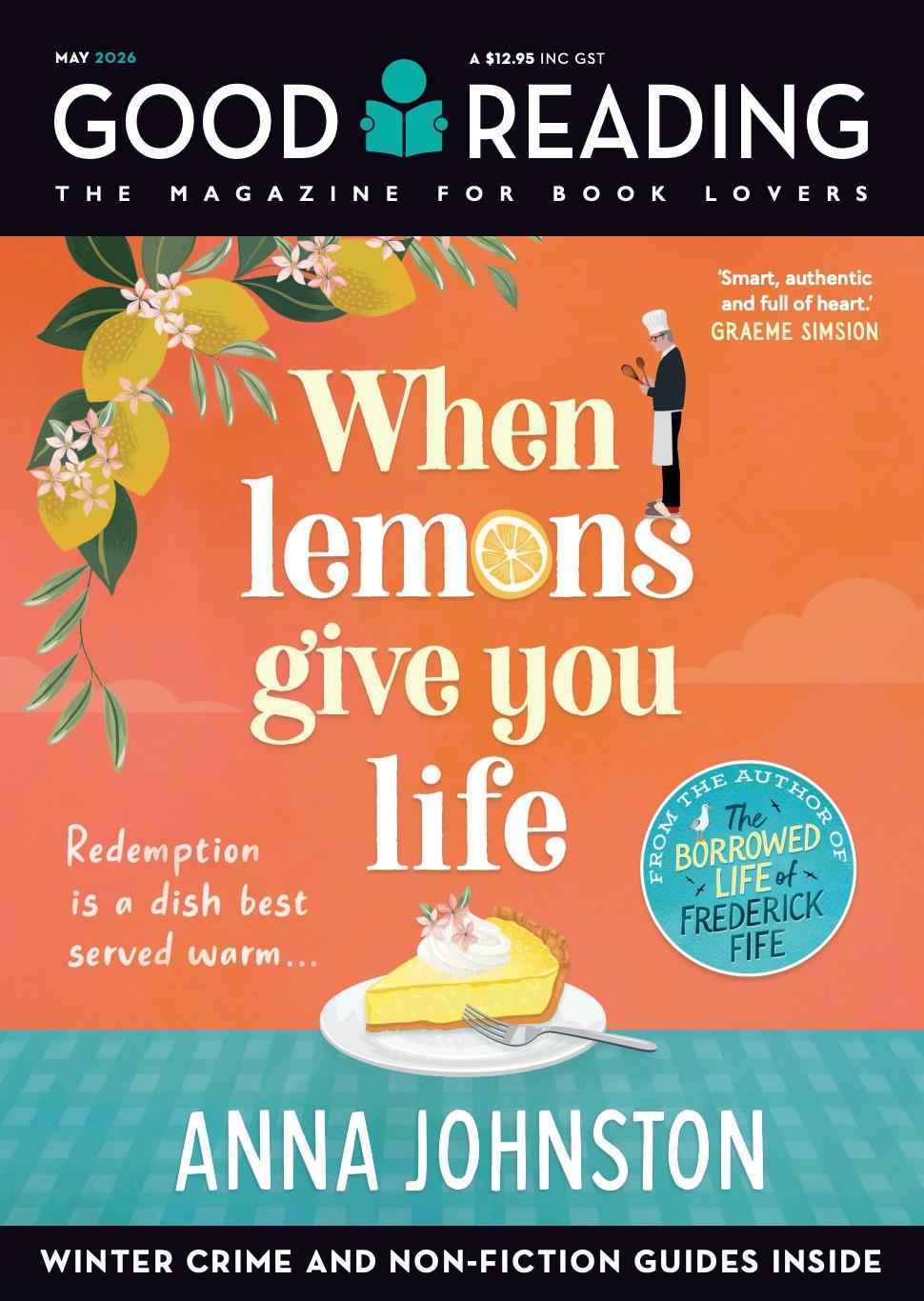


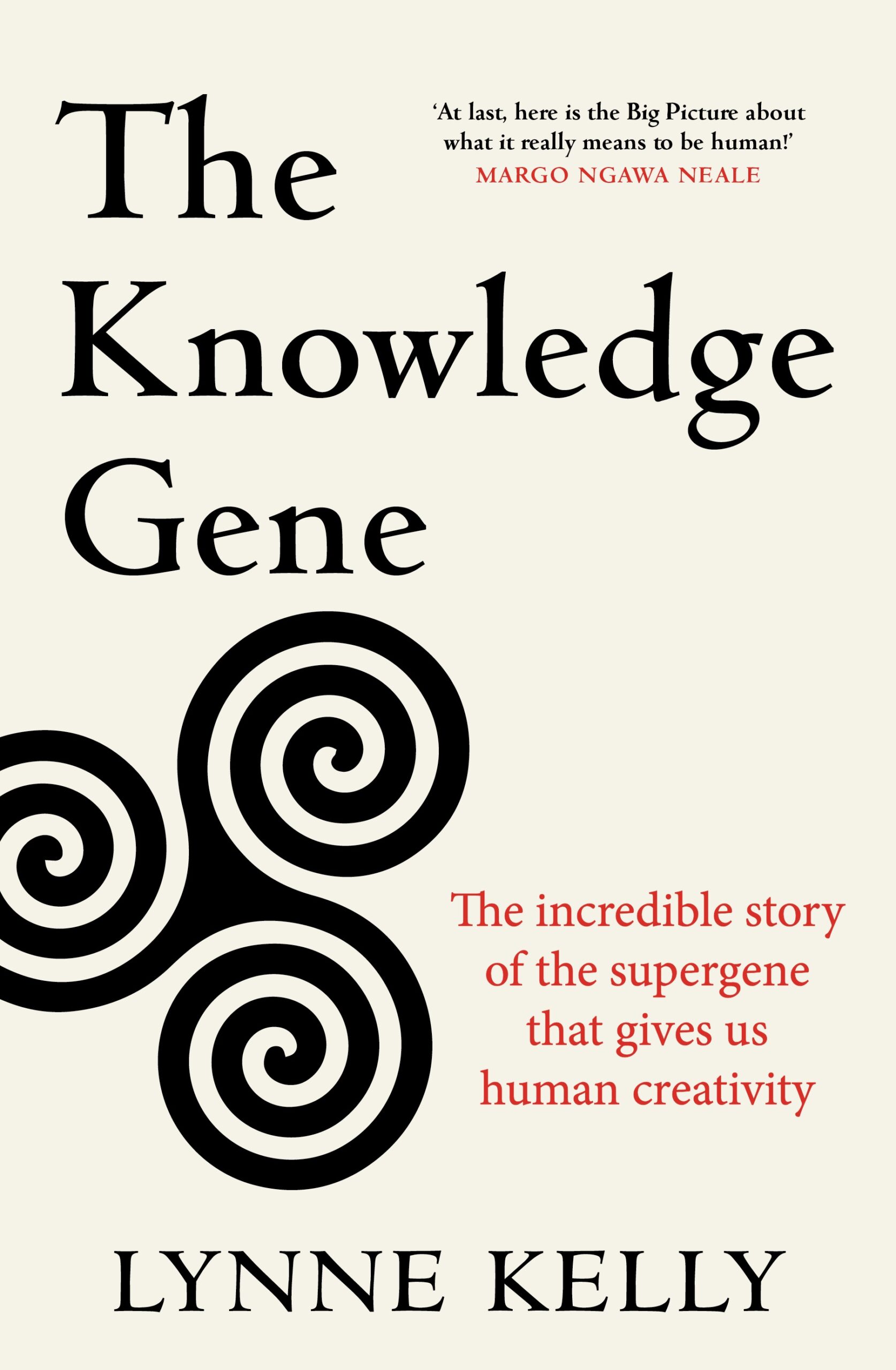
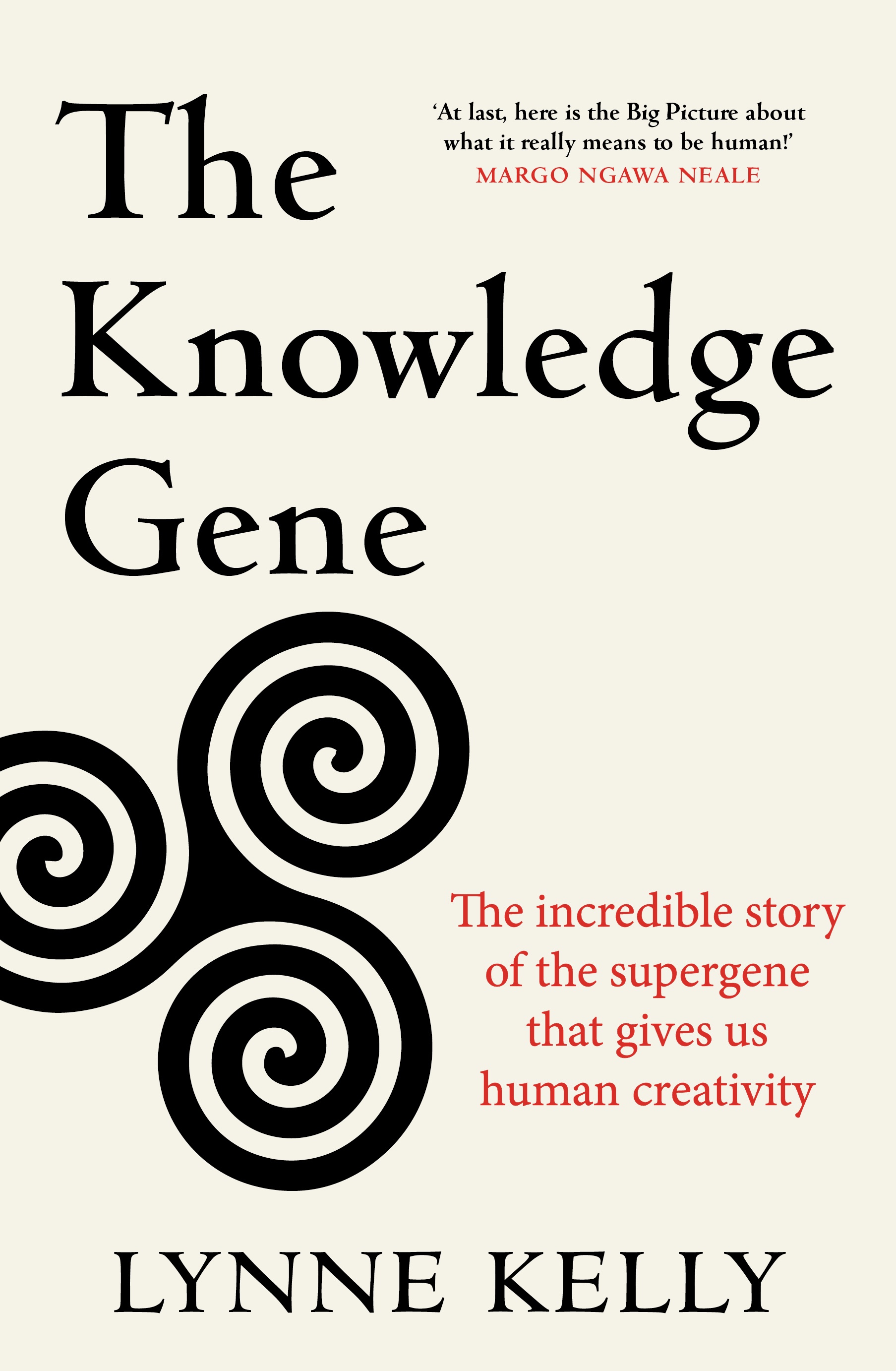
Drawing on a major discovery with tremendous implications, an Australian researcher uncovers the source of human creativity and learning in the functioning of a supergene Lynne Kelly calls the knowledge gene.
Read on for an extract from her book, The Knowledge Gene.
ABOUT THE BOOK
Over 500,000 years ago, a single gene mutated. It spread over time, becoming critical in the journey that transformed our earliest ancestors into fully modern humans, capable of navigating the entire planet and beyond.
A few thousand years ago, humans started outsourcing knowledge to writing, displacing art and music from the heart of learning.
This is the extraordinary story of a gene that makes us uniquely human. Dr Lynne Kelly recounts how a widespread congenital disorder was the critical clue she and her collaborators needed to identify this gene as the supergene that has long eluded researchers into human cognition.
The knowledge gene supercharged our ability to learn and share knowledge with others, explaining the prodigious memories of Indigenous people the world over. The knowledge gene unlocks many other puzzles too. It explains for the first time why humans are the only species to make art, offers new insights into the earliest music and storytelling, and discusses the cognitive strengths of neurodivergent people.
The Knowledge Gene shows that we can all access the full power of our memories, without giving up any of the advantages of writing and technology. The implications for learning and creativity at any age are profound.
**********
Knowledge makes us human
You belong to the only species that can learn and share what you have learnt in ways that create an ever- growing encyclopaedia. We can constantly learn and adapt by drawing on new information without losing what we have already learnt. That has given us an advantage over every other species – an advantage we have not always used well.
Our closest relation genetically, the chimpanzee, does not produce art, does not perform music, does not tell stories and debate philosophy, and has not adapted to environments beyond its natural habitat. The differences between us and chimpanzees are in our genes, within the 1.2 per cent of coding DNA that separates us from them.
This book is all about a mutation that separated us from the chimpanzees hundreds of thousands of years ago and supercharged our ability to store information in our uniquely human way.
You have two copies of this ancient mutation, but it isn’t an entirely rosy story. This mutation also introduced the potential for a devastating disorder, one that has never been recorded in chimpanzees. Given that risk, what was so valuable that evolu- tion left this mutation in our gene pool in the first place?
Only very recent discoveries can answer that question. And it’s the story of those discoveries that this book will tell.
In September 2021, my life was blissfully full: I was starting new projects, consolidating old ones and tying up innumer- able loose threads. The last thing that I needed was that email, that new word.
The time had come to indulge in all the treasured plans impatiently waiting on the backburner. During the previous decade, I had become fascinated by the way Indigenous knowledge keepers managed to remember so much informa- tion about their environment when, right through school, I’d struggled with anything that relied on memory. My logic was strong, so mathematics was a dream. My memory was pathetic- ally weak, though, so foreign languages were impossible.
How could Indigenous Elders possibly achieve their incredible feats of memory? Despite the distinct nature of the many Indigenous cultures around the world, they all use remark- ably similar methods to recall vast amounts of information. They have memorised the names and uses of thousands of plants and the behaviour of every animal in their traditional lands, including even the multitude of insects. They could navigate hundreds of kilometres and name all the stars. They knew their relationship to every person in their community and beyond, and to every place within their landscape. They maintained laws and ethical expectations, songs, dances and stories. And it was all kept in their memory. How the hell did they do it?
Over a decade after first asking that question, I had written a doctoral dissertation and five books on the topic. I was enthralled by the methods they were using. I had started experimenting with the techniques and was shocked at how effective they proved to be. My natural memory was still poor, but I could now train myself to memorise almost anything.
So I did. Every country in the world, a timeline for all of history, a field guide to all 412 bird species in my state, a thousand digits of pi . . . I kept getting excited about new experiments and different methods. I took on French, having failed it at school. And when I found that even that was within my grasp, I decided to take on my ultimate challenge and learn Chinese. I enrolled in French classes, live and online. I enrolled in Chinese classes, live and online, and started sessions with a friend who had spoken it since she was a child. The memory methods used space, large spaces across the landscape and small spaces in handheld memory devices. I had over ten kilometres around my neighbourhood mapped out and encoded with the minimum I needed to test the methods. I had already memorised lots of information, but I wanted to fill my memory spaces with all the data I’d carefully copied and pasted in my numerous notebooks. I wanted to layer these memory spaces with more and more complex information,
the way Indigenous Elders do.
The methods use art in wondrously varied forms. I had created a few mnemonic artworks to test the effectiveness of this, but there were so many more scribbled plans in yet more notebooks. I had become obsessed with Chinese handscrolls, a painted narrative form that seemed to me to be cognitively the same as Australian Aboriginal sand talk. I planned scrolls telling stories of birds and of Shakespeare. I bought art materials. I set up my studio, moving the tools of my writing career aside to make room for paints and paper. I enrolled in art classes, drawing and painting live, and calligraphy online. I spent the most exhilarating time with my new mentor, a 101-year-old artist who is still painting and still exhibiting. I knew I would learn a lot more from her than just about watercolour.
And I wanted to know more about music, especially as rhythm is so critical to non-literate knowledge systems. Indigenous cultures all engage with music. The Northern European Sámi drums are covered in markings that look very like the mnemonic marks I had studied elsewhere. Being close to tone-deaf, I had put my music experiments on that rather overloaded backburner and hadn’t even started making notes. Western music sounds so different from Chinese, and then there’s Indian and African. Yet every culture I had explored used music as a fundamental tool in their way of storing knowledge. Why was the use of music universal and yet the sound of it was not? My lack of engagement with music was holding me back, and this was something I was going to fix. I had taught the physics of music often but had little experience of the real thing.
So I started on a music course with the help of an opera- singing, physics-loving friend. Opera is a narrative form, so it seemed relevant. But I really didn’t like opera. Still, I was willing to endure it for the sake of my research. I watched La Traviata. It wasn’t as bad as I had expected. And the second time through, it was actually quite good. By the third time, I was besotted.
I tried The Magic Flute. Early on there is a trio of women screeching, and then the Queen of the Night screeches even more. I skipped the screeching because I was starting to love the rest. But to engage properly, I told myself, I had to endure, so I stopped the skipping. By the third time listening to the screeching, those arias had become my favourite pieces of music. I didn’t know what was happening to my brain, but in my year of bliss, I was going to try to work it out as I explored different sounds and rhythms from across the world.
In my previous books I had shown how ancient monuments the world over, from the European stone circles to the amazing mounds across the Americas, the Pacific islands statues and the Australian painted rock shelters, were all designed in ways that would enhance the storing of knowledge. There were so many more monuments across Europe that seemed to conform to the same pattern, but I had yet to analyse them properly. I was most excited about the Scandinavian Neolithic stone ships; I just needed time to go through the archaeological reports. And there were drawings of stone circles in India in a really old book I’d found but never had the time to read. More notebooks listed hundreds of other sites that were demanding my attention. And I des- perately wanted to give it.
I had stopped training for memory competitions. A few years before, I had taken out the Australian senior memory championships. I admit, there weren’t many people competing in the over-60 category, but I had won. Twice. I wanted to train again.
There were only 24 hours in the day, but every one of them, less a few for sleep, was to be filled to overflowing with things I longed to do.
And yet all the time I had a sense that there was something more, that I was only glimpsing the potential of the memory technologies that I had identified. I felt that there was a much broader and more ingrained potential, but I had no idea how to find it.
A message, among many that day, was the catalyst, sending me on a journey that would far outstrip anything I could have imagined.

0 Comments