


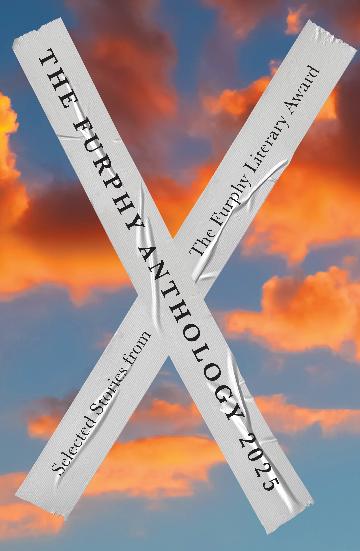
The Furphy Anthology 2025 is a collection of the top 15 stories short listed for the 2025 Furphy Literary Award. These are the best of the best, a celebration of the most promising writers in Australia this year.
Read on for the winning story – The Eulogy Business by SERENA MOSS.
ABOUT THE BOOK
 The best of the best! We are overjoyed to present our sixth edition of the Furphy Anthology, comprising short stories selected by a well-versed panel of judges.
Chosen from more than 750 entrants in the Furphy Literary Award 2025, this anthology is a celebration of the most promising writers in Australia this year.
The tales are about us and all we embody. They cover the diversity of life in Australia with themes of memory, life and loss, childhood antics, family relationships, lost opportunities, among others. They reminisce on what made us and where we are now, and project us into futures as yet unknown.
These stories show Australians in all their guises, at their worst, wisest and funniest. But more than that, they entertain and enlighten. Be prepared to laugh, cry and enjoy.
**********
EXTRACT
The first time I made someone cry for money I was twenty-two and hungover, sitting cross-legged on my mum’s laundry tiles with a Bic pen and a half-eaten sausage roll. It was a eulogy for a man I’d never met – a butcher named Stan with gout, three daughters and an ‘infectious laugh’. I wrote it in twenty minutes and charged two hundred bucks.
The middle daughter cried during the second paragraph. Ugly cry, too. Afterward, she thanked me like I’d brought her dad back to life for one last hug.
That’s when I knew I was good at this. That, or I was going to hell.
I didn’t keep doing it for the cash. Not really. The money was nice – quick, clean, no taxes. But what hooked me was this one bloke. After I read the eulogy for his mum – something about her hands smelling like jasmine and Jif – he pulled me aside and said, ‘You said what I couldn’t. Like you reached in and found it.’
He looked at me like I’d done magic. Like I’d cracked open his grief and poured it back in with better lighting. That scared me.
I’d always thought I was making things up – fiction with a funeral dress code. But maybe fiction was the only way they could finally tell the truth.
That’s what made it addictive. The idea that I could write someone into being remembered the right way. That I could clean them up, frame them nicely, and hand them back to their people. Not perfect. But palatable.
The bit that made Stan’s middle daughter break? A line I made up about Stan peeling oranges at half-time and calling everyone ‘champ’. It just came out of nowhere. One of those clean little paragraphs I could pull from nothing.
After the funeral, she hugged me like I’d conjured a ghost. I went home and vomited in the garden. Not because of the job, because of the goon I’d drunk the night before – but, still, poetic.
I should’ve been a writer. Like, a real one. Novels, short stories, shit like that. I had a folder full of stuff when I was seventeen – poems, scenes, half a screenplay. Mum called it ‘your paper fantasy’. My old man said, ‘What the hell are you gonna do with that? Print money with your feelings?’ Then he died. Heart attack in the garage.
Suddenly I was ‘the man of the house’, like some pre-rolled destiny you get handed with the death certificate. So I stopped writing. Started working. Uni went out the window. I sold tyres for a bit. Did a Cert III in something I didn’t finish. Paid the rent. Paid the bills. Didn’t complain. Not out loud.
But the words didn’t leave. They just got weird. Moved underground. And when I realised I could sell them – sell the grief-shaped ones, the clean little paragraphs that made strangers cry – it felt like cheating. Or resurrection. Or both.
****
You can sell grief like furniture. You just have to know where the soft spots are.
That’s what I tell myself when I open my email each morning: grief, boxed and ready to go. People don’t want the truth. Not really. They want the story they can live with. The nice, pillowed version of the past – not the sharp edge of how things actually were.
That’s where I come in.
I charge two hundred dollars for a standard package – three hundred and fifty if they want it in twenty-four hours. Add fifty if they want something ‘more poetic’ or ‘a bit religious’ or ‘like the one from The Notebook’. I’ve had it all.
The jobs come in through word of mouth mostly – cousins of cousins, old teachers, one weird goth chick from TAFE who handed out my number at her nan’s funeral. I don’t advertise, not really. Just a Gumtree ad under ‘creative services’ that reads:
Need a Eulogy?
Ghostwriter Available.
No Judgement. Quick Turnaround.
Reasonable Rates.
Sometimes I wonder if that’s the most honest thing I’ve ever written.
***
My mum still lives in the same brick shoebox on Welbourne Street, three houses from the corner deli and directly across from a bloke named Vince who once threatened to call the council over our lemon tree. I was six when we moved in. The paint’s bubbled, the letterbox leans like a drunk uncle, and there’s always a pair of size-eleven thongs on the porch that don’t belong to anyone.
We’re Lebanese Maronite on Mum’s side. Dad was Maltese but never talked about it – said the past was ‘too European’. Mum keeps every bill, warranty and grocery receipt in a floral tin that used to hold butter cookies. Every cupboard door creaks. Every shelf holds something breakable and Catholic.
My cousin Mazen sleeps on the foldout in the study. He’s in-between jobs – again – but insists he’s ‘just taking a break before crypto rebounds’, and that he’s ‘investing’. The only thing he invests in is Uber Eats.
Every night, Mum cooks like she’s still feeding six people. Sambousek, baked kibbeh, rice with slivered almonds, stewed green beans with lamb that falls apart like memory. Half of it ends up in foil for the neighbours, the rest in plastic tubs for tomorrow. Our fridge is a map of other people’s lives – school notices from families Mum babysat for, a charity calendar with a donkey on it, a faded photo of my dad at the grill wearing an apron that says ‘Chef of the House, King of the Couch’.
When the eulogy jobs started picking up, Mum just shook her head and muttered, ‘Ya Allah, from all the jobs in the world…’
But when the payments came in and she saw I could cover the bills on time, she changed her tune. Now she leaves clippings from The Advertiser on the table – obituaries with circles drawn around the names. Sometimes just a star, no explanation.
There are stories you can tell straight, and stories you have to edge sideways.
Job #1 – Lina’s Teta
The first job that week is from Lina, a woman in her forties with hair like a steel sponge and eyes that could slice a brick. Her grandmother’s died – a proper Lebanese matriarch, ninety-two, nine kids, hundreds of grandkids, ‘queen of the kousa’ Lina says proudly. She doesn’t want the usual wail and incense routine. Wants it ‘classy’, like something you’d hear in parliament.
We meet in the food court at Castle Plaza. She brings a folder – printed emails from the family group chat, a list of ‘things not to mention’ (gambling, the police incident, that cousin who moved to Perth) and a photo of her Teta standing in front of a Hills Hoist in a black dress holding a shotgun.
‘I need it to make people cry,’ Lina says, biting into a falafel wrap, ‘but not, like, too much. Just enough that they feel guilty about not visiting more.’
I deliver the eulogy two days later. It opens with a line about how ‘some women bake love into bread – Teta loaded it into a 2 gauge’. Lina texts me a crying emoji and a fist bump. Sends an e-transfer and a voice message that just says, ‘You’re a fuckin poet, habibi’.
Job #2 – Jack’s Dad
Next up’s a bloke called Jack, who rocks up to the servo where one of my cousins works and leaves a printed letter in a Hungry Jack’s bag. No email, no call. Just the note and two crumpled fifties.
His dad, he writes, was ‘a hard man’. No quotes around it. Just a hard man. Worked the same meat-packing job for thirty-eight years. Never said ‘I love you’. Never said much of anything.
He wants the eulogy short. Direct. Like a punch.
He showed us love in the way he taught us to reverse a trailer. In the way he always checked the oil before a long drive. In the way he sat outside during thunderstorms, drinking tea and saying nothing. He was a hard man. And we were lucky to know him.
I never hear back from Jack. No thank you, no complaint. Just silence. Like father, like son, I guess.
Job #3 – Grace (fifteen), Editing Request
Grace is the one who shakes me up a bit.
Fifteen. Lost her mum. Wants to write something herself, but her teacher says it needs ‘polishing’.
She sends me a Google Doc with pink font and smiley face emojis and a line that reads, ‘Mum was my sky and my bones and my favourite taste’.
I stare at it for ten minutes. Don’t touch a word. I send it back with a subject line that just says: ‘Perfect. Read it loud and slow.’
She replies, ‘Thank u. I didn’t want it to sound like a grown-up.’
It doesn’t. It sounds like heartbreak in a girl’s handwriting. I cry in the Coles car park. Ugly cry, too.
I don’t charge her.
Job #4 – Mr Dinh
I met the Dinh family at a folding table under a carport in Woodville North, two streets from the train line, where the jasmine was thick enough to make your teeth ache. Their dad had passed – former ARVN soldier, came over in seventy-nine on a boat that he refused to talk about. Ever.
His youngest son, Henry, spoke the most. Wanted something dignified.
‘He was strict, but he sacrificed everything for us,’ he said.
The eldest daughter sat with her arms crossed, eyes hard. She hadn’t spoken to her father in eight years.
‘Tell the truth,’ she said. ‘He scared us. He made everything heavy.’
The mother just poured tea.
I wrote two versions – one soft, one raw. Gave them both. Told them to choose.
They spliced them. Picked from each. I heard it read later and it sounded like a family forgiving itself.
Job #5 – Ava and Belle
Belle emailed me three sentences. Her partner Ava had passed. Cancer. Mid thirties. Wanted a eulogy that sounded, ‘like her – bit bogan, bit poetic. Swore too much. Made killer lasagne.’
They’d been together since 2014. No kids. One dog. Matching tattoos.
Belle didn’t want to read it herself. Asked her sister to. I sat in the back of that service in Port Adelaide, near the exit, listening to a woman in a pantsuit say, ‘She was the first person who ever made me feel like being seen wasn’t the same as being judged’.
I thought, this is what we’re here for; this is why we speak.
***
Some days it feels holy. Other days it feels like scamming grief out of strangers.
There was a woman once – maybe early fifties, hair like wet steel wool – whose husband had died after a long cancer thing. She sent me all the details, every little thing, right down to the kind of slippers he wore in the hospital.
I sent her back a draft. One of my better ones, I thought. Beautiful. Clean. Story-shaped.
She replied with three words: ‘This isn’t him.’
Then a second email: ‘This is what you think grief should sound like. But it’s not ours. It’s yours.’
I didn’t reply. Just filed her message into a folder on my desktop called Cold Water.
I read it every now and then when I start to believe my own rhythm too much. Sometimes I wonder if she was right. If all I’ve done is get good at dressing my own wounds in someone else’s language. If I’m not a writer – just a grief leech with spellcheck.
But it pays. It pays better than tyres, or call centres, or retail. It lets me buy Mum groceries, put petrol in the Corolla, give the illusion I’ve made something of myself.
‘Your cousin became a dentist. You write sad stories for dead people,’ she says, not unkindly, just as a fact.
From time to time, I wonder what my dad would’ve said, if he’d lived to see this. If he’d heard one of the eulogies and said, ‘That one sounded real’.
Then again, he didn’t believe in poetry. Said it was just ‘feelings dressed up to beg’.
**********
ABOUT THE AUTHOR
 Serena Moss works in real estate and is an aspiring author. She is the winner of the 2025 Furphy Literary Award, worth $15,000, for her short story ‘The Eulogy Business’.
She was shortlisted for the Fremantle Press 2025 Fogarty Literary Award for her manuscript Wreckage.
Follow Serena Moss on Instagram
0 Comments