



Since 1994 MALCOLM KNOX has written for the Sydney Morning Herald and has won three Walkley Awards and a Human Rights Award. He has written numerous novels as well as non-fiction books, including Boom: The Underground History of Australia; From Gold Rush to GFC, which won the 2013 Ashurst Business Literature Prize.
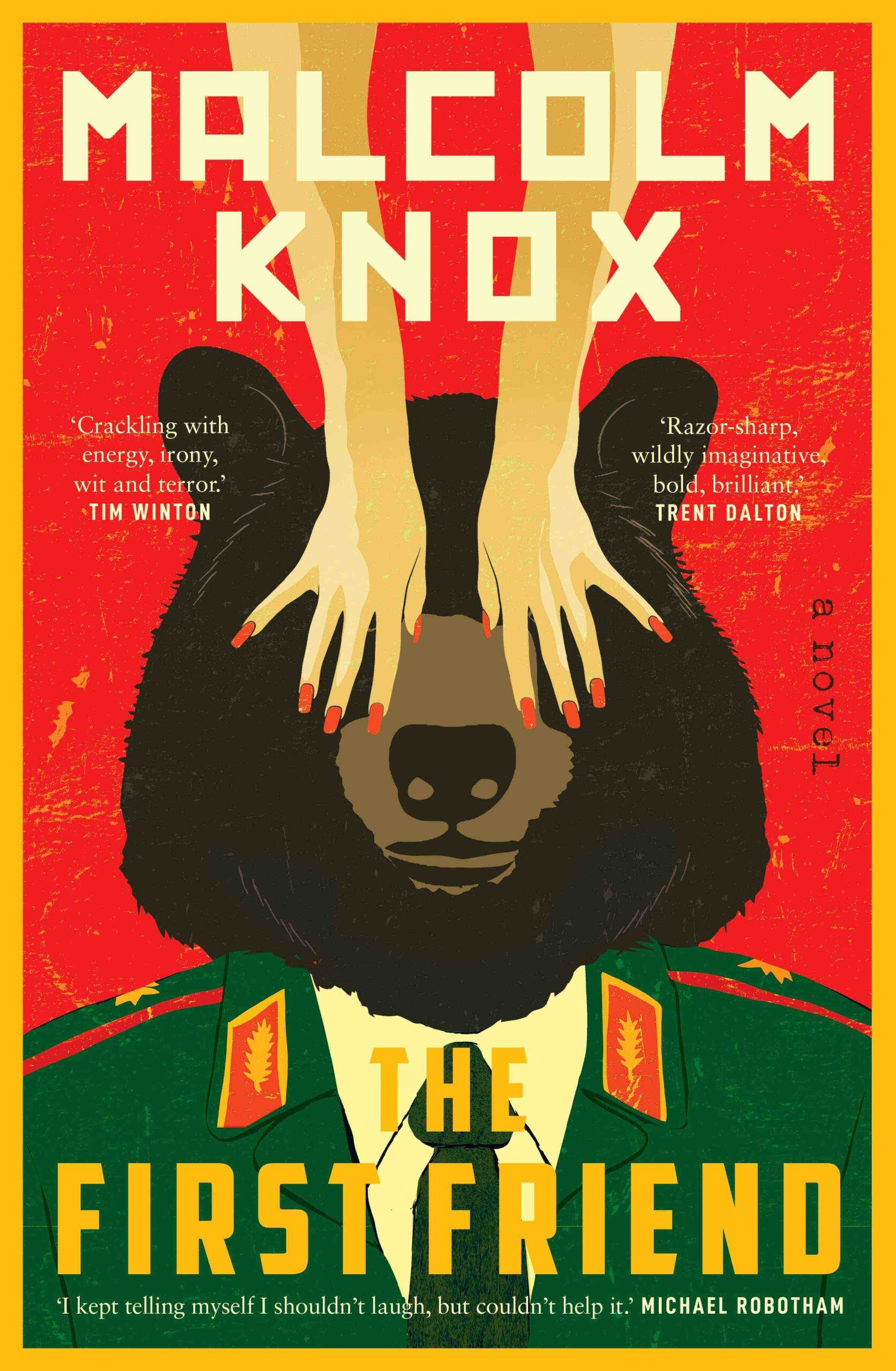
Michael Robotham said of Malcolm’s Knox’s latest book, The First Friend, that it is ‘Bleak, intelligent and fearsomely well-researched – I kept telling myself I shouldn’t laugh, but couldn’t help it.’
Read on for an extract …
ABOUT THE BOOK
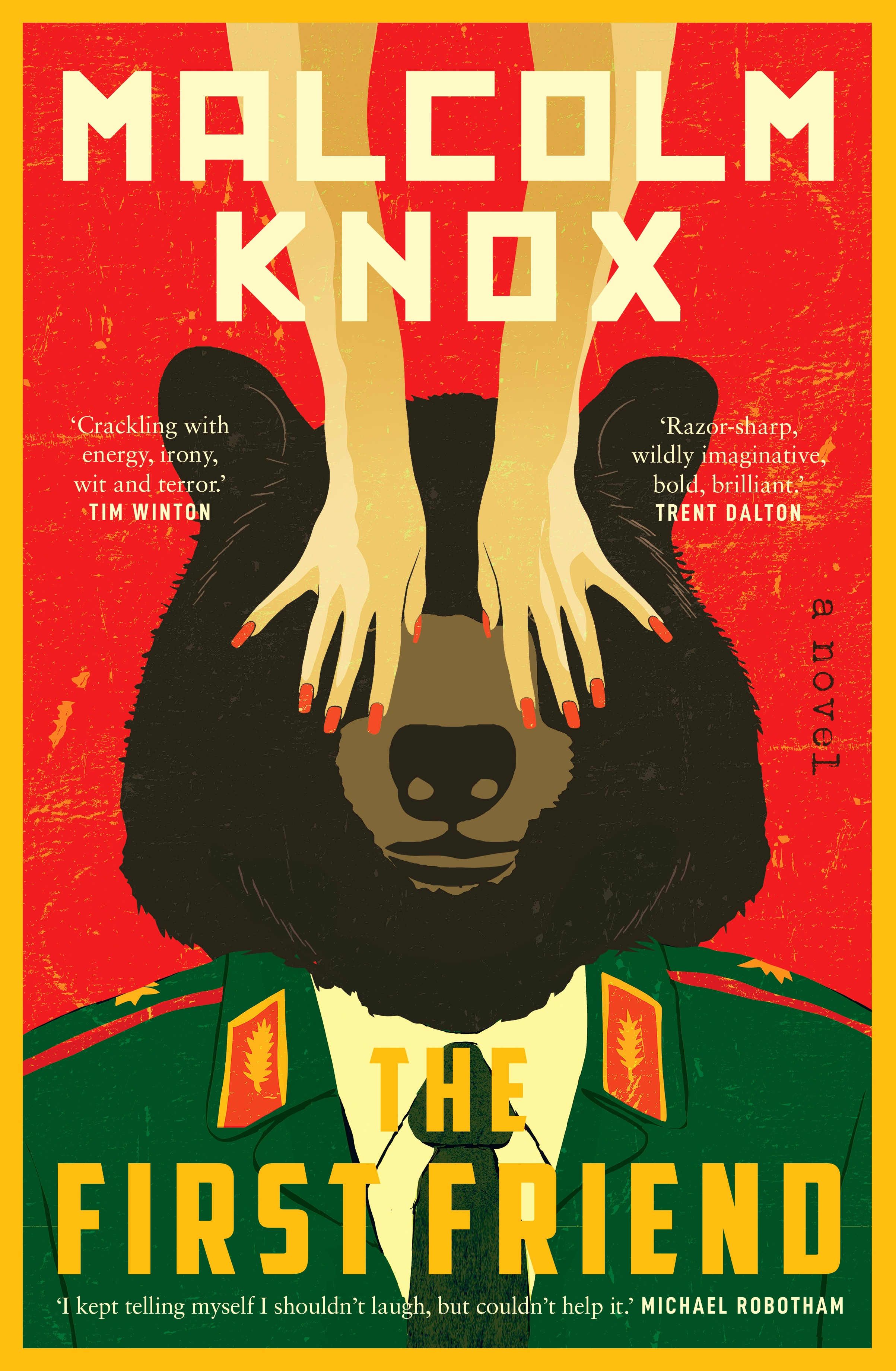 Even the worst person has a best friend.
A chilling black comedy, The First Friend imagines a gangster mob in charge of a global superpower.
The Soviet Union 1938: Lavrentiy Beria, ‘The Boss’ of the Georgian republic, nervously prepares a Black Sea resort for a visit from ‘The Boss of Bosses’, his fellow Georgian Josef Stalin. Under escalating pressure from enemies and allies alike, never certain who he can trust, Beria slowly but surely descends into dark murderous paranoia.
By his side is his driver and right-hand man, Vasil Murtov, Beria’s closest friend since childhood. But to be a witness is the most dangerous act in this world; Murtov must protect his family and play his own game of survival while remaining outwardly loyal to an increasingly unstable Beria. With the action moving between Moscow and Georgia, the tension ramps up as Stalin’s visit and the inevitable bloodbath approaches. Is Murtov playing Beria, or is he being played?
The First Friend is a novel in a time of autocrats, where reality is a fiction created by those who rule. Reflecting on Putin’s Russia, Trump’s America, Xi’s China and Murdoch’s planet Earth, it is at once a satire and a thriller, a survivor’s tale in which a father has to walk a tightrope every day to save his family from a monster and a monstrous society. Where safety lies in following official fictions, is a truthful life the ultimate risk?
EXTRACT
Vasil Anastasvili Murtov and Adam Adamashvili Adamadze sat in the black Emka on the lawn rippling from the basement of the shingled two-storey beach house all the way down to the Ureki seafront. Murtov had parked the car facing the house so they could be ready and undistracted by the Black Sea wind swells reflecting a sun that shone, dangerously, from outside the Soviet Union. Since 1937 you could be sent to the other world for showing too close an interest in foreign bodies.
The wind was building and swinging from the west. The midday onshores ruffled the pines. The black magnetic sand on the beach trembled beneath the gusts like a drying bedsheet.
Murtov was wearing a faded green state security tunic and blue trousers that had fretted in the crotch, a tear from wear. His hair was a tight number one military shave growing out in a horseshoe from ear to ear. He weighed ninety-two kilograms and was developing cellulite on his arse and middle, which Babilina had teased him about and, no matter how he starved himself, he couldn’t shift. Chewing gum, the thinking man’s snack, staved off his midday hunger. He unwrapped a stick and slid it between his lower jaw and the inside of his cheek, taking a moment to savour the dissolution of the sugar dust before the confection became a wad of tasteless fact. With the tip of his tongue he flipped it between the third and fourth teeth on his right-side jaw. Why he always began with the right side, every mouthful of every food, Murtov could not say. His comfort zone for food. In this job, in this life, if you couldn’t forgive yourself one comfort zone you were truly fucked.
He glanced to the passenger seat. AAA had to be twenty-one max. His black hair was cut in a mid-fade with a solid quiff and some sort of bespoke design at the part. The smell of his hair oil filled the car. A scarred border of neck acne poked above the collar of AAA’s embroidered red Ukrainian shirt, a garment in fashion among the Post-Revolutionary young who preferred it to the traditional Russian kosovorotka. They had begun wearing it when The Steel One’s rush to rural collectivisation had starved millions of Ukrainian peasants in a war that was undeclared yet historically necessary. Omelettes break eggs, if indeed any eggs had been broken, which officially they had not. The fashion for the shirts was somehow both a celebration and a denial of the fiction.
AAA wore low-cut leather shoes without socks, and in the footwell his serge trousers rode up to reveal a racially ambiguous skin tone. In Pre-Revolutionary days, the first question Murtov’s father would have asked about AAA was: ‘Where’s he from?’ Hard to say; somewhere between Abkhazia and northern Asia, one of the Stans, or Jewish–Chinese with one Egyptian grandmother and another from Vladivostok. This kid had all eleven time zones in him. You couldn’t tell anymore. More important: you couldn’t ask.
Murtov checked his wristwatch. Too early to worry about time, but his blood pressure had been here before.
AAA spied Murtov’s wristwatch before he could slide it back beneath his cuff.
‘Pre,’ AAA said.
Wristwatches had been banned after the October Revolution as an imperialist affectation. Workers told the time from the electric clocks on every street corner. It didn’t matter if they had the wrong time; it only mattered that they were all wrong together.
‘Better not get caught with that,’ AAA added, condescension loaded with puritanism, the double-thick armour of Post-Revolutionary youth.
‘Who by?’ Murtov grunted. A shot of his eyes to the shingled house.
Murtov could not hide his wristwatch and AAA could not hide his face, upon which was written: You old fools, you weary simpletons, enjoy your privileges while you can, your wristwatch is ticking . . .
What was it friend Lenin had said? By the age of forty, an old Revolutionary has become an impediment.
Or was it friend Stalin?
AAA was a fidgeter. He fiddled with the radio knob, couldn’t listen to more than ten seconds of Shostakovich before he quested for something else. Fresh out of Party academy, he knew the permitted music, and if he didn’t know it he didn’t want to. When he wasn’t changing the radio station he was stroking the dash leather with its chrome and wood trim inlays, fingers sliding across the magnified glass of the tachometer dial as if they needed to substantiate what his eyes could not quite believe. AAA coddled the chrome shift knob in the shape of a hand grenade. Murtov didn’t like AAA touching the shift knob; it was Pre territory. AAA hadn’t even been born when Murtov was a family man of the wrong heritage and worried his life was over, when the boss had given him a new lease on that life. Murtov was reborn in October ’17, which made him old. Since ’37, old was as good as dead.
ABOUT THE AUTHOR
Malcolm Knox was born in 1966. He grew up in Sydney and studied in Sydney and Scotland. Malcolm is the former literary editor and award-winning cricket writer of the Sydney Morning Herald, where he broke the Norma Khouri story, for which he won one of his two Walkley Awards. His novels include A Private Man, winner of the Ned Kelly Award; Jamaica, which won the Colin Roderick Award; The Life; and most recently The Wonder Lover. His many non-fiction titles include The Greatest: The Players, the Moments, the Matches 1993-2008; The Captains: The Story Behind Australia’s Second Most Important Job; Boom: The Underground History of Australia, From Gold Rush to GFC, which won the 2013 Ashurst Business Literature Prize; and Bradman’s War, shortlisted in the 2013 Prime Minister’s Literary Awards.



0 Comments