



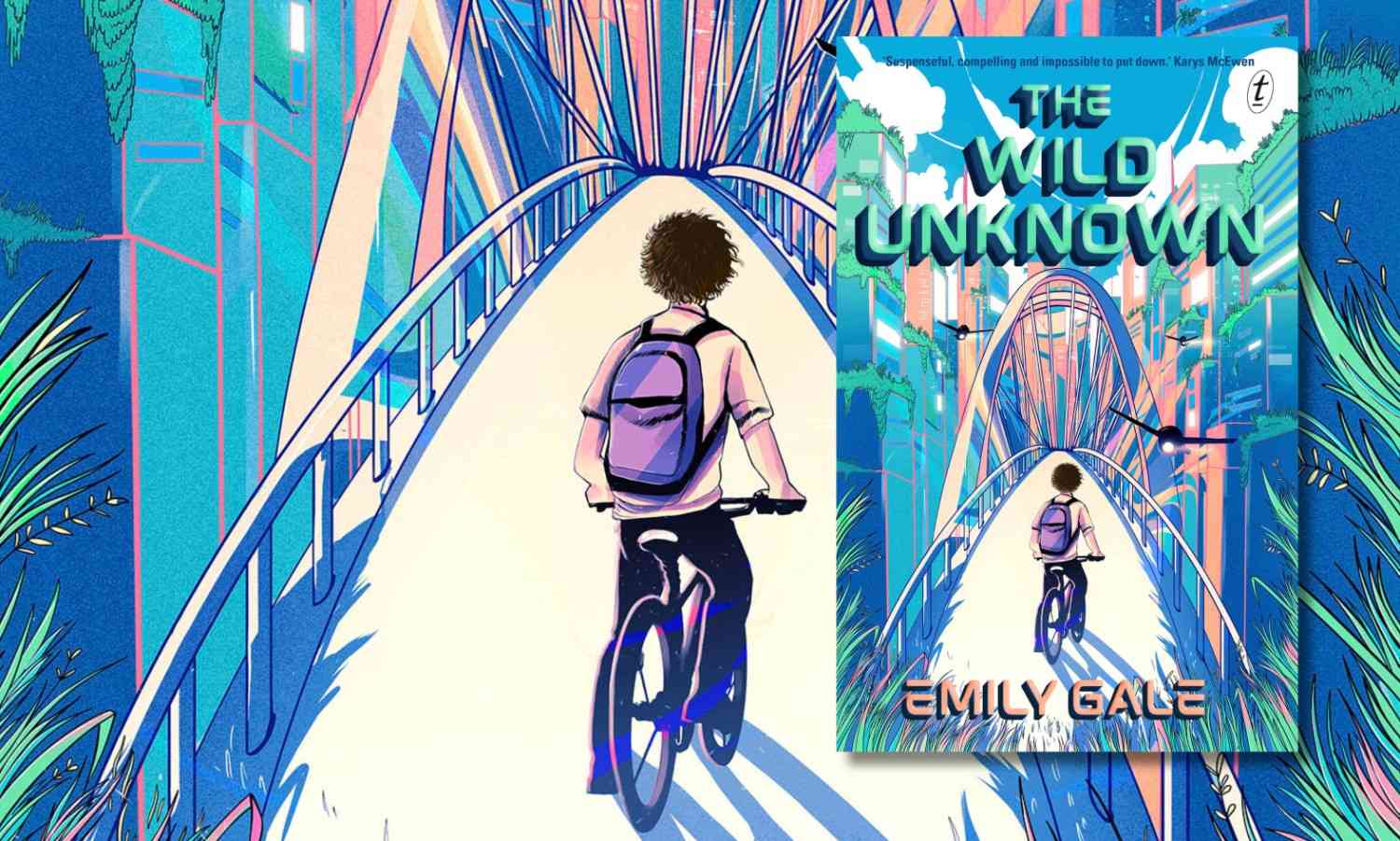
The Wild Unknown by EMILY GALE is a gripping adventure set in a near-future world. It’s 2045 and the world is full of tech, but robots can’t help the police find a missing boy – that’s up to main character Eddie.
Read on for a Q&A with the author.
MEET EMILY GALE
What inspired the futuristic world of The Wild Unknown?
This story was always about physical transformation – a boy gaining non-human attributes, some of which he’d love, some of which would bother him, and one that would terrify him. The future setting was a natural evolution from that because it gave me broader scope for every part of the story. I began with the premise that some of the ways we live that are totally normal to us now would have sounded ridiculous decades ago. That allowed me to stretch my imagination for the physical transformation – not just of the main character but other kids, too – and the mystery behind it, which two families decide to solve amongst themselves. On a personal level, I’ve always been inclined to look to the past to increase my understanding, and I wanted to challenge my usual ways of thinking as well as my creative skills by imagining the future.
Can you tell us about the world of 2045 in your novel, and how it differs from our world today?
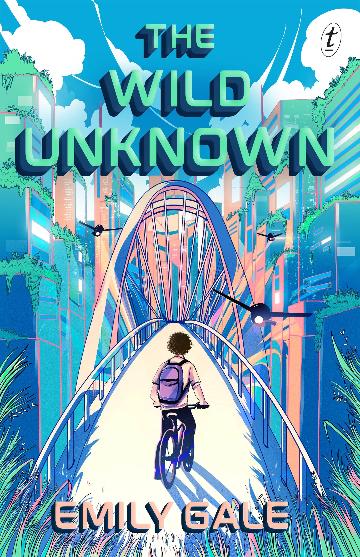 I designed a near future for Australia that my readers will be able to connect to without too many huge leaps. Some of the features exist today in other countries in some form, others are my own projections. In my story, multi-storey apartment buildings are built over the top of older housing to cope with the growing population, and covered in plants for urban heat mitigation. There are high-speed rail networks all over the country, the city rail system is autonomous, and ordinary people talk about lunar tourism the way we now envy rich people going on a world cruise. People eat lab-grown meat, insects, or ice cream that changes flavour. In the home there are housekeeper bots, and smart scales that diagnose any physical change, and virtual windows to compensate for the shadows of high-rises. Rather than a population glued to their screens, everyone now wears a ‘mica’ deep inside one ear, through which a personal assistant bot advises them throughout the day. But many old things exist, too – my main character Eddie and his friends ride ordinary bikes. The broad guidelines for building this world were simple: exciting but relatable.
Did you research real-world science or technology when creating the various bots and devices in the story?
It was a combination of research and artistic licence, not dissimilar to writing historical fiction in that I read widely and considered many possibilities before deciding what was right for this story. Some of the devices and bots exist now but are not in wide circulation, because that’s how technological progress goes, it starts with the wealthy and gradually becomes available to the rest of society. I also researched Artificial Intelligence, gene technology, and food science.
Why did you choose to tell this story as a sci-fi adventure, and how does the genre let you explore real-life changes and challenges for boys?
This is a story I wrote with my son in mind so I thought of the qualities he’s always looked for in novels: an adventure, a fast pace, wildlife, friendship, and humour. I’d been thinking about the tension for my son at age twelve between his love of the natural world and the new allure of technology. I wanted to bring that tension to the page with high drama and high stakes. The setting allowed me to do that in a way that was quietly relatable and ultimately a lot of fun. I wanted to explore the nature of progress on a personal and societal level, so it made sense to look to the future. I was thinking about how progress involves new benefits alongside the loss of older things, and it was that duality I wanted for the theme of growing up: what we lose and what we gain.
Where did the idea for Eddie’s strange transformations come from?
It started with thinking about the discomfort of puberty, and the battle between longing to stay the same, understanding that that’s not possible, and also desiring those changes. We start to juggle all of those feelings from around twelve years old. My son always had such an affinity with animals so I started to play around with some non-human features. Speed is huge currency in primary school so I thought it would be fun if a boy who’d never been the best runner was all of a sudden amazingly fast. Sleep patterns change in puberty so nocturnalism wasn’t a big leap, but then I added the night vision of a cat or owl. As a child I always dreamt or imagined flying, so that’s where the idea of feather-like growths came from. At the same time I wanted all of this to be happening under the radar, a private transformation that gradually threatens to become public. How do you tell your parents that you’re growing feathers and can see in the dark?
 Were there any sci-fi books or stories that inspired your novel?
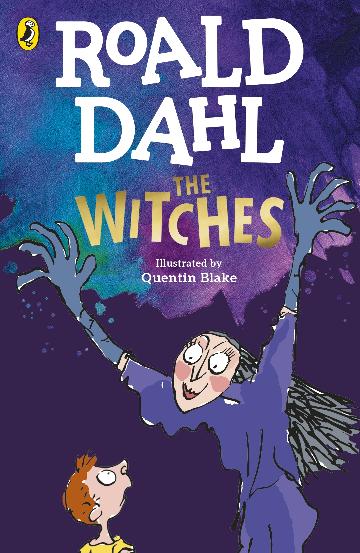
I’ve always loved transformation in stories, which can take many forms whether it’s Mrs Pepperpot shrinking, the boy turned into a mouse in The Witches, or Alice’s body changing size in Wonderland. I love that theme as a way of exploring identity and adapting to life changes. Artificial Intelligence is also a major part of the story, and as I was interested in the psychological challenges of ‘befriending’ an A.I. operating system, I was also inspired by the 2013 Spike Jonze movie Her.
What concerns you most about how technology is developing today?
I think when a significant number of the people who have helped to create a technology sound the alarm about how it’s being progressed and managed, you have to pay attention and that’s what’s been happening with Artificial Intelligence. What concerns me is how the good of humanity is deprioritised, that no legal system is keeping up with what A.I. companies are prepared to steal or corrupt to create their systems, governments continue to make weak decisions, and we do not understand what harm this may do to future generations, both in terms of psychological harm and lack of essential skills. I am not anti-technology but I am against decisions being made for society by people who lack basic morals and benign foresight, and those are the people running big tech.
What do you hope readers take away from Eddie’s journey?
First and foremost I want readers to enjoy watching the kids of the story solve the mystery. There’s a threat to kids’ bodies and souls in The Wild Unknown, and they save themselves from it – to do this they need friendship, family, community, human instincts, and curiosity, and I want those things to be seen as the triumph of the story. They use technology, too, but I want the reader to see the importance of using tech without letting it use you. I’d like to give readers a positive but questioning mindset about the near future, critical thinking about the use of AI, and belief in their own unique set of human attributes and abilities.
Read our review of Outlaw Girls here.
ABOUT THE AUTHOR
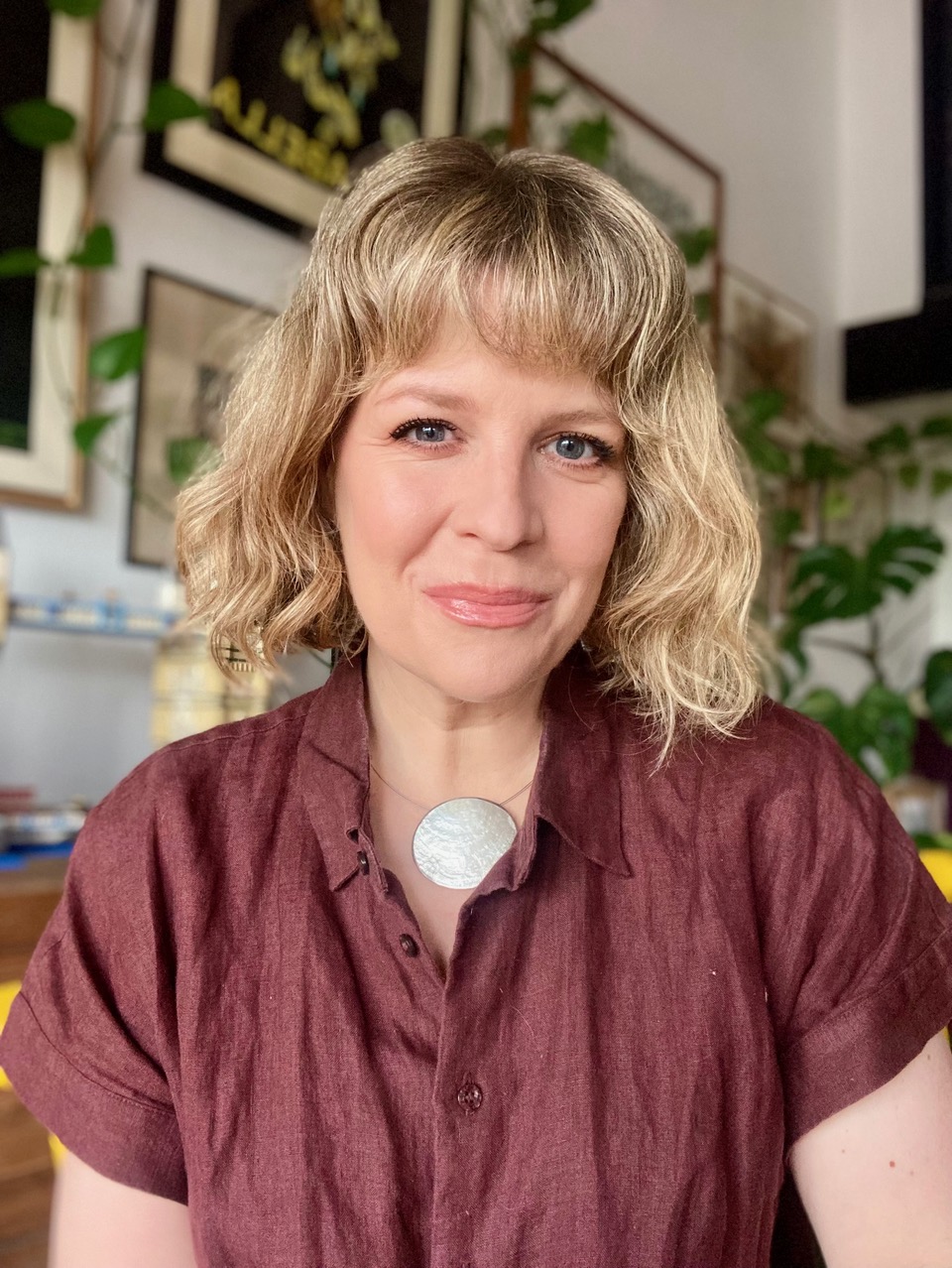 Emily Gale’s work includes the junior fiction duology Eliza Boom, middle-grade novels The Other Side of Summer, Elsewhere Girls and Outlaw Girls (co-written with Nova Weetman), The Goodbye Year, and most recently The Wild Unknown, as well as the YA novels Girl, Aloud, Steal My Sunshine, and I Am Out With Lanterns. Emily’s books have been published all over the world and shortlisted for a number of awards.
Follow Emily Gale on Instagram here.
Read more about The Wild Unknown on the Text publishing website here.


0 Comments