


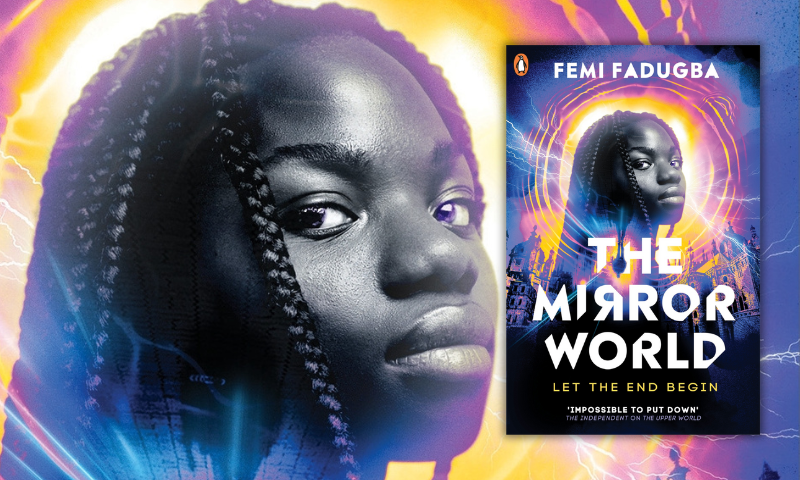
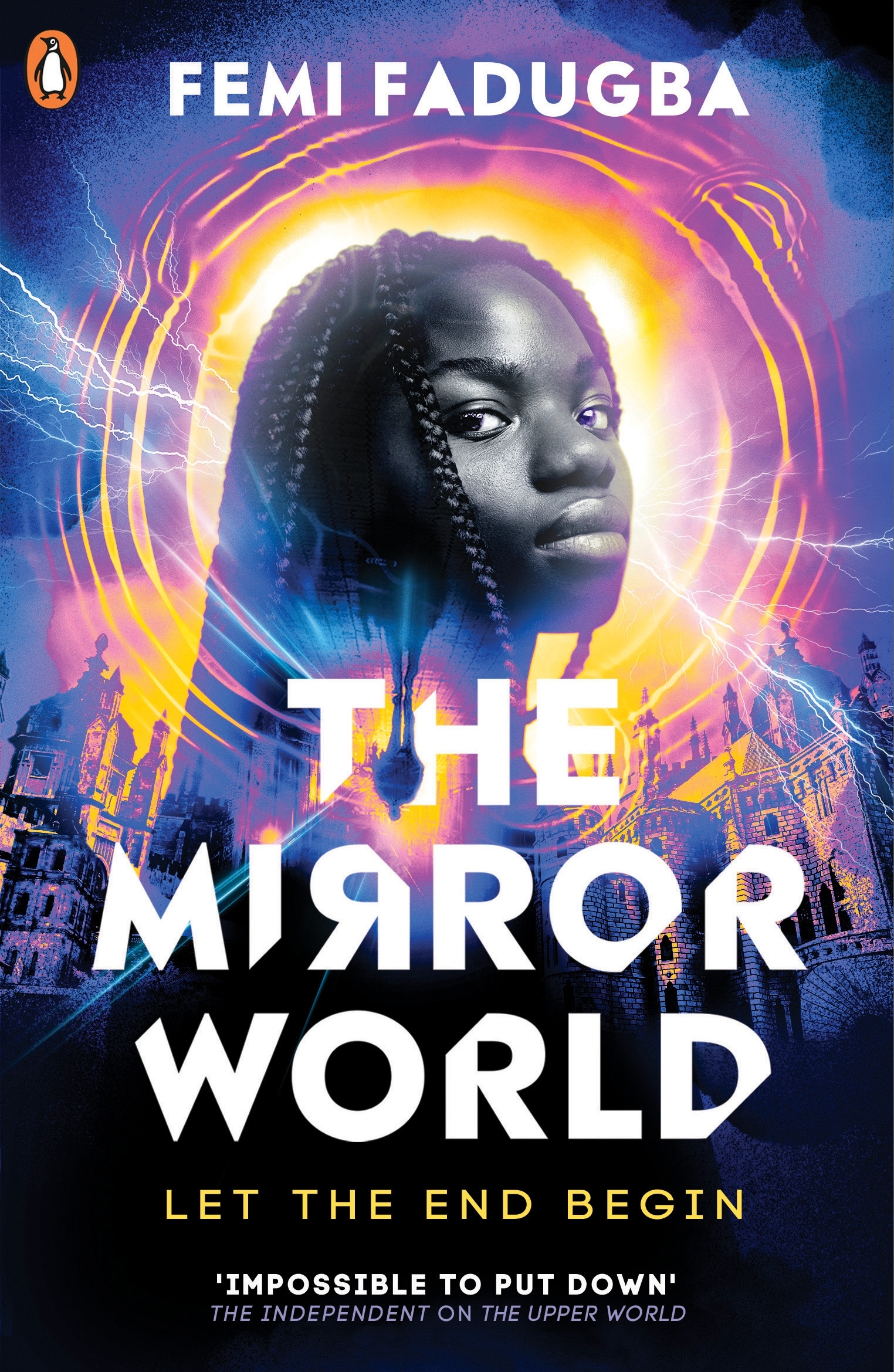
FEMI FADUGBA’s The Mirror World, is the sequel to the bestselling, critically acclaimed thriller, The Upper World, which is soon to be a major movie. Read on for a Q&A with the author.
The Mirror World is the sequel to your critically acclaimed thriller, The Upper World. What’s new for Rhia since the last book?
A lot’s new for Rhia. She’s starting uni now. She’s moving from the roads of Peckham, where she’s lived all her life, to the dreamy spires of Oxford University. And she has to (attempt) to make a new set of friends. But probably the biggest change for her is that, deep down, she’s still dealing with the fact that just a couple years ago she discovered that there’s a hidden, terrifying realm behind what we call reality, called the Upper World. Sure, the Upper World has given her power she didn’t have before, but what good is power if no one else knows about it? Or if they’d be scared of you if they did find out? She’s already an orphan struggling with identity issues and a traumatic past, and she just wants to find her tribe. So, she has to figure out what to do with this really weird and wonderful part of herself.
What can you tell us about the Ravens?
They’re the group of kids at uni that are so popular, connected and successful, that they don’t even want you to know about it. The only way power keeps its edge is by staying hidden.
In what ways have your drawn from your work as a physicist to create this world?
For my masters at Oxford, I was working on theoretical quantum computers and ended up publishing a paper on the topic in Physical Review Letters (the same journal Einstein published some of his works in). Those were the fairly early days of quantum computing, but everything’s about to kick off now. The quantum computing revolution is the natural sequel to the AI revolution that we’re experiencing today. And because The Mirror World is set in the late 2030s, I get to explore what that quantum-influenced-future might look like for gen-alpha. And in the meantime, I get to break the physics down for this generation too.
How did you go about creating The Mirror World?
With fear and trembling! On a serious note, I wrote a lot of it during the COVID years, which was a rubbish time for the world, and especially tricky for YA writers trying to summon optimism. But I think those dark days are ultimately what make the book work. It’s too easy these days to sell false hope – whether you’re a writer, a corporation, a teacher or a politician. And by the end of The Mirror World, Rhia is so fed up with living with the world’s lies that nothing but the ugliest truth can convince and save her. But the result is realer hope. The kind that can hopefully overcome the COVIDs and AI revolts of the future.
What drew you to the setting of Oxford University?
Oxford is such a wonderfully strange place. It almost shouldn’t exist. I mean, at what other place do 18-year-old uni students have to recite Latin before dinner then get their food served to them by waiters wearing bow ties? It’s a shock for a lot of the kids who go there, particularly for Rhia who’s lived in the inner city her whole life. I wanted that aggressive contrast to be one of the catalysts for her transformation in identity. It also sets up some hilarious encounters when her friends and family from London come to visit!
Oxford, like Peckham, is also a place I love. I found my intellectual identity there, plus many of my mates, and most importantly, my wife! It’s a place of privilege, no doubt. But the responsibility of privilege isn’t to hide and be embarrassed about yourself, but instead to tell the whole truth of your privilege (no matter how unfair or ugly it is) so it can have a chance to help those without much.
What was the most challenging part of writing this sequel?
Letting go of a lot of the stuff from book one. Rhia needed her own space to do her own thing after, and it took me too long to grant her that freedom.
On a personal note, this book was maybe the hardest thing I’ve ever done (way harder than that theoretical quantum physics paper I mentioned earlier!). The Upper World had such unexpected, runaway success that I felt this pressure … this expectation for The Mirror World to be that much bigger, better and badder. Ironically, everything that I wrote when I had that mindset was pants.
So, in the end, I had to take some time off (hence the delay since the last one – sorry), re-find my voice and more importantly, my motivation. At their heart, The Upper World and The Mirror World are about education. I’m a physicist who learned how to write novels so that I could give kids – who don’t even realise that part of their brain exists – a reason to give a shit about the most amazing subject in the world.
The Upper World is getting a film adaptation. What can you tell us about this?
Netflix don’t tell me much, unfortunately (I’m just the pretty face behind the operation!).
But I did have the opportunity to share thoughts on the first few drafts of the script, which meant I had the honour of working with Daniel Kaluuya, the Grand Electric production company, and the Netflix creative team. I’ve learned a lot – including that for a great film to survive birth, the right story has to meet the right vision at the right time.
ABOUT THE AUTHOR
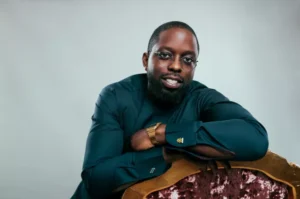 Femi Fadugba has a master’s degree from Oxford University, where he published in quantum physics and subsequently studied as a Thouron Scholar at University of Pennsylvania. Femi has worked as a science tutor as well as in solar energy and consulting. He currently lives between Peckham, London, and Baltimore, USA.
Follow Femi Fadugba on Instagram


0 Comments