


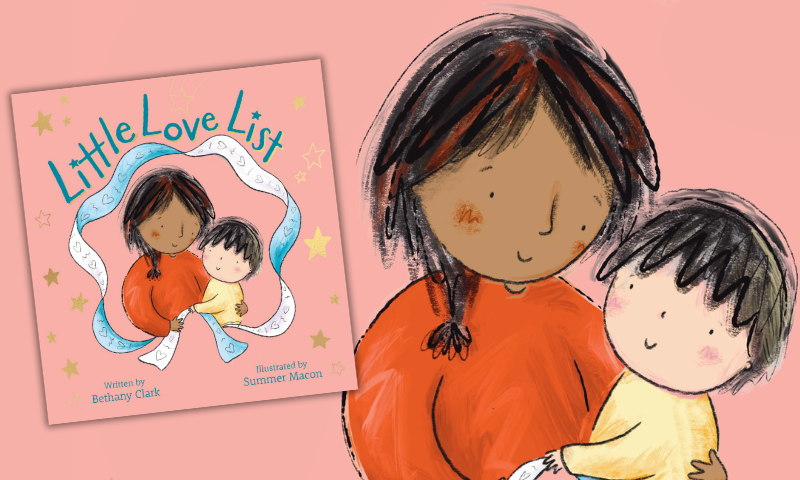
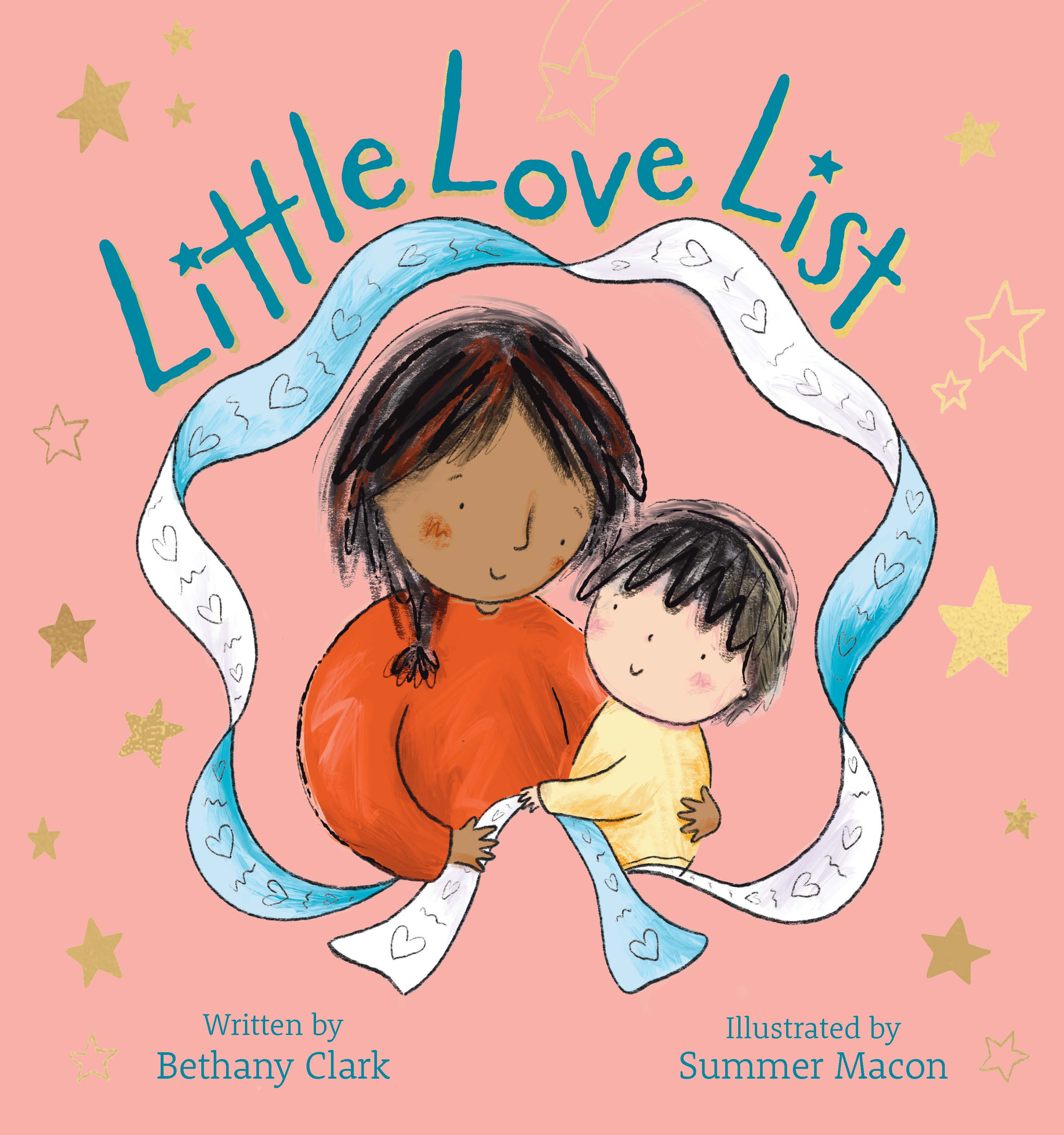
Little Love List by Bethany Clark and illustrated by Summer Macon is a sweet picture book that shines a light on unconditional love, reminding us that love is never-ending, no matter how fun or tricky the day has been. We caught up with Bethany to discuss what inspired the story.
What inspired Little Love List?
I was solo parenting my small child while my husband worked in the APY Lands. While we were surrounded by a wonderful village of family and friends, it was still a really tricky time navigating exhaustion, post-natal depression, and my son’s complete refusal to wear pants anywhere. I tried to be a ‘gentle’ parent, but I didn’t always get it right. Embracing the concept of ‘rupture and repair’, each night we snuggled in bed and I would tell him all the ways I still loved him, even when things hadn’t gone to plan or our feelings were really big and tricky. The list was ever-changing, but once I wrote it down, it quickly came together as a story that felt very personal but also universal. I can still hear his little voice asking me to read him ‘the love list one’ every night for his bedtime story.
You describe the story as capturing the idea of a ‘big emotional salad’ where different feelings coexist. What was your creative process like in translating this concept into a picture book for young readers?
Parenting is such a wild ride and I’ve been incredibly grateful for all the ways it has let me see the world through the eyes of a child again. We’ve done so many fun things, but we’ve also had lots of slow days doing simple things together like reading, playing, going for walks, or going to the park. And whether fast or slow, invariably our days were still filled with a rollercoaster of emotions. Creatively I really wanted to reflect these activities in a way that wasn’t necessarily binary, but reflected the reality of everyday life with small children. The wonderful Summer Macon was able to interpret this beautifully in her illustrations.
How do you hope Little Love List helps children understand that their emotions, whether positive or negative, do not affect the love they receive from their parents or caregivers?
I hope that reading Little Love List together will give families and their little people a gentle and fun way to start a conversation about all the ways they love each other through their own good and bad moments. Finding and holding space for each other’s feelings amongst the chaos, and normalising the highs and lows of each day with love and compassion, is such a powerful gift. I hope writing their own little – and big! – love lists together helps children to feel loved as a whole, not just for their good days.
As a mother, you created a book to help explain complex emotions to young children. What advice do you have for parents who may struggle with explaining their own emotions to their children?
Children are such little sponges who are soaking up information all the time and sometimes if you don’t explain things, they can make up their own minds and get it wrong. If you don’t feel comfortable talking about your feelings you could read books about emotions together, write your own love lists and make it into a game, or try ‘commentating’ to your children. Sometimes just pointing out the feelings they are having and giving them a name can help young children to feel more in control of their world.
As a mother, you’ve used storytelling to connect with your son. How do you think storytelling can help parents navigate difficult conversations or teach emotional intelligence?
Storytelling is such a powerful tool for connection and deep learning for all of us. But alongside the loveliness of snuggling together to read and talk, it’s especially important for children’s brain development. A super hack for parents is to know that when they tell their children stories the parts of their child’s brains that light up are those that manage language, emotions, and sensory processes. So, storytelling to your children literally builds the neural connections that develop emotional intelligence such as empathy, comprehension, and perspective. How great is that? All you really need to do to help your child develop emotional intelligence is to embrace regular reading and storytelling. And when you are connecting regularly and talking to each other, the bonus is those tricky conversations can become much less tricky.
ABOUT THE AUTHOR
 Bethany Clark is a writer and editor who after many years working behind the scenes in the publishing industry found herself as the chief manager of snacks for a small child. Her debut children’s picture boo, You’ve Got Yoghurt In Your Nostrils is a joyous celebration of the glorious mess babies create when they learn to eat, and her second picture book Little Love List shines a light on the unconditional love we have for our children, no matter how fun or tricky they can be. She lives in Adelaide with her husband and son, where she can still be found creating books in between catering continuous picnics and endless degustation menus for a myriad of small folk.
Visit Bethany Clark’s website here
ABOUT THE ILLUSTRATOR
 Summer was raised in an itty bitty town. As a child, she quickly became known as ‘Tiger’ as this is how she would sign her homework next to the many doodles covering their pages. She has decided to now go by her real name and lives in an even smaller itty bitty town (population 32) in beautiful Colorado. In the summer time (Summer enjoys the summer and not the winter) you can find her rock climbing, mountain biking or doodling on her contracts.
Follow Summer Macon on Instagram here
0 Comments