




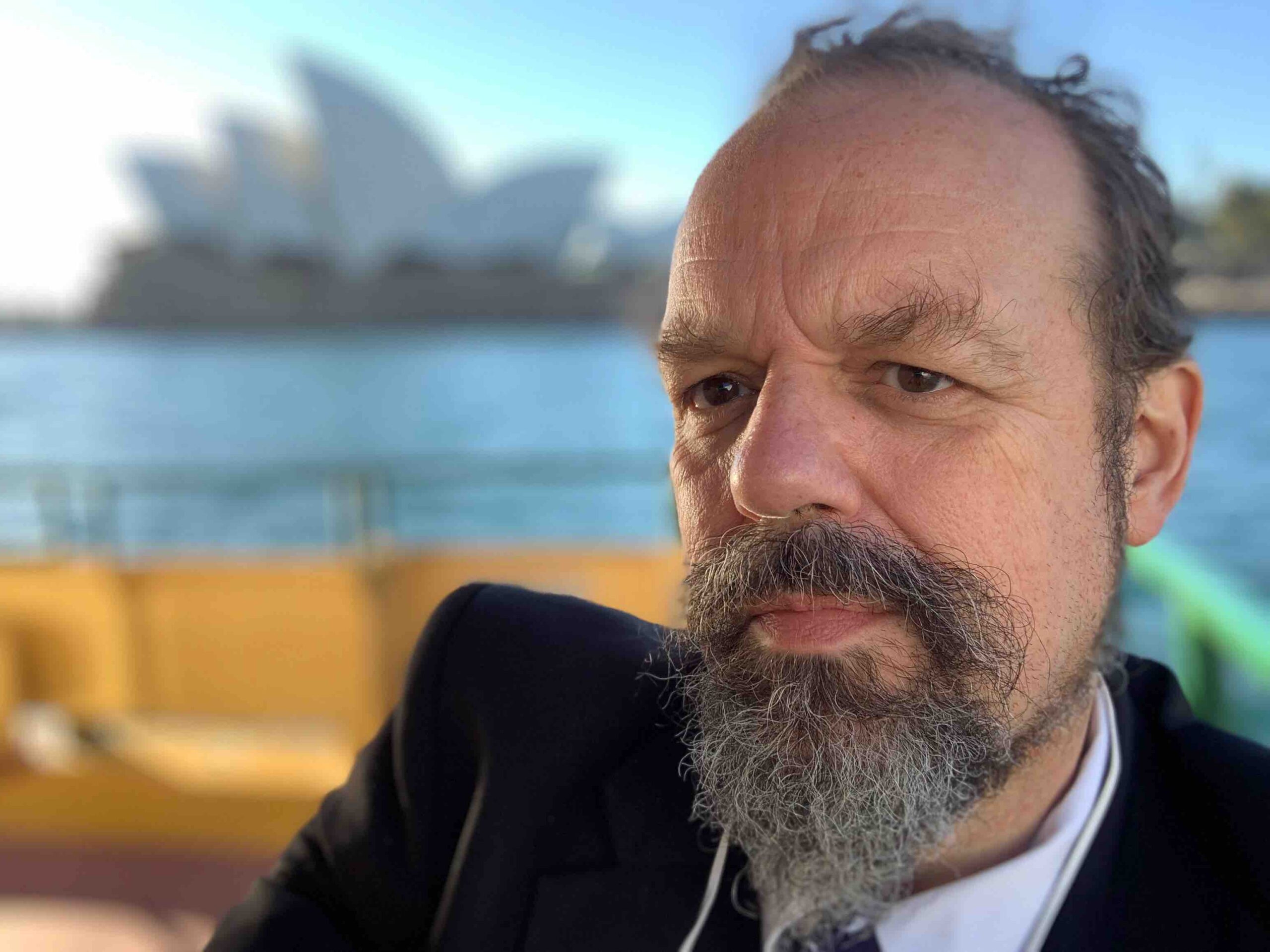
ARNOLD DIX became an unlikely hero when he promised to save 41 men trapped after a tunnel collapse in the Himalayas. .
In rural Victoria, Arnold Dix is known to locals as a farmer and a part-time truck driver. But his name reached global recognition when he played a pivotal role in rescuing forty-one Indian workers trapped after a deadly tunnel collapse. What many don’t know is that Arnold is also a barrister, scientist, engineer – a ‘quirky’ Aussie bloke who proves that extraordinary courage can come from the most unexpected places.
Good Reading caught up with the extraordinary man on the release of his new book, The Promise.
When you were a child, what did you think you’d do as a job when you grew up?
When I was growing up, I lived in rural and regional Australian Hotels.
I used to help my parents in the hotel with cleaning ashtrays and tables, in the kitchen, all the normal stuff of a small family business. I used to think a lot about animals and plants and nature, and I was fascinated by all the machines in the hotel and how they worked.
So, I had an unusual combination of a love of nature and the desire to disassemble machines that were broken to see how they worked. I remember pulling apart old cash registers, refrigerators, cooking equipment-just about anything and everything. So I suppose I was imagining a job that somehow worked with nature and machines. I was also quite a bit naughty with my brother Colin. We would do things like fill the exhaust pipes up with dust and dirt while people were in the bar drinking and kept the exhaust pipes with potatoes. When the drunks would try and start their cars it almost always ended in an apparent explosion and a big cloud of dust.
I also remember setting the hotel on fire by mistake when I was doing some experiments burning plastics. So, it’s fair to say I didn’t really know what job I was going do when I grew up I just knew that I liked experimenting with things and having fun as well as being curious and loving nature.
 Were you curious about the world around you growing up? Was there someone or several people who inspired you?
I was and still am incredibly curious. My curiosity was not inspired by anyone or any group of people it was something that came preprogrammed. I didn’t really look up to anybody nor did I look down upon anybody I just did my own thing. Upon reflection perhaps I existed in my own little bubble.
Even as a kid I enjoyed everything and was always busy learning about new machines, new ideas, and pulling apart old machines to learn. I also liked experimenting with gas and chemicals. Because we moved on average every couple of years I didn’t form any particular attachments with adults or even children, I just did my own thing.
What was the first event you got called to help by using your expertise?
The first major event I got pulled into to assist was the collapse of the World Trade Centre or 911 as it’s often referred to. The television and news services were reporting the collapse of the two buildings, and I had clients at home who were very concerned about the possibility of copycat or further attacks on major infrastructure in cities and my special interest and expertise was the underground.
So, my clients in Australia sent me to New York on a fact finding mission with the aim of bringing that knew learning back home to Australia so that we could implement it in our underground city rail networks. It’s interesting that when people think of 9/11, they think of the two buildings collapsing on the surface but actually for me and for other underground experts our interest was in how well the underground withstood the collapse of the buildings and also how the underground rail network was operated to safely evacuate thousands of people between the first impact and the ultimate building collapses.
This mission to New York was not only the first mission of its type in my career but also probably the mission that had the largest impact on my trajectory as a professional. After I returned to Australia and provided the advice that I had been asked to formulate I quit my job as a corporate lawyer and took up the challenge of helping make the world’s underground spaces better for everybody. In a very real sense that first 911 mission shaped the course of the rest of my career.
You have done valuable work to help people improve their lives and outcomes through safety among other things. Can you tell us about some of those.
I’ve been very active helping improve the level of safety for the peoples of the world over many decades.
The area I feel I have had the most impact is in the area of both road and rail tunnels. Billions of people use road and rail tunnels every year and my professional work has focused on ensuring that the standards applied to the construction and operation of those underground spaces from a safety perspective is improved.
For example, for decades I have served on the permanent International Association of Road congresses (PIARC) on the special committee on road tunnel safety. On that committee I’ve had a very real impact on issues as diverse as fire and life safety, fire suppression systems, emergency evacuation systems, ventilation systems and even lighting and emergency signage. Now I know that that may sound very boring (Pun intended) but it makes me feel really good to know that everybody using Australia’s road tunnels as an example has a safer journey than what they might have had I not been involved for so many decades in setting the safety standards within PIARC.
In addition, I also sit on two of the world’s most important fire safety standards for Rd tunnels and rail tunnels – the National Fire protection authoritie of Americas NFPA 130 and 502 rail and road tunnel standards respectively. The NFP was set up by mandate from the president of the United States to deal with fire safety and the standards I now applied almost globally. I’m one of only a handful of certified trainers on these standards and I get a real bars knowing that as is the case with PIARC my involvement over decades has made the world a safer place.
Addition I also have a special interest in chemical biological and radiological threat and risk management underground. I am lucky enough to also contribute to this subject.
As a hobby I also have a special interest in building safety and have significantly contributed to the analysis and understanding of both the Lakenal House and Grenfell tower block fires. I was particularly drawn to assisting with both these tower block fires because they affected lower income and otherwise disenfranchised individuals in the United Kingdom living in substandard and poorly maintained tower blocks.
When you add all of this together, I feel so proud to have quietly contributed to making the world a safer place-mostly underground.
What goes through your mind first when you get called to a disaster such as the Uttarakhand tunnel rescue?
When attending a disaster, it is most important to keep a very cool mind and be open to new thoughts ideas and phenomenon. Except in the case of war or criminal activity no one intends to kill lots of people so I’m always embracing the disaster with an open mind trying to understand what is occurred and why it occurred in the context of it being not understood and not anticipated.
This is important – because I have to make sure I don’t get hurt nor does anyone on the team attending and there’s always a risk that whatever went wrong the first time might happened again or in some other way there is another disaster. And of course, after a disaster we want to understand why everything went wrong so that we can do our best to make sure it doesn’t happen again. When we’re dealing with the underground this is often problematic cause the number of variables underground is very huge and so taking a conservative approach is always advisable when building civilian infrastructure like metros, road tunnels sewers and power stations
You promised to bring 41 men out alive from the tunnels. What were some of the challenges you faced, and did you ever allow yourself to waver in your belief that it could be done?
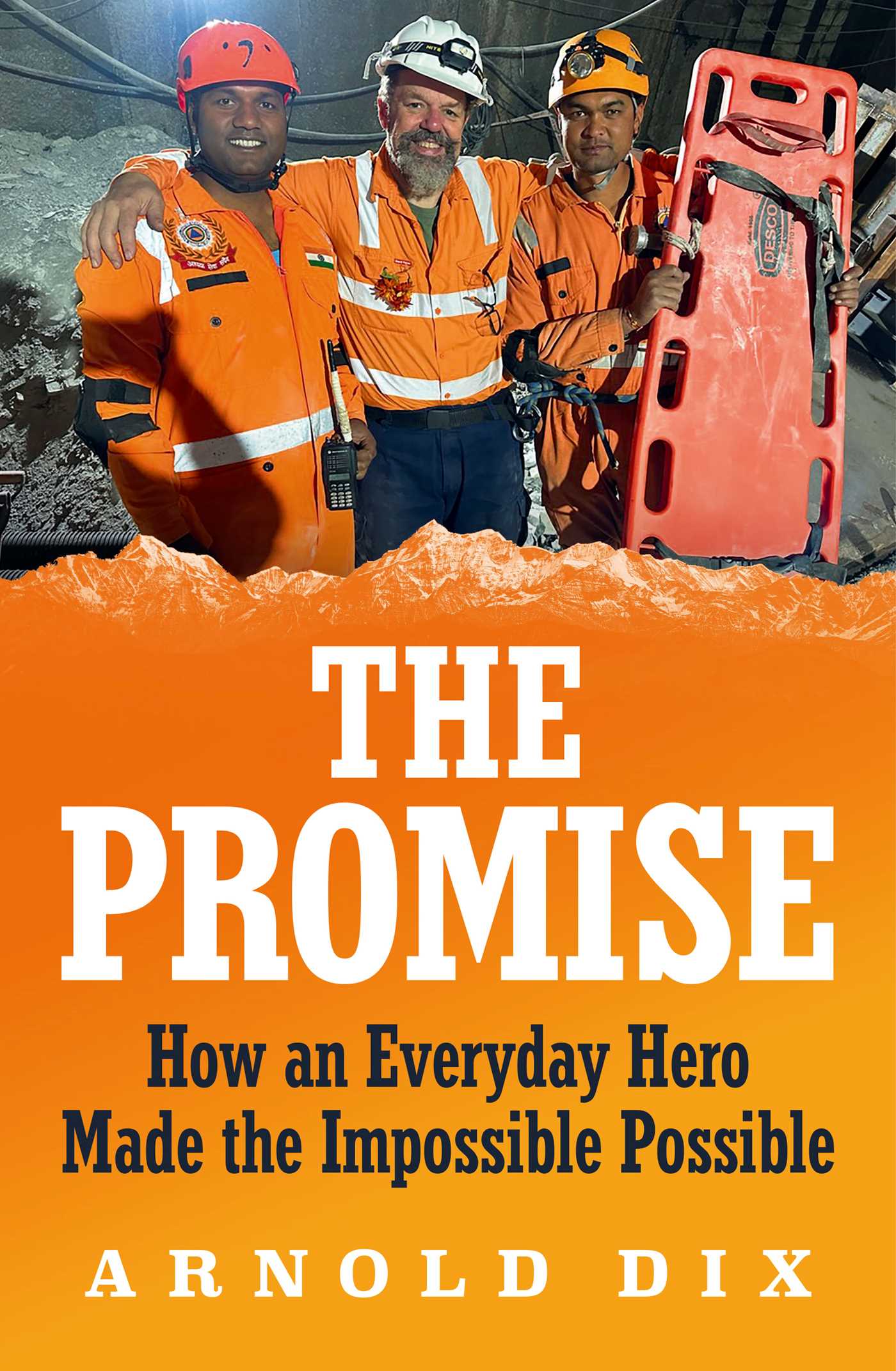
I promised to bring 41 men out alive from the tunnels right from the beginning – right from when I was first invited to help with the rescue. There are two parts to making that promise. The first part is that at the time I was asked to come and help everything had gone wrong with the rescue and the teams were beginning to lose faith in themselves and entertaining the idea that these men might die and that the risk to us as rescuers was too high to take.
The problem is underground that once a collapse begins, they forces at work do not relent until the new equilibrium or balance has been formed. In this case the mountain was collapsing from the inside and there was a huge hole like a big bubble rising up inside the mountain and causing the tunnel to continually collapse.
Our strategy, and I mean the strategy of the team, wants to have multiple rescue missions undertaken at the same time. There was a mission from the top of the mount and drilling a vertical shaft – the idea being that if we could drill a hole from the top of the mountain into the top of the tunnel where the men were trapped, we could perhaps lower a rescue capsule and pull them up on a rope.
There was a mission from the other side of the tunnel to try and dig a little tunnel as fast as we could to get them out via a new little tunnel. There was a mission from the side of the mount and where we were launching a thing called a tunnel boring machine and the idea was that if the vertical shaft didn’t work and the little tunnel didn’t work and nothing else worked we could drill a sideways tunnel but that would take a long time in any case we were busy preparing to launch a tunnel boring machine to build a horizontal tunnel for the rescue. And in the area at the front of the collapse we had two programmes underway.
We had a system of auguring – that involved putting in a huge drill and then as the hole was dug pushing I still plate pipe into the void that we created. And finally, we had a traditional method of mining that if everything else filed we would utilise which is known as a “drift”. A Drift is just an old-fashioned way of mining where you dig and put braces around the area you have done as you go and it’s very practical, very reliable but takes a long time.
As you know the rescue took 17 days. On virtually every day whatever we tried failed. We just kept trying new ways and new variations on old ways until we found something that worked.
The last 48 hours were particularly hard as our machines had all broken and we were left with virtually no alternative but to put human beings inside a pipe and have them dig with their hands and for us to then remove the Dug material with a little trolley that then we also built on a rope.
It was very slow in the end our hand digging and pushing the pipe literally millimetre by millimetre finally got the last 10 metres built. It was really hard because the rocks were still falling and there was a very real an immediate risk of a catastrophic collapse as we were destabilising the rock mass.
I always believed that we were going to be able to rescue all these men and that no one was going to be injured – I just didn’t know how. This was something I don’t really understand because normally when I’m investigating or attending a disaster all or most of the people have died. Dying is the normal outcome for these types of events. This is why even until today I describe this rescue as a miracle. In my mind it is a miracle because I know exactly how this story normally ends.
You have seen and investigated terrible disasters and have learned some confronting things through your work. How do you cope returning home to normality?
I have seen or investigated too much death for one lifetime. It has taught me to really enjoy being alive. Since I got back from this rescue, I’ve had the the benefit of being able to talk about it because it ended well. Normally there’s no such luck, no such luxury and I just quietly returned to my normal job. I don’t speak about it because it’s always confidential and, in any case, nice people don’t want to hear about death and destruction.
Usually, it takes me about six weeks to recover after a big job. It’s interesting, I still haven’t recovered after this rescue even a year on. I think that knowing the huge risk way the rescuers were under during the rescue and taking personal responsibility by declaring everyone would be rescued and known would be heard has impacted me more than would normally be the case. Possibly this is because during the rescue the government officials told me that if my promise to save everybody and no one got hurt was broken that there would probably be consequences for me as the mobs of people that had formed would likely make me accountable for the failure. This meant I was at risk of serious harm or worse if things went wrong.
Geologist, engineer, barrister, farmer and truck driver, a tunnelling expert. What drives you to keep understanding and learning new things?
I really enjoy learning new things and I’m not afraid of failure. At the moment I’m trying to teach myself how to play the keyboard, fix century old pump organs, and speak Sanskrit. I’m not really sure what I’ll be up to next week, but I know I’m really enjoying being alive right now and part of that enjoyment includes learning new things. It doesn’t mean that I’m expert at all of them but I’m good enough.
Was only a few years ago that I learned how to do welding and as it turned out the welding was essential for the rescue because I helped build the rescue gear. I think the welding is a real really good example of how you don’t know how a skill will help you but that it’s really good to have it under your belt in any case. It’s in that framework that I like learning new things. I would not recommend you come to me for a haircut and certainly not a colour for your hair but I enjoyed learning hairdressing too it’s just another example of how broadening your mind and learning new things is good no matter what they are.
You have achieved global recognition for your work. People around the world recognise your face. How has that felt dealing with the fame?
Dealing with fame has been quite challenging for me. My private life has always been very private, and I’ve never had a high public profile nor have I sought a high public profile. It seems that events can overtake your intention and I certainly find myself being recognised here and particularly and probably more so overseas.
Because the story is so positive and joyous I like being able to talk to people about something nice something positive something that reaffirms the wonderful underlying characteristics of being a human being. I think telling nice stories good stories fair stories humble stories but most importantly real stories are more important today than ever. We need to hear good stories about good people doing good things and that’s what pursue chiara rescue is all about we are a large group of people who’d never been before and yet we acted as one team and solve the problem that the majority of the world thought was unsolvable. I’m proud that in some small way my role in that miraculous rescue is recognised.
What is it that you find most satisfying and rewarding in life? What drives you?
It might come as a rather odd answer but I just love being alive. I get up before the dawn and watch the sunrise every day I can. Where possible I try and experience everything I can without being too greedy.
I literally enjoy watching the grass grow and the flowers bloom, I love the feeling of wind in my face and rain falling on me. There is little I like more than walking in the dark in the Rhine and just enjoying nature. I’m not really sure why I like the dark so much but that might explain my interest in tunnels. I think the night is interesting because it’s not really dark it’s just darker than the daytime. Maybe that’s what I love so much about it – the surprise of being able to see at night.
I really enjoy being able to make a difference and have an impact on the safety of human beings. I also enjoy having the skills and training to make me effective in whatever I do. I really enjoy the current conundrum faced by people trying to work out exactly who and what I am – I find it really funny in a nice and playful way.
I think to some considerable extent I’m driven by the inevitability of my own death. Soon I won’t be able to make a difference because I’m dead. For this reason, I much prefer to stay alive and keep doing things.
The one thing that doesn’t drive me is money – I’m really enjoying being in a position to share part of my story and hopefully to bring a smile to many people’s vices. My story is a good story about great people doing great things. I like that.
**********
 ABOUT THE AUTHOR
 ABOUT THE AUTHOR
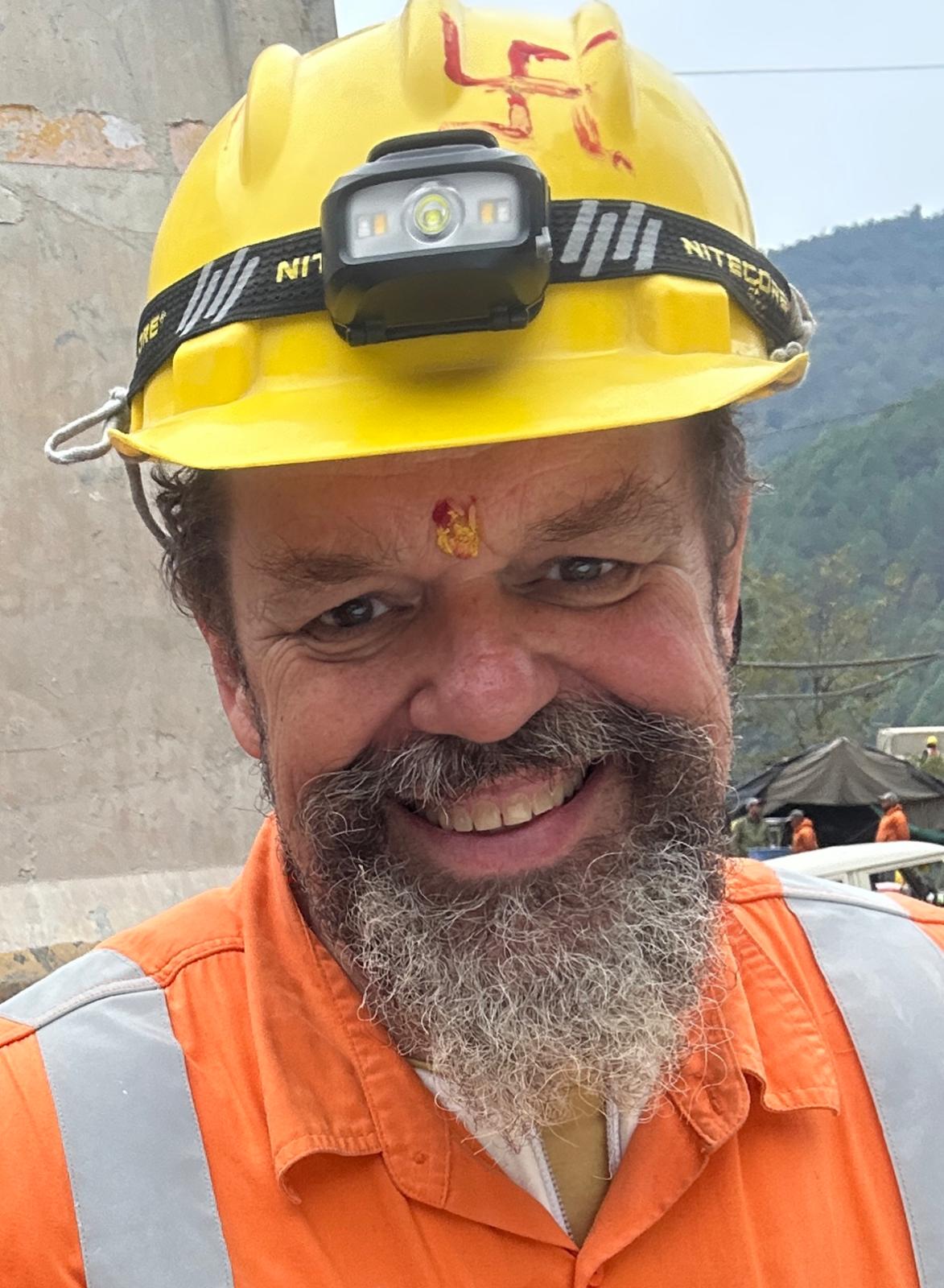
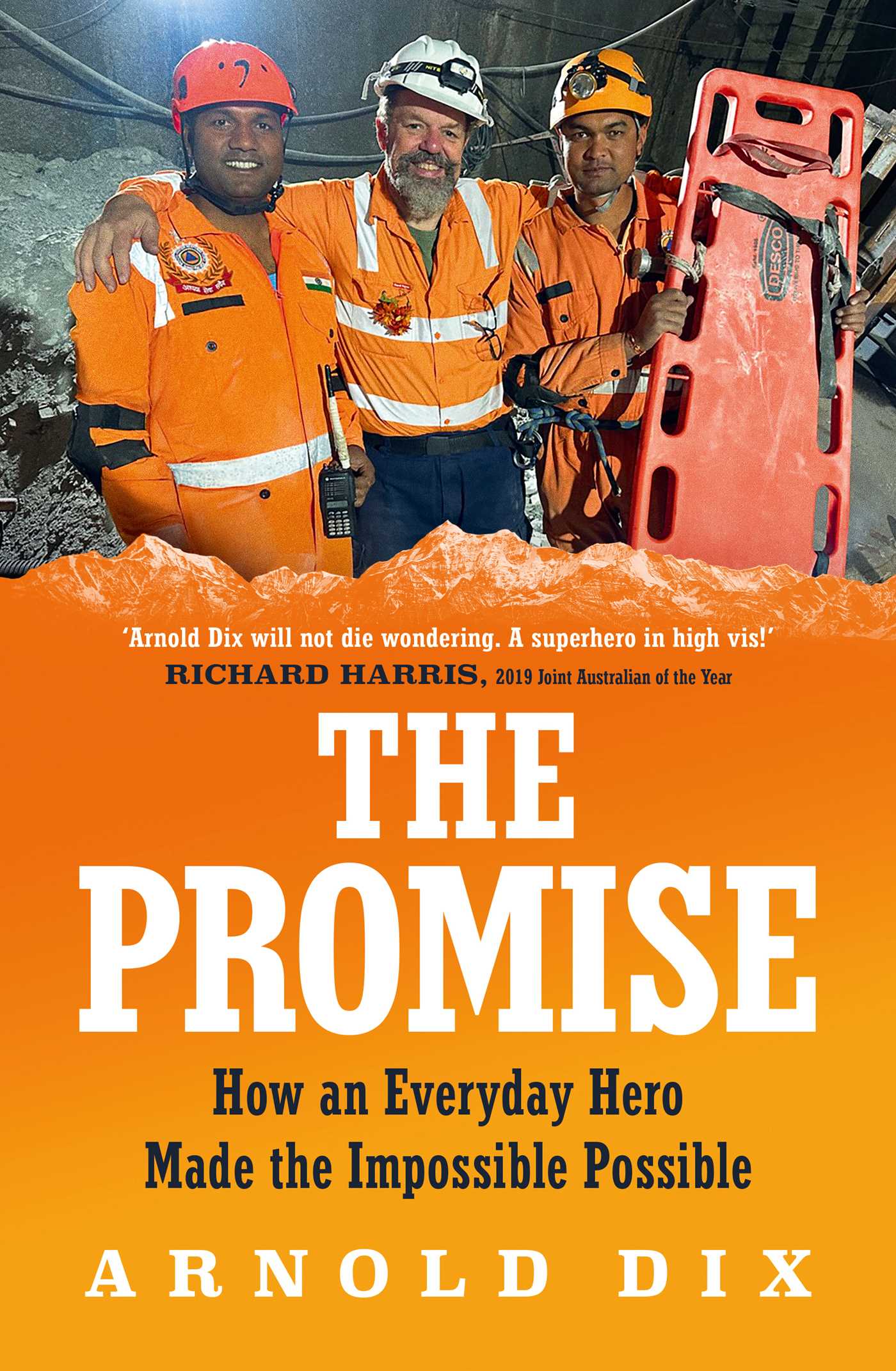
Arnold Dix is an Australian geologist, engineer, barrister, farmer and truck driver, who is widely known for being a tunnelling expert. In November 2023 he played a crucial role in a 400-hour rescue operation to save 41 miners trapped in the Uttarkashi tunnel in India.
All workers were freed successfully.
He was also involved in the 9/11 disaster in New York, the London Bombings, the Madrid Bombings and in a program in Qatar helping workers that were enslaved to help build World Cup facilities.


0 Comments