


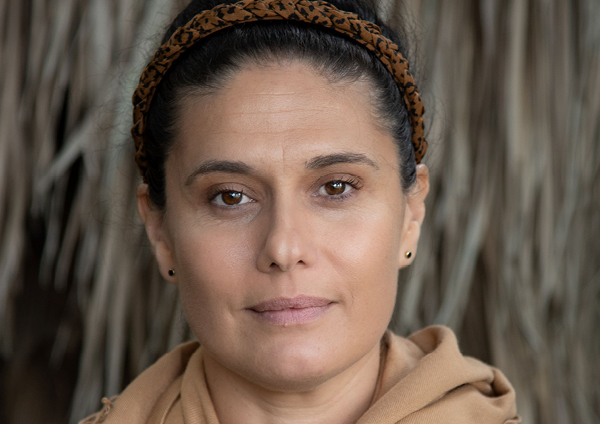
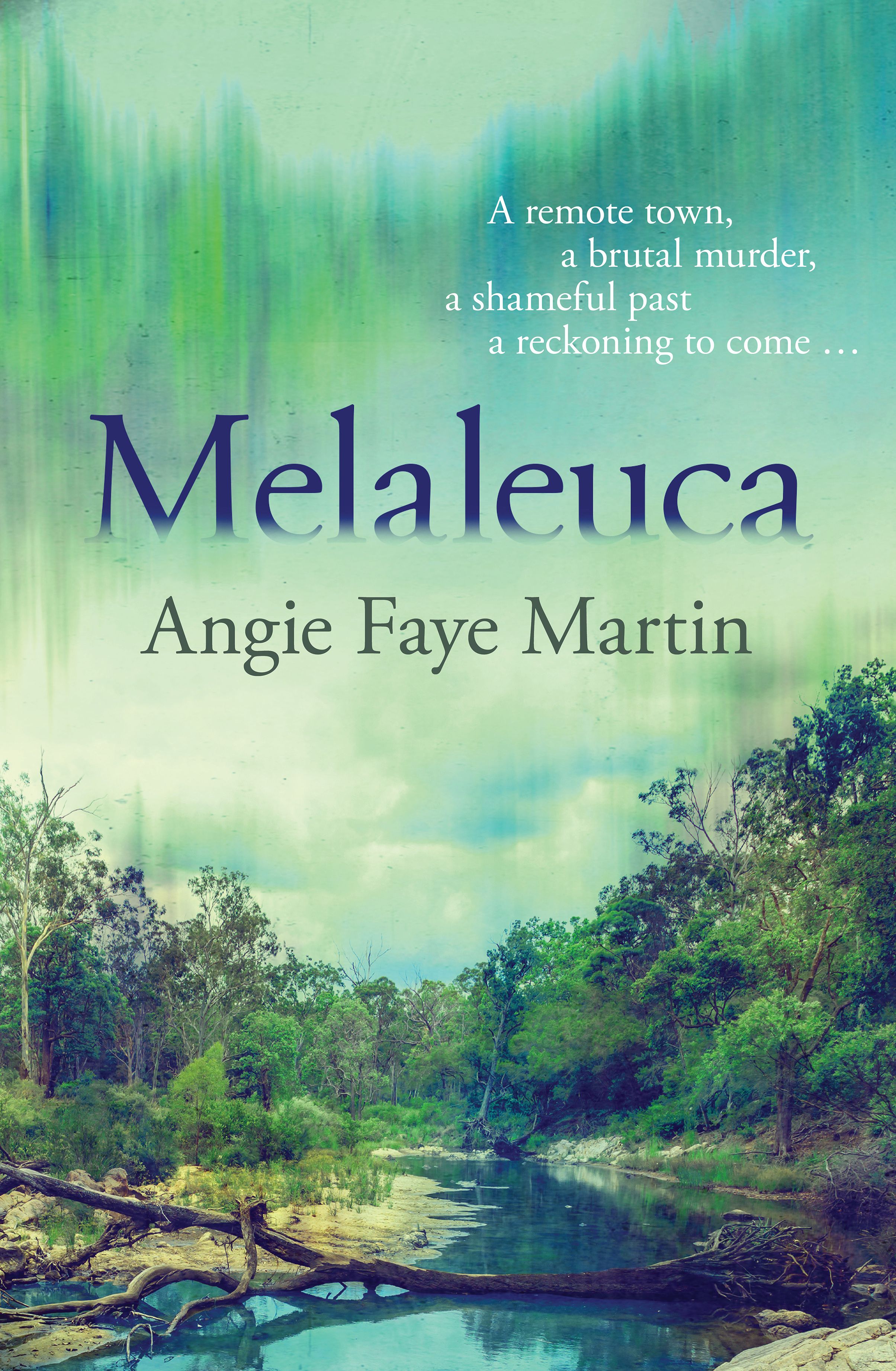
Good Reading caught up with Australian author ANGIE FAYE MARTIN about her debut novel, Melaleuca, ‘a compelling finely crafted gripping page-turner’.
ABOUT THE BOOK
A country town, a brutal murder, a shameful past, a reckoning to come… The injustices of the past and dangers of the present envelop Aboriginal policewoman Renee Taylor, when her unwilling return to the small outback town of her childhood plunges her into the investigation of a brutal murder.
Renee Taylor is planning to stay the minimum amount of time in her remote hometown – only as long as her mum needs her, then she is fleeing back to her real life in Brisbane.
Seconded to the town’s sleepy police station, Renee is pretty sure work will hold nothing more exciting than delivering speeding tickets. Then a murdered woman is found down by the creek on the outskirts of town.
Leading the investigation, Renee uncovers a perplexing connection to the disappearance of two young women thirty years earlier. As she delves deeper and the mystery unfurls, intergenerational cruelties, endemic racism, and deep corruption show themselves, even as dark and bitter truths about the town and its inhabitants’ past rise up and threaten to overwhelm the present…
Authentic, gripping crime drama from a bright new voice in fiction.
Read our book review of Melaleuca by Angie Faye Martin
MEET ANGIE FAYE MARTIN
What are the different career/roles you have worked in during your life?
I entered the working world at 14 as a shop assistant at the Blue Mountain Bakery in Toowoomba. Wanting more hours, I moved on to Target and saved enough money to go backpacking around Malaysia with my sister at 15 (backpacking was very cheap back then!)
A variety of part-time roles followed throughout high school and university – waitress, massage therapist, legal secretary – before I was awarded a cadetship with the Commonwealth Health Department. This allowed me to study full-time in Brisbane while working in Canberra during semester breaks. I loved that arrangement because I could focus more on my studies, and I enjoyed the short stints in Canberra because it was like a warm-up for the real world.
After finishing university, I moved to Canberra to work full-time in the public service and soon after enrolled in a part-time master’s degree. Over the next 15 years, I worked across health, education and employment policy in both state and federal governments. I learned so much – community engagement, writing briefs, public policy; but I also struggled at times –– I think I was too idealistic. Looking back, I must’ve been a total pain to work with!
Eventually, I moved into a part-time role at Swinburne University and then took the leap to start my own editing business, which I still run today alongside writing fiction.
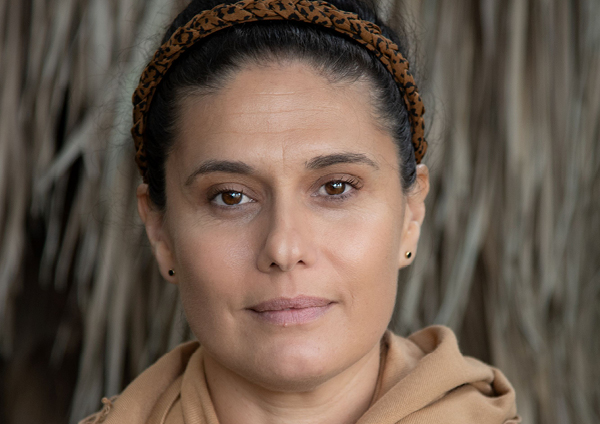 You say you are passionate about fiction. Why is that?
Besides being a wonderful form of escapism when the world gets a bit much, I think stories are just central to who we are – they’re everything. They sit at the heart of most belief systems, from Biblical parables to Aboriginal Dreaming stories, to ancient Greek legends. Stories help us learn about ourselves – maybe through quietly reading someone else’s experience of grief, and in doing so, processing our own; or by watching a character stand up to an intimidating challenge and discovering what courage really means.
The stories we share in groups or pass down to the next generation – whether they be about generosity or open-mindedness, or caring for the planet – help us grow, both as individuals and as a society. They shape our culture and values and help us define what really matters to us.
I also love how there are certain things that can only be communicated through stories, and it depends where in life the reader is at as to how they receive the message. I love that I can read a story at a certain point in my life, and then come back to it years later and take away a whole different meaning. My Nana Zona used to tell a story about how the American soldiers would pass through the Moree Mission back in the WWII days on their way north. Nan and her little mates would block the road and insist the soldiers give them a few coins before ‘letting’ them pass, and I remember as a kid, I’d find this story hilarious, imaging my nan as a little girl my age standing up to big American soldiers with guns and saying, ‘This is our land. You gotta pay us to cross.’ She told this story so many times over the years, but the last time I heard her tell it, I didn’t find it funny at all. Her eyes sparkled as she whispered it to me, and I almost cried thinking how strong she must have been to do that.
Can you tell us what first inspired the seed of the idea for Melaleuca?
There were a few ingredients that came together when I first had the idea for Melaleuca. I remember walking through the streets of Carnegie with my husband, just chatting, and I started telling him about some of the books I’d been reading – mostly thrillers I’d been completely absorbed in, like Gillian Flynn’s Gone Girl. At the time, I was feeling frustrated at work, like my voice wasn’t being heard, and I was escaping heavily into fiction. And that’s when it hit me: what if I tried writing one myself? So, writing became my outlet – a way to rebalance and reclaim a bit of space for myself.
But there was something deeper that had stayed with me for a long time – a personal seed of inspiration. When I was a kid, my dad reached out to his grandfather, a wealthy white man living in Brisbane, after Jack (my dad’s father) passed away. This man didn’t want to acknowledge us, and this rejection stuck with me for years.
It made me think a lot about broken connections and how many men know they have children but choose to walk away. That idea of disowned children and of abandoned family ties started weaving itself into the story and eventually became a theme of Melaleuca.
Can you tell us a little bit about the book and the main characters?
Melaleuca follows Detective Renee Taylor as she investigates the murder of a woman found by the creek in her sleepy hometown. She arrives home to look after her mum, just days before the murder. The identity of the woman remains unknown, puzzling Renee and the tightly knit local community. Renee is assigned to lead the case and as she investigates, she uncovers a link to a cold case involving two young Aboriginal women who went missing thirty years earlier.
It’s a classic police procedural mixed with some fairly tender moments that show insight into Renee’s character. She’s quietly terrified of her mother’s physical frailty and how much she needs Renee. Val was once a capable nurse but now she’s reliant on Renee for most things around the house.
Renee also struggles to let her colleagues help her. She’s guarded due to past experiences in the city of being overlooked and misunderstood but this cynicism doesn’t always serve her best interests.
The story is told across dual timelines – 2000 and 1965 – weaving Renee’s investigation with the story of Caroline, a young Aboriginal woman who lives in a camp on the town’s fringes, known as the yumba, and working as a domestic on a large pastoral estate. I take readers into the life of Caroline, showing them what it was like to live on the yumba.
Caroline’s older sister is protective and tries to school the more romantic and idealistic Caroline into how the world really works. While their grandfather tenderly watches over them, withholding judgement, gently steering them towards their true north.
Why did you choose to set the book in outback Queensland?
I feel like outback Queensland is imprinted on me – it’s where I grew up. This was back in the day before iPads and Netflix, when Mum and Dad would tell us to go play outside, and that’s exactly what we did, until the sun went down. We’d run amok with the other local kids, or with our cousins if they were visiting – climbing silos, playing in the cotton sheds, throwing ourselves off swings into the creek.
I used to love spending time with my pop (Mum’s Dad). Our house was on a corner of their farm on the edge of town, and just down the street from where they lived. I’d finish ballet or swimming (depending on the season) and race up the road to help Pop with farm duties: rounding up the sheep, driving the tractor, feeding the pigs. He and his brothers owned the butcher shop: Hamlyn’s. Sometimes he’d let us behind the counter and give us Frankfurt sausages to keep us busy and out of trouble.
We’d go further west, where Dad would show us our traditional lands and where he grew up. He’d teach us how to fish yellow belly, catch yabbies, keep a fire going. Us kids would spend the days sliding down the muddy banks of the river for fun, and at night we’d crawl up onto the sandhills, lay down on our backs and gaze at the stars.
That countryside – the wide-open fields, the deep purple thunder clouds, the dust and dry – it seeps into your bones. It’s beautiful but harsh, and there’s an intensity to life out there that suits the mood I wanted to convey in Melaleuca.
Are there any parts of you or family that you wove into the characters of Melaleuca?
I drew from both Mum’s farming heritage, and the experiences of Dad’s family as Aboriginal people displaced from their traditional lands. There was a time I felt conflicted about this heritage, being connected to both sides of history that includes the gaining and losing of land. But over time, I’ve come to sit with the complexity of it all.
Most people have some kind of conflict like this in their lineage: ancestors on different sides. It’s about recognising a difficult history, one that involves both struggle and survival, without placing blame on individuals. I spent hours talking to my parents and grandparents. I quizzed Mum’s parents about harvesting crops, the price of cattle, what Saturday night dances were like, and what interactions they had with Aboriginal people ‘back in the day’. And I’d ask Dad and his mum about life on the yumba – how they cooked, kept mozzies away, what they did for fun, whether they spoke language and thought of their totems.
I always had lots of questions, but I never pushed. I could sense when it was too much, and I backed off. They knew I just wanted to reconcile what was inside me, and so they were as generous with their knowledge as they could be.
What do you want readers to be thinking about after they have read your book?
I didn’t set out to be didactic, but if there’s one thing I hope people take away, it’s this: violence against women in this country is at epidemic levels and for First Nations women the crisis is much worse. We’re seven times more likely to be homicide victims than non-Indigenous women and we’re 33 times more likely to be hospitalised due to family and domestic violence. These findings were reported in a national Senate Enquiry into Missing and Murdered First Nations Women and Children released by the federal government late last year – yet it received barely any attention from mainstream media outlets.
Maybe it will lead readers on to First Nations authors who write about this in much more depth than I do, like Amy McQuire’s Black Witness, or maybe they’ll listen to advocates like Hannah McGlade speak on the issue of Australian policing.
What are you reading now and what are two books you always recommend people read?
Right now I’m reading Fleur McDonald’s The Prospect about a journalist and her partner, a policeman, who move to the wild mining town of Kalgoorlie. I’m loving the authentic outback Aussie dialogue and the eccentric characters.
People often ask me for a good book with First Nations themes, and I usually recommend Tony Birch’s The White Girl. It’s gently and lyrically told yet doesn’t shy away from the harsh truths of our past.
If I sense the person is a bit like me – someone who wants something to challenge their thinking, who’s open to being moved or even a little disturbed, I recommend Kazuo Ishiguro’s Never Let Me Go. It follows students at an elite British boarding school and ultimately asks what it means to be human. It’s beautifully unsettling. (It was later adapted into film starring Carey Mulligan, Andrew Garfield and Kiera Knightley.)

ABOUT THE AUTHOR
Angie Faye Martin (Kooma/Kamilaroi/European) is a writer/editor currently living on Gubbi Gubbi Country (Redcliffe). She worked in public policy for 15 years before launching a freelance editing business, Versed Writings. She has a Bachelor of Public Health, a Masters of Anthropology, and a passion for fiction.
Melaleuca is her debut novel.
0 Comments