


AMY NEFF’s debut novel, The Days I Loved You Most is being translated into 19 languages and counting. Her novel is a moving celebration of life, love and the small moments that make a life.
AKINA HANSEN writes.
It’s a Tuesday morning when I call American author Amy Neff in Connecticut to discuss the release of her debut novel, The Days I Loved You Most. Her excitement is palpable and, it’s no wonder, it’s been 10 years since she first began to put her story to paper.
‘I started writing this book when I was 22 years old and to be honest, I’ve always written, I wrote from a very young age,’ Amy shares.
As a teenager she attended an Arts Academy for writing and went on to study English at university. Despite this, she didn’t pursue writing as a career, and instead taught English for a short period and then worked in various odd jobs from sales, hotels to comedy management.
‘I never really thought I would be an author. That didn’t seem like a viable plan or something that was even attainable so, I always wrote for myself.’
Around 10 years earlier, Amy was visiting a friend in New York City when the idea for her novel came to her. She headed to Central Park with her notebook and spent a whole day fleshing out her story.
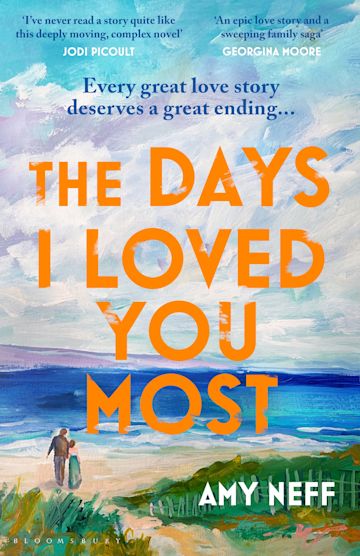 ‘The title came to me first; the title was always The Days I Loved You Most. Then I sort of sketched out the characters and the premise that first day, and it’s always been that since the start.’
As the years passed, Amy chipped away at her novel while juggling the demands of life – from moving, dating, getting married to buying a house. But what began as a side project eventually transformed into something more.
‘I just felt like I had taken it so far. I had taken it through two drafts in five years. I figured if I’m going to really do this, I have to fully commit and see where it can go.’
Yet, while she was committed to finishing her novel, it became increasingly difficult. By the time the pandemic hit, she was looking after two toddlers.
‘So, there was always something that was juggled among all of the other things: a newborn, postpartum, raising babies and toddlers, it became very challenging to find the time but also, it’s always been a fabric of my life for these last 10 years.’
Despite the rejections and challenges she faced along the way to getting published, in 2022 she signed with an agent. After a single revision, the book sold in four days.
Like Amy’s journey, The Days I Loved You Most is filled with its own trials. The novel tells the love story of Joseph and Evelyn and the joys and challenges of their life. Their love story begins in New England where for generations their families have lived next door to one another in Stonybrook, a beach town.
Taking inspiration from her own family history, the fictionalised setting of Stonybrook is reminiscent of Amy’s own childhood.
Since the early 1900s Amy’s family spent their summers at a beachside town where over time her grandfather, grandmother and great aunt acquired adjoining properties.
Amy’s memories of those treasured summers are filled with long beach days, big family dinners and the excitement and noise of the regular comings and goings of family between their homes.
And while she wanted to capture the nostalgia of those says, Amy notes: ‘This is not my family’s story. It’s completely fiction. These are not my grandparents. But I really wanted to capture that feeling of belonging.’
The Days I Loved You Most weaves between past and present, beginning from 1941 when Joseph and Evelyn fall in love through to their present day, where we learn that Evelyn has been diagnosed with Parkinson’s disease. Sadly, her condition is rapidly deteriorating, and with it her memory.
‘I wanted to write a novel about a love story from the very beginning to the very end … In order to get to the very end, ultimately, you have to get to their death. And so, I was thinking, in what ways could this end? And that’s what led me to explore choosing to end life together.’
Evelyn informs her three adult children – Thomas, Jane and Violet – that she and Joseph have made the decision to end their lives in one year’s time. Through the characters, Amy explores the different reactions to their decision – from anger, disbelief to a naive adoration – and how this decision ultimately shapes their own relationships and outlook on life.
‘They were really just avenues for me to explore all of those different ways that love shows up in our life and the ways that we navigate life through those lenses.’
And while she understands that euthanasia is still a controversial subject for some, ‘I think there really isn’t anything controversial about wanting to die with your dignity and without pain.’
As the novel progresses, we learn more about Joseph and Evelyn’s story and the moments that have altered them for better and worse. We see how the death of Evelyn’s beloved brother, Tommy, and Joseph’s best friend impacts them, and how their different desires and dreams fracture their relationship. Evelyn yearns to play for the Boston Symphony Orchestra, while Joseph wants to stay in Stonybrook and take over his family’s inn. It’s within these differences however that Amy thinks their true love story lives.
‘The reality of love and to make it a lifetime isn’t going to mean that every day somebody is buying you flowers and taking you out to nice dinners. There are big romantic gestures and that’s all part of it. But that’s not actually what’s romantic. And that’s not what makes the love story. What I find more beautiful and romantic are the simple moments that they share together. That’s what I wanted to highlight – what’s actually beautiful about a love story is its rawness and its realness, not just the great picture that you get.’
As the two continue to look back on their life together, we learn how and why Evelyn made certain sacrifices and compromises in order to create a fulfilling life with the person she loves. In particular, Amy delves into Evelyn’s experience with motherhood – the pressures, struggles and joy that come with it.
‘There are so many love stories that just tell this idealised version of love. And to be fair, I do think the book grew and matured as I did. I think some of the earlier versions of this love story were maybe a little rosier. Then as I grew and as I got married and had my own children, I think their relationship matured.
‘It was beautiful timing that I was able to have children while writing this because I think I was able to give such better shape to Evelyn’s motherhood story than I otherwise would have. I think it’s really hard to understand everything that motherhood entails and what kind of sacrifices mothers do make just naturally.’
With Evelyn and Joseph’s final days fast approaching, The Days I Loved You Most reminds us it’s the simple, everyday moments we share with the people we love that we’ll remember when we look back on our lives. So hold the ones you love close, as your time together will always be too short.
‘I hope readers see the beauty inherent in life and the beauty inherent love. That beauty is in those simple moments and can be in a simple life. Nothing is guaranteed, nothing is forever and everything is fleeting.’
0 Comments