



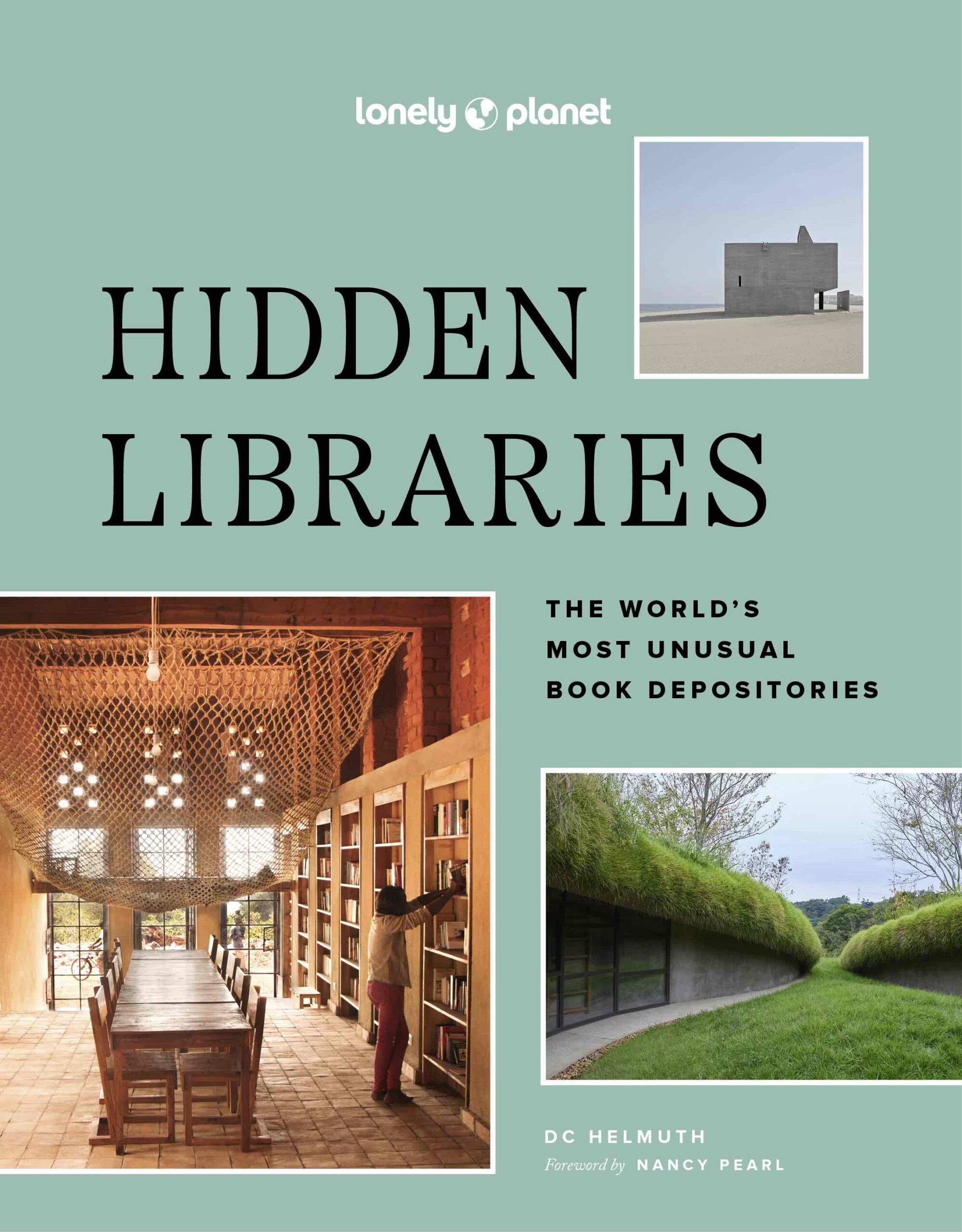
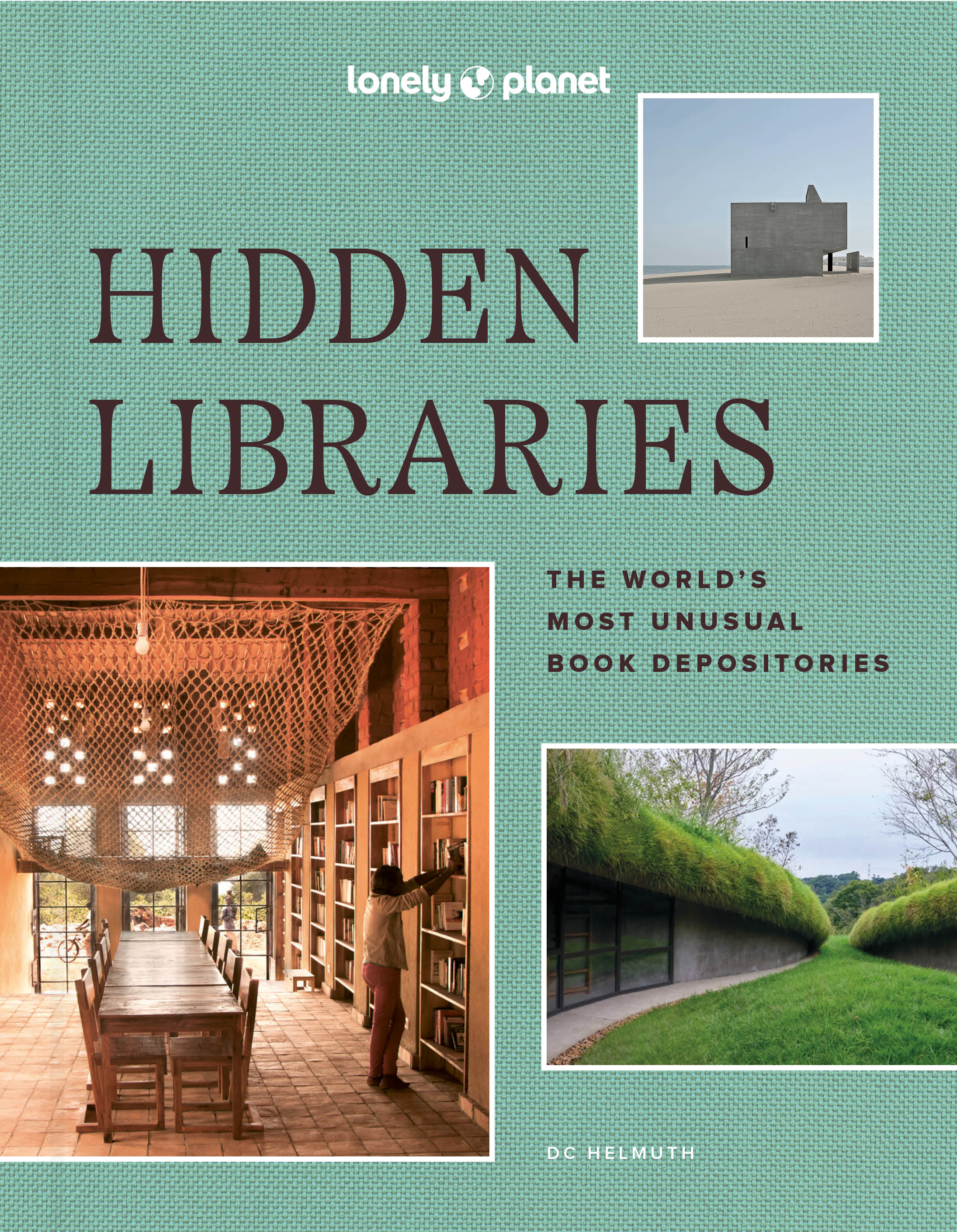
Lonely Planet’s Hidden Libraries by D C Helmuth has a foreword by the wonderful Nancy Pearl. Nancy is a US librarian who became famous in Seattle for her vast knowledge and passion for books and reading. She was a radio regular, sharing her favourite reads and even wrote a bestselling book called Book Lust. Her fame spread further and further around the globe until they even made a Nancy Pearl doll.
The libraries in this book are ‘hidden’ as they would most likely be unfamiliar to the majority of us. Even to such well-travelled library goers like Nancy.

Rowena Morcom, Editor – Good Reading
It begins with the Prison Library Project. US Prison libraries are hidden from us for obvious reasons. With phones and internet access limited for inmates, the library becomes a major source of entertainment and, of course, learning. Sadly, prisons have very little funds to purchase new books, and this is where the Prison Library Project, working out of a bookshop in California, steps in. They raise funds to help buy books for these libraries so that prisoners have access to current books rather than an ancient backlist of books. Books are essential in helping prisoners reform and to help them learn so they can achieve new goals.
Did you know that there are over 75 000 little free libraries in over 88 countries around the world? There’s even one at the South Pole. The modest little library is trotted out next to the South Pole whenever weather allows – just in case anyone who might be passing by needs a book. However, when winter comes, the cabinet is brought inside the nearby Atmospheric Research Facility, where it is spared from the average minus 87°C temperatures and hurricane force winds.
In Richard Brautigan’s novel The Abortion, he tells a story of a man who protects a library of books that have never been published and will never be read in his lifetime. All manuscripts dropped on the doorstep are added to the library. The Brautigan Library took inspiration from the novel, but kindly allowed readers to read the ‘forbidden’ unpublished books in its care.
The Weapon of Mass Instruction is a fabulous book mobile. Created by artist, poet and bibliophile Raul Lemesoff, this library is sometimes also called the Think Tank. Raul’s inspiration came from the 1979 Ford Falcon which was ‘favoured by Argentinian dictator, General Videla, to kidnap students, reporters and anyone else whose opinion threatened the regime.’ By choosing to embody the library in this car he aimed to transform the car into a ‘vessel of peace, delivering books far and wide – so that dictatorships never take hold again.’
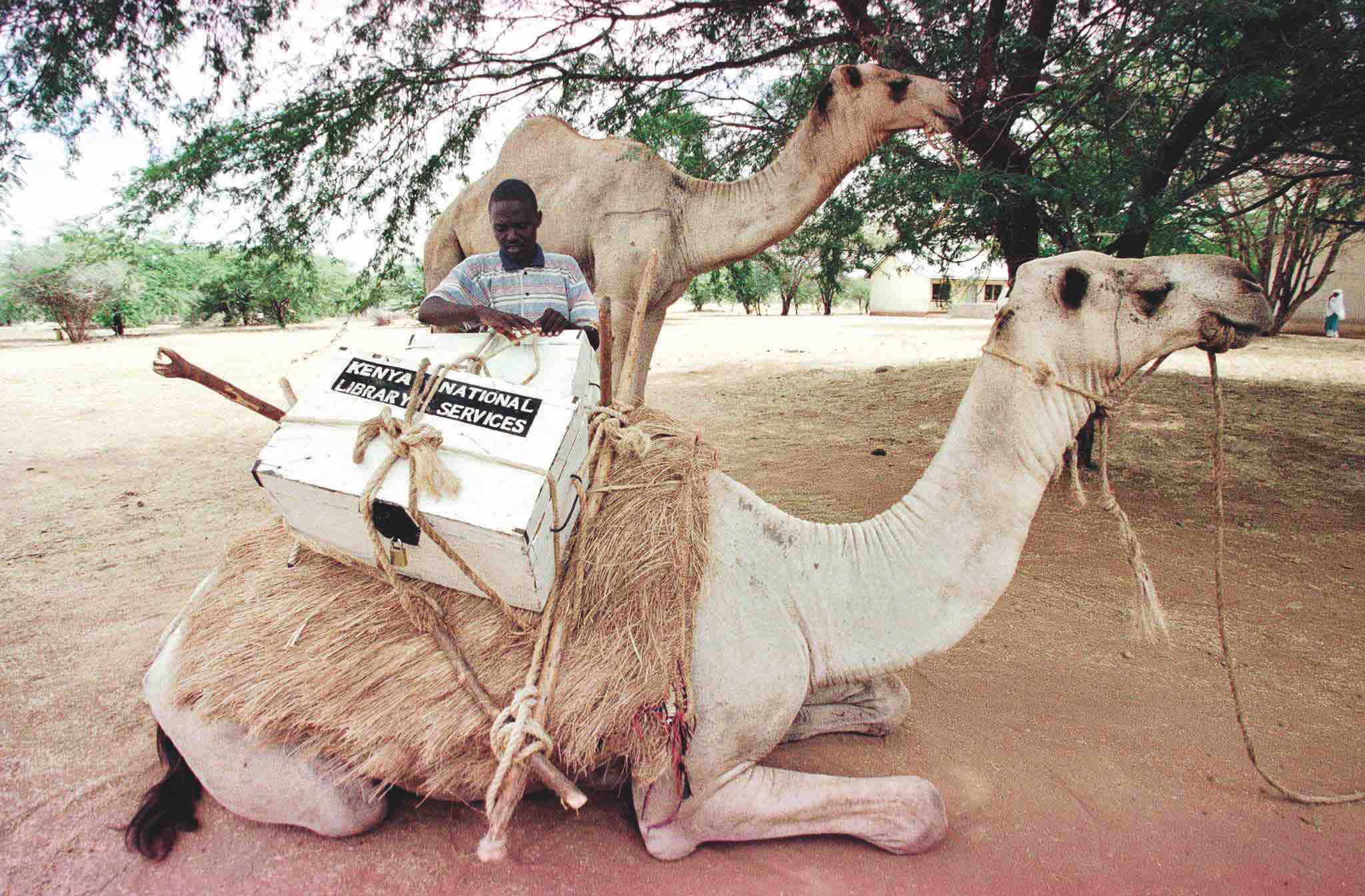
The librarian Joseph Otieno unloads his camels 17 February 2000 in Bour Argy. Using a camel to carry the books, mobile library works with five primary schools around Garissa, 400 km east from Nairobi. (Photo by ALEXANDER JOE / AFP) (Photo by ALEXANDER JOE/AFP via Getty Images)
Cars are not the only type of book mobiles.In the 1990s Kenya had The Camel Library. Each morning a librarian, two assistants and a camel herdsman loaded up one camel with 400 books, and another with a tent, reading mat and chairs. Each day they would head to a different region to visit local villages. After they arrived, they’d pitch the tent, spread the mat out and place the books on top. It would quickly be surrounded by excited children holding picture books and adults fossicking for a book to read. Sadly, the service was superseded by motorcycles, so the camels and the herder lost their jobs. Although in other parts of the world camels are still in service.
Chinguetti was founded in 777 CE. It was a trading post that became a ‘landmark stop on the trans-Senegal trade routes’. It grew over centuries trading ivory, fabrics, spices and knowledge. By the Middle Ages its stone walls housed hundreds of manuscripts held in privately owned libraries. Travelling scholars would stop to study everything from poetry, mathematics, medicine and philosophy. About 5000 residents remain living in this ancient city where families are now custodians of 13 libraries containing over 6000 texts, some dating back to the ninth century. ‘Some of the manuscripts are written on gazelle skins and bound in goat hide, wrapped in bamboo tubes or hand-spun fabric’, tucked away into stone shelving.
So many more fascinating libraries are included in this interesting book. There are underground libraries in India and Tokyo, vending machine libraries in China, a beach library in Bulgaria of all places, the Phone Booth Library, which, of course, is in England, the Open Air Library and the Future Library in Norway.
Thank goodness for libraries. They should be revered, lauded, and frankly, be better funded by governments. They are there for all of us, no matter who we are, our circumstances, our income or wealth, or whether we live in big bustling cities or in far-flung places around the globe.
Of course, now libraries can provide a wealth of resources online so no matter where you live you can have access.
For those of you who are not a member of your local library, maybe it’s time for a New Year’s Resolution. It’s time to join. Sign up the whole family! Then let’s all go to the library over the next couple of months at least once, or even twice, or every week!
Meet the librarians, browse their books, attend an event, do a course, find help with research, borrow from their toy or tool library, or just sit down and immerse yourself in their space and use their free wi-fi.
If you really can’t, or don’t want to visit your library, then jump online and be in awe of all the amazingly fabulous free stuff, e-resources that is, which they have available just for you and me.
I’ll see you there!
Rowena

0 Comments