




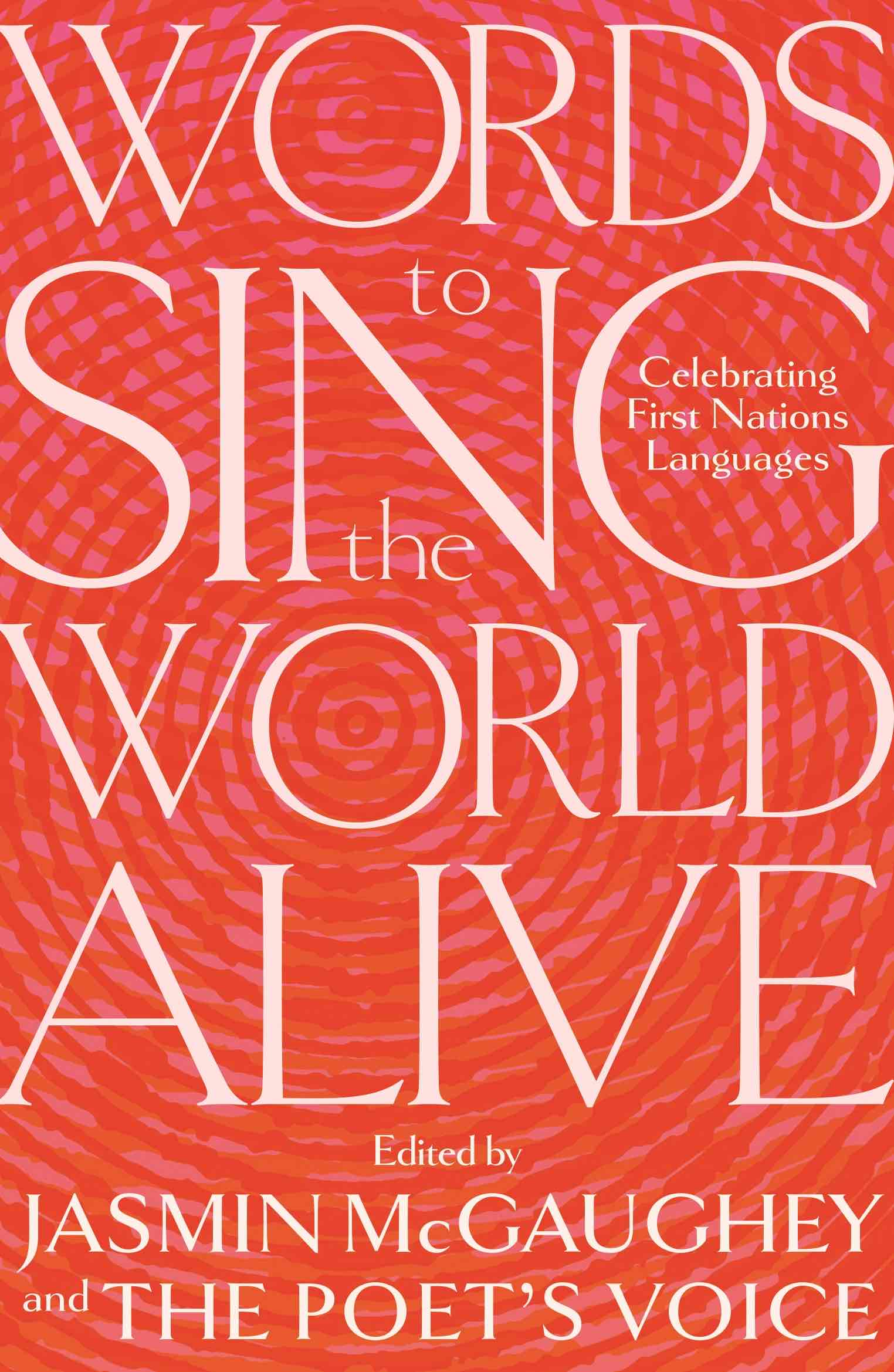
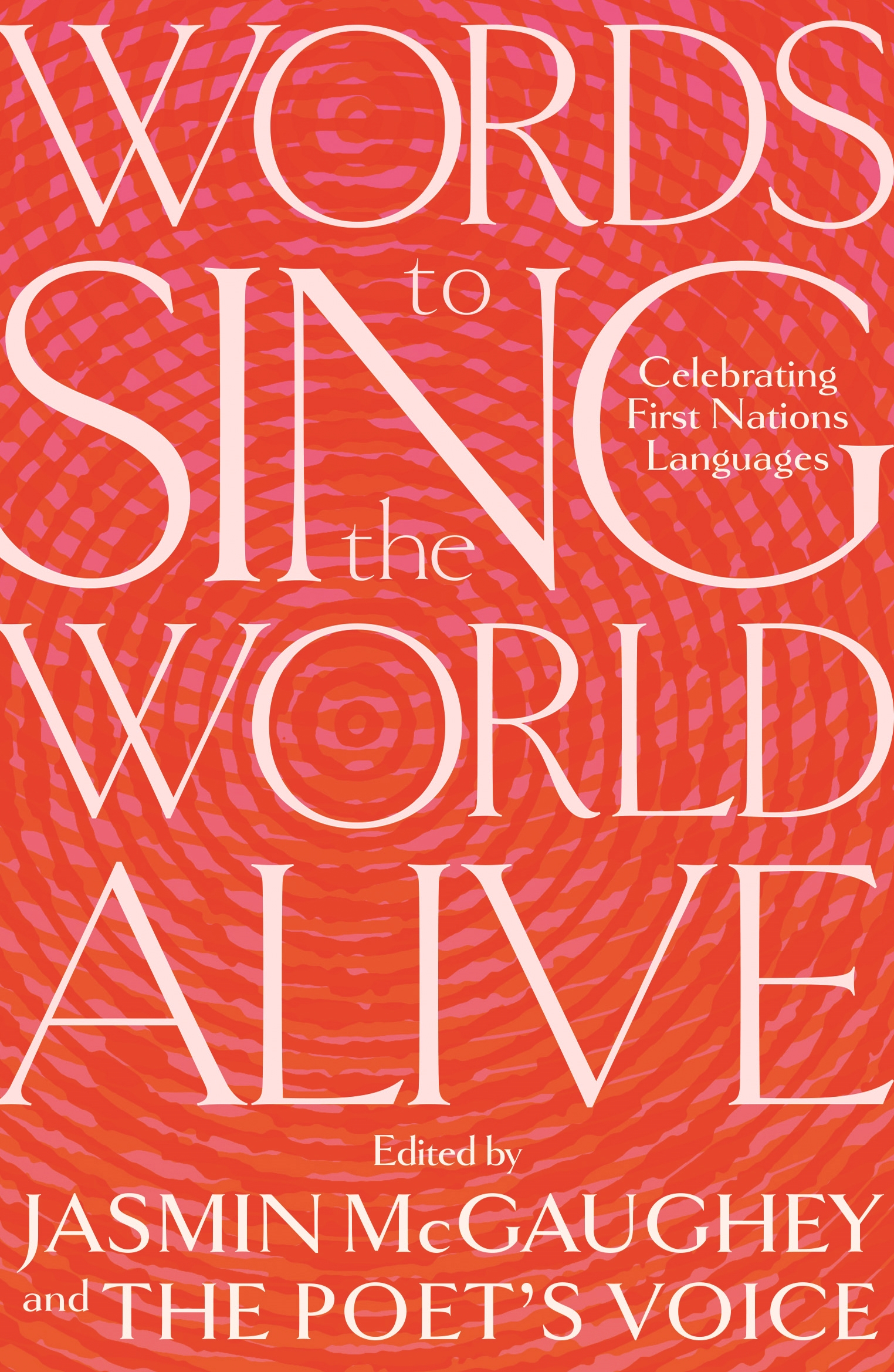
Words to Sing the World Alive is a celebration of First Nations languages from a selection of Australia’s finest Indigenous writers, all wrapped up in a handsome hardback.
In this extract Terri Janke tells us about the Indigenous word, Ged.
ABOUT THE BOOK
Words to Sing the World Alive celebrates First Nations languages from across the continent. Forty First Nation writers and thinkers, journalists and lawyers, artists and astronomers come together to reveal their favourite and significant words. Words that evoke the power of childhood and the wonder of Country; that explore the essence of mother, of fire, of time. Words that are imbued with family and belonging, and that surprise with their connections.
Join contributors including Kim Scott, Tara June Winch, Daniel Browning, Terri Janke, Jeanine Leane, Nardi Simpson, Dan Bourchier, Ellen van Neerven, Alice Skye, Bruce Pascoe, Anita Heiss, Thomas Mayo, Evelyn Araluen, Claire G Coleman and Mykaela Saunders as they share their words to sing the world alive.
GED
by Terri Janke
Ged means home. People are Ged. Land is Ged. Ged is a Meriam Mir language word, from the Torres Strait, the islands between Cape York and Papua New Guinea. Meriam Mir comes from Mer, or Murray Island. Ged is island. Ged is a word I have heard Meriam people speak. It’s in the names of organisations – being strengthened through community use.
It’s a simple word, but its meaning is holistic. Ged means Country, referring to the land, and like the word Country, it also means connection, belonging, home. Because the land is home, and home is the land. The land is our lore, custom and knowledge. It’s our language, our ancestry, our spirit. We call the land Country to refer to the relationship between all these elements. Country is our culture. It is a universal law for Indigenous cultures that you look after the land, because the land will look after you.
Caring for Country is a reciprocal relationship and the land and seas, the animals, fish and plants become sick if not managed by its people, and in turn, its people will become unwell too. Healthy Country means healthy people. First Nations people have lived according to this understanding as the role of custodians of Country is embedded in our way of life. First Nations people look after Country like it is kin.
Ged is connection to the environment. Through a longstanding relationship and lived experience within the land and waters, Indigenous peoples derived knowledge and cultural systems that have been passed down for countless generations. They developed a holistic and unparalleled knowledge about the environment – an understanding of the unique ebbs and flows of the natural world – from which they weaved their culture. This cultural art, craft and traditional knowledge is passed down from generation to generation through story, dance, song and language.
Land management practices are embedded in Indigenous culture. These practices have been tested, learnt, used, adapted and passed down to the next generation. They sustained Indigenous societies for thousands of years, for they are knowledge systems whose foundations lie in sustainability, ensuring the land is strong for this generation and generations to come.
Indigenous fire management, known as cultural burning, was used to protect cultural sites, to clear access for paths on Country, for hunting, for agricultural purposes and for ceremony. Cultural burning keeps the land healthy and helps to prevent catastrophic bushfire outbreaks. Since the loss of ability to care for Country, we have seen the environment decline in health. Without being able to access the land and make decisions about Country, Indigenous peoples are unable to practise their culture – a web of systems of stewardship.
There is much we can take by way of land management traditions to care for Country and keep Ged strong. To maintain the strength of First Nations cultures is to maintain the traditional knowledge, practices and customs that nurture the environment.
Ged is family. I am a daughter, sister, niece, wife, mother and aunty. Ged is ancestors. I have two grandmothers who were born in the Torres Strait. I am connected to Meriam people through my paternal great‐grandmother, Azey Leha, the mother of my grandmother, Agnes Blanco. Agnes was born on Mer in 1921 in the village of Gigrid, of the Peibre clan. She was the daughter of Azey Leha, a Meriam woman, and Victor Blanco. Victor’s mother, Annie, who married Juan Blanco from the Phillipines, was from Old Mapoon in Cape York. Grandma Agnes attended Sacred Heart Convent on Thursday Island before moving to the mainland during the Second World War.
I only met Agnes once, when she reunited with my father. It was in Mossman in Far North Queensland on the mainland, not far from Cairns, where we grew up as kids. My grandmother died two years after we met. I remember her hair, her face, her hands. I remember looking at her feet when she held out her hand to meet me.
I grew up on the mainland of Australia in Cairns, Canberra and then Sydney. I am sad that I did not grow up speaking Meriam Mir language. The disconnection of family and heritage for First Nations people has been devastating on language practice. Like many Aboriginal and Torres Strait Islander people, my ancestors were forced to speak a foreign language. The loss of people and the removal of children silenced the words spoken on Country. Aboriginal and Torres Strait Islander languages were spoken on lands for tens of thousands of years before colonisation, and Australia’s first languages are considered endangered.
Today there are many Indigenous groups revitalising languages and making them strong again. Their work includes recording language, and examining old records in archives, notes and books written by researchers and linguists. This is where my work in Indigenous cultural and intellectual property (ICIP) comes in to help. It aims to empower Indigenous people to understand their rights to their culture, language and stories, and helps non-Indigenous people understand how to engage with ICIP respectfully. My work hopes to prevent Indigenous people from being disconnected from their inherent cultural heritage again.
The marked decline of those speaking Meriam Mir as an everyday language has had an immense impact, and it is good to see the strong Meriam Elders speaking language and revitalising it as a community. I am grateful to speakers who revitalise and share language and culture today. One such person is Meriam linguist Uncle Benny Mabo, who helped me put together words for the 2021 State of the Environment chapter on Indigenous themes, a report of which I was co-chief author. Uncle Benny Mabo has since passed away, but he generously helped me with translation. I was writing about Indigenous ways of knowing and seeing, and caring for the environmental challenges of today and the future. As the world’s oldest living culture, Indigenous people have dealt with environmental change since time immemorial, but this chapter was to be the first time that Indigenous voices would be heard in this report.
I wrote down some words in English like poetry and Uncle Benny Mabo translated the words into Meriam Mir. I wanted the language words to describe land and Country. I wanted to describe that the years of living on land and waters, and interacting with it, and celebrating and respecting it, keeps Indigenous people strong, and in turn keeps Country strong. We care for Country, and it cares for us. Culture is home, culture is Ged. This is what we came up with:
‘Uteb Azimwaretli.’ Protect our land.
‘Keriba au Tonaride Keriba Ged Kelar Aiswerli.’
The strength of our culture gives strength to our land.
**********
Dr Terri Janke is a Meriam and Wuthathi woman and an international authority on Indigenous Cultural and Intellectual Property (ICIP). She is the owner and Managing Director of Terri Janke and Company, an award‐winning legal and consulting firm founded in 2000. The firm has a vision to empower Indigenous peoples to manage their culture, attain their business goals and to assert their ICIP. The protocols in her book True Tracks: Respecting Indigenous knowledge and culture are used widely to support collaboration with Indigenous and non-Indigenous peoples. Terri was a co-chief author of the 2021 State of the Environment report.
Excerpt from Words to Sing the World Alive: Celebrating First Nations Languages edited by Jasmin McGaughey and The Poets Voice
0 Comments