




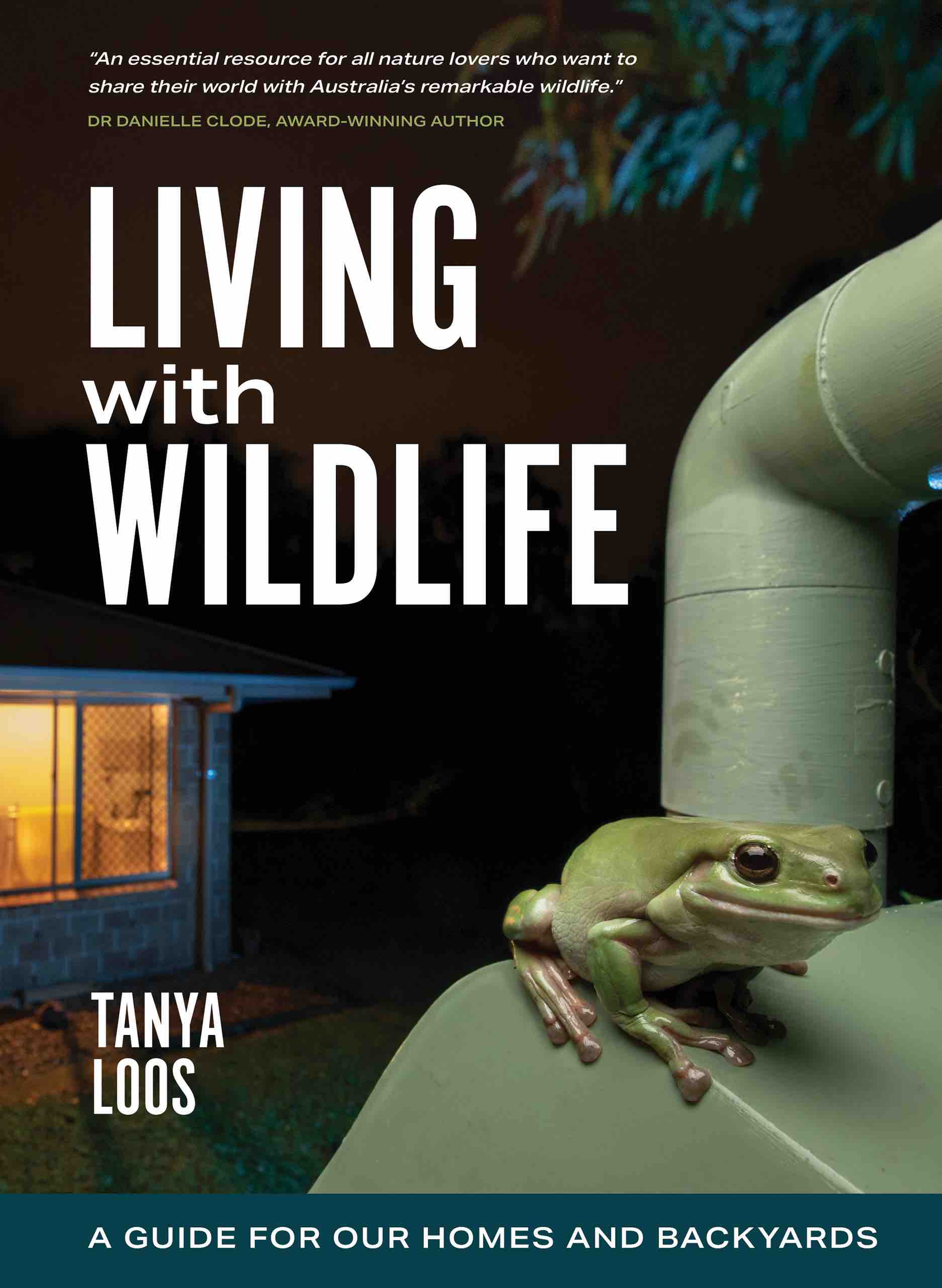
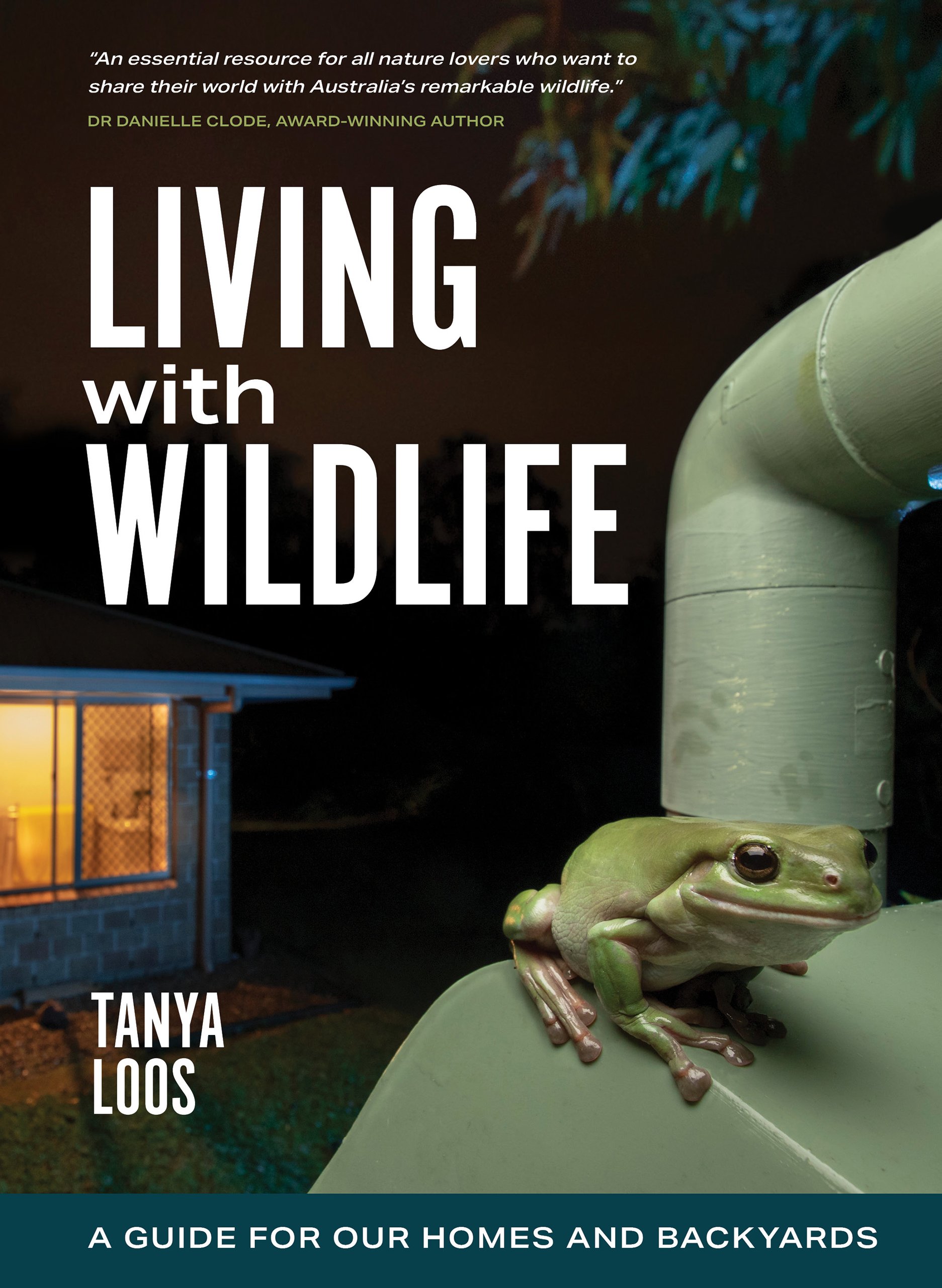
Living with Wildlife: A guide for our homes and backyards by TANYA LOOS is a practical and wildlife-friendly guide for successfully living alongside our wild neighbours.
Possums in the roof, an echidna in the garden, or perhaps a python in the pantry? Tanya Loos explores commonly asked questions and issues about encounters with wildlife. Taking a wildlife-friendly approach, she provides practical information, advice and solutions, based on current guidance from wildlife rescue organisations and the latest research.
In this extract we looks at those spiders that live inside and around our homes.
EXTRACT
Some spiders find our homes ideal habitat with corners for web building, walls for hunting – and plenty of insects and other spiders to feed upon. Sharing your house with our eight-legged housemates is perfectly safe with a few simple precautions.
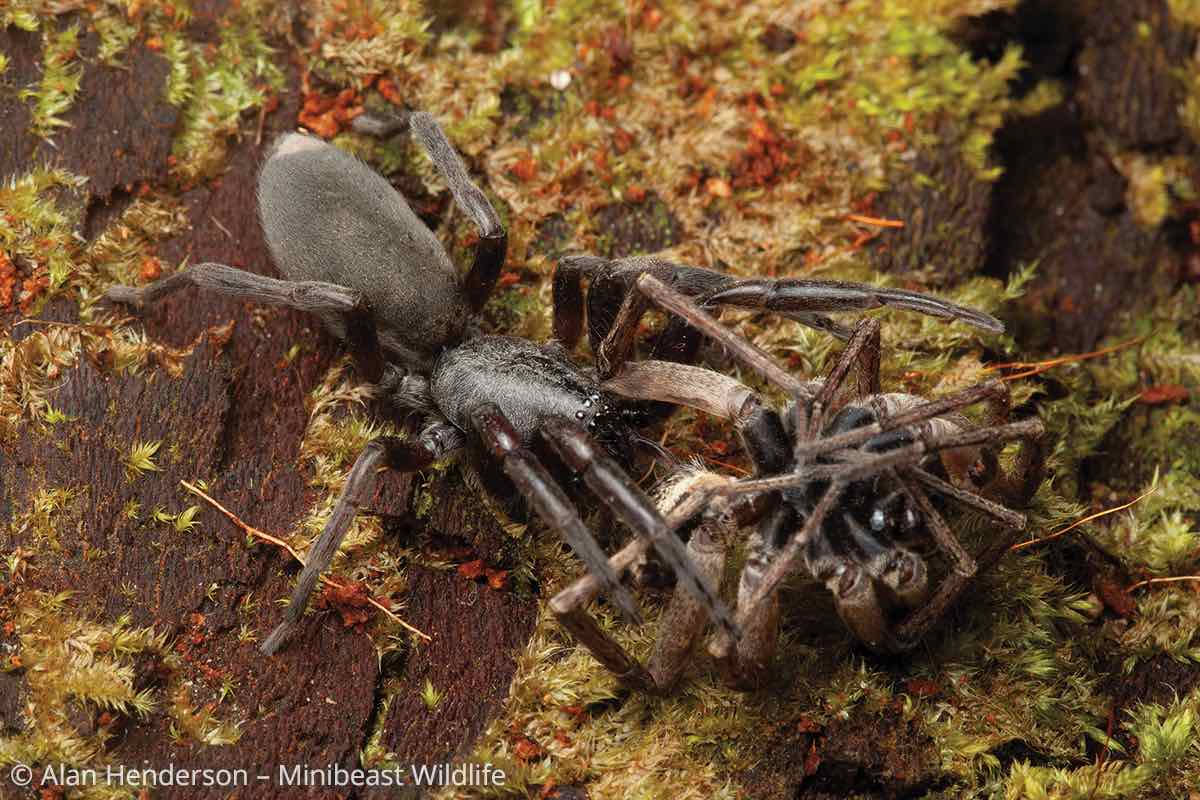
A white-tailed spider pauses with their spider prey, in this case a wolf spider.
PHOTO: ALAN HENDERSON – MINIBEAST WILDLIFE
BEHAVIOUR
The behaviour of these spiders in our homes varies depending on their hunting strategy – whether web-based or ambush.
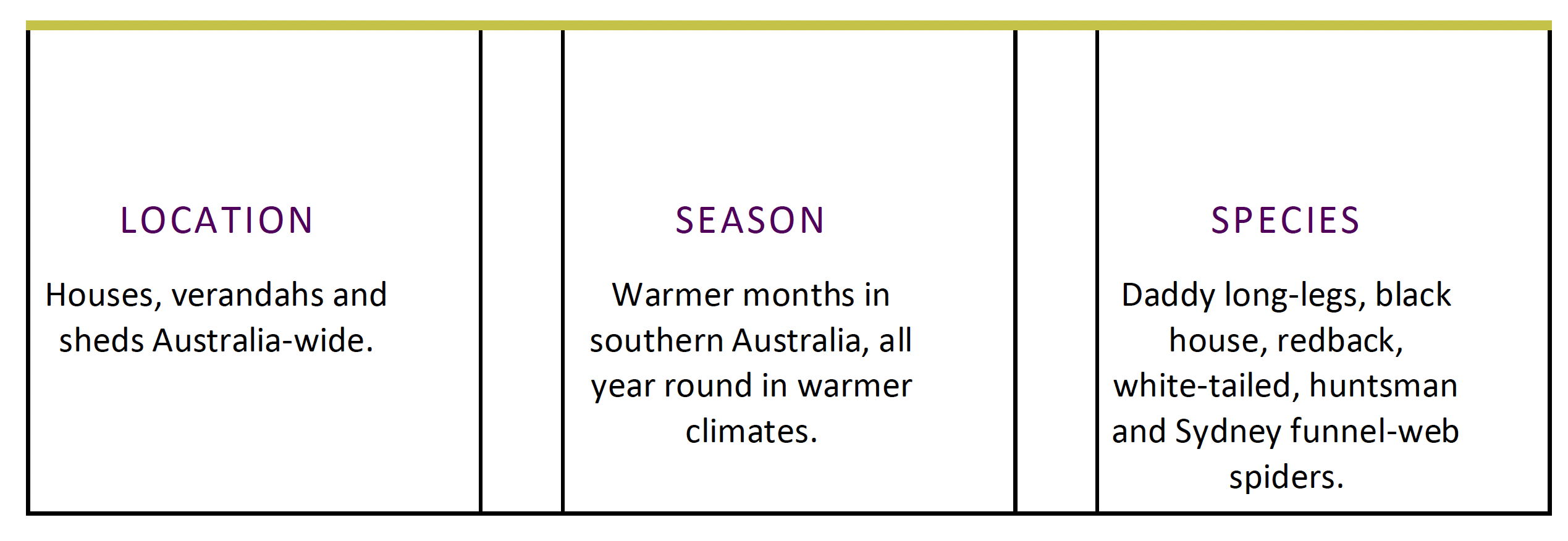
The most common species in houses is the daddy long-legs, which is in fact several species, with both introduced and native members in this family (Pholcidae). Other web builders found in our homes include the black house spider and the redback spider. Another infamous spider is the white-tailed spider, which does not build a web. Huntsman (Sparassidae) are famed for their huge size and are found in houses throughout Australia. These spiders are known as modern spiders, the araneomorphs. The Sydney funnel-web is a mygalomorph, a group of large primitive spiders which live in burrows. As the name suggests, the Sydney funnel-web only occurs in a 160-km radius around Sydney – but there are other primitive spiders that look very similar, such as mouse spiders and trapdoor spiders.1
The daddy long-legs spider catches their prey via a tangled, unstructured web, usually erected in the corner of a room, or behind a picture frame. They also create trip lines of silk that are nearly invisible, radiating out from the web and allowing the spiders to sense their prey over a much wider area.
The black house spider builds their web in the corner of a window, both inside and out, and around light fittings. The web is untidy and may have a cocoon-like tunnel where the spider shelters during the day. Away from houses, these spiders build their messy webs in the gnarled bark of huge eucalypts or in rocky under hangs.
The redback spider also has an untidy web, but prefers dark, rarely disturbed corners – most famously the outdoor ‘dunny’, but also under verandahs. We have had a redback spider in our letterbox, and also in the corner of our fire bunker. Redback spiders are not as common these days in warmer parts of Australia since the introduced Asian house gecko seems to like preying upon them!1
The huntsman spiders are instantly recognisable with their very long legs and large size. Huntsman spiders are ambush predators – they do not build a web, but rather wait in a favoured spot to snatch insect prey. When frightened, these spiders can run at an incredible pace. The fastest huntsmen recorded are both from tropical Queensland – northern banded hunstman Holconia hirsuta and golden huntsman Beregama aurea – and can run at 42 and 31 body lengths per second, respectively.2
White-tailed spiders do not build a web – instead they move through their habitat, whether that be bushland or the downstairs rumpus room, preying upon insects and other spiders such as black house spiders.
Sydney funnel-webs and other mygalomorphs are burrow living, and rarely come inside the house. Males are the most commonly encountered as they wander in spring searching for females. These spiders hunt from their burrows, using trip lines to alert them to the presence of passing prey.
RISKS
To spiders: The risks to spiders in the home very much depend upon the attitude of the humans present. Many people tolerate some level of spider population in the house while others are frightened of spiders and use pesticides or vacuum the spiders away, even while they are still alive!
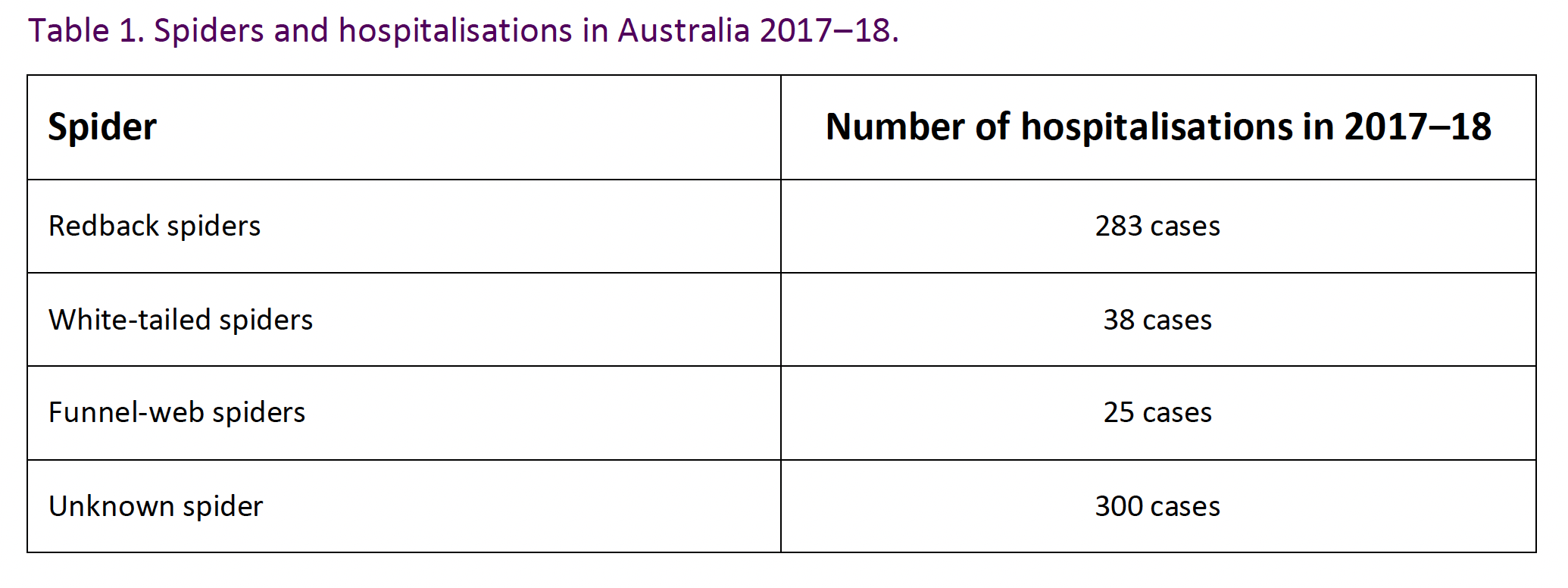
To people/property: Spider bites and hospitalisations do occur. But compared to bees and wasps or even dog bites, the risk is minimal. Between 2017 and 2018 there were over 3,500 Australians in hospital due to contact with a venomous animal or plant, and more than a quarter of them were due to bee and wasp stings. Spider bites accounted for just one-fifth (19%) of hospital visits. For comparison, in the same year 9,542 people were hospitalised due to dog attack.3
Myths abound about the dangers of spiders, probably related to the prevalence of arachnophobia; fear of spiders may be the most widespread fear of animals.4
The daddy long-legs spider is said to have the most potent venom of any of the spiders, and the only reason they aren’t featured in Table 1 is because their jaws are too small to penetrate human skin. This is completely untrue, and probably arose because people observed the fearsome redback spiders being caught and eaten by daddy long-legs – so the logic went, these must be powerful! But the truth is more mundane in nature – the daddy long-legs’ legs are so long they can wrap up the redback without coming into reach of their fangs.1
White-tailed spider bites are said to cause a ‘flesh-eating’ wound much like gangrene. However, a survey of 130 bites by this species found no evidence of necrosis.5 Instead, bites had minor effects, or at worst painful red lesions.
Sydney funnel-web venom is very potent indeed, but happily there have been no deaths since the development of an antivenom in 1981.
ACTIONS AND SOLUTIONS
Your next steps depend on your tolerance level for spiders and their location in the house. Even the most ardent spider lover may find it difficult to turn out the lights and go to sleep when there is a large huntsman spider just above the bedhead.
- Daddy long-legs are harmless – they can be left where they are, and the webs cleaned away with a stick occasionally to prevent excessive build-up.
- Black house spiders stay in their webs, so if you don’t mind the gothic décor, you can leave them in situ.
- Redback spiders are best removed and taken outside – use a stick to wrap both spider and web up, and wear gloves just in case!
- Huntsman can be left where they are or caught and put outside. The easiest way to capture a spider is to place a glass or plastic container over the spider, and then slide a thin piece of cardboard (such as a postcard or greeting card) underneath the animal, taking care not to damage their legs! Then, ideally with the help of someone to open the door, place both container and card outside and let the spider run away. For the really large spiders, a plastic sheet such as a flexible chopping block may be used. This method is very effective but does get the heart rate up a bit as you position the container over the spider on the wall. If a huntsman or other spider is trapped in the sink or bath, and you would prefer not to catch it, simply place a towel half-in and half-out of the sink or bath to form a ladder and allow the spider to climb out unaided.
- White-tailed spiders are best caught and placed outside using the above method.
- Funnel-web spiders and other mygalomorphs should be treated with extreme caution and moved outside. Always wear gloves when catching these spiders. The Australian Reptile Park has the country’s only funnel-web antivenom program and they are always looking for live spider donations! Their website has useful advice on how to safely catch a funnel-web, and a list of spider drop off points around New South Wales.
SHARING YOUR HOUSE WITH SPIDERS
The spiders generally like to keep to themselves. All we need to do is avoid inadvertently placing our hand in a spider’s web, such as a redback spider, or accidentally disturbing a spider such as a white-tailed spider as it lays hidden in clothing, sheets or shoes. Here are some hints that may help you and your family members be spider aware:
- Wear gloves when carrying out clean-ups of sheds or verandahs.
- Check first before placing your hand in dark spaces such as mailboxes.
- Inspect any items that may be left outside before use, such as gumboots, bike helmets, winter gear, camping equipment and other potential spider habitat that hasn’t been used for a while.
- Turn back your sheets before hopping into bed.
- Give any clothes that have been laying around in your floor pile a good shake before wearing; same applies to shoes and gardening gloves, especially those that haven’t been worn for a long time.
- Funnel-webs can remain submerged without any ill effects for a very long time indeed, so do not assume that any large spider floating in a pet’s water bowl or the pool is dead. Bring pet water bowls inside.
- Draught excluders fitted to the bottom of any external doors should exclude funnel-webs as they are strictly ground living.
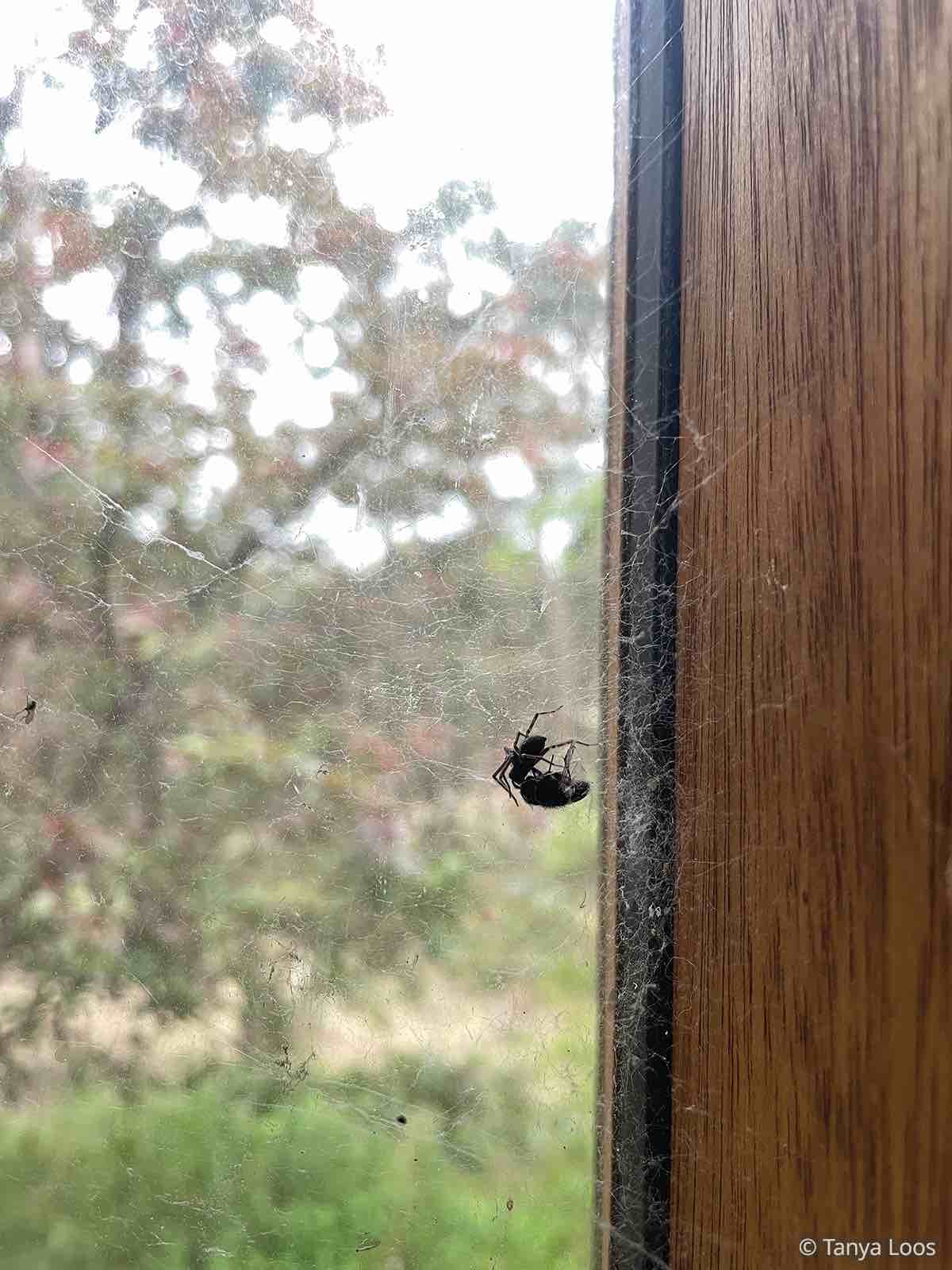
A male black house spider helping to keep the insect population down in the house – here feeding upon a house fly.
TANYA LOOS
ABOUT THE AUTHOR
Tanya Loos is an ecologist, educator and science communicator living in central Victoria, who is passionate about wildlife. Tanya loves writing about nature and science, and her work has featured in Cosmos Magazine, Wildlife Australia and Australian Birdlife.


0 Comments