




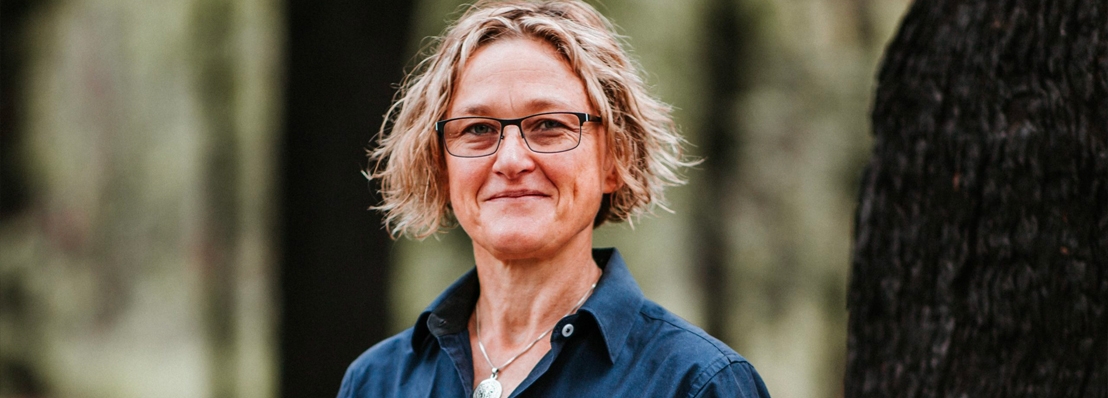
A solar eclipse, destruction of landscape and animal species, and a group of people hiding in a national park.
INGA SIMPSON reveals their connections to JENNIFER SOMERVILLE.
 It was a podcast by a British writer about the disappearance of moths and other insects in the UK that first alerted writer Inga Simpson to the phrase, ‘The Thinning’. That expression refers to a reduction in numbers, rather than extinction, and Simpson has used it as the title of her latest novel.
‘Some people may think that this kind of reduction doesn’t matter,’ said this Australian writer known for her books about nature as well as speculative fiction, such as The Thinning.
‘The real hook for me was reading an article about the English language. Many words we use come from the natural world, yet a children’s dictionary was dropping words such as “swan” and “heron” in favour of “MP3” or “streaming”.
‘There is a danger of people becoming illiterate in their own language, and that concerns me as a writer, because language is so important.’
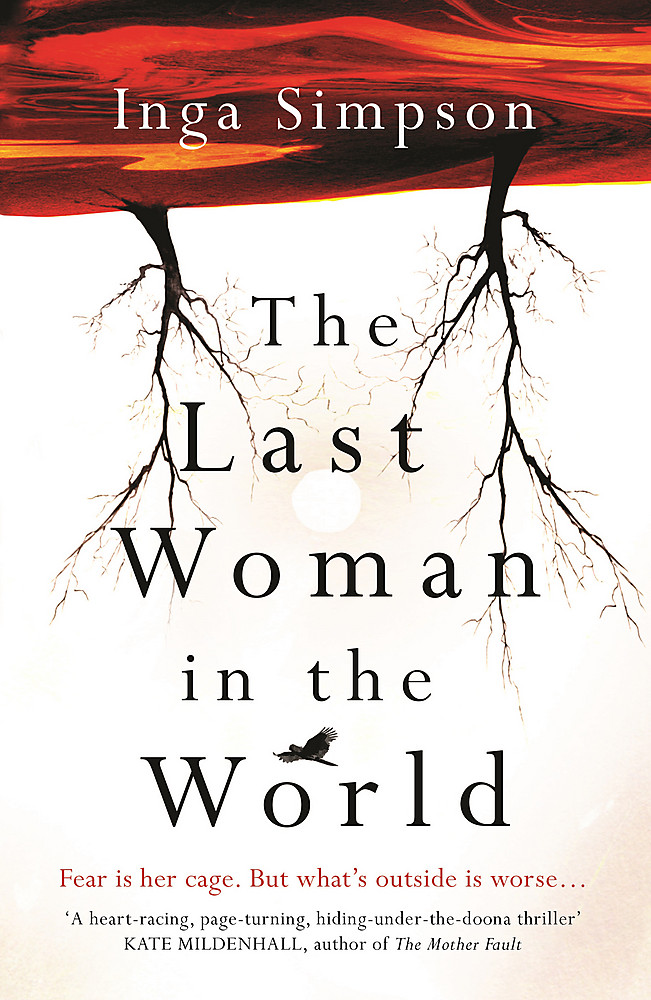
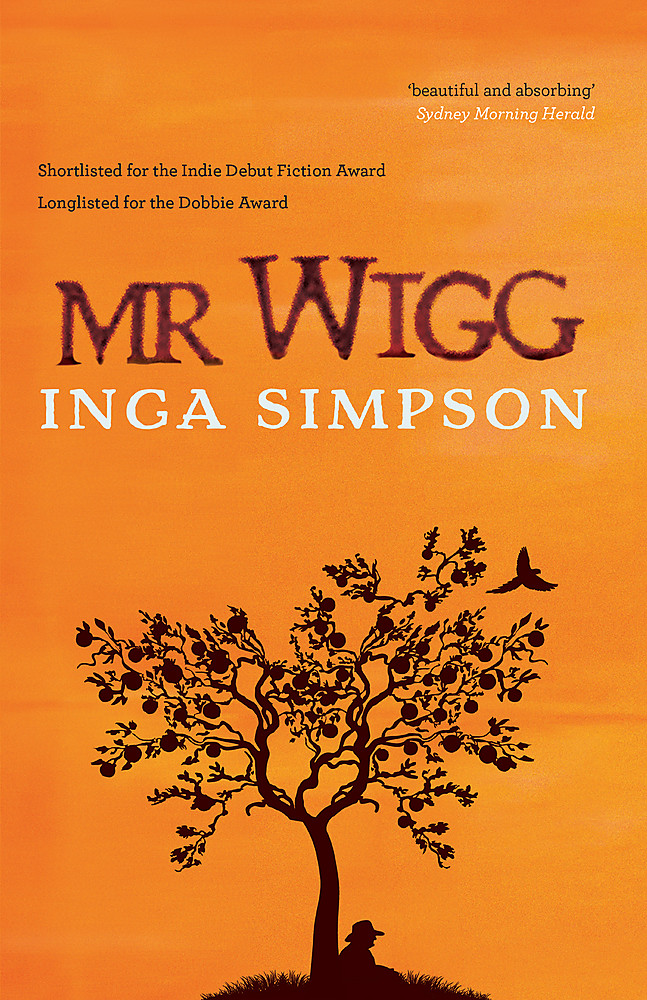
Inga Simpson has had several novels published since Mr Wigg in 2013. She has always regarded herself as a nature writer and her second PhD explored the history of Australian nature writers. Nest, Where the Trees Were, Understory and a children’s book, The Book of Australian Trees followed her first novel, along with a speculative environmental thriller, The Last Woman in the World and the bestselling novel about cricket, Willowman.
While it was the information about the thinning of species and its effect on language and imagination that first grabbed her attention while writing Willowman, it was when she travelled to a specific area of NSW that she knew she had her setting for The Thinning.
 She visited the Warrumbungle and Mount Kaputar national parks briefly but returned there to spend a month camping and walking, as well as the Pilliga Forest between them. She had been entranced by the rugged beauty of the landscapes and saw them as arks for surviving animals and maybe humans. She discovered that there were many species living only there, left behind when the rainforests retreated to the east coast.
It was on Simpson’s second-last day in the national parks that she stood at a lookout on Mount Kaputar and suddenly the final scenes from the book she was planning sorted themselves out in her mind.
‘I looked back at the Warrumbungle National Park, and in 15 minutes I had pictured the final scenes. Without that time there I would not have had them,’ she said, revealing she quickly wrote those scenes while still in the national park.
Astronomy and the night sky took over her novel, which deals with a reality sometime in the future for Australia. There is almost subtle mention of the last koala dying in captivity and the Great Barrier Reef being declared dead, with societal and environmental decay all around.
As Warrumbungle National Park is Australia’s only Dark Sky Park, containing Siding Spring Observatory, this provided Simpson with a reason for a family to live within the park. She had already determined that the father would be an astronomer, employed by a university, but she candidly admits the whole astronomy thing was too big for her brain.
Simpson has always been a nature and landscape photographer, and like many people, did even more of it during COVID lockdown. While trying to figure out the plot, she wondered if the mother could be an astrophotographer working at the observatory. She had been given a book about astrophotography, attended a one-night workshop on it in Goulburn, and was hooked.
It’s addictive and satisfying, according to Simpson, and for her it does feel a little magical. The plethora of satellites above our planet are a major cause for concern in the novel, as they are for its writer.
‘There are thousands of satellites up there,’ she says. ‘I can’t take a single shot at night without dozens of satellites showing in just one exposure. I know they enable lots of things in our daily lives, like communication, but they are another form of pollution.’
The main protagonist in the novel is Fin, a young woman still deeply affected by the death of her astronomer father. She is living in hiding in the national park with her mother, along with other former observatory and park employees, known as Illegals, always ready to run.
A shadowy organisation, MuX, has taken over many CSIRO functions; teenage girls are having their fertility monitored so they can breed with the people known as Incompletes; gas wells have destroyed the Pilliga landscape; and a total solar eclipse is about to happen.
‘There are thousands of satellites up there,’ she says. ‘I can’t take a single shot at night without dozens of satellites showing in just one exposure.
An Incomplete boy, who escaped the arrest of his parents, is given refuge with the Illegals, and he and Fin set out at her mother’s bidding to be at the top of Mount Kaputar for the eclipse. These children have been born short-sighted, a consequence of too much screen use by parents, and need to use special eyedrops and wear glasses. This is already happening, says Simpson.
Equally factual is her description of some of the birds that have evolved with bigger beaks and claws, and she has Fin recall her father saying that gannets’ eyes have turned from blue to black because of a virus.
Simpson maintains the tension throughout the novel, with Fin never sure of what her mother and the other outliers are planning, and sensing that there is some kind of public resistance movement, but not being really sure. Her trek to Mount Kaputar is interspersed with recollections of her past family life, school life, and best friend.
Simpson says that the overall project in her writing has always been to close the gap between the reader, particularly younger readers, and the natural world.
‘It’s an idea from Celtic beliefs that we are close to the natural world and First Nations people know that there are special places,’ she said. ‘In this book, Fin doesn’t have special abilities, but her senses have really developed as she has spent time with the park rangers, and for the past 18 months was really cut off from the world.
‘There is an affinity with eagles … and I experienced an interaction with an eagle like I have described her having with her father.
‘There is more to the world, if we are open to it, and Fin feels her powers escalating and wants to cross over to the natural world. I hope it’s empowering for younger readers.’
So, what’s next for Inga Simpson?
She has another children’s book, The Peach King, which evolved from Mr Wigg, almost ready, and is now working on a collection of short stories that continue the themes of The Thinning, with interconnected characters living close to nature.
 Simpson believes that Willowman has been her most commercially successful book.
‘After it was published, I had all these old cricketers contacting me, telling me their cricket stories. I even had a good friend who smuggled a sign into a cricket match in India, attended by the Australian and Indian prime ministers, which he held up. It simply said, “Read Willowman”,’ she said.
‘I think it and Mr Wigg will stay in the public eye for a long time.’ •
**********
During her research into the national parks and the Pilliga Forest, author Inga Simpson had learnt about the proposed fracking project in the area by Santos, drilling more than 850 coal seam gas wells across 95 000 hectares in the heart of the NSW grain and agricultural belt. With 60 per cent of the project in the Pilliga Forest, the project would require clearing 1000 hectares.
Opposition has been intense, particularly from the Gomeroi People, as there are concerns about polluting the Pilliga waterways and the Great Artesian Basin beneath it.
While the project was approved by the NSW Independent Planning Commission, subject to a number of conditions, as did the Native Title Tribunal, the Gomeroi group appealed the decision in the Federal Court, which in March this year ruled that the greenhouse gas emissions from the Santos Narrabri Gas Project were not adequately assessed in light of the Gomeroi Native Title claim, but Santos is continuing to push ahead with its proposed gas project.
Inga Simpson has declared that 10 per cent of author profits from sales of The Thinning will go to the community campaign against Santos.
Follow Inga Simpson on Instagram here.
0 Comments