



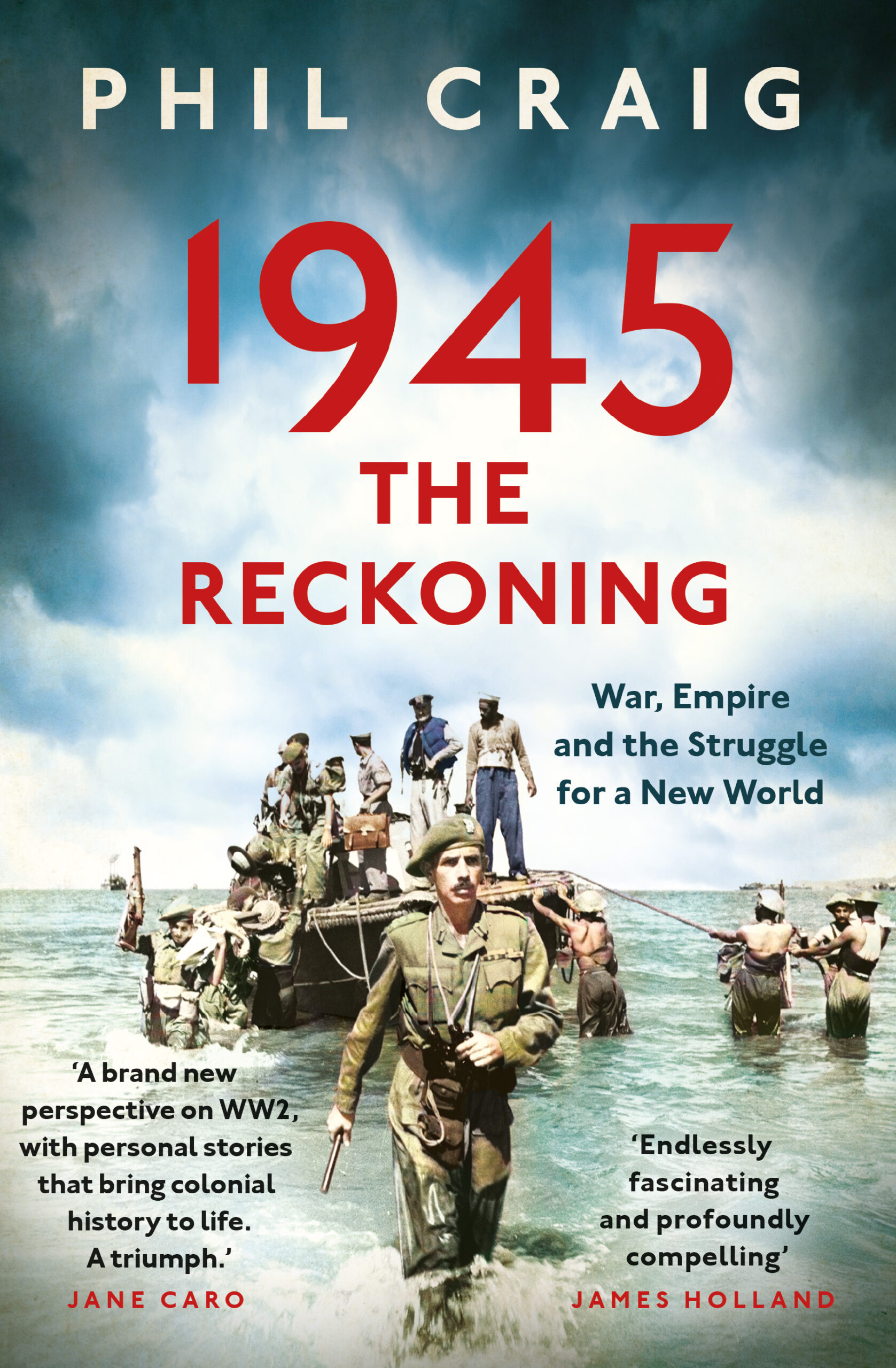
1945: The Reckoning is the conclusion to the bestselling ‘Finest Hour trilogy’, and recounts how the final, dramatic acts of the Second World War set Britain, her colonies and her dominions on a new course.
Read on for an extract …
**********
When the people who fought in the Semut operation came to reminisce about it −Dayaks and SRD men alike − some of them did so warmly. Different peoples bonded by a common cause against a cruel enemy. The drama and romance of moonlit canoe raids and great Catalinas swooping down onto still dark waters. The borak, the singing, the wondrous natural surroundings. It made for a thrilling story, packed with exotic colour and ‘derring-do’, one of those ‘jolly little wars’ that a young Winston Churchill had written about while serving as a cavalry officer in nineteenth-century Africa. But the stories that would dominate most post-war memories were of the horror that overwhelmed the operation in its final weeks.
So many civilians died or were injured in these poorly planned and inaccurate air raids that one of the Semut teams painted a large white sign on the ground as a message to their fellow Australians flying high above. The sign read: FUCK OFF.
Semut started life as a British-controlled political and intelligence operation carefully dressed in Australian clothes. It was meant to ‘show the flag’, regain ‘lost face’ and so help pave the way for a return to British rule. Sarawak did indeed become a profitable British crown colony after 1945 and remained so until it joined the independent Federation of Malaya in 1963. If Operation Semut helped make that happen then perhaps it fulfilled its secret purpose. But it is hard to see how it did so.
Either way, at some stage inside the mysteriously opaque world of the SRD it morphed into a grand guerrilla operation with cash-for-human heads as a key ingredient. It’s likely that General Blamey and the other top Australian commanders never expected it to develop in this way, and the Americans on MacArthur’s staff who approved the mission certainly did not. But Special Forces were and are special, and in 1945 they carried an aura of secrecy and excitement, a cachet that placed them outside the normal hierarchy and allowed their projects to run ahead of scrutiny or control.
Perhaps SRD was in fact truly run by ‘larrikins’, British and Australian alike. Men who enjoyed operating outside the rules, specialised in the unconventional and found the whole business of war really very jolly indeed. In her elegiac farewell to empire, Jan Morris wrote about how, during the Second World War, ‘racy characters of the imperial legend reappeared from clubs or offices, to rediscover themselves in commando raids, parachute drops or weird prodigies of intelligence’. There’s more than a little of this in the story of Semut.
ABOUT THE AUTHOR
Phil Craig is a best selling author and multiple-award-winning film-maker.
He studied history at Cambridge university, was a BBC graduate trainee and built his career working for iconic British TV series World in Action and Panorama. Later he held senior positions at the prestigious Brook Lapping production company, at Channel Four, at the Discovery Channel and at ABC Television in Australia where he ran the entire factual output including its high profile ANZAC centenary project. Throughout his TV and writing career Phil has spent many years researching and reinterpreting the story of Britain and its Empire during the Second World War, including his definitive and bestselling account of 1940 – Finest Hour.
He now runs The Scandal Mongers Podcast with his friend and fellow writer Andrew Lownie.



0 Comments