




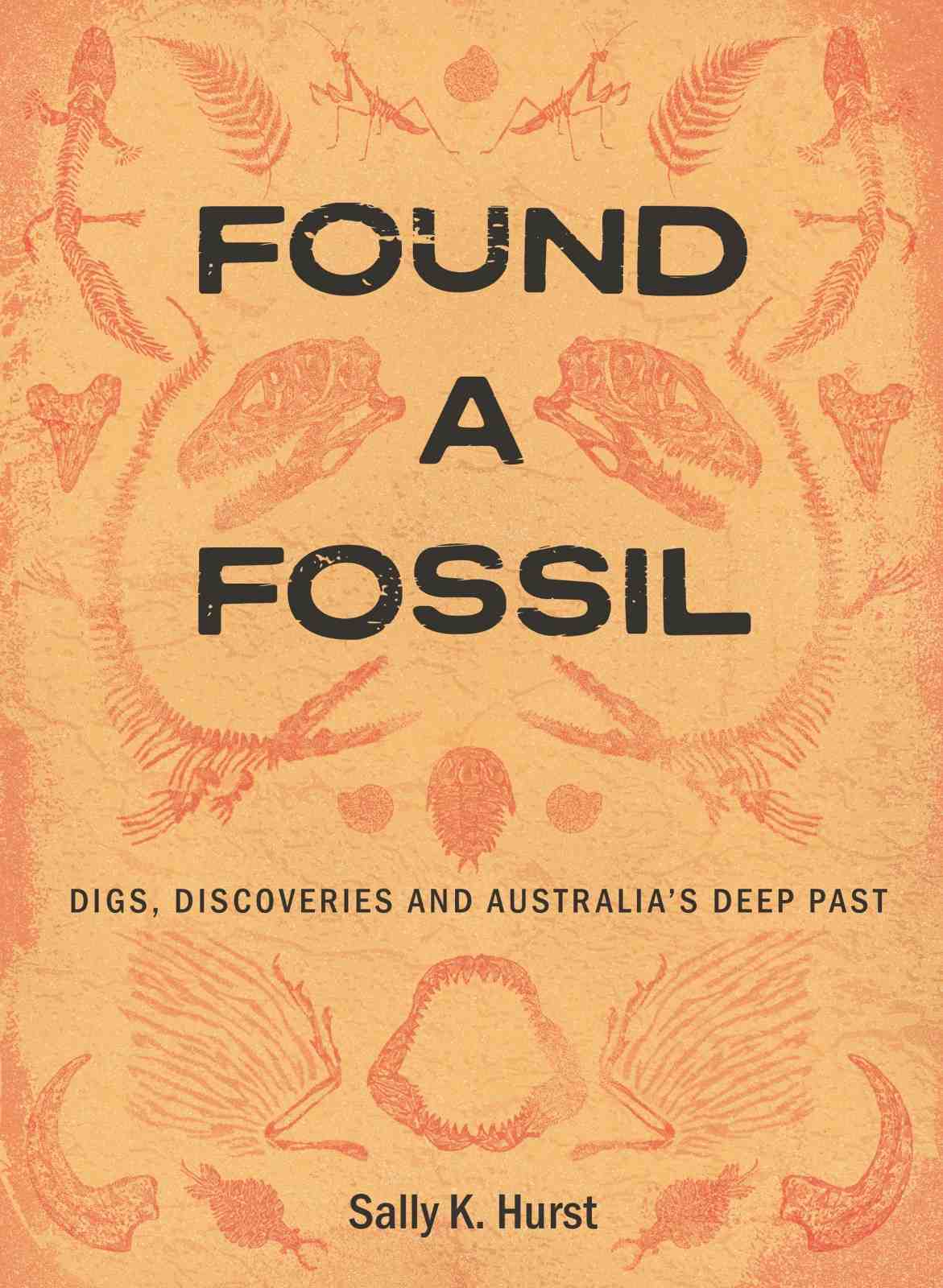
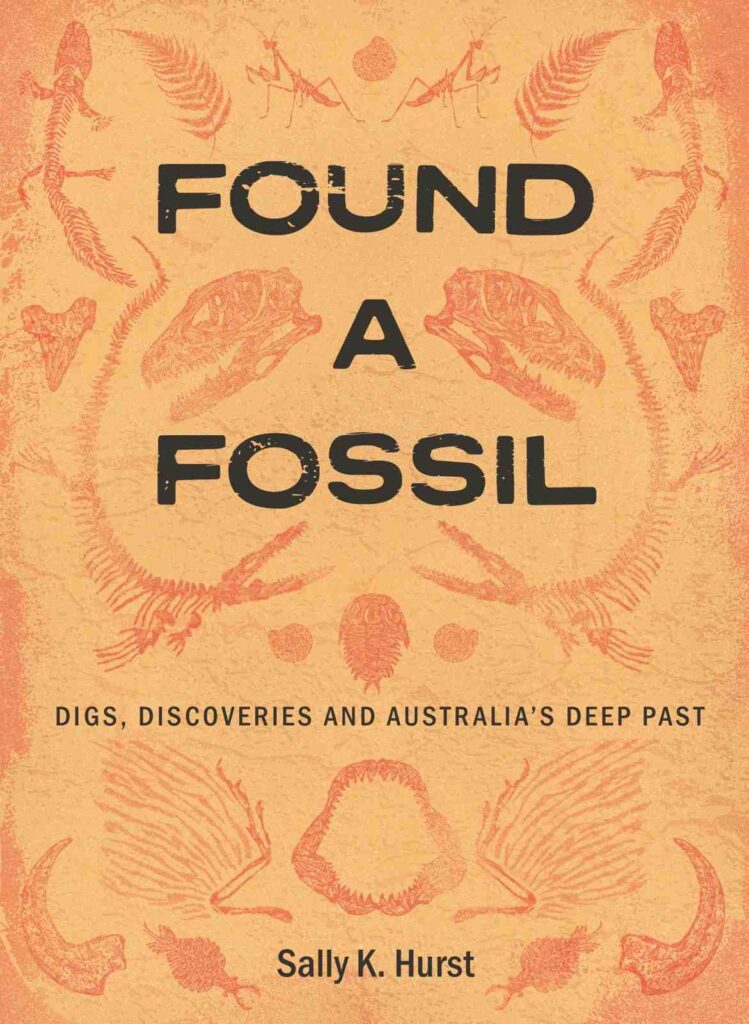
Imagine stumbling upon a fossil or an Indigenous artefact during a walk in the bush, on a quiet beach or across your family farm – what would you do next? Found a Fossil by SALLY K HURST is a fascinating journey into Australia’s deep past.
Here’s a sneak peak into the world of fossils.
EXTRACT
What to do if you find a dinosaur in your backyard
 Now that we’ve discussed what everyone else might do if they came across a fossil or Indigenous artefact – what are you actually supposed to do?
While it may seem far-fetched to find a dinosaur bone when you’re out and about, it does happen, probably more than you think. Dinosaurs, such as the herbivorous Muttaburrasaurus, the opalised Fostoria and the long-necked Savannasaurus were all dinosaurs discovered by members of the public (learn more about them in Chapter 6). Without discoveries like these, the dinosaur record of Australia would be sparse indeed.
The answer to what you should do if you find a fossil can be tricky as it changes depending on what you’ve found and where you’ve found it. This is one of the reasons why the reporting of fossils and artefacts is so confusing and convoluted.
Fossils around Australia
The Protection of Moveable Cultural Heritage Act 1986 is the only Australian act related to heritage protection that operates at a federal level. While this Act can be used to stop the export of scientifically significant specimens, there isn’t really a body that enforces the protection or regulation of fossil sales within Australia.
The situation gets more complicated because every state and territory has different laws protecting fossils. In Queensland, you might need a fossicking licence and you can’t collect vertebrate fossils from some land types. In South Australia, all fossils belong to the Crown, but it’s not as if the legislation lists a phone number for King Charles so there’s not really any guidance on whether you’re meant to report these fossil finds or, in the absence of King Charles, who you’re meant to report them to. In Western Australia you may need a Miner’s Right. In Victoria, fossils aren’t explicitly mentioned under any legislation. For places where laws or protections do exist it can also be confusing as to who enforces them – sometimes it might be local council, a state government department, national parks or other party.
Where I live in New South Wales, there are also no laws or guidelines on what to do if you uncover a fossil in your backyard. For many fossils this isn’t an issue – there are several common fossils from known localities that scientists have already sampled and studied, and we really don’t need any more of them taking up room in museum collections. Some of these known sites are within national parks and you can go and visit them, take photos and leave them for the next person to enjoy. Other localities are on public beaches or Crown land – places where you can go and collect fossils and take them home (although hopefully still leaving a few for future fossickers).
Within national parks or places like marine reserves, fossils are protected – along with everything else, from the rocks on the ground, to the leaves on the trees, to the sand on the beaches. Fossils are not awarded any significance of their own under current legislation. There are some protected fossils sites, such as Wellington Caves, near Dubbo, that are protected under local Environment Plans, or places like Talbragar Fossil Beds, near Gulgong, that are protected as a Crown Land Reserve (with access via permit). Apart from those designated places, most fossils in New South Wales are pretty much fair game.
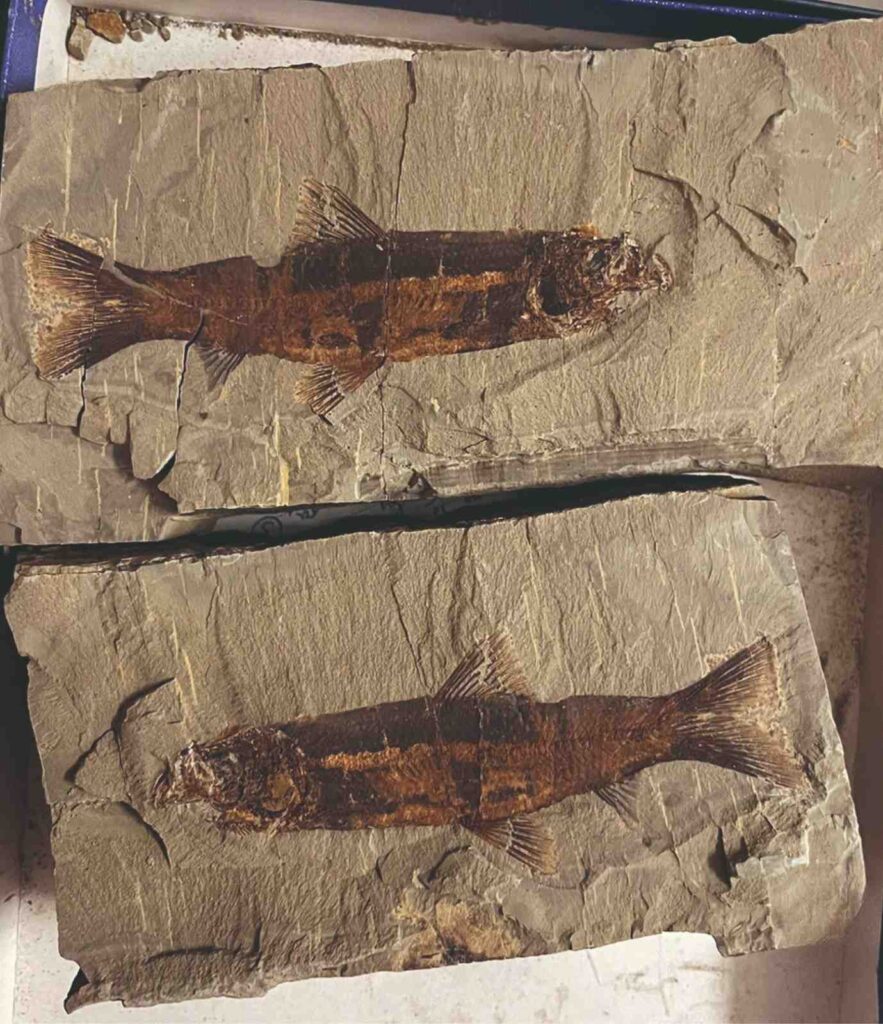
Early Cretaceous fish fossil from Koonawarra, Victoria, in the Australian Museum Palaeontology Collection.
This means that if in fact you did discover a dinosaur in your backyard, in New South Wales you don’t actually have to tell anyone. But if you do think you’ve discovered a dinosaur, or other new fossil – please don’t keep it to yourself! Inform a museum or a university, or the Found a Fossil Project.
Unfortunately, these requirements and the legislation that is paired with them is often very vague, difficult to find, and confusing to understand, an issue common across all states and territories in Australia. Within the appendices of this book, you can find a brief guide to what laws may apply for fossils across all states.
What should you do if you find a fossil?
1. Get permission
If you find a fossil, you may need permission to collect it – this will depend on what land you are on and what state you are in. Permission might be from the owner of private land, the local council, or Native Title holder.
In some locations, such as national parks, you can’t take anything that you didn’t bring in with you, so you’ll have to leave your find behind. Other places might require a scientific licence or a fossicking permit.
2. Record the details
If you find a fossil, take photos of the specimen, where you found it, and record any other important details. This could be a GPS location, whether there are any other fossils nearby, and the date you found the fossil.
3. Collect responsibly
Fossils are relatively rare and can be fragile – handle them with care! Exercise restraint in the amount that you collect – we want others to be able to share in the joy of finding something. Be careful with what equipment you choose to use – in some places you can only surface collect, with no digging allowed, or only with hand tools.
4. Seek advice
Some of the most scientifically significant finds in Australia have been made by chance, and thankfully, the finders contacted somewhere like a museum or a university.
5. Donate
If your find is scientifically significant, we highly encourage you to donate it to somewhere that has a permanent collection, like a museum or university.
What actually happens when you report a fossil find?
Most fossil finds are identifiable through photos. The best photos are clear, taken from multiple angles, and include something next to the fossil for scale (I’ve seen people use everything from a banana to the back seat of a car, but something whose size is identifiable, like a coin, a pen, or a ruler, is best).
Be conscious of where you are if you’re picking the fossil up or planning to take it with you as there may be rules that apply. Be mindful that your find might be thousands or millions of years old. And especially if part of it is still buried, rather than fully exposed on the surface, be careful in your handling – you can always send off photos first and wait for advice (the fossil animal is already dead; it’s not usually going anywhere – you’ve got time).
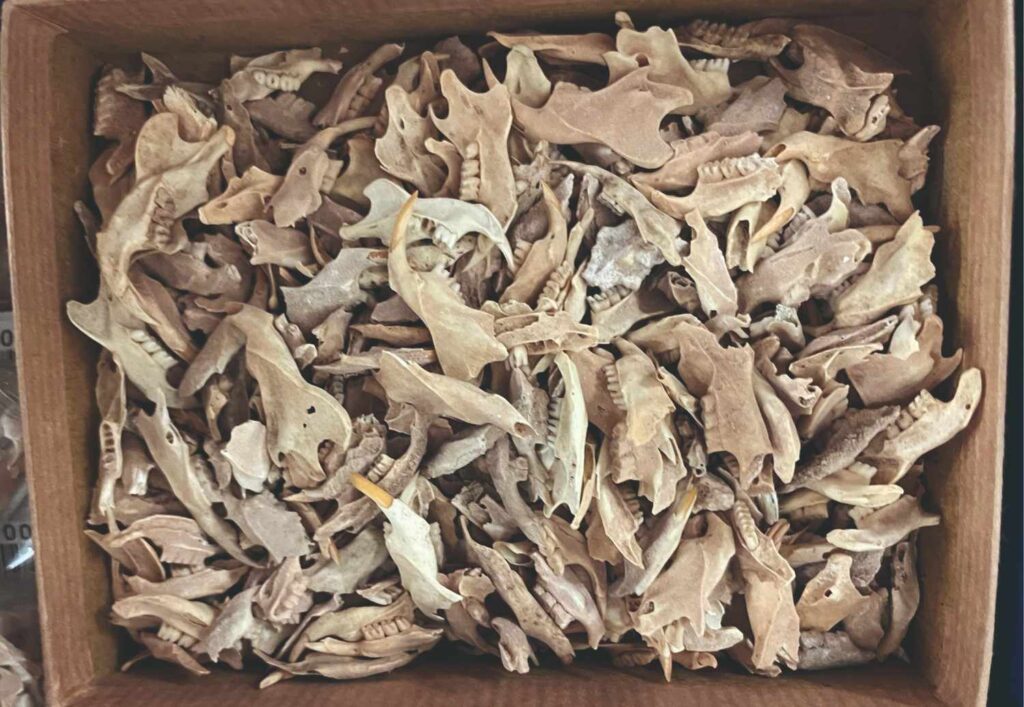
Pleistocene age mammal jaw fossils, all smaller than 4 centimetres long from Jenolan Caves, New South Wales, in the Australian Museum Palaeontology Collection.
Most state museums around the country are set up with an identification service that can assist in providing more information about your find. Alternatively, you can also get in touch with universities in your state that have a palaeontology department or staff, and they may be able to assist in identification and further research.
If you’re one of the lucky few who has found something that catches the interest of a museum or university, they may send someone out to take a look to see if they can collect more information. This is why recording other details, like a GPS location, can be really important (most phones are now set up to tag locations easily). It would be a shame if it was a new dinosaur or species new to science but you forgot where you found it.
Once a museum or university comes out to take a look, if they do determine that the find is significant or interesting enough that they’d like to conduct further research, then they will often ask you to donate it into their collections.
Why should you consider donating a fossil?
‘Plan for demise (of you or your hobby, whichever comes first).’
− Kailah Thorn, palaeontologist, The Conversation, 2021
There are a few reasons why museums or universities may ask you to donate your fossils, and it is not because they want to keep it for their own secret collections. First, if a museum is asking you to donate something, it is generally because they’ve identified it as special – possibly something never before seen or so rare that they hope to have it in a larger collection to research it and to share this epic find with the rest of the public. The institutional collections have the benefit of longevity – they’re the queens of hoarding (for better or worse). But it means that even long after a specific palaeontologist or scientist, or donator dies, the collection remains.
 Another reason they may ask for a donation is because, on the whole, museums have very little money. Whether this is a regional museum in the middle of outback Queensland or the large government institutions in state capitals, most are working with a tight budget and there isn’t spare cash to pay for acquiring fossils).
The Australian Government’s Cultural Gifts Program may offer tax incentives to those who donate significant cultural items (including fossils) to museums. While this program has helped museums like the Australian Opal Centre in Lightning Ridge, New South Wales, to acquire important opalised fossils from miners that may have otherwise been destroyed to make opal jewellery, we depend entirely on your generosity to donate important fossil finds.
The other reason we need people to donate to public museums and universities has to do with the way the scientific process works. When a scientist writes a new research paper, they’ll submit it to a journal who will review it and make sure the scientific method and research within is legitimate before they publish it. One of the main objectives of scientific publishing is that your methods must be repeatable by others to get the same results.
For example, if a new dinosaur skull is discovered and I’m in the laboratory measuring all the different parts of the skull to determine if it is a new species or, say, a juvenile of an already known species, those measurements must be able to be repeated by someone else to get the same result. This does mean, however, that if a dinosaur or fossil remains in the possession or collection of a private individual rather than a publicly available collection within a museum or university, those methods can’t be repeated because the specimen is not accessible to anyone other than the collector. Public collections help to prevent personal bias; you can’t just restrict access to the fossil because you don’t like someone, which has been known to happen with private collections.
ABOUT THE AUTHOR
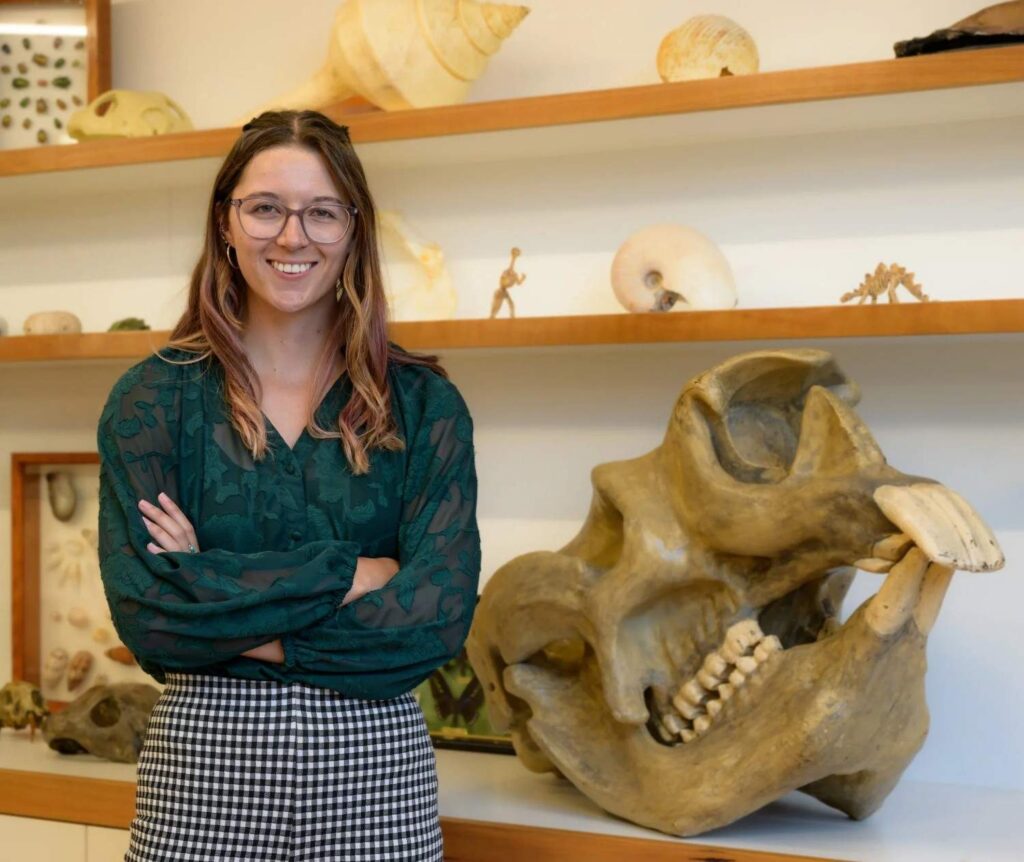
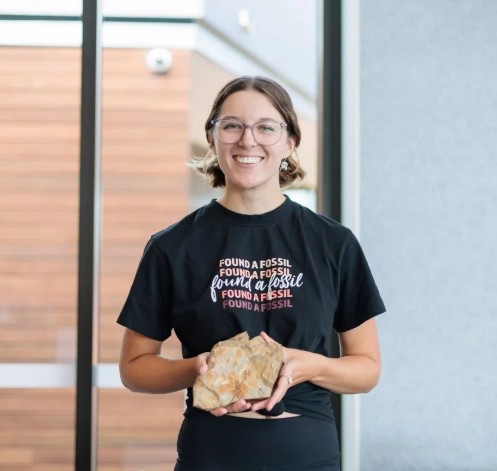 Sally K Hurst is a palaeontologist and archaeologist researching the interactions between humans and fossils. She’s the creator of the Found a Fossil Project, and a passionate science communicator.
Visit Sally K Hurst’s website here.
Follow Sally K Hurst on Instagram here.
Read more on the NewSouth Publishing website here.

0 Comments