


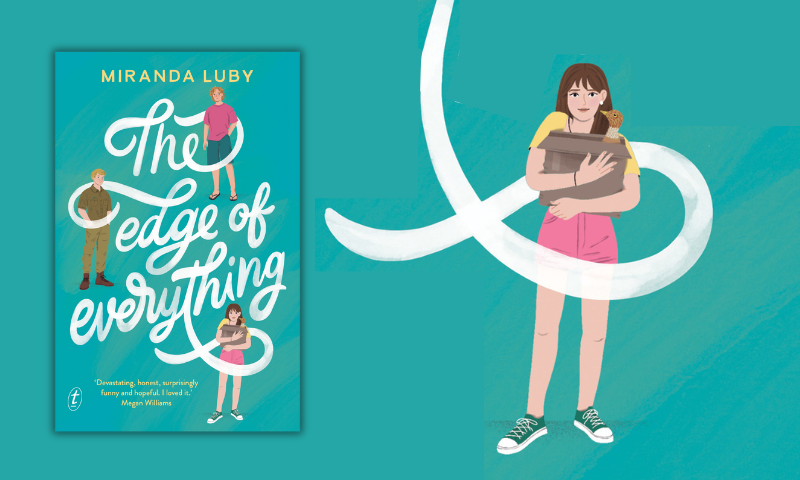
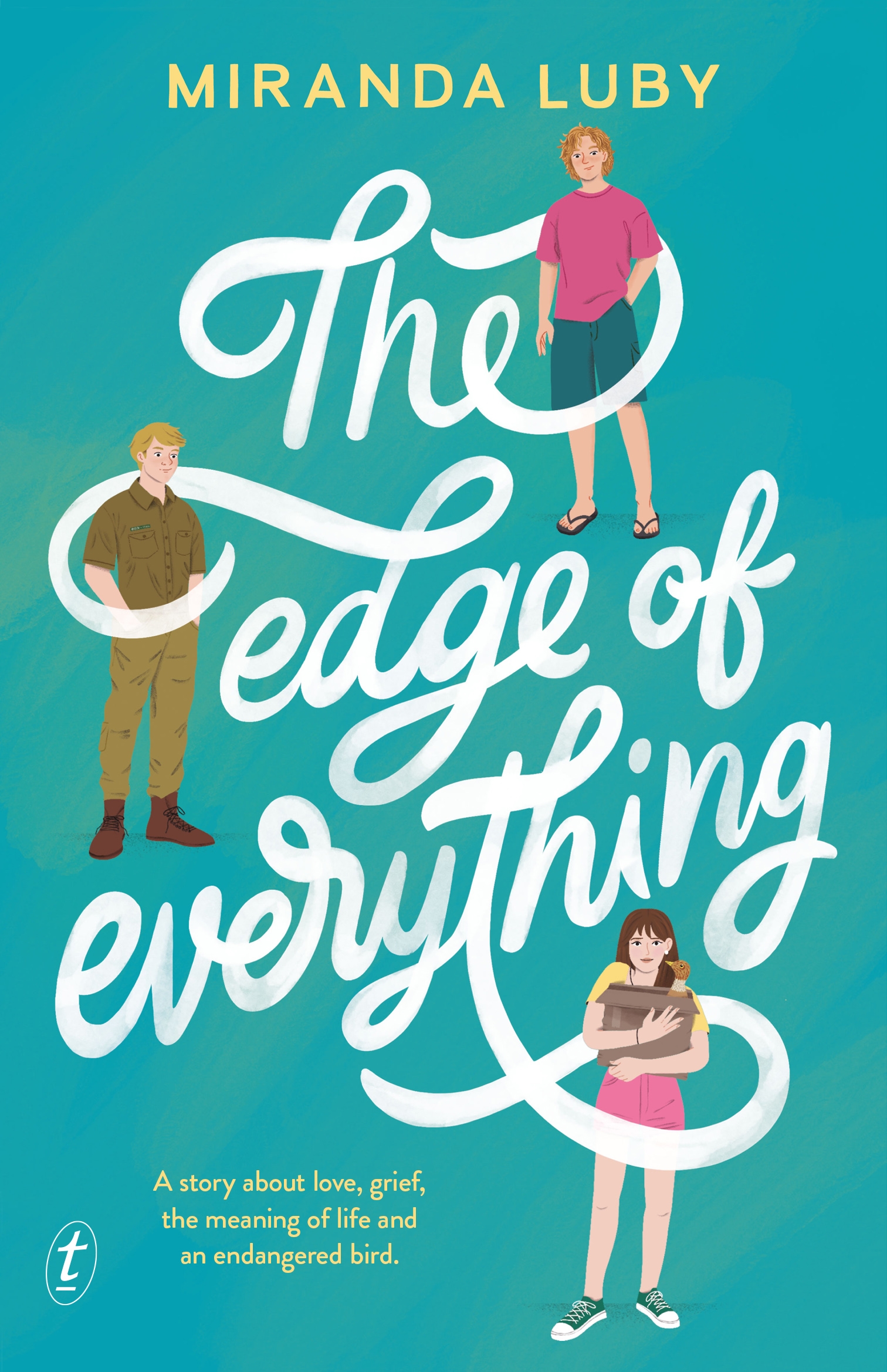
MIRANDA LUBY’s second novel, The Edge of Everything, is a heartfelt portrayal of grief, a tender romance, and a tribute to a very special Australian bird. Read on for a Q&A with the author.
The Edge of Everything deals with themes of loss, grief and love. What inspired it?
When I was young a friend of mine died suddenly in a random, tragic accident, just like my protagonist Lucy’s brother in the novel. Alongside the grief, I struggled with some pretty big existential questions about meaning and mortality. I wanted to write a book that holds space for these heavy, challenging questions, while still being a romantic, funny and cute read.
The book is also inspired by the more amorphous anticipatory grief I think so many of us (but particularly teenagers) are feeling about the future of our planet. Is saving one endangered bird still meaningful if you can’t save the whole species? That’s what Lucy has to decide.
When an endangered bird flies into Lucy’s room, she sees it as a sign. Can you tell us about this bird and its significance?
Plains-wanderers are a very cute and very endangered Australian bird that look a bit like a quail. The species is unique. It’s the sole member of not only its own genus but its own family and its closest surviving relatives are from South America, meaning its evolution can be traced back at least 60 million years to when the supercontinent Gondwana existed.
It’s an important bird to the story because, as well as losing her brother, Lucy is facing the common teen anxieties around what makes her matter. Are we born with inherent meaning, like the Plains-wanderer, or do we have to earn it somehow?
How did writing this novel compare to your first?
They tell you writing books doesn’t get any easier – and they’re right. But you keep working, paragraph by paragraph, day by day, and you end up with something resembling a pitchable manuscript. Of course there are many glimmers of joy, that sense that you’re actually doing it, you’re writing the story of your heart, but mostly it was a lot of self-doubt and hard work and Tim Tams.
Do you share Lucy’s love of animals?
I do. If I wasn’t going to be a writer, I thought I was going to be a vet. It’s lucky that I chose this path, though, because I really don’t have a STEM bone in my body. I have chickens and a cat instead.
The setting of the local wildlife sanctuary plays a central role in this story – did you draw from a place that you were familiar with?
I did! I worked in the communications department of Zoos Victoria for a few years. My office was based at Werribee Open Range Zoo. I got to drive around the savannah and take photos of the giraffes and generally live my childhood dream of hanging out with animals all day.
The sanctuary in the novel is a blend of a few zoos and sanctuaries I know, and I’ve taken a little bit of creative licence with some scenes, but the Plains-wanderer program is inspired by Werribee Zoo and all the incredibly hard-working wildlife heroes there who are saving the species from extinction. Donations go a long way!
What was your favourite part of writing this story?
I found this whole story so cathartic to write. It’s a novel I wish I could have read when, all those years ago, I was asking the same questions that Lucy is. I hope it makes someone feel less alone.
ABOUT THE AUTHOR
 Miranda Luby is an author, journalist, copywriter and animal lover living on Victoria’s Surf Coast. She has won several awards for her short stories, and her journalism features in publications such as National Geographic, BBC Travel and the New York Post. Miranda was shortlisted for the Text Prize for her debut novel, Sadie Starr’s Guide to Starting Over.

0 Comments