


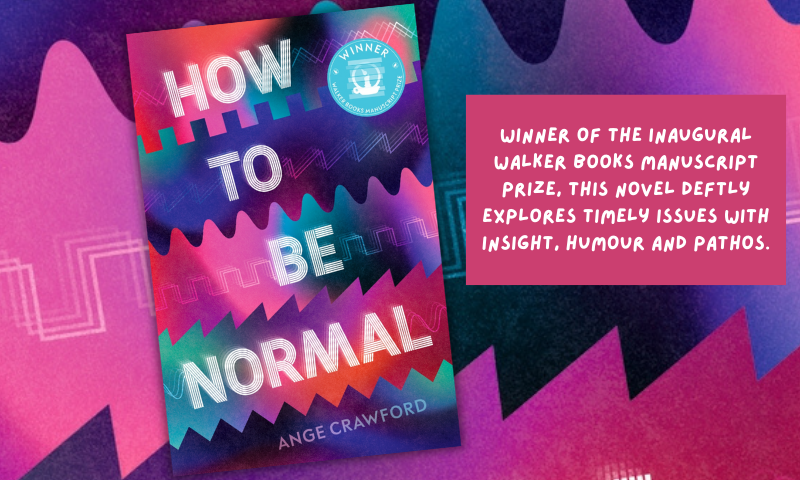
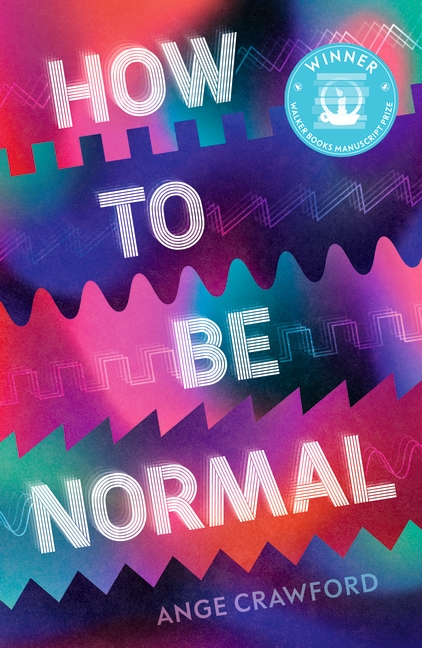
ANGE CRAWFORD’s debut novel, How to Be Normal, deals with themes including coercive control, coming of age and finding yourself.
Students at Cerdon College caught up with the author to ask her everything from what was involved in her research process, crafting characters, through to what inspired her.
ABOUT THE BOOK
Astrid is about to start her last year at high school. And her first.
When her dad loses his job, Astrid’s homeschooling comes to an end. Until now, she has lived within the confines of a tightly controlled, contracted world where there’s no room for anything … except following her father’s rules and pretending that everything is normal.
As Astrid, and her mum, tentatively expand their world, they struggle to break free of their ingrained wariness and self-doubt. But with hope, new friends, and the strength of a promise, Astrid has a chance to find out what she wants, who she loves, and who she really is.
Age Guide 12+
WATCH VIDEO
What Cerdon College students thought about How to be Normal:
Salma (Year 11)
Absolutely loved this book! Thank you for promoting these types of extracurriculars and helping us become more critically aware young women.
 Victoria (Year 12)
 Victoria (Year 12)
What was the reading experience like for you?
While reading I felt really connected with the character, I was invested in their lives. So my reading experience was really interesting and I enjoyed it.
What did you learn or what insights did you gain through reading this novel?
I learned about the different ways abuse can happen. It also gave me insight into the types of things people might have to go through. So after reading I feel more conscious that you never know what sorts of things people are going through, so it’s best to be nice.
Do you have any other general comments you would like to make about this novel?
This novel was really a great novel and I really enjoyed it. I love Ange Crawford’s writing style because what she writes flows so well with the emotions of the characters and how they interact with the world around them. I think she conveys them in such lovely ways that I couldn’t stop reading and I was so invested in the characters.
Rosemary (Year 11)
At first I felt like it was going to be a very typical book, I mean how many YA novels start out with the protagonist stating why they aren’t part of the ‘norm’ in order to justify their status as a main character and maintain their relatability. My feelings changed as I started looking into Astrid’s home life and felt the tension of new routines being tested to escape her strict old life and more was revealed about the side characters making them feel more loveable. My favourite part of the story was the ending with the escape, merging Astrid’s harsh reality with a compelling plan being pulled off in a way that would parallel action movies but in a more grounded way.
What did you learn or what insights did you gain through reading this novel?
Bad people don’t come out of nowhere and don’t always have bad intentions.
An important part of having healthy relationships is having multiple people to display what they look like and be able to identify if something goes wrong.
One’s owns problems often blind themselves to other people’s issues.
Angel (Year 12)
I really appreciated how well written Astrid’s relationship with her father was. Even though he mistreated her and her mother there are still good times. He’s the one who introduced her to music and it connects her to him. There is still a part of her that loves him and that’s what makes it so much worse.
Many people are abused by people they love and it’s because of that love that they are willing to let the abuse continue and find ways to justify it or forgive it.
Many stories that show abuse depict the abuser as always being angry and violent and in your face about it but this story shows what abuse is really like for a lot of people especially children with abusive parents who don’t have any experience outside of that abuse and think it’s okay or even normal.
Raksitha (Year 8)
What was the reading experience like for you?
At first, I was a little bit confused and I felt a sense of heaviness while reading it and after a while I re-reading the book and realised Astrid was going through some of things that I was personally going through when I moved to high school. New environments, new people, making friends, fitting in and etc …
What did you learn or what insights did you gain through reading this novel?
I learned to embrace whoever I was.
Do you have any other general comments you would like to make about this novel?
Overall, I really loved the novel, and small details.
LISTEN TO THE PODCAST
ABOUT THE AUTHOR
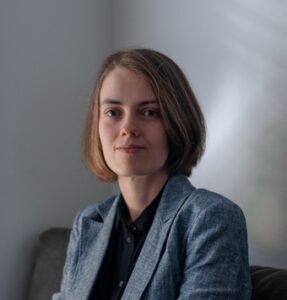 Ange Crawford is a queer, neurodivergent writer based in Naarm/Melbourne. Currently a PhD candidate in the School of Media and Communications at RMIT, she holds a Bachelor of Social Science (Psychology, Honours 1) from Bond University and a Master of Arts (Writing) from Swinburne University of Technology. Her debut novel for young adults, How to Be Normal, is forthcoming from Walker Books in 2025. She has published shorter works across many genres, such as digital poetry, reviews, fiction and feature articles. She works as an editor and runs Seventh Gallery’s emerging writers’ program.

0 Comments