



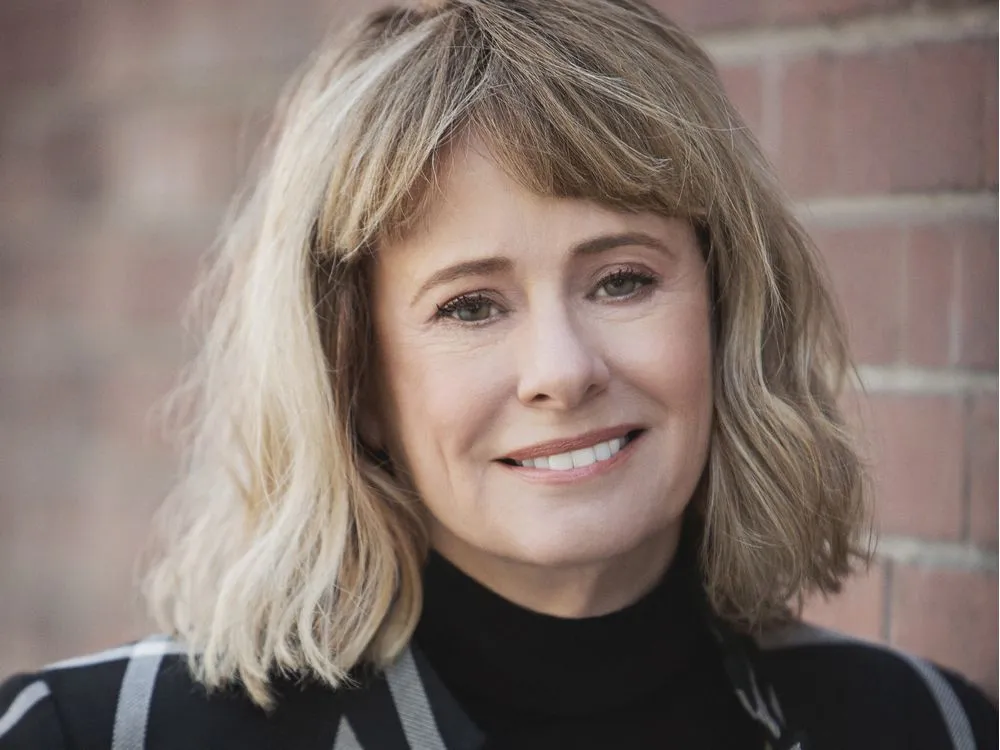
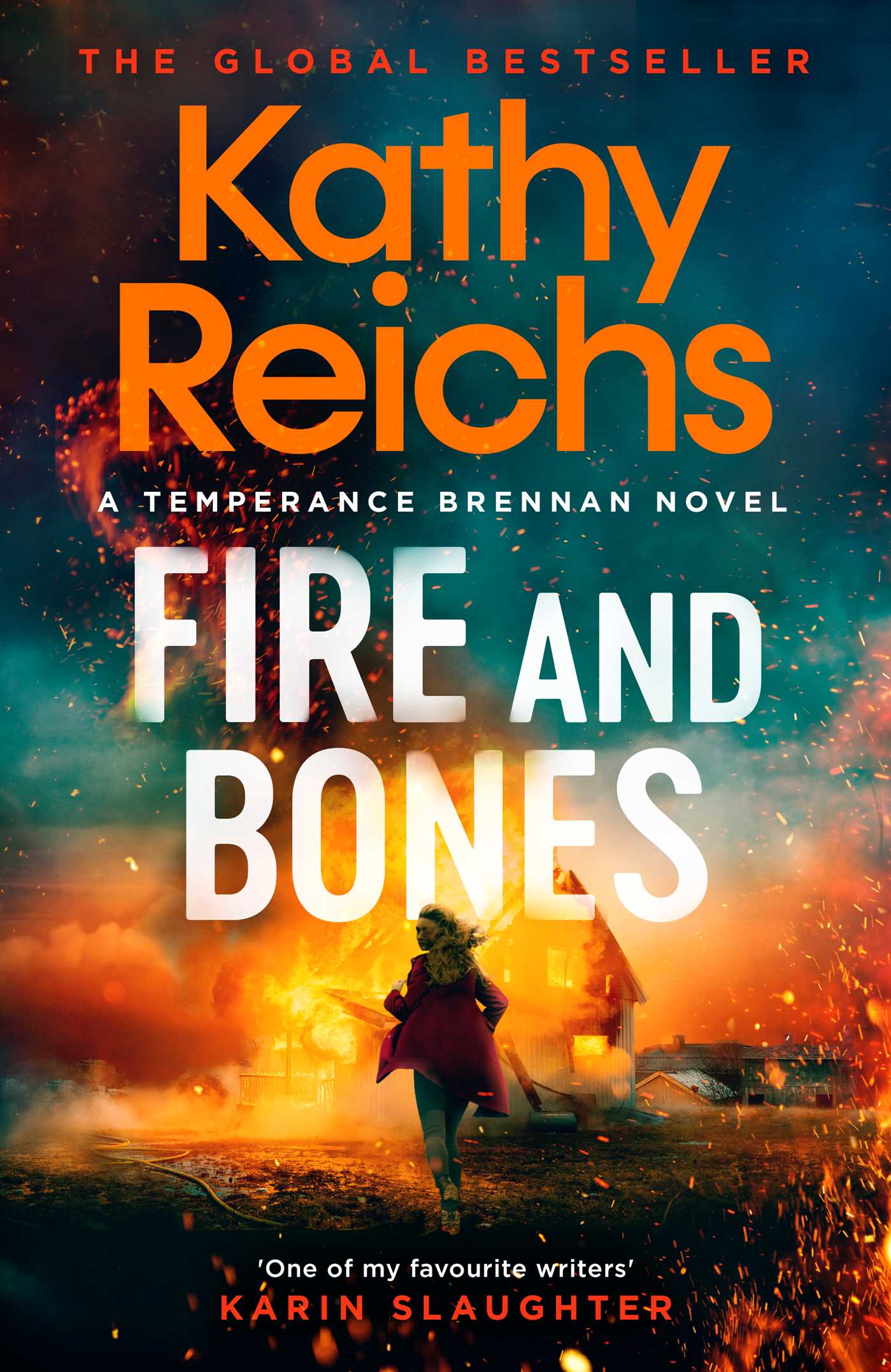
Crime queen Kathy Reichs returns with a twisty thriller featuring forensic anthropologist Temperance Brennan, who finds herself at the centre of a Washington, D.C., arson investigation that spawns deepening levels of mystery. Good Reading caught up with the author to find out more about her latest book, Fire and Bones.
Forensic anthropologist Temperance Brennan is back in Fire and Bones – How does she evolve compared to previous instalments and what new challenges does she face?
As Tempe evolves, there are new people and places that she encounters, new happenings that I write into her life. In this book she is in Washington DC, dealing with the victims of a deadly fire. She ends up partnering with a tele-journalist, something she would normally be hesitant to do.
If I don’t keep the character and her stories fresh, keep Tempe growing and facing new situations, she will no longer be engaging for the reader. Yet, through it all, she remains steadfast in her commitment to the dead. And she never loses her sense of humour – especially about herself!
What was the inspiration behind the arson investigation?
I write good old-fashioned murder mysteries. But in each story, the solution to the case is driven in part by science. I try to introduce a different aspect of forensics into each story. In past books I have used entomology, DNA analysis, and gunshot wound patterning, to cite just a few examples. I had not previously featured fire and arson examination, so this seemed a new and fresh area of crime lab expertise.
The setting and history of the Foggy Bottom neighbourhood plays a central role in this story. What was the most interesting historical detail you discovered during your research?
The colourful history of the Foggy Bottom neighbourhood was, indeed, a major impetus for this book. I was intrigued by one work in particular: The Foggy Bottom Gang: The Story of the Warring Brothers of Washington DC, by Leo Warring. While reading about the exploits of this trio of brothers, about their involvement in the world of gambling and bootlegging decades ago, I decided this would make for fascinating back story. To the best of my knowledge, the legend of the Foggy Bottom Gang is true.
What can you tell us about the Foggy Bottom Gang?
The Foggy Bottom Gang was comprised of the Warring brothers, Leo, Emmitt, and Charles. Their career in racketeering was long and diverse. Motivated by the passage of the Volstead Act, it began in the 1920’s with the bootlegging and distribution of illegal booze. When Prohibition ended and alcohol was once again legal, the brothers shifted to gambling. The gang’s influence in the DC-Maryland-Virginia area was extensive and continued well into the 1950s.
What challenges did you face while writing Fire and Bones?
As usual, the challenge was finding the discipline to sit at the keyboard for hours on end. I have six grandchildren now, and there were many times I’d have preferred being in the pool with them. Or out kicking around a soccer ball. But I made the effort to maintain my usual schedule, up and at work by eight or nine, write or edit for at least five hours daily.
What dynamic did you want to explore between Temp and Ivy Doyle?
In many ways, Ivy is like Tempe. She is ambitious, intelligent, and occasionally impulsive. Both women are principled and committed to doing their jobs well. Both feel compassion for the innocent victims of crime or unfortunate circumstance.
Tempe recognises these shared traits. Though typically she avoids the media when working cases, in this situation she makes an exception.
But Ivy has a dark secret in her past. I suspect she is willing to push the ethical boundaries of her profession a bit farther than Tempe.
Fans of your work love the authenticity of the forensic and procedural elements in your books. When writing, how do you balance realism with creating a dramatic and thrilling read?
Thrillers take readers into worlds they don’t normally visit. The murder scene. The crime lab. The autopsy room. The clandestine grave.Temperance Brennan stories have unfolded in some very bleak places and introduced some very dark characters. I think that is part of the fun – a visit to the underbelly, perhaps a good scare. A thrill!
I do include forensic and procedural details, but only those that move the story forward. The key to the science is to keep the passages brief, accurate, entertaining, and jargon-free. Never inject blood and gore just for the sake of grisly sensationalism.
What does a day of writing look like for you – do you have any particular habits?
I am more a ‘pantser’ than a ‘plotter’. I write from a very brief outline, perhaps a paragraph on each of the first eight to 10 chapters. I know how the story will end, and I know what the big plot twist will be. Beyond those basics, it’s largely a free flow.
Often a plot twist comes along in midstream that surprises even me. Some are good. Some not so much and I ignore the idea.
I write early in the day, pretty much every day. I begin by reading the chapter I’m currently creating, editing as I go. This brings me back into the story at the point at which I left off.
ABOUT THE AUTHOR
 Kathy Reichs’s first novel Déjà Dead catapulted her to fame when it became a New York Times bestseller and won the 1997 Ellis Award for Best First Novel. Her other ‘Temperance Brennan’ books include Death du Jour, Deadly Decisions, Fatal Voyage, Grave Secrets, Bare Bones, Monday Mourning, Cross Bones, Break No Bones, Bones to Ashes, Devil Bones, 206 Bones, Spider Bones, Flash and Bones, Bones Are Forever, Bones of the Lost, Bones Never Lie, Speaking in Bones and the Temperance Brennan short story collection, The Bone Collection. In addition, Kathy co-authored the Virals young adult series with her son, Brendan Reichs. The bestselling titles are: Virals, Seizure, Code, Exposure, Terminal, and the novella collection Trace Evidence. The series follows the adventures of Temperance Brennan’s great niece, Tory Brennan. Dr. Reichs’ novel, Two Nights, features Sunday Night, a tough-talking, scarred heroine. Dr Reichs was also a producer of the hit Fox TV series, ‘Bones’, which is based on her work and her novels.
From teaching FBI agents how to detect and recover human remains, to separating and identifying commingled body parts in her Montreal lab, as a forensic anthropologist Kathy Reichs has brought her own dramatic work experience to her mesmerising forensic thrillers. For years she consulted to the Office of the Chief Medical Examiner in North Carolina and to the Laboratoire de Sciences Judiciaires et de Médecine Légale for the province of Québec. Dr Reichs has traveled to Rwanda to testify at the UN Tribunal on Genocide, and helped exhume a mass grave in Guatemala. As part of her work at JPAC (Formerly CILHI) she aided in the identification of war dead from World War II, Korea, and Southeast Asia. Dr Reichs also assisted in the recovery of remains at the World Trade Center following the 9/11 terrorist attacks.
Dr Reichs is one of only 100 forensic anthropologists ever certified by the American Board of Forensic Anthropology. She served on the Board of Directors and as Vice President of both the American Academy of Forensic Sciences and the American Board of Forensic Anthropology, and is currently a member of the National Police Services Advisory Council in Canada. She is a Professor in the Department of Anthropology at the University of North Carolina-Charlotte.
Dr Reichs is a native of Chicago, where she received her Ph.D. at Northwestern. She now divides her time between Charlotte, NC and Montreal, Québec.


0 Comments