


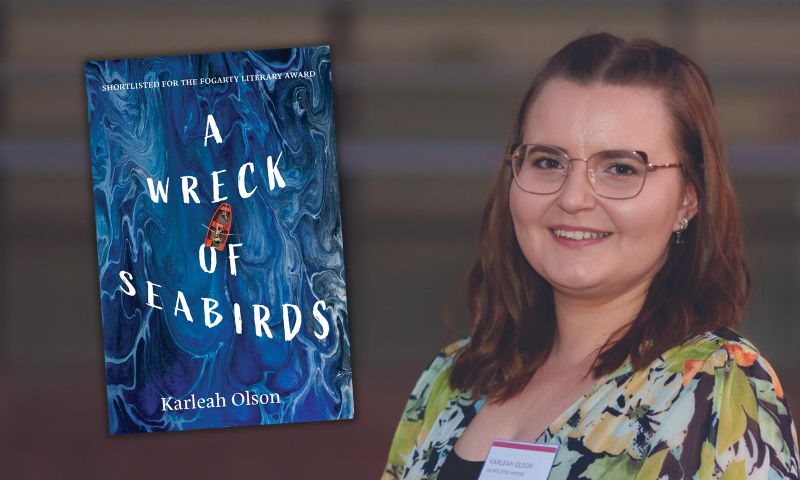
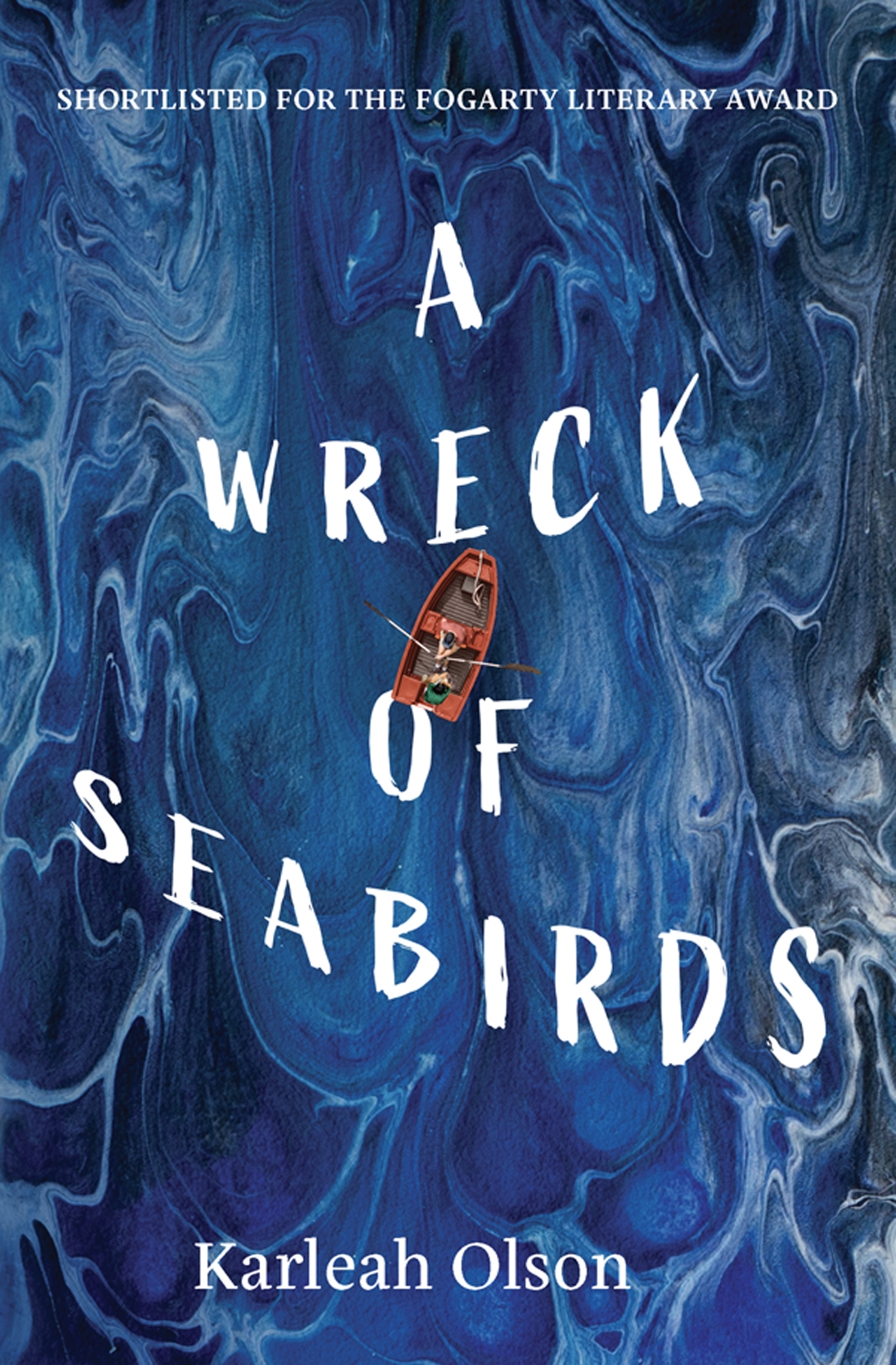
Good Reading for Young Adults caught up with author KARLEAH OLSON to discuss her debut novel, A Wreck of Seabirds, which was shortlisted for the Fogarty Literary Award and delves into themes of loss, isolation and entrapment.
What inspired A Wreck of Seabirds?
The biggest inspiration for the novel was the coastal landscape itself. I grew up here in Perth, never more than a 10 minute drive from the beach, and the West Australian coastline has been such a beautiful, constant, emotive background for my life. When I was around the age of the novel’s protagonists – late teens and early twenties – especially, I have so many memories of ending up at local beaches with friends, or after nights out, and feeling so isolated, and unsure, but at the same time so connected. Those conflicting feelings and that connection to the landscape are probably the most personal inspirations I took into this novel.
What can you tell us about Briony, Ren, and Aria?
Briony, Ren, and Aria are all young adults who are struggling with very universal emotions, despite the very particular circumstances of their stories. If you’re looking for the inherent themes of the work, you’ll notice that the three of them are each trapped and isolated in some way or another, be it physically trapped on an island, or emotionally isolated by an experience of loss or grief. I wanted these characters to be the centre of their own stories, but to be connected to each other in this integral way through the landscape and town they all have this connection to.
What drew you to exploring themes of loss, isolation and entrapment?
I wrote this novel as part of a PhD thesis, and my initial focus was Coastal Gothic Fiction. Isolation and entrapment are key elements to Gothic fiction which I explored in my research, and these themes inevitably made their way into the creative work. I’m really happy with how these themes ended up being reflected in so many different ways, beyond just the obvious ‘trapped in a haunted house’ sort of isolation that I initially associated with the Gothic.
Where do you get your love of storytelling?
This is probably a pretty cliched answer, but my love of storytelling comes from a life-long love of reading. I come from a family of readers, and getting lost in fictional worlds and stories has always been a part of my life. Writing, for me, was a natural progression from a love of reading.
What was the most enjoyable or challenging part of writing this novel?
The most enjoyable and challenging parts of this novel probably stem from the same thing. As I wrote this for a PhD project, the process involved a significant amount of research before I even had an idea of the novel I was going to write. I was researching such a wide range of things, from ocean mythology, to contemporary Australian coastal fiction, and of course the Gothic. It was the sort of scope that felt like it got bigger and bigger before it all came together. When it did come together it really felt like a lightbulb moment – this is the story I want to tell – but it was quite a daunting process before that point.
This story weaves between past and present – why did you choose to tell the story this way?
An aspect of Gothic fiction that I really love is the idea of the past returning into the present, so weaving those together was always going to be a part of how I told this story. I was also really drawn to the idea of time being a layered thing rather than a linear one; I wanted it to feel as though these stories were playing out at the same time, in the same place, like they’re constantly overlapping. If you look closely there are a few moments when the timelines bleed into each other a bit. I also wanted the switch between the stories (The Shore, The Shallows, and The Deep) to feel as though you were going deeper the further back in time you went, and for the flow of it to feel a bit like the tide moving in and out.
The natural environment is central to this novel – in what ways has your own connection to the environment informed your storytelling?
My own connection to the coastal environment informed this story in so many ways. I really associate the strong emotions of that coming-of-age time of my life with the ocean. I have so many memories of coast walks, and driving to the beach at night, and sitting in the sand talking about how lost and confused we were. I have also lived in Perth for most of my life, and so the coastal landscape has been a constant for me. Its something that’s both comforting and formative. It feels very natural to me that my debut novel speaks to a love of that environment.
What do you hope readers take away from your story?
I think at it’s core this story is about letting things go. While the experiences the protagonists in this novel go through are pretty traumatic examples of things that can trap and isolate a person, the idea of needing to stop yourself from holding onto something that’s holding you back is a pretty important lesson for life in general.
ABOUT THE AUTHOR
 Karleah Olson is a Perth-based writer and avid reader, and loves to collect books – more than she could possibly read in a lifetime. Karleah has spent the last few years as a PhD candidate at Edith Cowan University, where she is studying Australian Coastal Gothic Literature. Her debut novel, A Wreck of Seabirds, was shortlisted for the 2023 Fogarty Literary Award and is a work of YA fiction inspired by the gothic genre and the West Australian coastal landscape.

0 Comments