


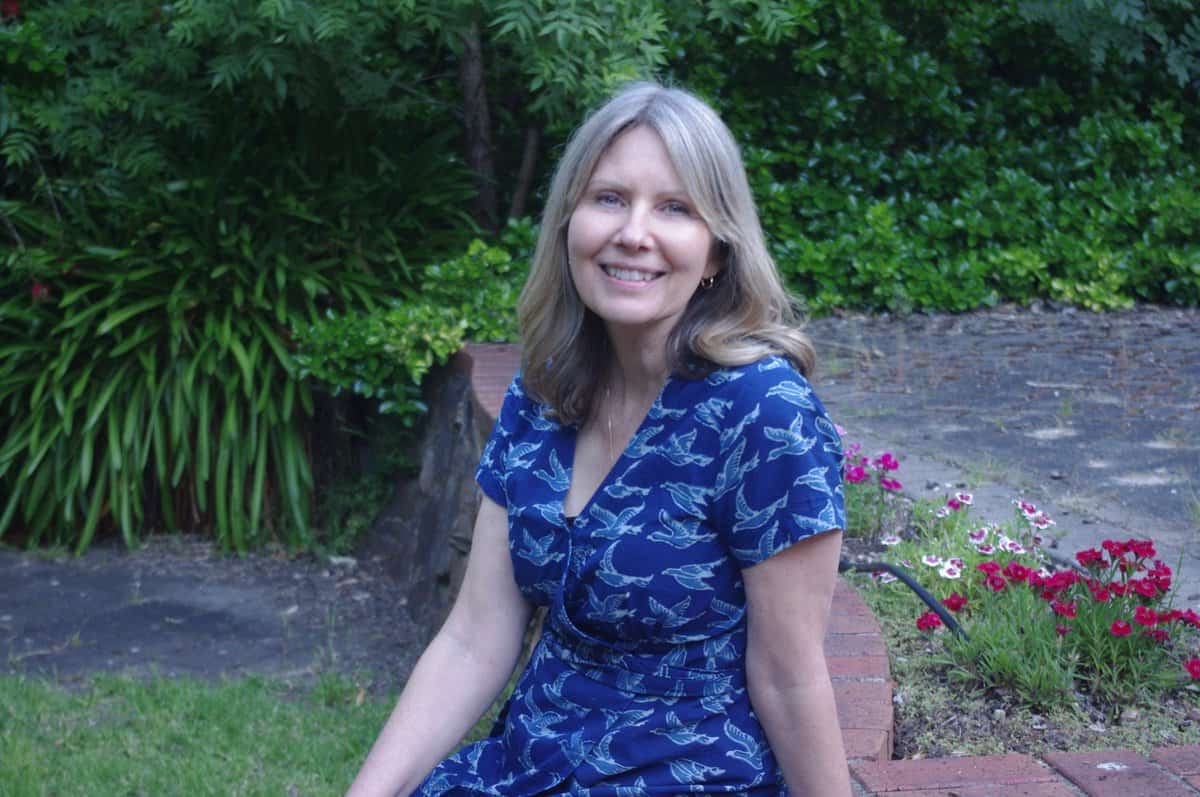
SHARON KERNOT’s book, Birdy, is a young adult verse novel that delves into the pain of loss and trauma and the healing balm of friendship.
Good Reading for Young Adults caught up with the author to talk about waiting, the passage of time and to find out what she’s up to next;
ABOUT THE BOOK
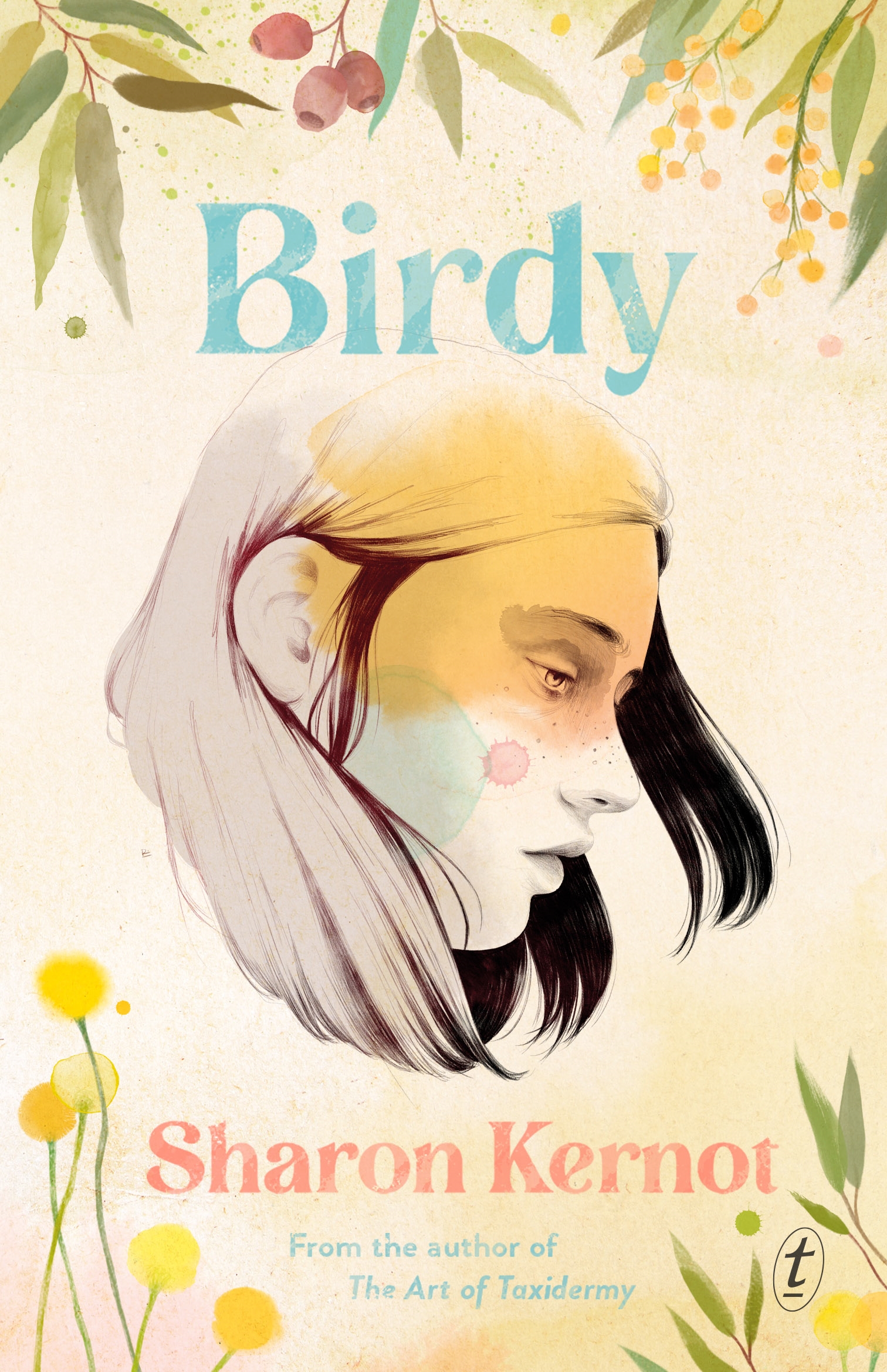 Maddy is mute. Since the Incident she has barely spoken. And now she and her mother and brother are staying in a farmhouse on an old apricot orchard not far from town. It’s a chance to rest and recuperate-or a way to hide further away from the world.
Alice is waiting. Since Birdy, her darling daughter, disappeared forty-five years ago, she has sat in her house waiting for her to come home.
Alice says Maddy reminds her of Birdy, and Maddy feels a strange connection to the long-lost girl. In the quiet not-speaking and waiting, amid the clutter of the old woman’s house, Maddy and Alice slowly become friends.
Until Maddy takes something that’s not hers.
Birdy is a tender warm-hearted verse novel about the pain of loss and shame, the beauty of words, and the healing power of small acts of kindness.
Teachers’ Resource – Birdy by Sheryl Kernot
Q&A with Sharon Kernot
The protagonist, Maddy, is mute due to an incident. Can you share more about the inspiration behind Maddy’s character and the challenges she faces in the novel?
In the novel, Maddy is confident and happy and comfortable in herself and in her life until she experiences a traumatic event. Up until that time, she has managed to cover-up any insecurities she feels but after the incident, she’s unable to process her mixed feelings and articulate her thoughts and emotions clearly. This inability to express herself quickly becomes a problem. She begins to stammer then stutter and then she is silent. Once this happens she is labelled as a mute. Her friendships drop away and she becomes isolated and reclusive.
The inspiration for Maddy’s character initially came to me when I was working in a child protection agency with children who were experiencing extreme anxiety and selective mutism after traumatic events. This combined with my own experiences of feeling largely inarticulate and unable to express myself when I was a child and young adult enabled me to write closely from Maddy’s perspective.
In Birdy, how does language, communication, and expression play a role in the characters’ development, especially considering Maddy’s muteness?
Despite the fact that Maddy is mute in social situations, she is very much a person who loves words. She loves reading and writing and these are important aspects of her development and the process of her coming to terms with the trauma of the incident, her grief and shame.
Maddy is supported by her psychologist, Bron, who suggests several strategies to help with her anxiety, her avoidance of people, her confidence and inability to talk freely. Bron sets homework for Maddy and part of that homework involves writing her thoughts in a journal, a kind of writing therapy, which Maddy embraces. She begins writing poetry and reading Emily Dickinson, who she feels an affinity with because Dickinson was also reclusive.
The page provides a safe space for Maddy to explore her feelings without judgement and enables her to revisit the trauma in a way that is less threatening than talking about the events.
The setting of an old apricot orchard and a farmhouse adds a unique backdrop to the story. How does the environment contribute to the themes of rest, recuperation, and hiding from the world?
Initially Maddy feels in two minds about moving to a farmhouse in a deserted country town for the summer with her mother and her brother. It’s completely alien to her. She has grown up in the suburbs and, unlike the rest of her family, has been uninterested in nature preferring instead to spend time on social media and hanging out with her many friends. Since the incident, however, she has no friends. And she’s not sure if she can ever trust herself to make any more and so this tiny town in the middle of nowhere feels like a safe place for her to hide-out.
It’s hard to remain anonymous and unseen in a small town, but because Maddy is able to spend time alone when necessary, and meet people in non-threatening ways, she’s able to regulate her emotions more easily. Over time, she also begins to connect more deeply with the environment around her, and this provides respite from her emotions. The connection with the natural environment – the landscape, birds, insects, flora and fauna – is an important part of her healing process enabling her to see the world in a completely different way.
There seems to be a strong bond between Maddy and Birdy, Alice’s long-lost daughter. Can you elaborate on the significance of this connection and how it shapes the dynamics between the characters?
Yes, there’s a strong bond between Maddy and Birdy from the beginning. As soon as she arrives at the farmhouse, Maddy feels a strange presence, feels as if she is not alone. Before long, she hears about the ghost of Birdy and becomes intrigued. This interest deepens when she meets Birdy’s mother, Alice, and local girl, Levi, who has many stories about Birdy and her disappearance.
The fact that Maddy is 15 when she arrives in town, the same age Birdy was when she disappeared, and the fact that she also looks very much like Birdy, due to a distant family thread, results in Alice taking an instant liking to her. Added to this, Maddy learns that she and Birdy share other similarities – a love of words, poetry, music, adventure and perhaps more, much more.
Alice has been waiting for her daughter, Birdy, for 45 years. How does the theme of waiting and the passage of time play a role in the narrative, especially in relation to Maddy’s own struggles?
Forty-five years is a very long time to wait for anyone or anything. It equates to three of Maddy’s own lifetimes – and Birdy’s too – as they are both 15, albeit at different times in history. Initially, to Maddy, this waiting, this holding period is incomprehensible. But over time, Maddy begins to see it is one of Alice’s strengths. She is resilient. She has lived through incredibly difficult times and continues to do so. And yet, she rises each day, she connects with community, she continues to hope. Her life is far from perfect but she has never given up. In this sense, Alice is role model to Maddy from which they build a mutually beneficial, lasting friendship.
The mention of Maddy taking something that’s not hers suggests a turning point in the story. Can you provide insight into this event and how it impacts the relationship between Maddy and Alice?
When Maddy takes something that is not hers, without permission, she’s aware that she has broken Alice’s trust. She feels she has committed a crime, a violation that in a way connects back to her own trauma and enables her to reflect more deeply on her circumstances. The object also provides some insight into Alice’s and Birdy’s history and struggles. As a consequence, Maddy feels she has a greater understanding of Alice and she wants to do more for her, but in so doing, she takes further steps that actually cause a rift between the characters.
What do you hope readers take away from your novel?
Well firstly, I hope they love the characters as much as I do. I hope they find the friendships uplifting. I hope the connections and themes demonstrate that life is forgiving and so are people, mostly, and that small acts of kindness can impact in huge ways. And also that there is beauty and friendship to be found in the most unlikely places.
What’s next for you?
I’m well into writing the first draft a dark psychological thriller in verse, which I’m absolutely loving. In the new year, I’ll be heading to Varuna in the beautiful Blue Mountains to take time out to complete the first draft. I can’t wait to get there.
ABOUT THE AUTHOR
 I have an MA in Creative Writing from the University of Adelaide and a PhD from Flinders University. I’ve worked for TAFE, the University of South Australia and Flinders University, and for three years I was the Writer-in-Residence for people with disabilities at Writers SA.
My short fiction and poetry has been shortlisted and longlisted for a number of awards including the Whitmore Press Poetry Prize. Bauhinia Literary Awards, the Furphy Prize, the University of Canberra’s International Poetry Prize, the Bridport Short Story Prize, Aesthetica’s Creative Writing Awards and the James Tate International Poetry Prize. And in 2019 my poem ‘Eating Type’ won the Matthew Rocca Prize for poetry.
Underground Road, my debut novel, was shortlisted for the Adelaide Festival of Literature Awards Unpublished Manuscript Prize and later published by Wakefield Press and my verse novel, The Art of Taxidermy, was shortlisted for the 2017 Text Prize and published in 2018. Since then, it has been shortlisted and longlisted for a number of awards including the CBCA, the Inky Awards, the NSW Premier’s Literary Awards, the Prime Minister’s Literary Awards and the REAL Awards. My latest novel, Birdy, which is also published by Text, will be released on January 30, 2024. I’m currently working on a new verse novel, which recently received a project grant from Arts SA and a Varuna Residential Fellowship.
Over the years, I’ve had quite a few different jobs to fund my study, writing and travel. I’ve worked as a compositor, a typesetter, a financial counsellor, a community worker, an editor, an access worker, a writing coach and mentor, a tutor, a mental health worker, an editor and co-publisher of chapbooks, and for a very short time when I ran out of money while travelling I ironed sheets for a pension on a Greek Island.
Apart from reading and writing, I also love birds, animals, art and spending time in nature.

0 Comments