

Only 35% of Indigenous children in Year 5 living in very remote NT communities can read. Compared to 95% of children living in major cities. This Indigenous Literacy Day, Good Reading revisits our interview with the Bawurra Foundation. The organisation uses e-readers to preserve Indigenous culture and language and close the literacy and learning gap.
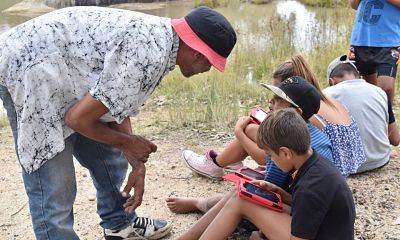
On a visit to the Indigenous community of Tingha in northern New South Wales, members of the Foundation pile into a rickety bus crowded with schoolchildren and drive out to the home of one of the community members. Kangaroo tail is being sliced up in the kitchen when they arrive. The tail, which turns out to be bait, is taken to a nearby lake.
Alex Stonyer-Dubinovsky, co-founder of the Bawurra Foundation, recalls the experience: ‘The kids are getting their hands dirty. They’re grabbing bits of kangaroo, they’re tying it up with string. And then they start fishing like crazy.’
Formed in 2014, the Bawurra Foundation focuses on improving Indigenous student literacy and preserving Aboriginal culture. Aboriginal ways of learning have not, historically, been given the same respect that has been accorded to Western education. Aboriginal culture has suffered as a result. According to Jesse Slok, Chairman and founder of Bawarra and a member of the Gomeroi nation, Indigenous literacy schemes need to build on Indigenous perspectives if they are to succeed.
The idea began with Digital Elders, a project that Slok first worked on in high school. Its aim was for students at schools in and around Tamoworth, NSW, to work with community elders and create a digital textbook of Aboriginal lore for students. The Bawurra Foundation and the Department of Education then downloaded the content onto Kindle e-readers.
‘Instead of the students having to access a computer to get to the information, which is quite difficult, we were able to put that information on Kindles and put it straight into their hands.’ Slok says.
The Department first directed the team to two schools, one in Boggabilla and the other in Toomelah. The schools have been identified as having low participation rates and low continuation rates. The reaction, however, was more than the foundation had hoped for.
‘It was crazy, says Stonyer-Dubinovsky. ‘We take the Kindles there, we hand them out to the kids — and we wait. They open them up and they start saying: “Oh, that’s my aunty! That’s my uncle! That’s my grandfather!” These are kids who don’t really engage in class. But they grabbed the Kindles and were immediately into it.’
The team moved forward to new communities after this great success. Including areas such as Tingha and Dorrigo, near Coffs Harbour. The Bawurra Foundation also has big expansion plans, as they want to reach more than 10 schools by the end of the year. The project relies heavily on government grants, fundraisers and donations, and new volunteers are welcome year round.
For more information or to support the foundation visit their website.