


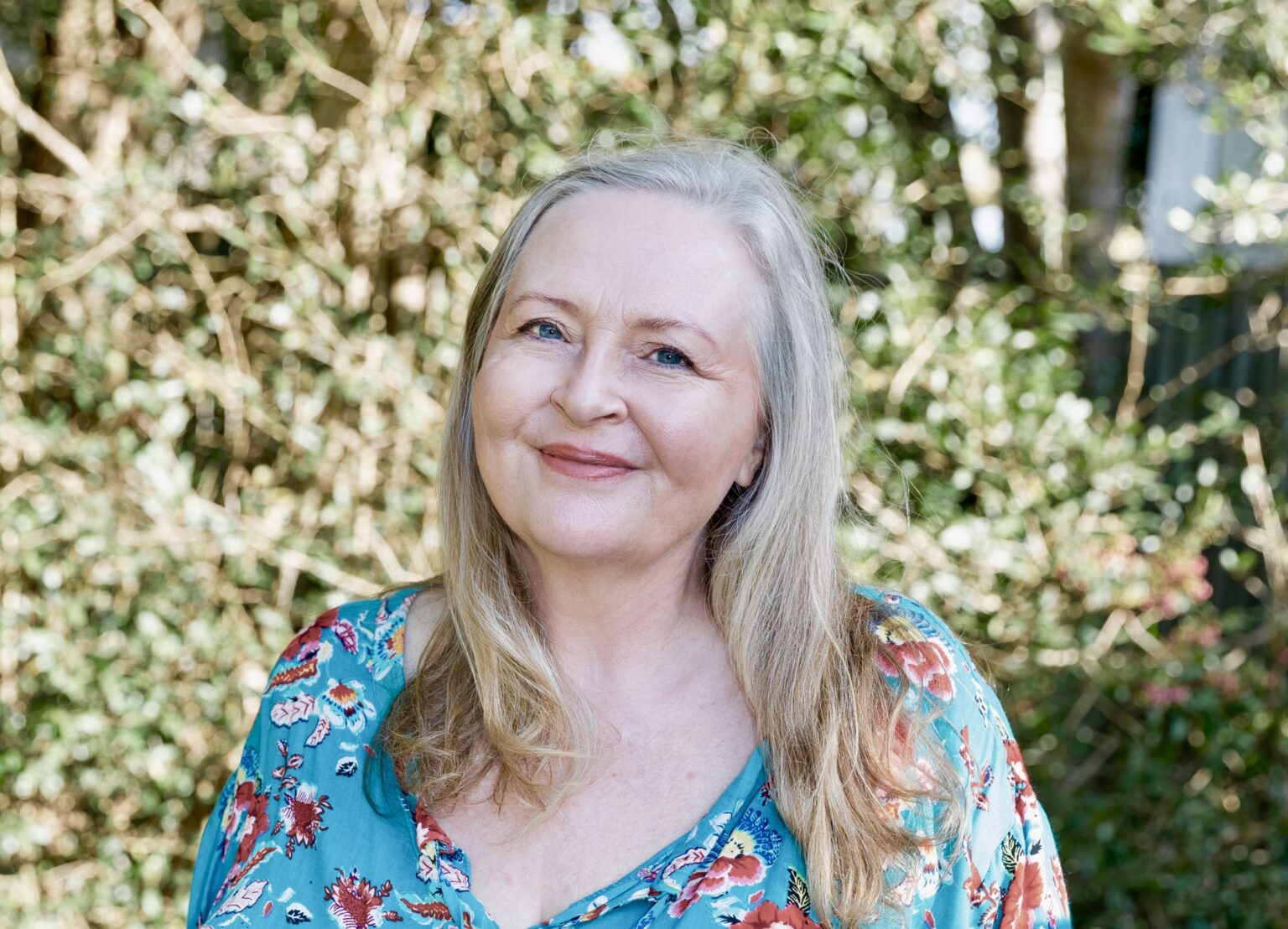
Mary-Lou Stephens was born in Tasmania and has written a number of bestselling novels set in the Apple Isle.
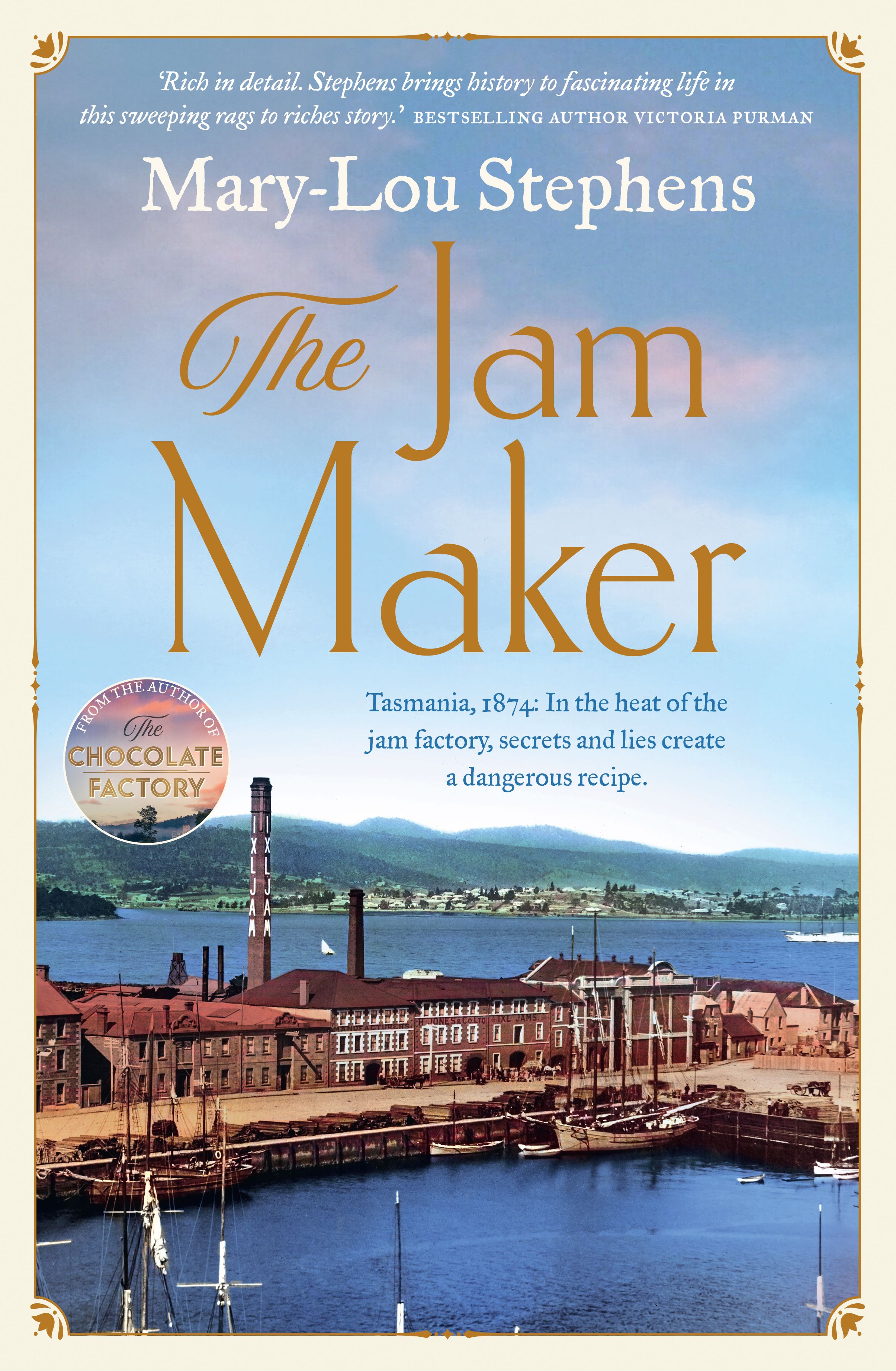
Her latest book, The Jam Maker, is a fascinating historical novel based around the history of the jam making industry of Tasmania.
Good Reading caught up with Mary-Lou to find out what she loves about Tasmania and learn more about her passion for its history .
MEET MARY-LOU STEPHENS
 Can you tell us about your childhood? Where did you grow up and what are some key memories?
I grew up in Hobart on Bend 1 of Mt Nelson right next to the University of Tasmania and with views of the Derwent River. I remember cracking the ice on the puddles while walking to Waimea Heights Primary School in winter and the long twilights in summer.
One winter the Aurora Australis put on a massive show – big sheets of green light shooting up into the sky. Magical. It was uncommon back then to see the aurora in Hobart.
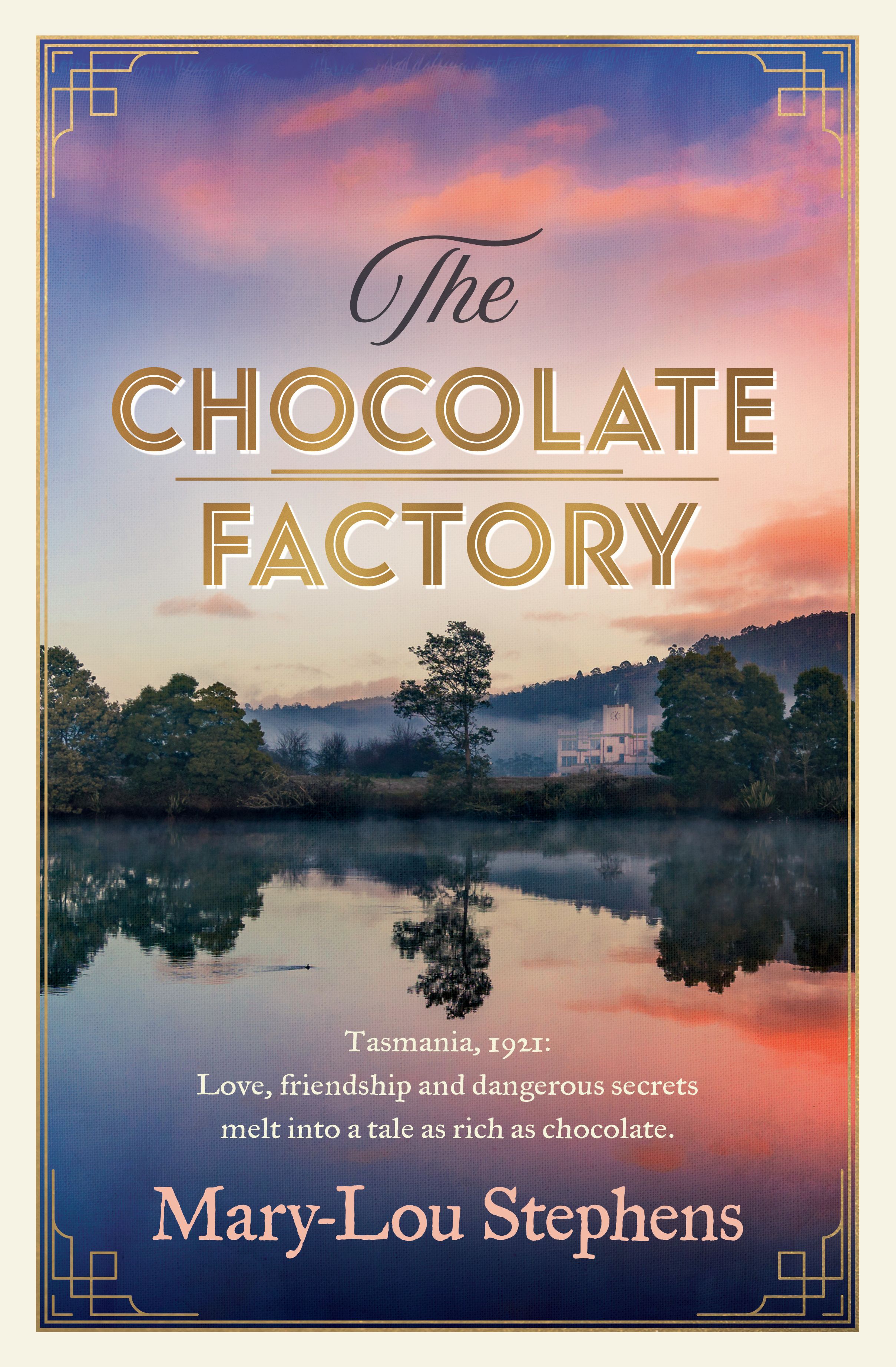
Our school excursions were visits to the orchards of the Huon Valley and the Cadbury’s factory in Claremont. These memories have made their way into my novels.
What was your first job?
Like many Tasmanians at the time I left the state as soon as I could in search of work and excitement. My first job was as a breakfast waitress at the Menzies Hotel in Sydney serving American tourists huge plates of pancakes with eggs over easy, bacon and maple syrup. I was living right next to Kings Cross and would often turn up to work after staying up all night at the clubs.
I found more excitement than I’d anticipated and scurried back home after about a year of drama and mayhem. But while in Sydney I was inspired by seeing The Stranglers at the State Theatre. As soon as I could afford it I bought my first bass guitar and started playing in bands in Hobart.
You studied acting after leaving school. What drew you to study acting? Was there a moment of inspiration, someone who inspired you, or have you always been drawn to it?
In Grade Two at Sandy Bay Infant School I was cast as Mary in the nativity play. It wasn’t my first time on stage (I sang at a Sunday school performance when I was six) but it was my first acting role. After that whenever there was a school play I was in it, both in primary and high school. The drama teacher at my high school, Mr Cornelius, was the first one who inspired me to think beyond the boundaries of the school auditorium.
When I returned from my misspent year in Sydney I was cast in a production of Spring Awakening and met many actors around my own age. Some of us formed a small troupe and performed in schools throughout Tasmania. While acting in other productions in Hobart I was struck by the thought that I could be a better actor. I auditioned for The Victorian College of the Arts and spent the next three years in Melbourne immersed in the art of acting. Did I become a better actor? I honestly don’t know. But the fact that I could hardly wait to get back to playing in bands speaks volumes.
You also played in bands and then worked in radio for many years. So all your previous careers have been in performance Arts in some form. What did you feel when you stopped and started writing, which is solitary work? Was it a challenge to discipline yourself to sit, research and write?
Before I was published I received many rejections. One day I bemoaned my life choices to a friend saying that I’d chosen a life of rejection. Acting auditions – rejection. Record labels – rejection. Publishers – rejection. She laughed and reminded me that I’d lived an amazing life of my own choosing – acting, music, writing – one full of adventure and creativity. It’s true. Mind you, during my years in radio it was wonderful to receive a regular and liveable wage.
While working at the ABC I saved up enough money to take six months leave without pay. I wanted to find out whether I could write a novel and, having done so, would I want to do it again. The answer to both questions was yes. I enjoyed those six months – the solitude, the quiet. Radio stations can be noisy and frantic. To be honest, when I left radio, I relished the peacefulness of sitting in a room on my own researching and writing. The deadlines in publishing are nothing compared to the deadlines involved in putting a daily radio show together.
Everything I’ve done has fed into my writing. Acting gave me an understanding of dialogue and character. Songwriting gave me the ability to tell a story. Radio involves research and writing. All three of them have given me experience in being in front of an audience which is helpful when it comes to book events.
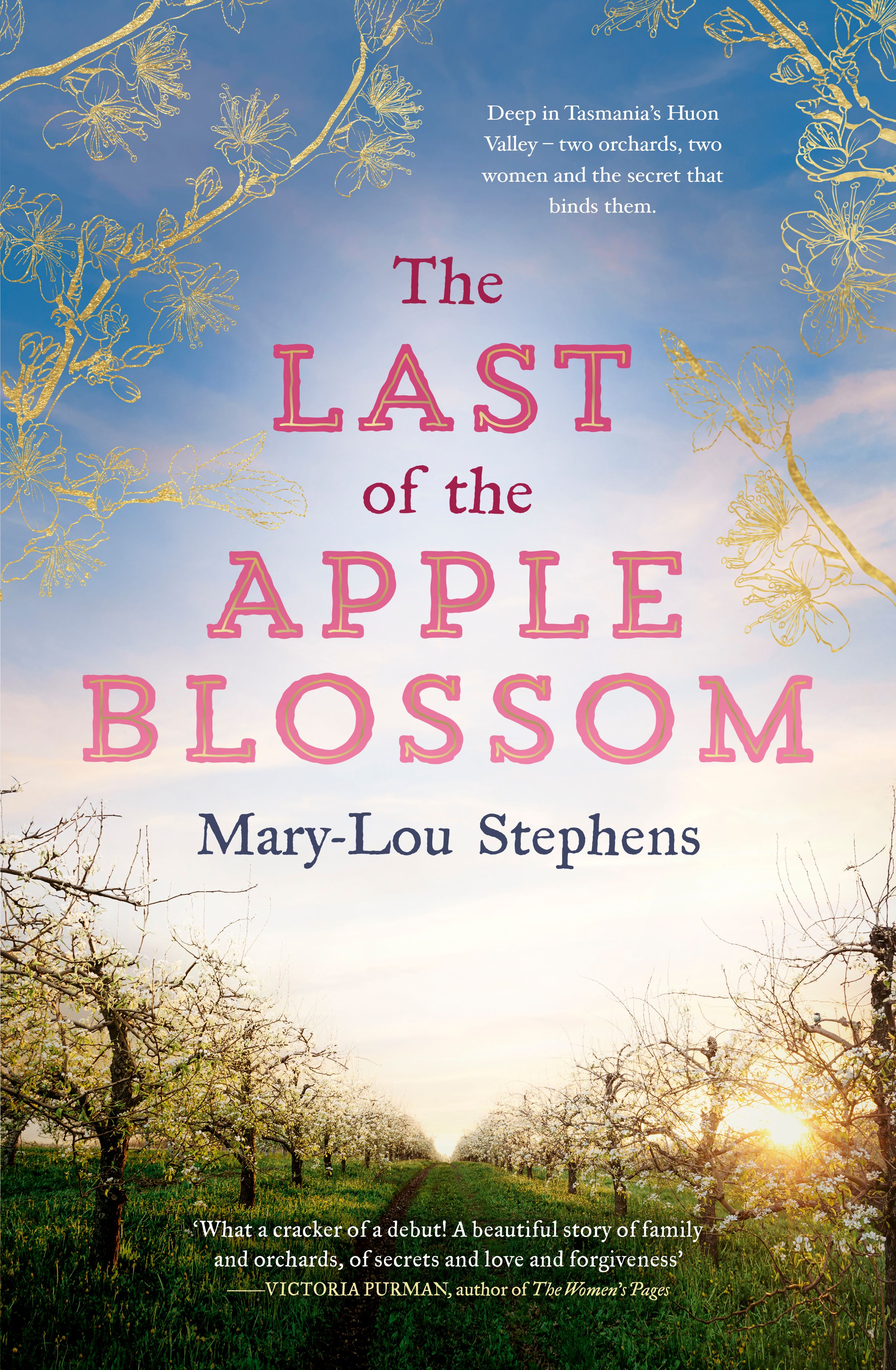 What inspired your first book you wrote and had published?
My first published book was my memoir Sex, Drugs and Meditation which was released in 2013 by Pan Macmillan. I used to read self-help books but I never did any of the suggested exercises, I just loved reading the case studies. When it transpired that my life read like one of those case studies I wondered if I wrote it would people enjoy reading it. My memoir is the story of how meditation changed my life, saved my job and helped me find a husband. Apparently it’s funny.
My first novel, The Last of the Apple Blossom, chose me. The idea for a novel that starts on the day of the devastating 1967 bushfires in Tasmania and traces the demise of the apple industry came rushing at me like a freight train. It terrified me to be honest. I tried to run away but it wouldn’t let me be. I’m glad I found the courage and tenacity to write it. I also had a generous and tough mentor in Monica McInerney who brought out the best in my writing. I hadn’t written historical fiction prior The Last of the Apple Blossom. (I have three unpublished novels tucked away in the archives. I call them my practice novels.) With historical fiction I’ve found my place in the writing world. I love it here.
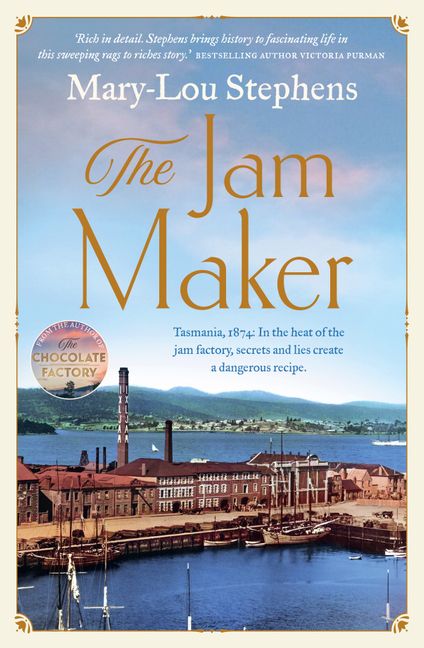
Can you tell us a bit about your new book, The Jam Maker, and what inspired you to write it?
The idea for The Jam Maker came to one sunny afternoon as I was walking along the Hobart waterfront. On one side was the old Henry Jones IXL factory. On the other were the sandstone buildings of Salamanca Place that once housed the thriving jam enterprise of WD Peacock. Two giants of the jam industry once faced off against each other across the docks of Hobart. ‘What happened here?’ I wondered.
Researching the history of Henry Jones and his famous IXL brand was fascinating. His is literally a rags to riches story from an impoverished childhood in the slums of Hobart to a multi-millionaire captain of industry. The Jam Maker is told through the eyes of Harriet Brown who, at twelve years old, disguises herself as a boy to gain employment at George Peacock and Sons as a label paster. She starts work on the very same day as Henry in the factory that he will one day own. They become firm friends and their lives are entwined throughout The Jam Maker. Through the decades Henry experiences triumphs and setbacks while Harriet’s life is one of success, love and friendship but also of heartbreak and disaster. One of these disasters leads to a deadly secret that, if revealed, will destroy her life and the lives of those she loves and protects. Hence the grab line for The Jam Maker – jam is sweet but it can also burn.
 What did you do in terms of research when writing The Jam Maker? What are some of the surprising things you discovered?
One of my favourite aspects of writing historical fiction is the research. I think most historical fiction authors would agree that often it’s hard to stop researching and start writing. For my novels I’m always sourcing books that are long out of print. Academic papers and theses on the subject are also incredibly useful. Trove is an invaluable resource and then there’s the internet for all those vital details like clothing and slang. I have an entire glossary of Victorian slang tucked away in my research notes for this novel. I made good use of it when it came to Ruth’s voice. I also spend hours in the archives of the State Library of Tasmania. The librarians there are a treasure.
One of the wonderful discoveries I found in my research was how important Henry Jones’ wife, Alice, was his to success. It was she who saved the money to help him buy the factory. She was his business confident and advisor as well as the mother to their twelve children. Yes, twelve!
A surprising fact was that Henry Jones never carried money. The man was a millionaire but he was forever borrowing a few coins from petty cash to catch the tram home to North Hobart. Alice had to make sure he took a money belt filled with sovereigns on his business trips. When he went to inspect a hop field with his banker and decided to buy it on the spot he had to borrow the two shillings for the down payment from the banker.
I think most people are familiar with the brand IXL but they might not know its origins. IXL comes from Henry Jones’ motto, I excel in everything I do. And he did.
Do you think Tasmania’s history, peoples, and its evolution are different from mainland Australia due to its isolation? Have its history, buildings, and stories been in some ways protected, rather than built over and in many cases forgotten, like the big cities on the mainland?
Tasmania is certainly a unique state. I grew up during the ’60s and ’70s and it felt like a world apart. We were very much behind the rest of Australia in terms of fashion and culture. There were no jobs and the population was decreasing. Tasmania has spent much of its history in depression and recession because of its small size and limited resources. It’s a much different story today with its thriving arts community, lauded food culture and successful tourism industry.
Many of the buildings I write about in The Jam Maker were in danger of demolition at one stage. It saddens me to think that we might have lost the beautiful sandstone warehouses of Salamanca Place but in the late ’60s and early ’70s many of them were derelict. Thanks to the foresight and efforts of influential citizens those buildings still stand. The incredible renovation and transformation of the H Jones & Co IXL factory into the Henry Jones Art Hotel was visionary and a testament to the success of ventures like this.
Tasmania has a singular history as the result of being an island state so isolated from the mainland and the world. These attributes are now seen as attractive and as a tourist draw but for much of Tasmania’s history the opposite was true.
 What is ahead for Mary-Lou Stephens over the next few years?
The second draft of my next novel has been fact checked and I’ll complete another draft before I send it to my beta readers. I have a June deadline and once submitted there will be many rounds of edits with my publisher.
While touring The Jam Maker in Tasmania I’m fitting in some research for the 2028 novel. I’m looking forward to diving into writing it once the 2026 novel is submitted.
After I left the ABC my husband asked me what I wanted to do next and my answer was, ‘All I want to do is travel and write.’
It took a while to figure out how we could afford it but a few years later (and after a particular global event) we sold or gave away almost everything we owned, rented out our home and set off overseas.
My husband and I have been slow travelling the world for the past two years. We’ve had many adventures in Asia and South America and hope to make it to Europe in the not too distant future. The plan is to travel for ten years but we’ve learnt plans often change. Slow travel makes this writing life possible because we stay in one place for between one and three months. I bunker down, make myself a writing nest and put one word in front of another. As we’re in one city or town for so long there’s no need to rush around seeing the sites. I have one or two days off a week and that’s enough time to visit places of interest.
Our budget is limited so we usually stay away from expensive tourist areas, eat at the local restaurants and walk or take local transport. All of this adds to having a sense of a country even though I spend much of my time writing.
The Jam Maker was written in six countries and edited in three more. If all goes to plan my next novel will have a similar history. But given what I know about plans anything could happen. Anything is possible!
0 Comments