



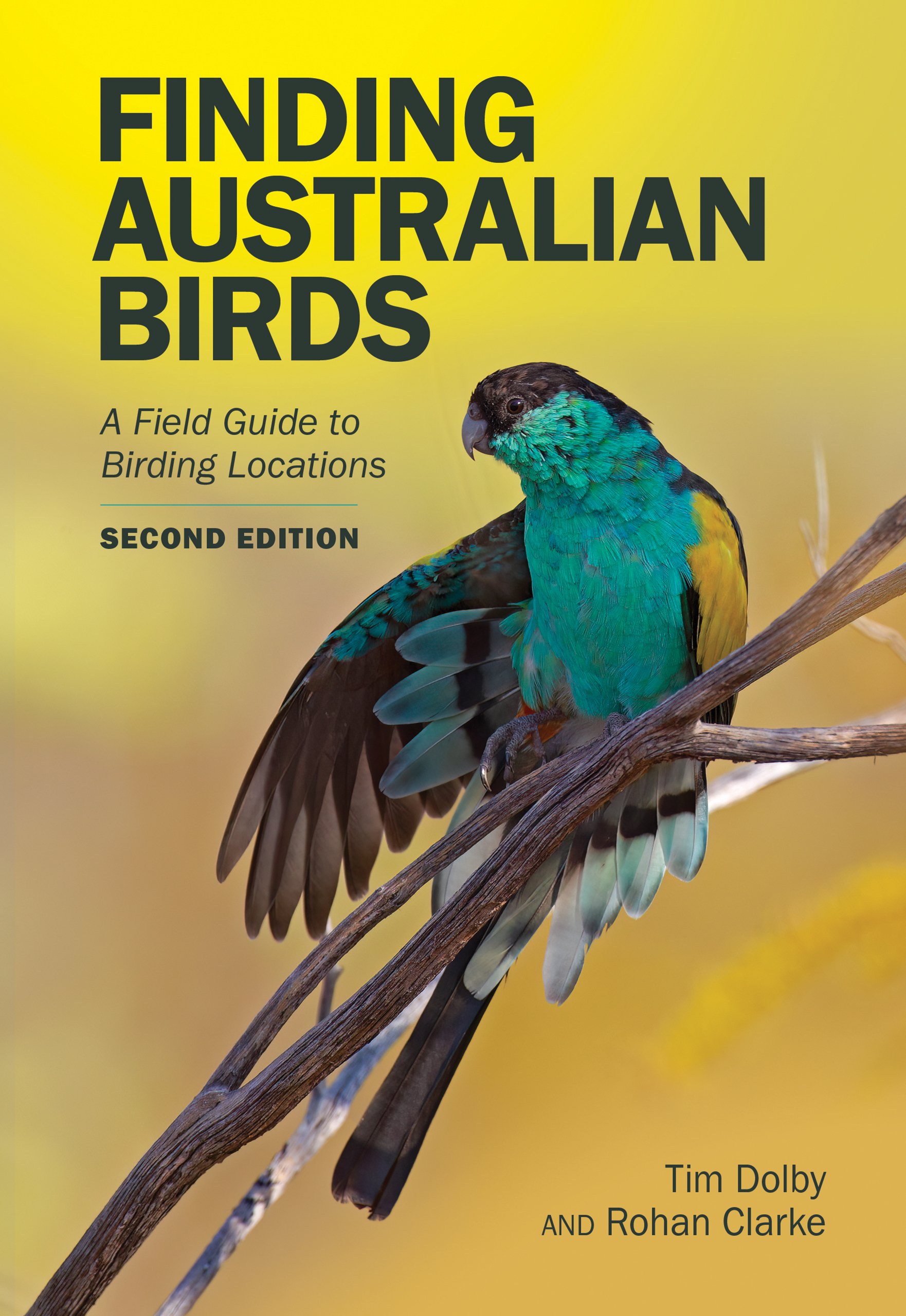
From the eastern rainforests to the central deserts, Australia is home to some 900 species of birds.
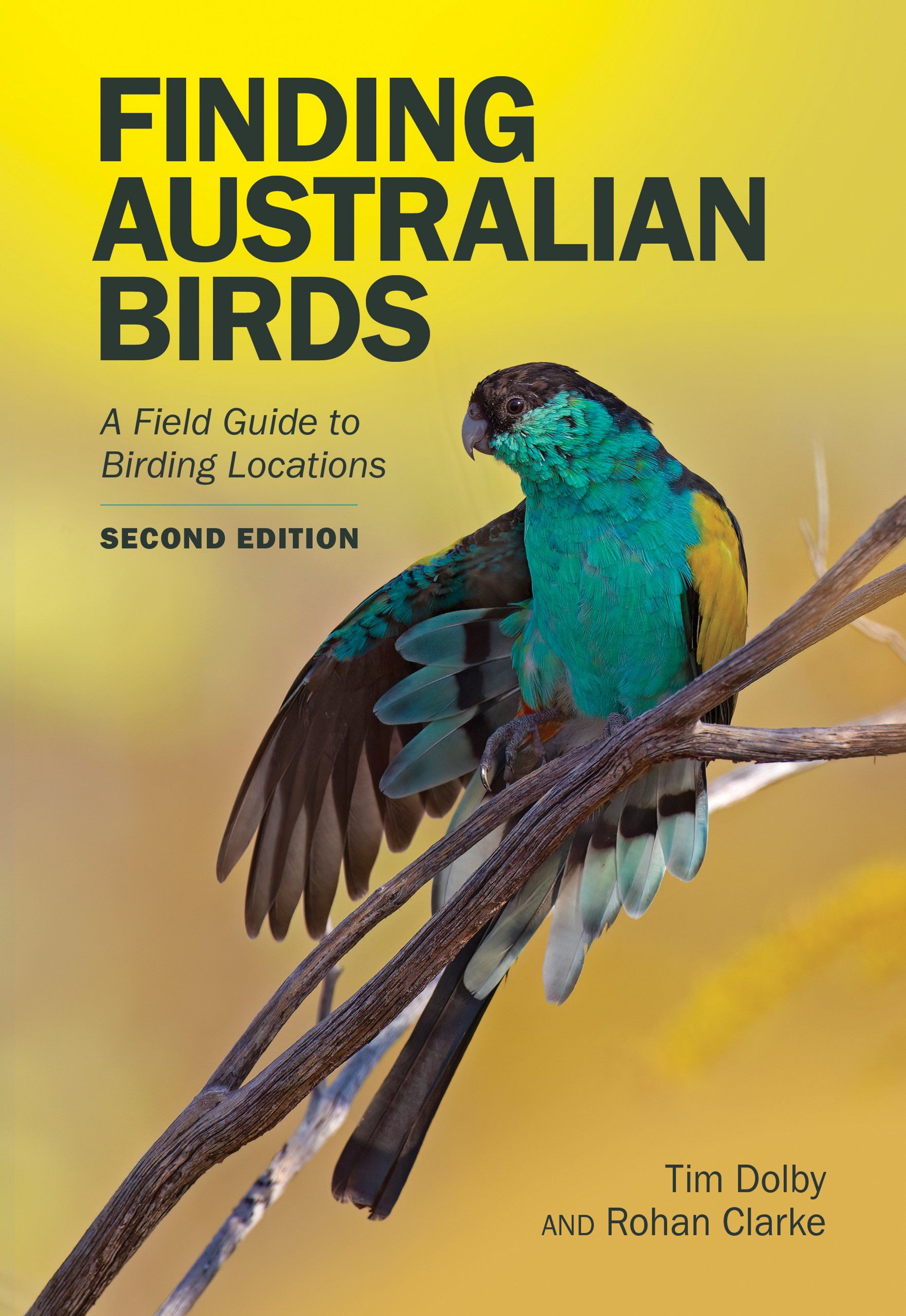
The second edition of TIM DOLBY and ROHAN CLARKE’s Finding Australian Birds covers over 400 birdwatching sites conveniently grouped into the best birding areas, from one end of the country to the other.
Read on for their top 10 tips for finding birds in Australia.
Australia provides opportunities for some of the world’s most spectacular birding. A continent in its own right, with a land mass of 7.7 million km2, it is the world’s largest island and the sixth largest country. Aside from the mainland states and territories, Australia also administers the islands of Christmas, Cocos (Keeling), Ashmore, Norfolk, Lord Howe, Heard and Macquarie, so the coverage of this book spans a quarter of the Earth’s circumference.
Australia hosts some remarkable geographical features that provide a spectacular backdrop (and, of course, travel highlights in their own right) while exploring the continent’s birdlife.
The Great Dividing Range stretches 3500 km from the north-east tip of Queensland, down through eastern New South Wales to the Grampians in western Victoria.
These ranges include, among other habitats, tropical rainforest, vast eucalypt forests and woodlands and the only alpine areas on the mainland. Off the south-eastern coast lies the island state of Tasmania, with its spectacular mountain ranges, extensive areas of native vegetation (42 per cent of the state is either reserved or exposed to minimal use) and pristine coastlines, including the entire south-west coast for which there is no road access.
The Great Barrier Reef, located off the coast of Queensland, is the world’s largest coral reef, spanning over 2000 km of coastline.
Covering most of continental Australia, the ‘outback’ is predominantly semi-arid rangelands and desert, and includes some of the world’s largest deserts (such as the Great Victoria, Great Sandy, Tanami, Simpson and Gibson Deserts), the vast Nullarbor Plain, spanning the South Australian and Western Australian border region on the southern coast of Australia, and the vast dry Mulga woodlands (encompassing 20 per cent of the Australian continent).
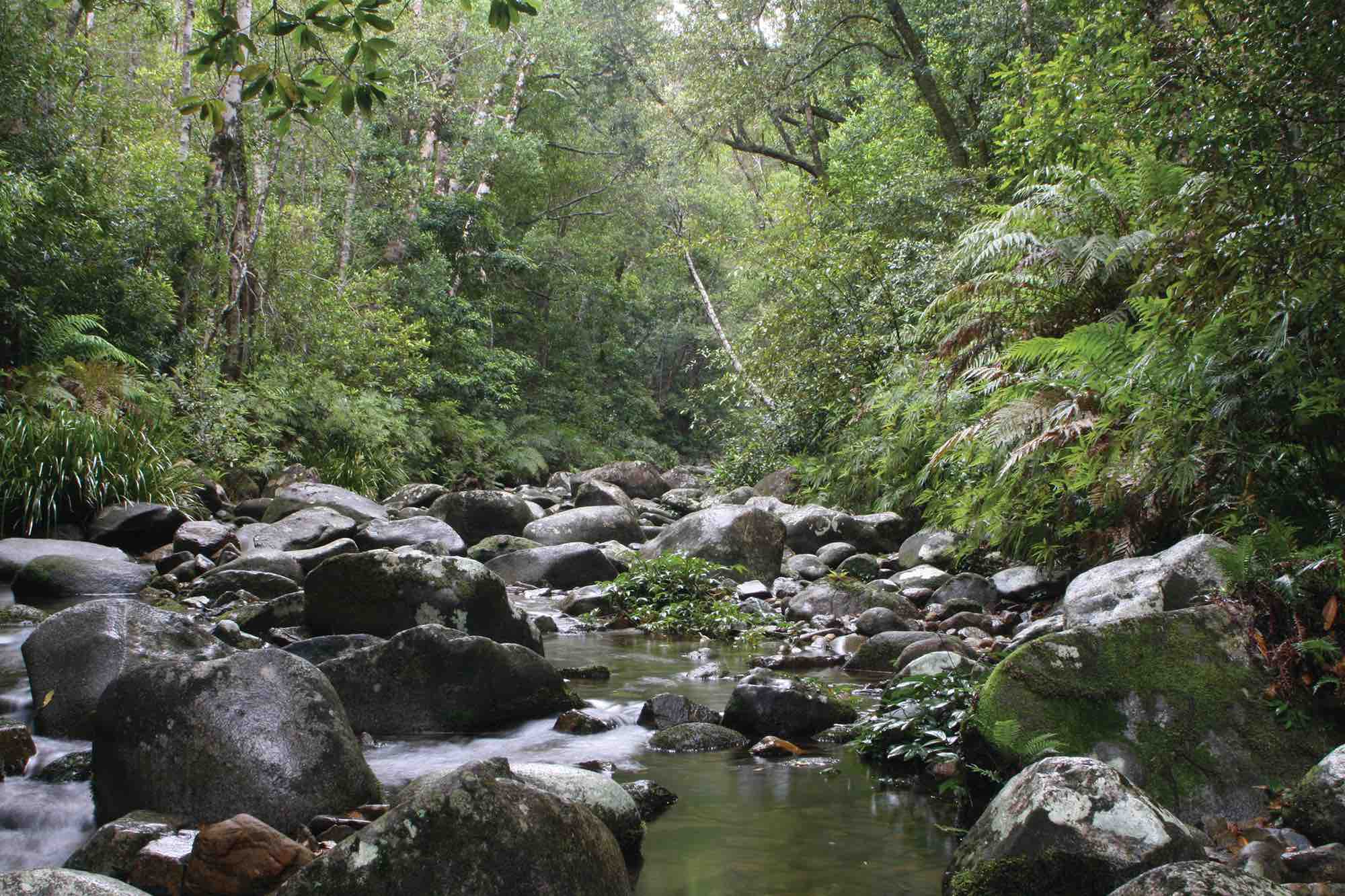
Subtropical rainforests in northern NSW support over 100 species of bird including sought-after species such as Wompoo Fruit-Dove, Marbled Frogmouth, Regent Bowerbird and Paradise Riflebird.
Photo: Rohan Clarke.
Across northern Australia, from west to east, are the Kimberley, the Top End, Gulf Country and Cape York – all have a tropical climate with a predominantly summer monsoon season, with large tracts of woodland, grassland and escarpment. Although Australia is a relatively dry continent, some of its most arid lands are crossed by remarkable river systems. For example, the Cooper Creek system begins in the Channel Country of south-western Queensland and, after ~1300 km, drains into the largest Australian lake bed, Lake Eyre. The largest, and perhaps the most iconic river systems, are the Murray and Darling Rivers that collectively drain the Murray–Darling Basin – an area of over one million km2 in the eastern half of the continent, or one-seventh of the land mass of Australia. The continent is bounded by the Indian, Pacific and Southern Oceans, and separated from land masses to the north by the Arafura and Timor Seas. Other notable marine features include: Bass Strait, which separates Tasmania from Victoria; Torres Strait, which separates Queensland from Papua New Guinea; and the Great Australian Bight bounding the southern coastline of Western Australia and the coastline of South Australia.
The National Reserve System is Australia’s network of protected areas and includes more than 9300 separate reserves covering ~14% of the country (almost 106 million ha). The reserve system consists of Commonwealth, state and territory reserves, Indigenous lands, protected areas that are run by non-government organisations, and ecosystems protected by farmers on their private working properties. Many of these places are specifically covered in this book. Australia currently has 65 Ramsar-listed wetlands covering 7.5 million ha. Recently, 314 Important Bird Areas (IBAs) have been identified across Australia (see www.birdata.com.au/iba.vm). These IBAs are considered to be of international significance for bird conservation. Not surprisingly, many IBAs are captured within the National Reserve System, but there are also many that are not.
Finding Australian birds
Due to the great age of the Australian continent, its variable weather, extended periods of geographic isolation and the vast areas involved, much of the birdlife is unique. At last count, 969 bird species have been recorded in Australia and its offshore islands and territories. Although 230 of these are considered vagrant or accidental visitors, more than 45 per cent of the remainder are Australian endemics: found nowhere else on Earth. Some species are extraordinarily specialised with very restricted distributions, endemic to a localised area (e.g. Golden Bowerbird), while others are wide-spread and occur over most of the continent (e.g. Brown Falcon).
Australian birds include such recognisable species as the world’s second largest bird and Australia’s unofficial bird emblem, the iconic Emu, one of the world’s great songsters and mimics, the Lyrebird and, with its distinctive chorus of laughter, the Kookaburra.
Australia is also home to over 50 species of brightly coloured parrots and cockatoos, with many of the most colourful species (e.g. rosellas, lorikeets and galahs), easily seen in urban environments. The diversity of finches is also high, and includes the stunningly beautiful Gouldian Finch. Owing to Australia’s Gondwanan origins (the southernmost of two ancient continents) many of the most well-represented passerine groups so characteristic of Australia also have ancient origins. For example the honeyeaters, fairy-wrens, grasswrens, thornbills, gerygones, scrubwrens, treecreepers and the Australopapuan robins can all be traced back to ancient songbirds with local origins.
Finally, being an island continent, the surrounding oceans hold a truly remarkable diversity of seabirds: if you participate in a pelagic boat trip off the southern coastline, on a good day it is possible to see as many as eight species of albatross, including the majestic Wandering Albatross.
 Ten tips for finding birds in Australia
- Know your birds by knowing what to look for – in conjunction with this book, a good field guide is a must.
- Many species in Australia are small, skulking or both. When combined with the challenges posed by dense and sometimes tall vegetation, good birdwatching optics, especially binoculars, will enhance the views obtained and provide more opportunity for a positive experience.
- Most birds display distinct habitat preferences. Species-specific pointers and images of habitat in this book, alongside habitat descriptions presented in field guides, will help to narrow the search.
- Many birds are most easily located by call. A growing familiarity with the calls of common species allows a birdwatcher to focus more on the unfamiliar. When an unknown songster is tracked, there is a higher probability of it being a less common species.
- Many small birds associate with other species in mixed flocks. Looking for birds ‘where the birds are’ enhances the chance of encountering many of the more sought-after species – for example, the elusive Grey Honeyeater is most frequently found in the company of thornbills.
- Australian birds display a remarkable diversity of movement patterns, with some key strategies being north–south migration, altitudinal migration, nomadism, and population irruptions and dispersal in response to boom and bust cycles driven by above average rainfall and drought years. Knowledge of seasonality (as presented in this book) and other less-well-defined movement strategies can be the key to locating some species.
- Australia experiences a climate of extremes. On hot days, birds are generally most active in the morning, especially just after dawn, but become progressively harder to find through the heat of the day. Most species show increased activity again in the late afternoon, but, in exceptionally hot weather (>38°C), this second activity peak may not occur. Conversely, in cold weather (<5°C) the dawn chorus may initially be more muted until birds have a chance to soak up the first rays of sunlight.
- Many bird species drink daily from freshwater sources, especially in warmer weather. Along with areas with concentrated food resources, such as eucalypts heavy with blossom (honeyeaters and lorikeets), caterpillar-infested shrubs and trees (cuckoos) or drying wetlands (herons, egrets and other piscivores), these locations warrant extra time.
- Good field craft isn’t essential but it certainly helps! Wear muted colours, avoid sharp noises and use slow steady movements (or better, remain still) while observing – with these techniques birds will be less disturbed by your presence and as an added bonus you’ll also get better views.
- To continue honing your bird finding skills, take note of where and how you find birds. Some places are simply better for birds than others, with different species responding differently to the available opportunities – open areas, sheltered areas, sites with water, the presence of a specific plant species or updrafts to assist flight are just some elements that create the right opportunities for particular species.
Ethical birdwatching
All birders have a responsibility to adhere to ethical birdwatching principles. BirdLife Australia has developed a policy on ethical birdwatching that can be found at www.birdlife.org.au. The guidelines are especially appropriate at sites such as those outlined in this book because many of these will be visited over time by relatively large numbers of birdwatchers. Even a very small impact on the birds (and landholders and other community members) at such sites by individual birdwatchers needs to be viewed in the context of cumulative impacts from all visitors. For this reason, we ask that birders strive to adhere to the following principles at all times.
Promote the welfare of birds and their environment
- Avoid stressing birds or exposing birds to danger.
- Avoid using methods such as flushing and call playback, particularly during nesting season when the consequences of even minor disturbance may be severe (e.g. nest failure).
- Remain on roads, trails and paths where they exist – this avoids habitat disturbance.
- Do not handle birds.
- Report rare bird sightings to conservation authorities but consider the wellbeing of the bird or population before making this knowledge more publicly available.
- Support the protection of birds and their habitat.
Respect the law and the rights of others
- Do not enter private property without the owner’s explicit permission.
- Follow all laws, rules and regulations governing use of roads and public areas.
- Consider and respect the rights of landholders.
- Practise common courtesy in interactions with other people.
BirdLife Australia is Australia’s premier birding organisation, and provides invaluable assistance for both local and international birders. It is well worth joining BirdLife Australia just to participate in the many monthly activities that take place. An award-winning quarterly magazine forms part of the membership package, while your membership also provides a voice for the birds, because BirdLife Australia is the leading advocacy group for birds and bird conservation in Australia.
BirdLife Australia consists of numerous state and regional groups, so it is also possible to ‘tap into’ local activities and knowledge through this network.
**********

0 Comments