


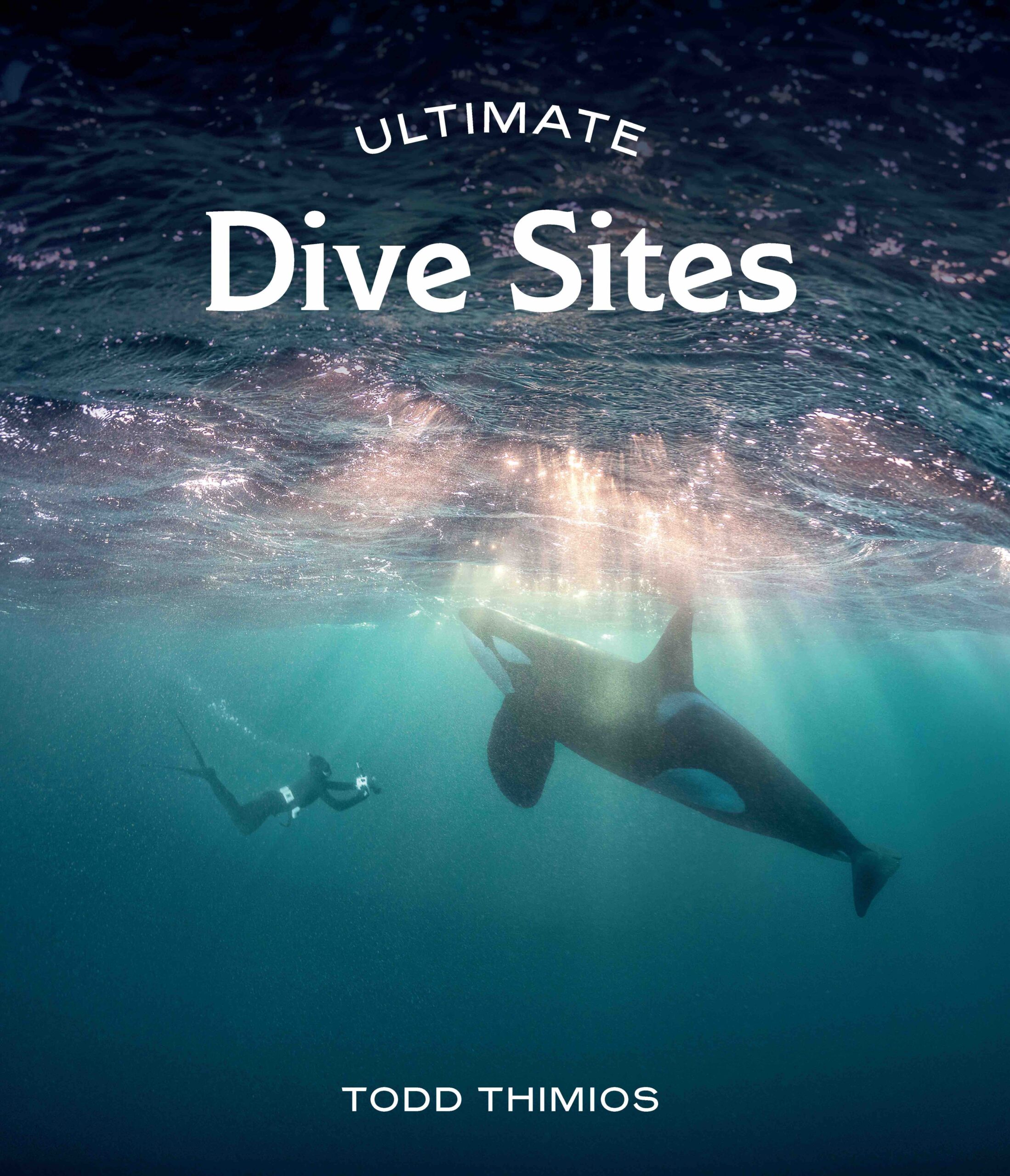
Diving expert, photographer and author TODD THIMIOS has completed more than 3500 dives and has curated a collection of the best diving experiences.
His book Ultimate Dive Sites is a detailed guide offering insightful tips and essential information you’ll need when visiting these unique diving sites and countries.
From the Maldives, Arctic, Cuba, Brazil, to the warm waters of the Pacific, Todd Thimios highlights the best dive sites, rich with coral reefs and diverse marine life.
In this extract we dive into the waters of Indonesia.
**********
Lembeh Strait, Indonesia
Go crazy for critters in this muck diving mecca
Why it’s special
Lembeh Strait, a slender ribbon of water between North Sulawesi’s mainland and Lembeh Island, is renowned as the world’s best muck diving destination. Distinguished by its black sand environment, Lembeh hosts an astonishing diversity of peculiar creatures. In this macro-photography haven, every grain of volcanic sand seems to conceal critters. Frogfish, mimic octopuses, flamboyant cuttlefish, and myriad species of nudibranchs are just the beginning of the catalogue that thrives within these nutrient-rich waters. Beyond the sand, the Strait’s artificial reefs and wrecks have become flourishing ecosystems, offering a home to a variety of species and providing divers with an array of habitats to explore.
Best time to dive
Diving here is year-round, and each month brings its own unique set of marine life, but the best conditions are typically from March to December, with calmer seas and optimal visibility. The January to February wet Season can bring rains and reduced visibility, but it also often leads to increased sightings of rare critters.
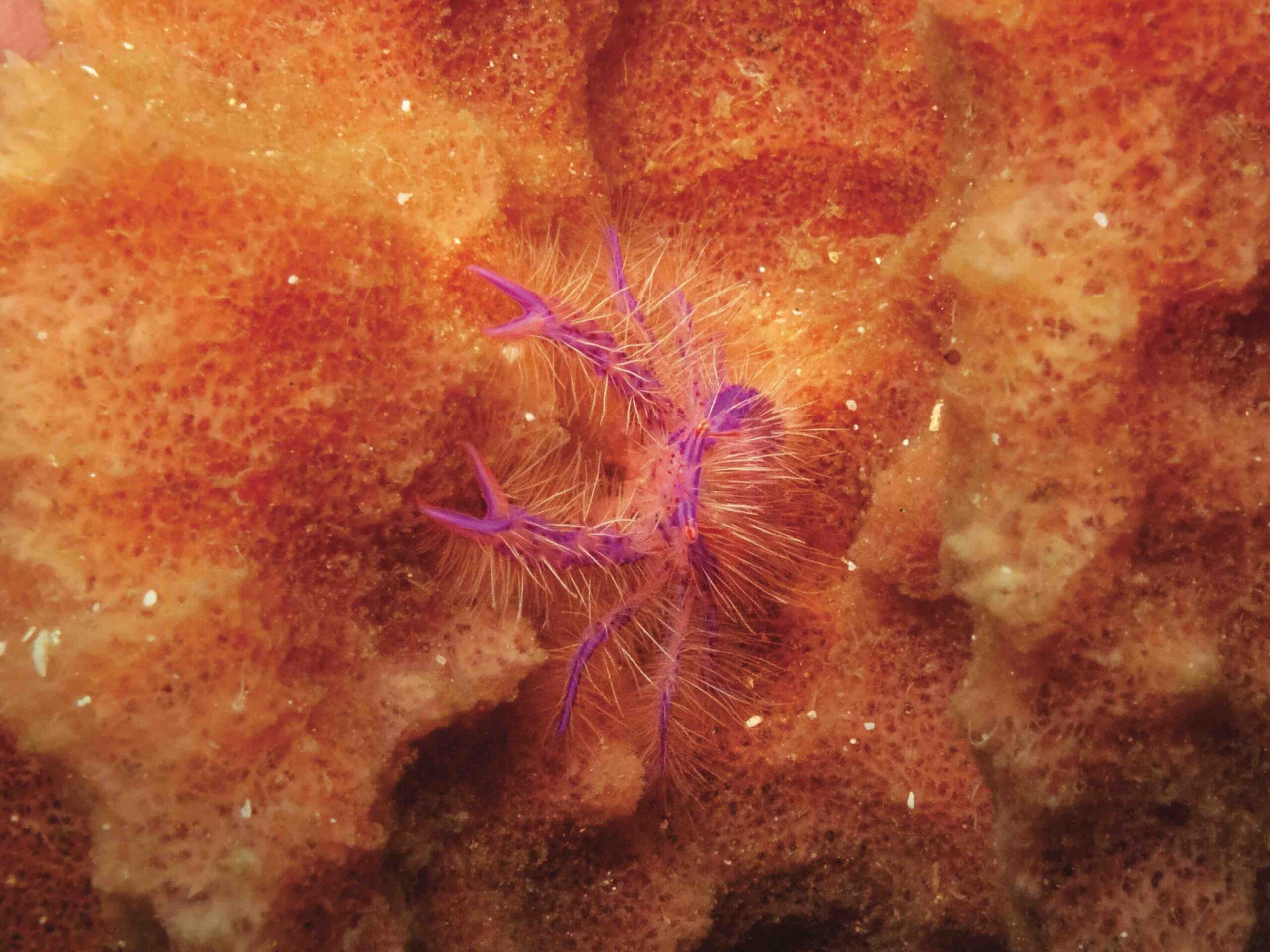
I love photographing these little critters. I think they have the greatest name in the sea – the hairy squat lobster
**********
Gear
- 3mm wetsuit for 26–29°C (79–84°F) water temps
- A good dive light for night dives
- Fins that remain stiff when you kick, to avoid displacement of the ocean floor environment
If you’re Nitrox certified, I encourage you to dive with Nitrox to prolong your bottom times. More bottom time equals more time searching for Lembeh’s critters.
Qualification
- Open water
Lembeh Strait’s gentle currents and shallow sites make it accessible to divers of all levels. However, neutral buoyancy is critical to avoid disturbing the delicate muck environment and its hidden occupants.
Getting there
You can fly directly to Manado Airport from Singapore, then it’s a one-hour drive to Bitung. A 15-minute boat ride across the harbour will have you on the island of Lembeh.
**********
DIVE IN
Muck diving deserves to be in its own category; it really is nothing like your regular clear-water diving. In this scenario, it’s less about finding pretty reefs. With limited visibility and light, you’re not focussed on a big open scene, but rather on a tight corner or crevasse that some super bizarre, little critter has claimed as its home. Muck diving sites tend to have a lot of rubble, trash (such as old bottles and containers) and things that look out of place underwater. But don’t let this turn you off; all of these foreign objects make excellent hiding places for a variety of exotic critters.
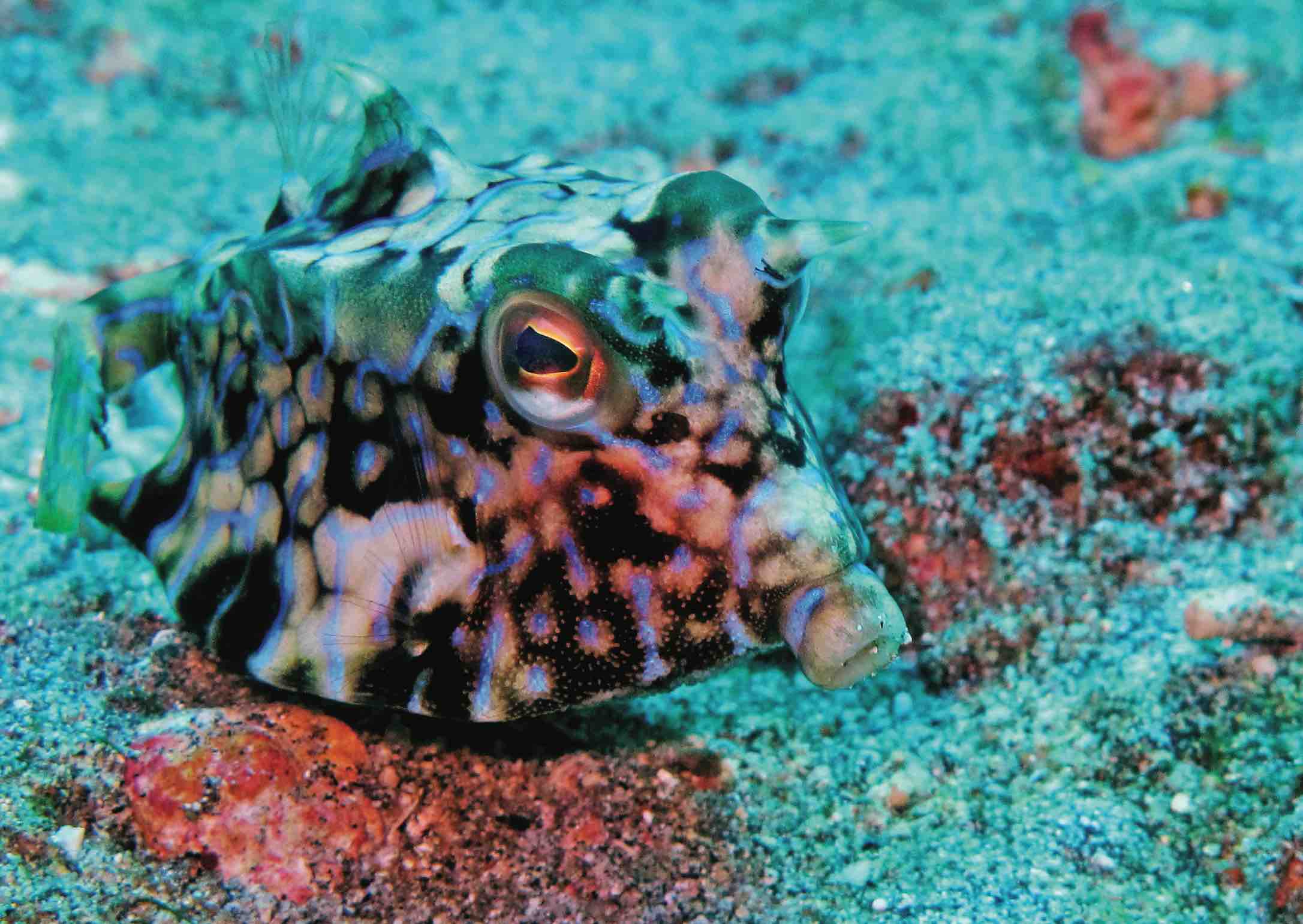
Honeycomb cowfish
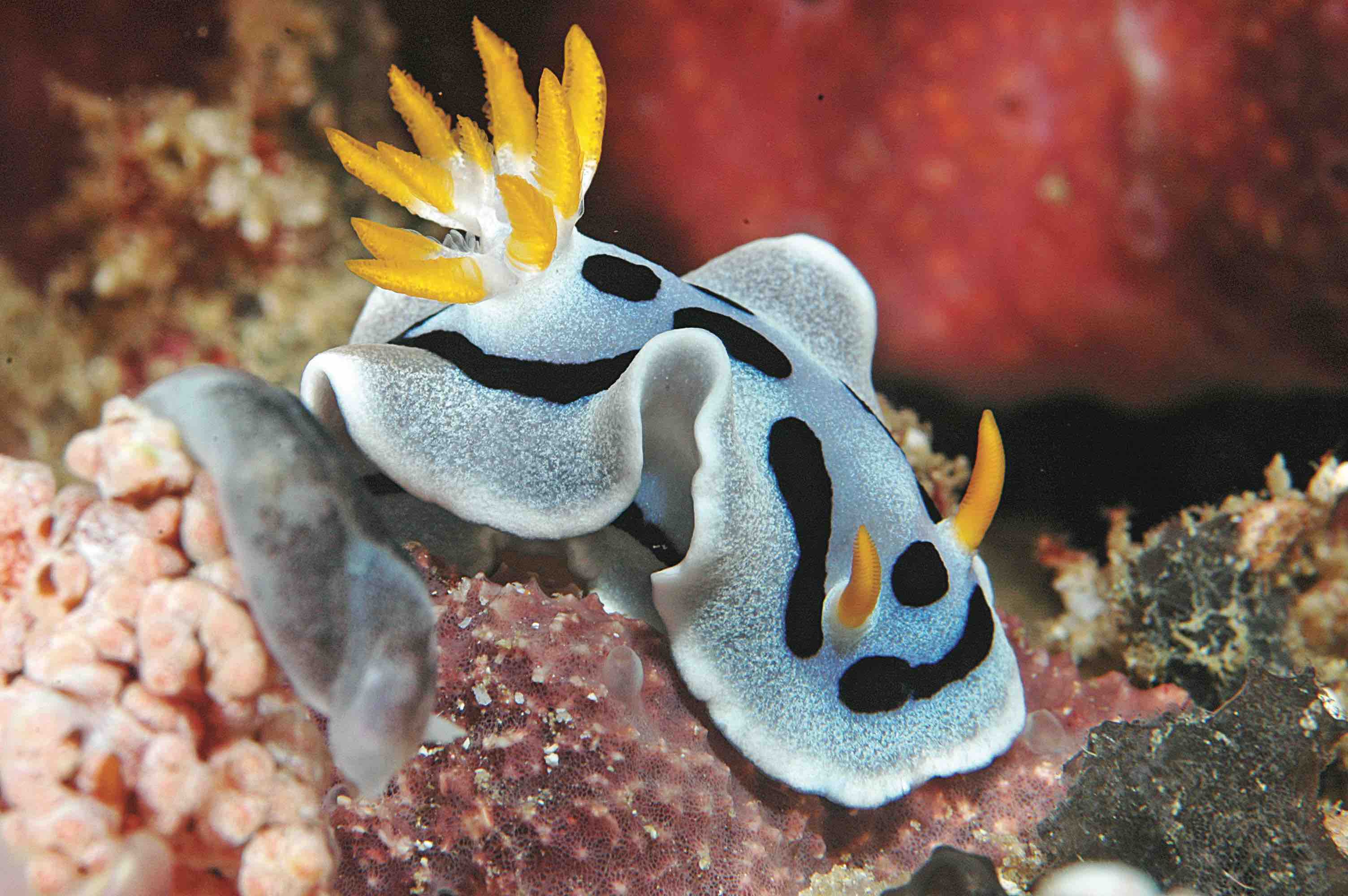
Macro Image of Nudibranch, Diana’s Chromodoris
I fell in love with muck diving when we cruised through Lembeh Strait on a superyacht that I was working on. One of my strongest memories from the Strait is when we resurfaced from our night dives and waited for the zodiac to pick us up. Floating in the warm, equatorial waters, we’d rest our necks back into our inflated BCDs and look up at the star-filled sky. The vast expanse of the universe was a perfect contrast to the time we’d just spent on the sea floor, intensely searching for the tiniest of critters with our dive lights. Our itinerary had brought us from Raja Ampat to Lembeh Strait, where the two kinds of diving were completely different.
Entering the waters of the Lembeh Strait, you’re immediately transported to an alien landscape. The dives are like a game of hide and seek, where the reward is the discovery of some of the ocean’s most bizarre inhabitants, such as seahorses the size of a rice grain, nudibranchs with colours so vivid they seem unreal, and fish that walk rather than swim. Patience, buoyancy control and kicking slowly with raised fins are paramount, as the silty sand stirs easily if you brush against it. Nitrox is also preferable, as many critters are found in depths of around 20m (66ft) and the extra bottom time with Nitrox is welcomed. Other quirky characters to be found in these waters include pygmy cuttlefish, blue-ringed octopus, ghost pipefish, boxfish, mantis shrimp, frogfish, gobies, blennies and my favourite-named critter of all time, the hairy squat lobster. This motley crew are what macro dreams are made of.
Lembeh’s black volcanic sand creates a dramatic backdrop for these extraordinary creatures to perform their daily (or nightly) rituals and the Strait’s artificial reefs, like the famous Police Pier, demonstrate how human-made structures can be repurposed to support marine ecosystems. Over time, these sites have become encrusted with corals and sponges, creating the perfect habitat for a plethora of creatures. Night dives here are particularly enchanting, as nocturnal creatures emerge and the seascapes transform into bustling metropolises of marine activity.
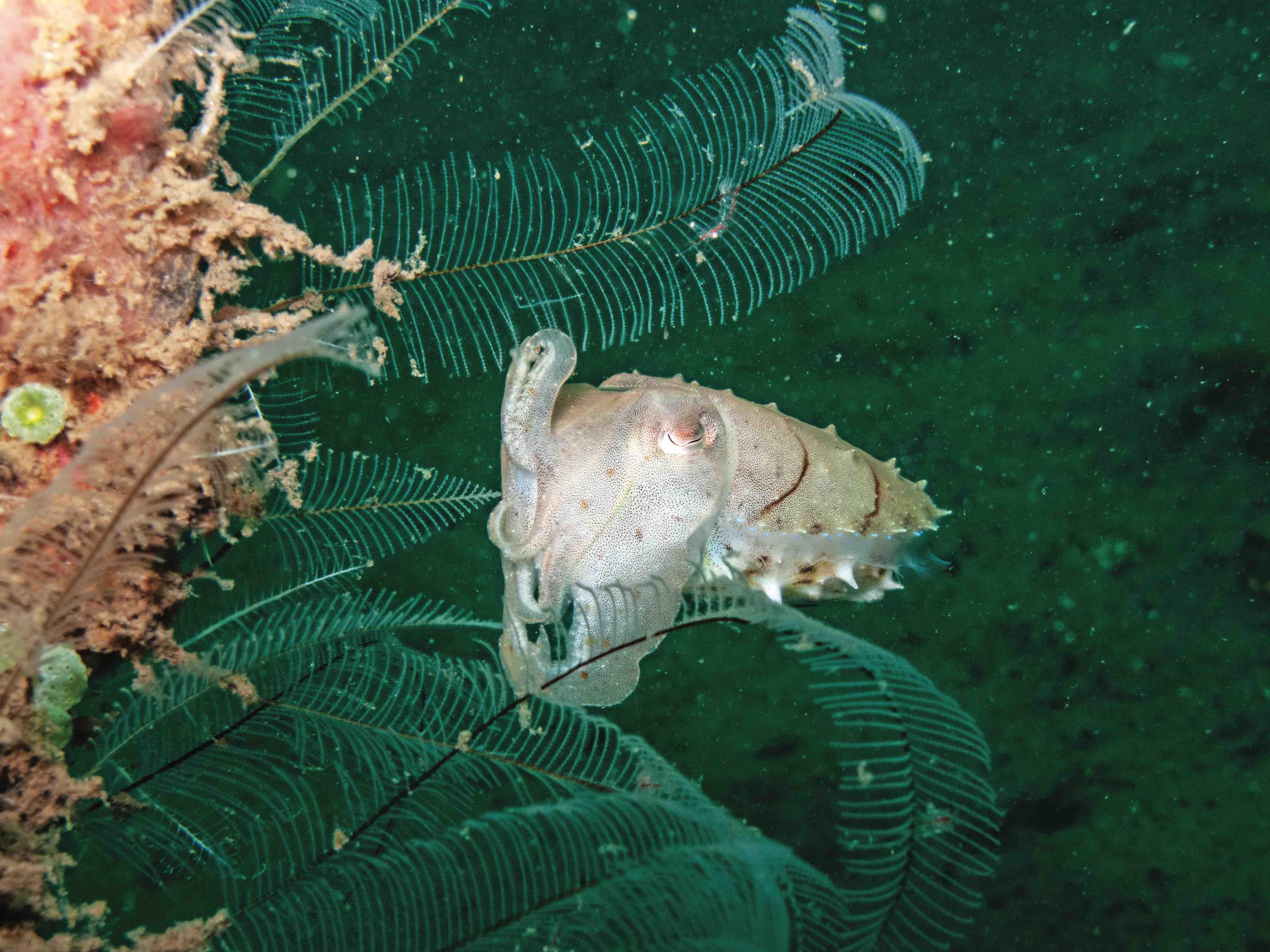
Broadclub cuttlefish
The subculture of muck diving is a world unto itself and diving in the Lembeh Strait is as much about the culture as it is about the critters. Here, local dive guides have an encyclopaedic knowledge of the Strait’s residents, often passed down through generations. They are the unsung heroes of Lembeh Strait’s diving experience, spotting the tiniest of creatures for our delight and leaving a trail of satisfied divers.
I love muck diving; it attracts a rather tragic crowd of dive-hard enthusiasts. It’s not unusual to find muck divers who dedicate all of their dives to this exclusive pursuit. They’re not interested in wide angled lenses, clear blue water or megafauna. Give these divers a jetty, some black sand and an unusual little critter that most of the world has never heard of and they’re stoked. For me, it’s another dimension in the wonderful world of ocean exploration. I love variety and the challenges that come with stepping into the micro world of macro. Slowing down and focussing on the smaller things brings the realisation that even in the ocean’s unassuming corners, life thrives in extraordinary ways.
There are several dive resorts on Lembeh Island to suit most budgets, from Bastianos Froggies Resort (bastianos.com) and Thalassa Lembeh (thalassamanado.com) to NAD Lembeh Resort (nad-lembeh.com) and the luxurious Lembeh Resort
(lembehresort.com). All these resorts offer photographic support and tuition, expert guides (spotters) and have excellent camera facilities.
Photography

A pair of harlequin shrimp feeding on a starfish
Creating macro magic in the muck
Muck diving is a whole new world of underwater photography. It’s all about little critters and macro lenses. Here are a few pointers that might help you make a start.
- Familiarise yourself with the local wildlife and the ecosystem in which you’re diving. Compile a critter checklist of species you would love to see.
- Seek out an experienced, local dive guide. This will increase your chances of discovering new wildlife tenfold.
- Equip yourself with a reliable dive light and a focus light. Ensure your strobes are always set to a low level of brightness and use diffusers.
- Embrace the excitement of rainy or cloudy weather – it often brings forth more intriguing critters.
- A 100mm (4in) lens is a great foundation for this type of photography. If you want to go to the next level, try experimenting with super macro by using a wet dioptre (basically, an attached magnifying glass to your housing) for greater macro reach.
- Be patient and aim for capturing behavioural moments in your photographs.
- Uphold ethical diving practices, refrain from disturbing creatures for personal gain.


0 Comments