


To travel to Europe from countries Down Under takes a good chunk of time. To make the most of the long trip many people stay for extended periods using a base from which to travel to and from.
100 Weekends in Europe is an excellent guide to use for short trips while your there or for planning a holiday trip where you hop from place to place.
In this extract we travel to the beautiful city of Ljubljana, Slovenia.
ABOUT THE BOOK
 Explore Vienna’s vines, Umbria’s hilltop towns, and Oxford’s literary legends with 100 carefully plotted and mapped travel itineraries featuring epic escapes to discrete islands; hidden and unexpected sides of well-known destinations; fun family outdoor adventures; and cultural city breaks. It’s time to start planning your next European adventure!
Inside 100 Weekends in Europe:
- 100 easy-to-follow short trip itineraries to amazing destinations in Europe from Scandinavia to Spain and everywhere in between
- Discover the weekend’s most surprising experiences, must-see sights, and must-do activities and explore the rich culture, history, and foods of each place
- Extra sidebar content reveals topics of local interest so you can learn about must-try eateries, famous artists from the region, community customs and traditions, and more
- Packed with practical travel advice with details on where to stay, when to go, and how to get there
- Local maps and vibrant photography accompany each exciting European itinerary
- Includes recommendations on how to extend your trip if you have the time
- Contents include: Southern Europe – Trace Madrid’s history through the arts; be bedazzled by Seville & the Costa de la Luz; discover island bliss in Gozo and Comino. Western Europe – Soak up cultural capital in Brussels; admire the architecture in Rotterdam; find romance in Lucerne. Central and Eastern Europe – Be moved by the past in Warsaw; uncover another side of Prague; learn about Balkan history in Sofia. Northern Europe – Browse the cool neighbourhoods of South London; set sail for the Faroe Islands; experience the drama of the fjords in western Norway
**********
Big things in small packages in LJUBLJANA
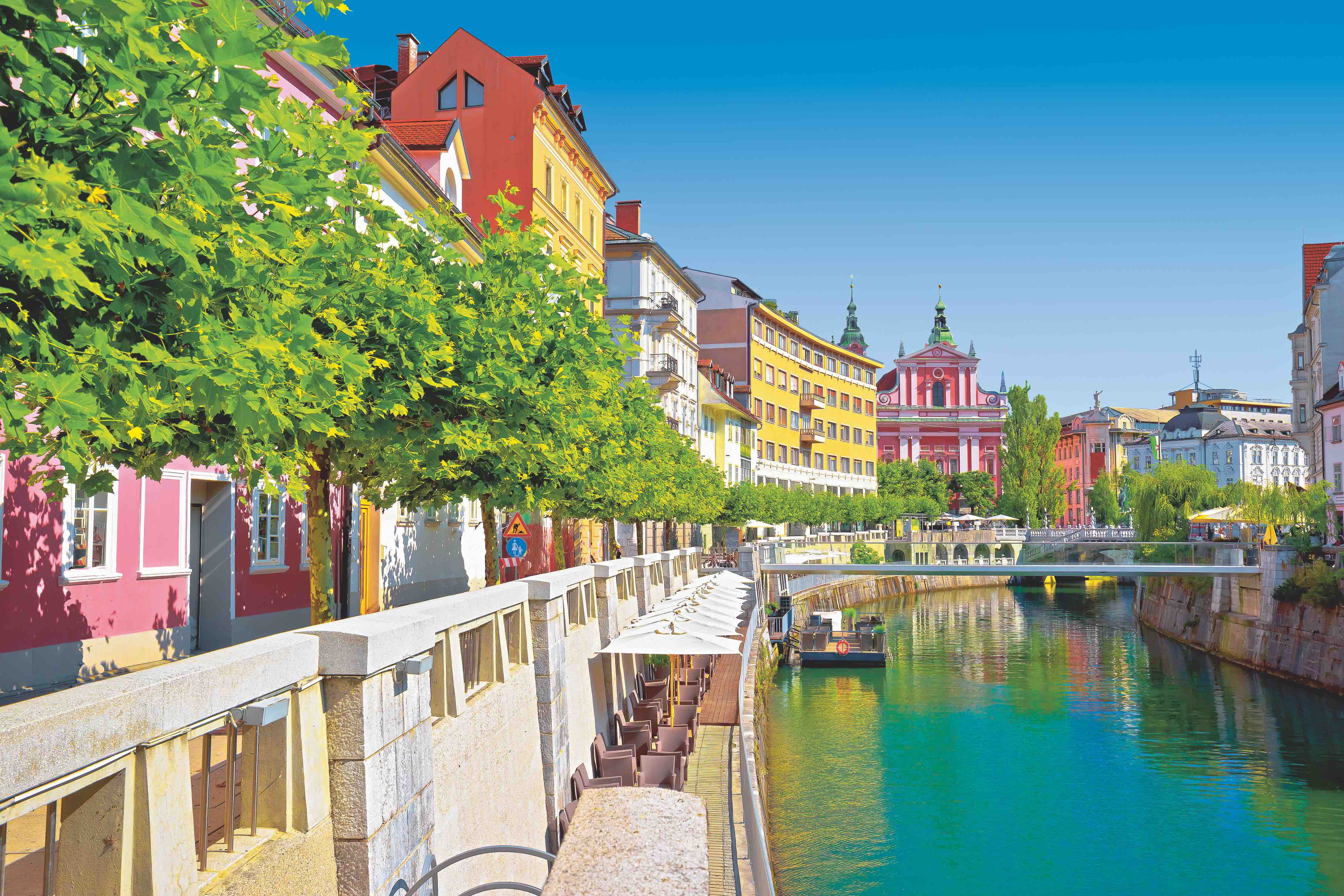
City of Ljubljana historic riverfront view, capital of Slovenia
Ljubljana, the capital of Slovenia, is appealingly lively and beautiful – and small. Crossed by the Ljubljanica River, which gives it a rural atmosphere, the city offers some excellent reasons to visit. An exceptional architectural heritage combines medieval vestiges with flamboyant baroque buildings and an innovative early 20th-century aesthetic – between 1920 and 1950, Jože Plečnik adorned the capital with elegant bridges, government buildings, pyramids and lampposts.
Ljubljana is also one of the most eco-friendly cities in the world – it was named European Green Capital in 2016 – and is compact enough for easy exploration by bike or on foot. Some 50,000 students create a buzzy vibe and share the wealth of museums, restaurants and bars with visitors.
The city feels like a mix of Italian dolce vita with a Balkan accent.
And if you have time to go beyond the Slovenian capital, you can explore the rest of the country.
Although small, Slovenia has some stunning scenery to offer, with the Julian Alps, the Škocjan Caves and the Adriatic Sea all providing the perfect excuse to venture out – two standout options for day trips are Lake Bled and Venice-lookalike Piran.
Climb up to the castle
Whether on foot or by funicular from Vodnikov trg square, heading to castle hill, aka Grajska Planota, 375m (1230ft) above the capital, is an experience not to be missed. Sitting at the summit,
Ljubljana Castle (ljubljanskigrad.si) dominates the city with its robust architecture, dating mainly from the 16th century. To access the rampart walk and enjoy a view of the Old Town, climb (via a double-headed iron staircase) to the 19th-century watchtower in the southwest of the castle’s courtyard.
Meander along the Ljubljanica River
A walk along the banks of the river that runs through the heart of Ljubljana is a must on any visit; entirely pedestrianised and bike-friendly, the riverside paths are an invitation to enjoy the emerald green of the water. Make a gastronomic pause at the Central Market (inset) to the north, or take a journey through the city’s history at Novi Trg to the south, which in the Middle Ages was a fortified fishing village. And don’t even try to resist the temptation of the cafes that transform the riverbanks into one long outdoor terrace in summer.
Time travel in Stare Mesto
From Prešernov Trg (a square named after Slovenia’s greatest poet), you can reach Ljubljana’s Stare Mesto (Old Town) via the Triple Bridge, a historical work of art dating back to 1842 and extended between 1929 and 1932 with two pedestrian footbridges designed by Jože Plečnik. Once across the river, the Old Town spreads out around three adjoining squares: Mestni Trg (Town Square); Stari Trg (Old Square); and Gornji Trg (Upper Square).
Together they hold a rich mix of medieval gabled houses and baroque buildings.
See the works of an inspired architect
The Ljubljana you visit today owes much of its charm and beauty to Jože Plečnik (1872–1957), one of the precursors of postmodernism.
Born when Slovenia was under Austro-Hungarian rule, the architect studied with Otto Wagner in Vienna, then endowed his hometown with buildings inspired by the Viennese Secession and Orientalism: the Triple Bridge; the Central Market; and his most celebrated building, the National and University Library (nuk.uni-lj.si), which has a large reading room open to non-students every Saturday afternoon.
MORE TIME?
BLED
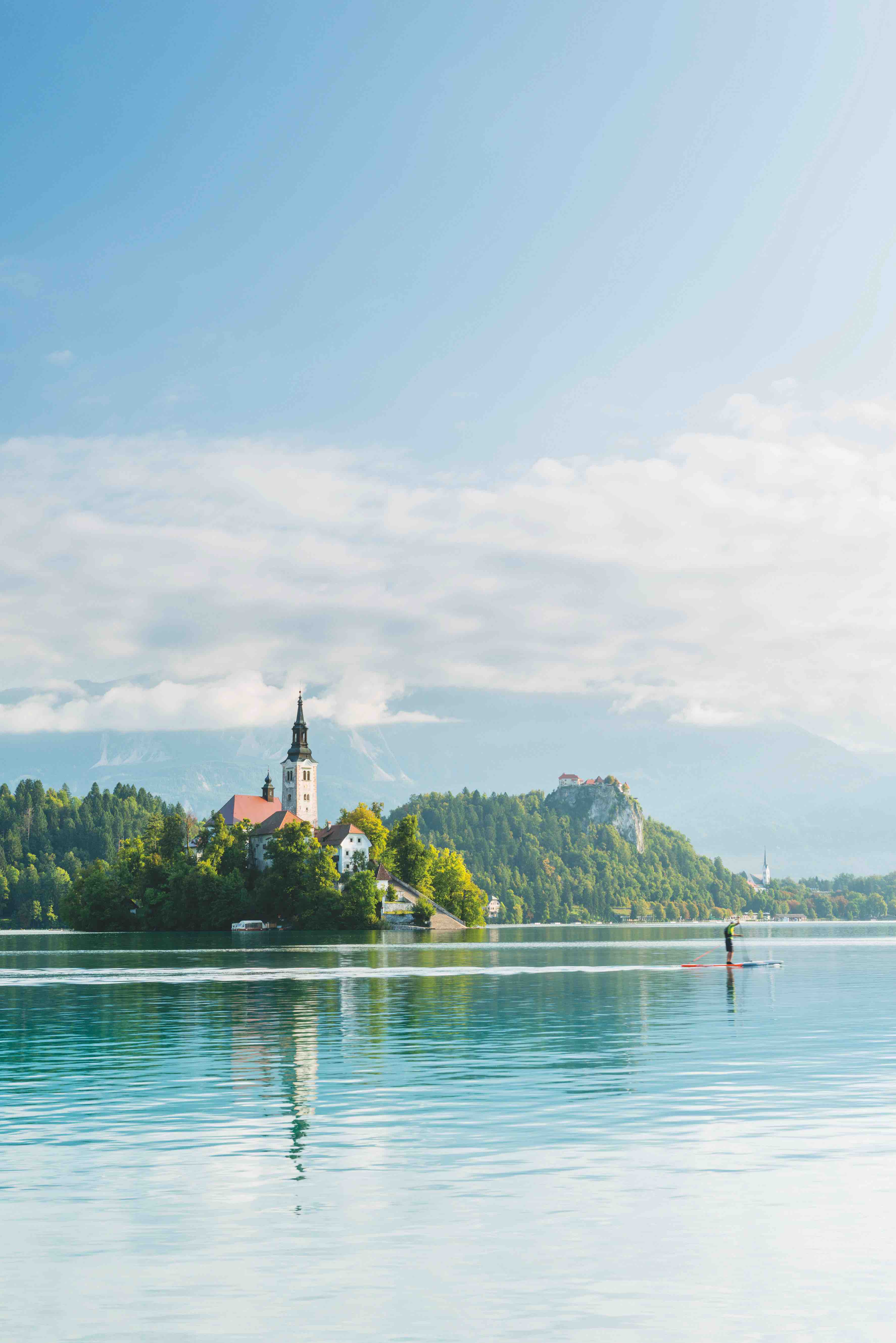
A short (less than an hour) train ride separates the capital from one of Slovenia’s most beautiful spots, Lake Bled. A medieval, cliff-clinging castle stands guard over the water here, and in the middle of the lake, a small island is home to a delightful church, easily visited by boat
PIRAN
Three hours by bus from Ljubljana, Piran was ruled by Venice for five centuries, and today is one of the best-preserved Venetian ports on the Adriatic. It’s also a great place to enjoy fresh fish and a stroll through picturesque lanes.
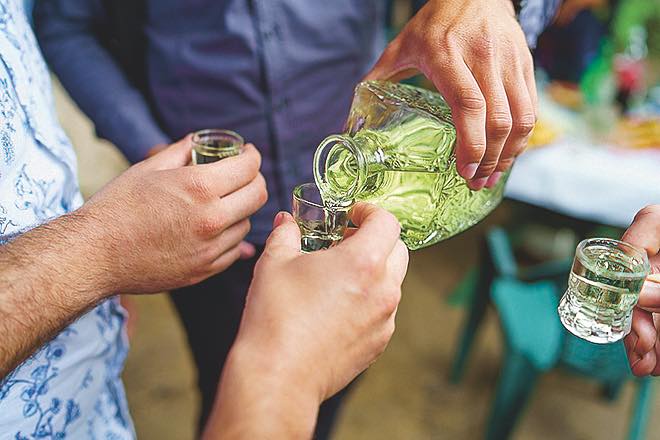
Pouring homemade domestic brandy slivovitza, celebrating outdoors
SLOVENIAN BRANDY
The Balkans are renowned for their strong, fruity brandies, and Slovenia is no exception – you can enjoy žganje distilled from a variety of fruits, including borovnica (wild blueberry), slivovka (plum) and češnjevec (cherry).
Among the best though is Pleterska Hruška, created from pears by the monks of the Pleterje Monastery in the southeast of the country. If brandy doesn’t appeal, don’t worry: Slovenia is now full of excellent craft breweries too.
PRACTICALTIES
HOW TO GET THERE
Many major European cities have direct flights to Ljubljana: the airport is about 30 minutes from the centre. There are also direct trains from Austria, Germany, Hungary and Serbia.
WHERE TO STAY & EAT
For a glamorous sleeping option, choose the Vander Urbani Resort (vanderhotel.com), which brings together four beautifully restored 17th-century building in the middle of the Old Town.
Ljubljana’s culinary scene is booming. If you’re here between mid-March and mid-December, head to the Central Market for the Open Kitchen (odprtakuhna.si), an event held every Friday from 10am to 10pm when local chefs cook up their specialities.
EVENTS
The Ljubljana Festival (ljubljanafestival.si) takes place in July and August, with concerts, opera, theatre and dance, mainly in the open air.


0 Comments