


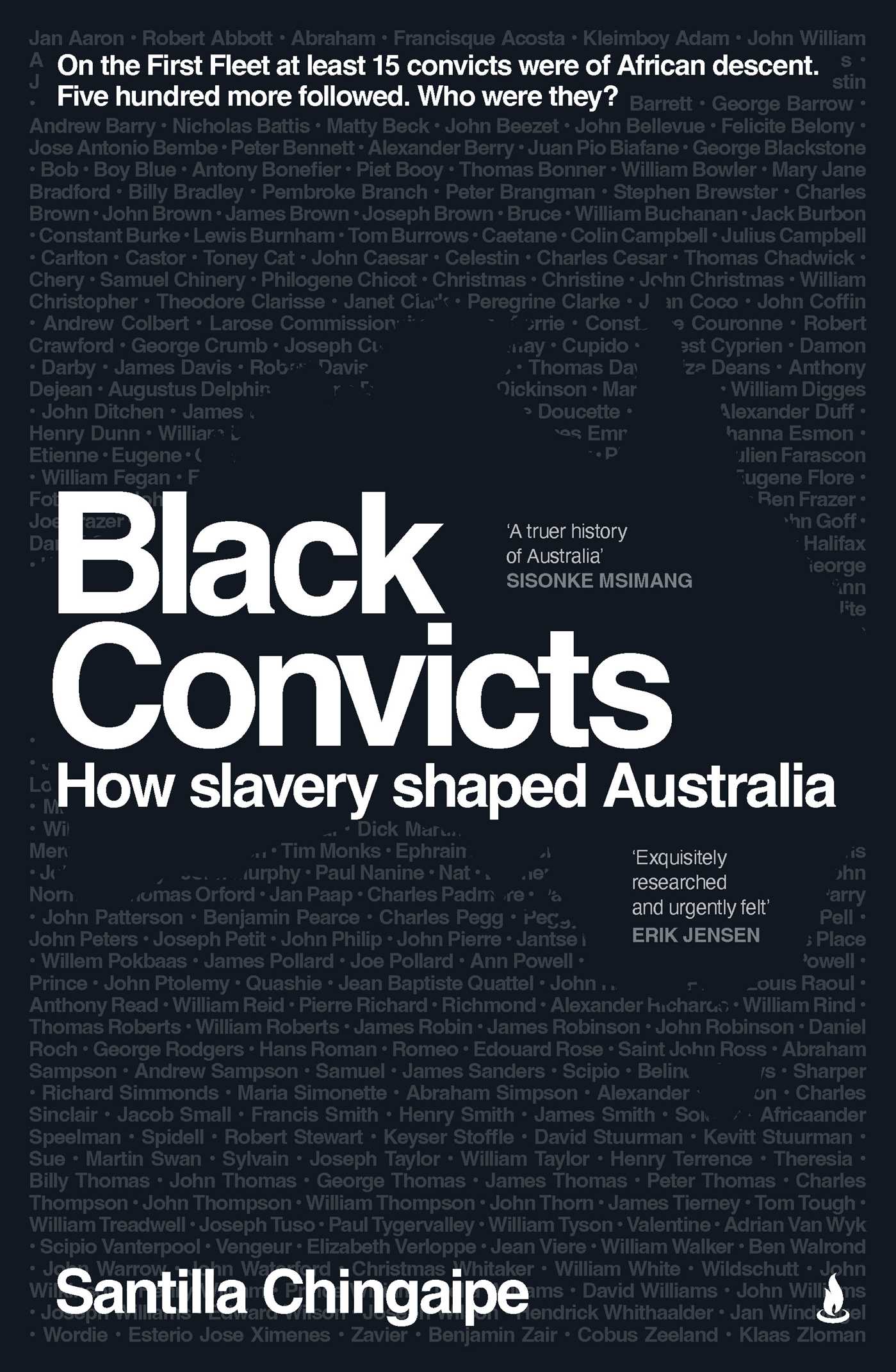
The story of Australia’s Black convicts has been all but erased from our history.
In recovering their lives, SANTILLA CHINGAIPE offers a fresh understanding of this fatal shore, showing how empire, slavery, race and memory have shaped our nation.
ABOUT THE BOOK
On the First Fleet of 1788, at least 15 convicts were of African descent. By 1840 the number had risen to almost 500. Among them were David Stuurman, a revered South African chief transported for anti-colonial insurrection; John Caesar, who became Australia’s first bushranger; Billy Blue, the stylishly dressed ferryman who gave his name to Sydney’s Blues Point; and William Cuffay, a prominent London Chartist who led the development of Australia’s labour movement. Two of the youngest were cousins from Mauritius – girls aged just 9 and 12 – sentenced over a failed attempt to poison their mistress.
But although some of these lives were documented and their likenesses hang in places like the National Portrait Gallery, even their descendants are often unaware of their existence.
Black Convicts traces Australia’s hidden links to slavery, which both powered the British Empire and inspired the convict system itself. Situating European settlement in its global context, Chingaipe shows that the injustice of dispossession was driven by the engine of labour exploitation. Black Convicts will change the way we think about who we are.
DESCENDANTS
It is mid-autumn in Melbourne, and I’m in Parkville meeting a descendant of Prince Moody, a Barbadian convict who was transported to Australia about 160 years ago. His name is Tony Birch. He is wearing a bright blue knitted vest over his shirt – this is the first thing I notice as I walk up to him outside the main library at the University of Melbourne. I’m a few minutes late, and Birch has been patiently waiting for me. After exchanging pleasantries, we go inside the library to find a quiet space to sit down and talk.
Birch is the Boisbouvier Chair in Australian Literature here at the university, and we’ve been friends for a few years. During one of our conversations, Birch mentioned in passing that Prince Moody was one of his paternal ancestors, so I was eager to sit down to discuss his family history.
A self-described ‘Fitzroy Black’, Birch grew up in the Melbourne suburb of Fitzroy in the 1960s in ‘a very strong urban, Aboriginal community’. He tells me that he has ‘always known’ that one of his ancestors was of African descent – his great, great uncle Les Moody told him. Les was a bantamweight boxing champion who also went by the name Ranji Moody (then spelled ‘Moodie’). ‘He was given an Indian nickname, Ranji, because his family disguised their identity as being Indian for some period,’ says Birch.
In March 1906, as an up-and-coming boxer, Moody defeated local favourite Ted Green in 20 rounds in a much-hyped match in Sydney. A newspaper report praised him as ‘a game fighter, and a boy who should make a name for himself at the game,’ while also noting that ‘as “Ranji” would suggest, he is coloured’. Les and his family ran a fruit market in the neighbouring suburb of Collingwood, which these days shows evidence of its relatively recent gentrification: hip cafes, microbreweries and designer shops abound. But back when a young Tony and his father would visit Les’ ‘small terrace house’, the place looked very different. Birch tells me that on these visits to Les, he and his father would be regaled with stories about their Barbadian ancestor, Prince Moody.
As an enslaved young man in Barbados, Prince Moody had already served two prison terms for ‘disobedience’ – one of three months and the other for a month. But it was early in the apprenticeship period on the island that the 29-year-old would receive the sentence that would take him away from his partner, Rose, and their three children forever. In December 1835, Moody was convicted of burglary and sentenced to transportation for life. As he awaited transportation in England on a prison hulk, authorities described him as ‘orderly’. In April 1836 he started the four-month journey to Hobart. At one point during the long and uncomfortable journey, he contracted a skin infection, diagnosed as ‘psora’ by the ship’s doctor, and was placed on the sick list for 11 days.
On his arrival in Van Diemen’s Land, Moody was recorded as a bricklayer, stonemason and ploughman – useful skills in the burgeoning colony. After almost a decade, in September 1844, he was given a Ticket of Leave, but only two months later, he was convicted of larceny under £5. Moody’s Ticket of Leave was revoked and he was sentenced to hard labour in a work gang. The following year, his Ticket of Leave was restored.
In August 1847, Moody applied for permission to marry fellow convict Ann Smith. No decision on the application was recorded, meaning they probably were not wed.6 However, Moody didn’t give up on finding a partner: he was granted permission to marry a white Irishwoman in May 1852 in St Georges Church in Hobart. Margaret Gannon had been transported for seven years for the paltry crime of ‘stealing 2 sheets’. Like Moody, she’d applied to marry another man the previous year but had been denied. Her age was recorded as 20 at the time of her marriage to Moody, and her husband’s as 37 – well below his real age of around 46. Moody was listed in the marriage register as a ‘servant’, but his bride had no occupation and was simply labelled a ‘spinster’. Neither signed their names, which indicated that they may have been illiterate.
A few months after their wedding, in November 1852, they welcomed their first child – a son they named James. While still a newlywed, Moody was recommended for a conditional pardon. But before it could be approved, he was arrested. In January 1853 he pleaded not guilty to a charge of ‘being out after hours and disturbing the peace’ – apparently, he had offended the state by being out after midnight on a Sunday at New Wharf in Hobart. A constable testified that Moody had been with another ‘coloured man’ who had absconded before he could be apprehended. Moody argued that he was, in fact, the victim: ‘someone had attempted to rob his house’ and had thrown a large stone through the window, nearly killing his child. Despite this, Moody was taken into custody. He was later admonished for ‘being out after hours’ and released.
A few months later, in May 1853, Moody received a Conditional Pardon and was a free man, allowed to travel anywhere except to the United Kingdom or Barbados. It’s hard to know how he would have felt about this: he had started a new family, but this condemned him never to see the old one again. He stayed in Australia, and it seems that he may have got a job on a small ship transporting timber and other goods between Van Diemen’s Land and Melbourne. It’s in Melbourne that he appears in court again, in 1860, charged with stabbing a man, though he was found not guilty. Margaret appears to have stayed in Hobart, because by 1861, Moody had fathered twins – a son and daughter – to an Emma Sullivan, and he was living in North Melbourne. After that, Prince Moody’s story follows the pattern of other Black convicts who effectively disappear from the archives once they’re no longer in trouble with the law. Their legacy, however, lives on in the tens of thousands of descendants.
In Melbourne, Tony Birch tells me that, despite his family’s awareness of their African ancestry, some of his relatives deny this part of their lineage. ‘They had “passed” as Anglo-Indians or whatever else. I haven’t seen these people for 50 years or more, so they just said that this wasn’t a true story. But for us, it was always a true story,’ he tells me. In the racial hierarchy of the late 19th and early 20th century, Anglo-Indians were regarded as superior to Africans; this was therefore a preferable (if fictitious) ancestry. Birch says that despite his boxing name, Les Moody didn’t hide his heritage. Because of that, he was ‘ostracised’ by the family; it’s only been in recent years that Birch was able to locate exactly where Les was buried.
A trained historian, Birch is a widely celebrated and acclaimed First Nations writer, poet and activist. He has written at length about his forebears, and he takes great pride in sharing his family history. But there is a sadness in his tone when he reflects on the great lengths some members of his family went to deny or hide their West Indian heritage. For Birch’s branch of the family, Prince Moody’s race was as irrelevant as his criminal past – ‘You know, long I have come from a criminal family,’ says Birch. ‘So, having a criminal forebear is nothing . . . a bit of larceny is small change.’
Prince Moody, Birch tells me, had a child with an Aboriginal woman before he came to Melbourne. ‘He used to work on ships in those shipping routes from Hobart to Devonport, up the East Coast of Australia, and then even in the Pacific,’ Birch explains. ‘Aboriginal women from Cape Barren Islands would be picked up or working on boats.’ They might even have ended up running a brothel together in Melbourne. Birch’s family story reveals some of the complexities of how race has played out within Australian families over the last two centuries.
Since embarking on this research, I’ve received countless messages from – and met with – white Australians who have discovered that one or more of their ancestors was of African descent through DNA tests or by tracing their genealogy online. In most instances, their African heritage was hidden or not acknowledged.
Many of them discovered their connection after undertaking DNA tests, although they’d heard whispers in their families about darker skinned relatives. One of these descendants, Ray, told me that in his family, ‘there was always talk of what was called a “touch of the boot polish”, and of course it means that you have some black blood’. I was shocked to hear this, but Ray says growing up, ‘we understood that you didn’t ask questions about Nanna’.
ABOUT THE AUTHOR
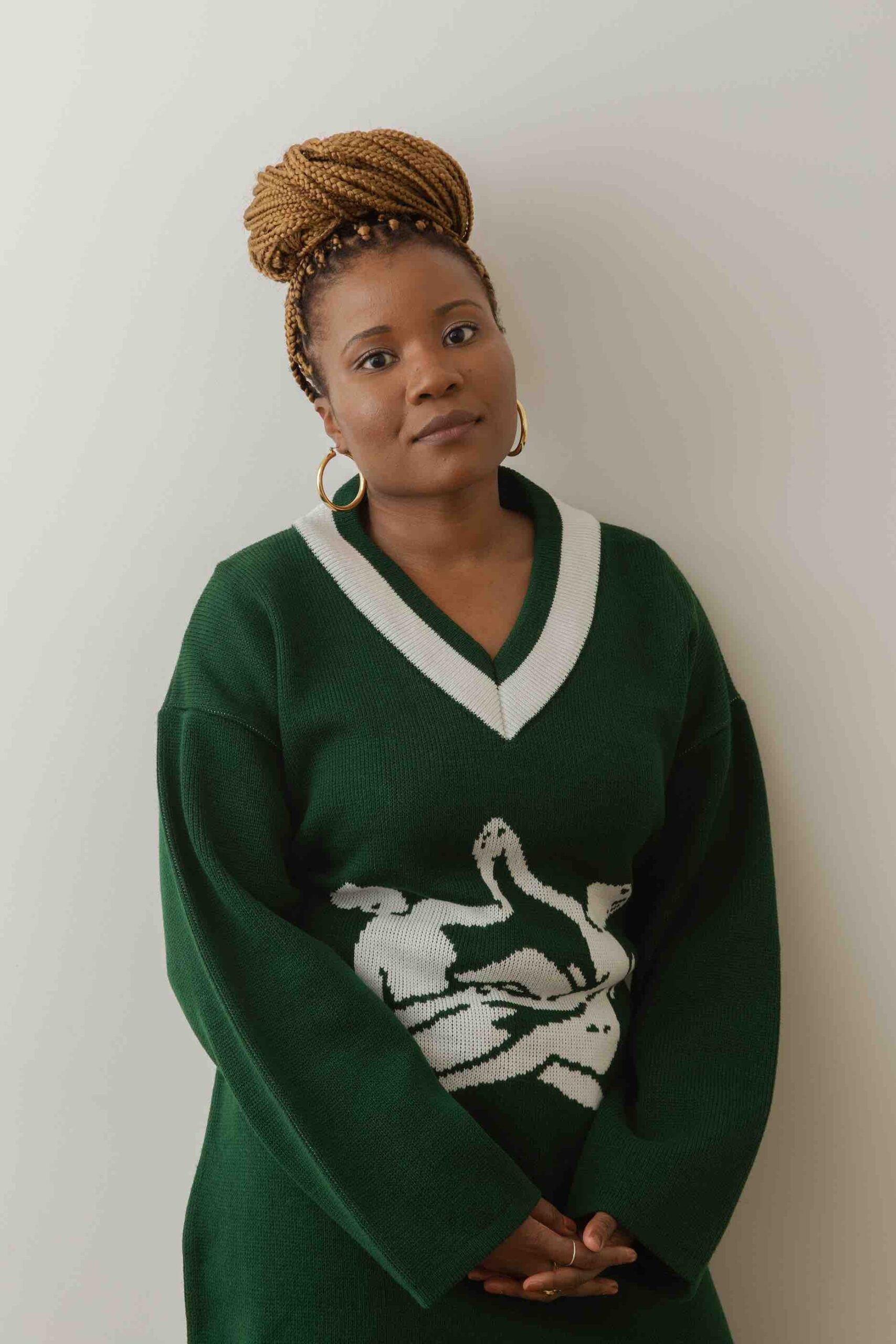 Santilla Chingaipe is a Zambian-born filmmaker, historian and author, whose work explores settler colonialism, slavery, and contemporary migration in Australia.
Chingaipe’s first book of non-fiction Black Convicts and the critically acclaimed and award-winning documentary inspired by the book, Our African Roots, is streaming on SBS On Demand.
The recipient of several awards, she was recognised at the United Nations as one of the most influential people of African descent in the world in 2019. She delivered the annual E.W Cole lecture in 2023 on ‘Who Gets to Write History?’, and her work has been published internationally by The New York Times, The Guardian, The BBC, and elsewhere.
Chingaipe is a regular contributor to The Saturday Paper and is the founder of Behind The Screens, an annual program supported by VicScreen, aimed at increasing the representation of people historically excluded from the Australian film industry.


0 Comments