


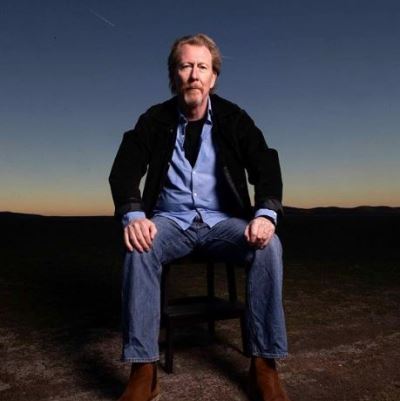
CHRIS HAMMER is back with his latest thriller, The Valley.
Read on for an extract.
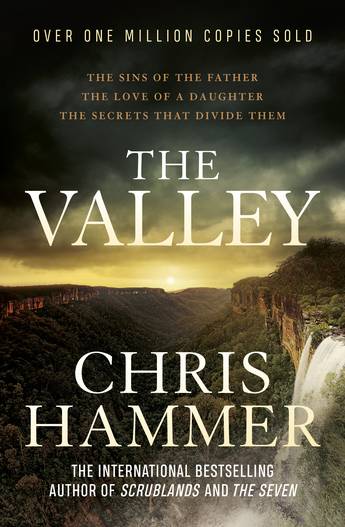
ABOUT THE BOOK
Nell Buchanan and Ivan Lucic are back – and Nell is thrown into her most emotionally fraught investigation yet.
A controversial entrepreneur is murdered in a remote mountain valley, but this is no ordinary case. Ivan and Nell are soon contending with cowboy lawyers, conmen, bullion thieves and grave robbers.
But it’s when Nell discovers the victim is a close blood relative that the past begins to take on a looming significance.
What did take place in The Valley all those years ago? What was Nell’s mother doing there, and what was her connection to troubled young police officer Simmons Burnside? And why do the police hierarchy insist Ivan and Nell stay with the case despite an obvious conflict of interest?
The Valley features a page-turning plot, intriguing characters and an evocative sense of place—where nothing is ever quite what it seems. Chris Hammer, the acclaimed author of the international bestsellers Scrublands, Treasure & Dirt, The Tilt and The Seven, presents another immersive and emotionally rewarding thriller.
EXTRACT
They meet Carole and Blake for breakfast in the cafe attached to the general store. Whereas the pub has been completely renovated, full of clean timber and tasteful art, the cafe remains largely untouched, a hotchpotch of tables and chairs scattered before a glass-fronted counter at least fifty years old. There are fans in the ceiling and lino on the floor. But it’s clean and the old-fashioned menu looks enticing: no avocado or haloumi or wheatgrass juice; just bacon and eggs and white-bread toast, help yourself to tomato sauce.
The forensic experts have overnighted in Saltwood, close to the hospital and its morgue, but have driven down early. It’s just the four of them for the moment; Detective McMahon returned to Queanbeyan the previous evening, but Sergeant Hearst has overnighted with friends in The Valley and is planning to join them. Nell likes him, suspects he wants to make himself useful, give them the benefit of his local knowledge.
Blake has already ordered the English breakfast and is clearly pleased with his choice, plate piled high. He compliments the bacon even as he devours it.
‘Take us through what you know,’ Ivan says to the pathologist. ‘Drowned. But probably more to it.’
‘Such as?’
‘Blow to the back of the head. Probably not enough to kill him outright, but maybe enough to daze him or render him unconscious. Contemporaneous with the drowning.’
‘Detective didn’t mention that,’ says Nell.
‘Easy to miss,’ says Blake. He hesitates, knife and fork hovering above his meal, as though he’s spied something untoward on his plate. Something healthy, perhaps. ‘Also, there are suggestions of poisoning.’
‘Suggestions?’
‘I’ve taken the samples, had them driven to Canberra for toxicology. Hopefully we’ll know more later today or tomorrow.’
‘Not drugs? Not an overdose?’
Blake sounds dismissive. ‘Doubt it. None of the typical signs.’ ‘What sort of poison?’ asks Ivan.
‘Let me get back to you on that.’ ‘Working theory?’
‘Murder,’ says Blake. ‘The blow to the head. If it was the front or side, an accident would be more plausible. But who falls over, hits the back of their head, then goes face first into a river? Hard to imagine, even if the poisoning comes to nothing.’
Ivan looks to Carole, who agrees. ‘That’s consistent with the crime scene.’
‘But he was still alive when he went into the river?’ asks Nell. ‘Yes,’ says Blake. ‘Water in his lungs. That’s what killed him.’ ‘Time of death?’
‘Late Tuesday, or early yesterday morning. An hour either side of midnight. That Queanbeyan detective knew what he was about. Measured the body’s temperature soon as he got here.’
Ivan is staring hard at Blake, that unnerving blue stare of concentration that Nell has come to know so well, as if he’s working through it, imagining the last moments of Wolfgang Burnside’s life. ‘Would he have died anyway, if he hadn’t drowned?’
Blake is shaking his head. ‘Too much speculation. I still haven’t fully established the damage wrought by the blow to the head or confirmed there was poison in his system.’
Sergeant Hearst comes bustling in, greets them, spies the remains of Blake’s breakfast and licks his lips. ‘I’ll grab something.’ He goes to the counter, orders, then returns, pulling up a chair. ‘You got everything you need?’
‘Tell us about the victim,’ says Ivan. ‘We hear he was quite prominent.’
Vicary raises his eyebrows. ‘That’s one way of putting it.’ ‘Go on,’ says Ivan.
Vicary looks around, surveying the room as though seeing beyond its walls and out into the surrounding valley, perhaps trying to summarise it in his own mind before responding. ‘This place feels like Sleepy Hollow, but that doesn’t mean everyone’s a happy camper. There are the established farming families, conservative for the most part. Then there are the old hippies, who came in the seventies, bought cheap bush blocks. Just lately, there’s been an influx of cashed-up tree changers. A few young families looking for a better lifestyle, but mainly wealthy retirees coming out of Sydney and Canberra. Former lawyers and doctors and company directors, setting up vineyards and wineries. You follow?’
‘Not really,’ says Ivan bluntly. ‘What’s that got to do with Wolfgang Burnside?’
Vicary Hearst appears momentarily surprised, perhaps thinking his exposition should have been self-explanatory. ‘No one really wants development. Not the farmers, not the hippies, not the tree changers. They like it the way it is.’
‘And Wolfgang?’ Ivan persists.
‘No one called him Wolfgang. I didn’t even know that was his proper name. Everyone called him Wolf or Wolfie. And he was all in favour of progress. A self-declared champion of it.’
‘What did that entail?’ asks Nell.
‘Started in real estate. Got rich selling it. No formal education, but a millionaire by the time he was in his early twenties. And that was just the beginning. He restarted an annual harvest festival, a one-day writers’ festival, established a monthly farmers’ market. He brought bands and musos and comedians here to play the cricket ground like in the old days. Put an ATM in the general store. Owns a share in the pub and helped fund its upgrade, and like I told you, he’s developing an eco-resort next to the national park. He got elected to council up at Saltwood, lobbied hard to set up a community internet in The Valley, but when council didn’t back him, he resigned and built his own. Then people complained when he charged them to use it.’
Vicary holds his hands wide, palms up, like he’s balancing competing ideas.
‘No one called him Wolfgang. I didn’t even know that was his proper name. Everyone called him Wolf or Wolfie.
‘So depending on who you ask, he was either some kind of saint, advancing the community, or he was in it for himself, only interested in making money.’
‘Quite the entrepreneur,’ observes Ivan.
‘I see how he could have put people offside,’ says Nell, ‘but none of that sounds like a motive to murder him.’
‘True,’ says Vicary. ‘But he was also into property development. He graduated from merely acting as an agent and started buying out a few of the old hippies. A bunch of them are getting on, getting sick of living hand-to-mouth, subsistence. On paper they’re wealthy because their land has appreciated so much. Asset rich, cash poor. Wolfie helped sell a few blocks to tree changers. Then he went further, started buying the blocks himself, subdivided, put housing on some. Made millions. People resented that.’ Vicary grimaces. ‘And then there’s the power company.’
‘In The Valley?’ asks Nell.
‘His latest scheme. He was proposing to take the entire community off-grid, make the place self-sufficient, do with electricity what he did with the internet. He built windmills up on the plateau; you probably saw them on your way in from Saltwood. He put in a solar farm and was planning more, owned a company that installs rooftop solar. He reckoned we can be net generators, putting electricity into the grid and taking money out. Wanted to build a battery, even proposed developing pumped hydro using the lake up by the Gryphon Mine.’
‘Gryphon Mine?’ asks Ivan.
‘Abandoned goldmine up on the escarpment, overlooking the eastern side of the valley. Lake up the top, settling ponds at the bottom.’
‘Pumped hydro,’ says Blake, finishing his breakfast, plate wiped clean. ‘That’s ambitious.’
‘Like a huge battery,’ says Vicary. ‘Pump excess power generated by wind and solar during the day up to the lake, then feed it down through turbines at night when the power is needed. There’s four hundred metres of fall. Some people think it’s wonderful: self-contained, sustainable energy; no more coal. But others worry that he would control it, accrue too much influence.’
‘So big money, and big sway,’ says Ivan: an observation, not a question.
‘But is that enough motive?’ Nell asks.
‘There’s a rumour he was thinking of making a run for state parliament,’ says Vicary. ‘I can ask around at Saltwood, but you’d probably need to speak to people in Queanbeyan about that.’
Nell looks at Ivan. Politics. Their eyes meet, and Ivan raises his eyebrows. She knows what he’s contemplating: Plodder’s motivation for assigning them the case so early.
‘Personal life?’ Ivan directs the question to Vicary.
‘Married young. High school sweetheart, Janine. Divorced a couple of years ago. She still lives in The Valley. He remarried last year. Sydney girl. Tyffany.’
‘She lives here?’
‘Yes. At their eco-resort.’
They finish their breakfast, and Nell leaves a tip. Always useful to befriend the locals. Outside, Carole and Blake say their goodbyes. They’re heading back to Saltwood and Queanbeyan and, most likely, to Sydney, their work largely done.
‘Speak soon,’ says Blake. ‘Let you know what I find.’
Vicary Hearst leads Ivan and Nell to the Miners’ Institute, explaining that they can use it as their base, that The Valley’s one-man police station closed back in the 1970s and was later sold off altogether. The Institute sits diagonally opposite the pub, on the far side of the crossroad, a solid, compact brick building – scaffolding erected, perhaps anticipating repair work that is yet to eventuate. But serviceable. Lockable.
‘Lot of miners then?’ asks Nell.
‘There was once, when The Valley was first opened up, when the future looked bright,’ says Vicary. Then, flicking his head towards the building: ‘Heritage-listed, can’t be demolished. Good to put it to use. Should have everything you need. Power, water, toilets and a kitchen. Downside: no aircon, wood heating. This time of year you should be sweet. Upside: Wolf Burnside’s fibre-to-the-premises internet. Rocket-fast. Better than Sydney or Canberra.’
‘Holding cells?’
Vicary shakes his head. ‘Nah. If it comes to that, give me a bell and we’ll deal with them at Saltwood.’
Once the sergeant has left, returning up the escarpment, Ivan and Nell set up their laptops and screens, power boards and a printer/ scanner, a process practised and refined over the past three years. They find the internet connection is every bit as fast as promised, but Ivan tells Nell he doesn’t want to waste time online. He says he’s already been through the material collected by Detective McMahon, seen the photos of the crime scene. He wants to get out, talk to people, glean new evidence, not revisit second-hand information.


0 Comments