


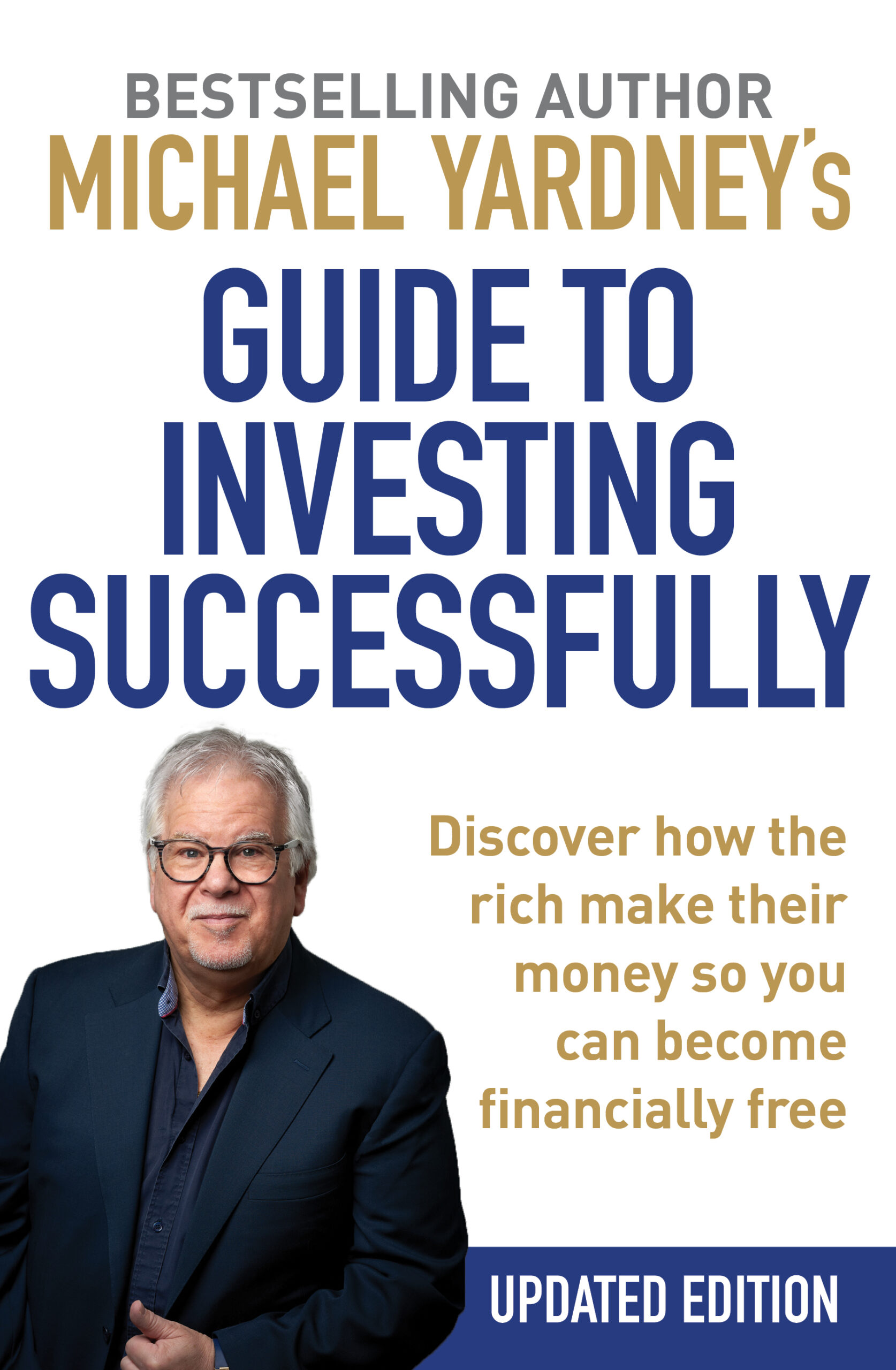
In the updated edition of Michael Yardney’s Guide to Investing Successfully there is much sage advice on how to manage your finances.
In this extract we find an answer to a common question home owners ask, ‘Should I pay off my home loan or shouldn’t I’?
I’m often asked whether it’s better to pay off your non-tax-deductible home loan rather than investing. Many people see this as a form of forced savings, and even though it is, you can never save yourself to wealth.
To explain my thoughts I usually ask people to do the following exercise: Take a piece of paper and write down your mortgage interest rate – say three per cent.
On the other side of the paper write down your best guess at how your investments will perform – say 10 per cent (combining the capital growth and rental return of your investment property) or maybe eight per cent (the dividends and growth of your share portfolio.)
So you have two potential investments – one is going to earn you three per cent (guaranteed) and the other is going to give you a chance at getting around eight to 10 per cent per annum. Which one would you choose?
For most people it’s clear that it makes little sense to pay off your mortgage (especially because you’re using after-tax money to pay off your mortgage) when you could use the money to invest for a better return.
Of course the underlying assumption is that you can successfully invest your money without significant risk and achieve eight to 10 per cent per annum. But what makes the sums look better still is that this return is on the value of your investment property or shares, not on your invested capital. If you take into account the benefit of leverage on your investments, it’s clear that investing your funds gives a better return than paying off your mortgage (saving).
Let’s look at these figures in a different way. Imagine that you have received $20000 as a bonus. You could use this windfall to pay off some of your home loan and save interest each year.
On the other hand, if you took that $20000 and used it as a deposit to purchase a property, you could buy $100 000 worth of property using 80 per cent debt. Now of course you can’t buy any decent sort of property for $100000, but if you just follow my example – for every $20000 that you have, you could buy $100000 worth of property by borrowing 80 per cent of the value of that property.
If you bought a well-located property in any capital city, your property would increase in value by about eight per cent per annum (over the long term – not each and every year) and you would get about four per cent rental return. This means that you would realise a total investment return of 12 per cent. At the same time, you would have to pay about three per cent interest on your money and maybe one per cent of the value of the property would go in outgoings such as rates, taxes and insurance and managing agents’ fees.
This means that you would have 12 per cent return coming in (some in cash and some in capital growth) and three or four per cent going out, leaving you a net return of eight per cent!
INVESTMENT SUCCESS FACT
The compounding effect really kicks in once you have multiple properties that benefit from a market upswing. It’s during these times that your wealth starts to grow right before your eyes — just make sure you don’t then rush out and overspend on non-wealth producing assets, of course!
Don’t forget inflation
Most people fail to take inflation into account when they create their financial plan. Of course the trouble is by the time they retire, inflation will have taken a huge chunk out of their savings … unless they have a wealth accumulation strategy that will allow their assets to grow at wealth producing rates.
It’s kind of ironic that the same principles of compounding and inflation that defeat the average person actually benefit property investors.
Well-located properties have, in the long term, increased in value by considerably more than inflation, while the value of the mortgage that investors hold against those properties has relatively decreased in value due to inflation.
What this means is that if you were to buy a property today for $800000 with a $600000 mortgage – 10 years down the track your property could be worth $1600000, while the mortgage would remain at $600000 (assuming an interest-only loan). Of course in the future, that $600000 won’t buy as much as it would today – so although your property is worth much more your mortgage against it is worth relatively less. Pretty nifty – hey?
Compounding investments
Now here’s an interesting fact and one of the reasons the rich keep getting rich … Around 80 to 90 per cent of their ultimate asset base will consist of money they never saved or invested. When I explain this to people they’re usually shocked. But it’s true.
INVESTMENT SUCCESS FACT
The fact is that no matter how much of an investment you start with, if you invest in high growth assets your money will grow exponentially due to the power of compounding.
Compounding means you not only earn money on your investment, but you also earn money on the entire previous balance.
Let’s use the property example from the last section to illustrate this more clearly. Imagine you put $100000 down as a deposit on that property worth $500000. The value of your property doubles in value in 10 years to one million dollars. This means that your original $100000 deposit would have compounded into $600000 (on million less your original mortgage of $400000). As you can see, most of your profit will come from capital growth and leverage.
Most of the greatest fortunes have been made through the power of compounding.
ABOUT THE AUTHOR
 Michael Yardney has been
 Michael is a #1 best selling author of 9 books and frequently challenges traditional finance advice with innovative ideas on property investment, personal finance and wealth creation.
His wisdom stems from his personal experience and from mentoring over 2,500 business people, investors and entrepreneurs over the last decade and over the years Michael has probably educated more successful property investors than anyone else in Australia.
Michael also writes regular columns for Yahoo Finance, Smart Company, Your Investment Property Magazine, New Zealand Property Investor Magazine and Your Mortgage.
He was once again voted Australia’s leading property investment advisor. This is the 5th similar award he has won in the last 7 years.
Michael is Australia’s most trusted property commentator and his opinions are frequently quoted in the media and he has been featured in all major newspapers, finance and property magazines throughout Australia and in his regular segments on Sky TV as well as on commercial radio.


0 Comments