


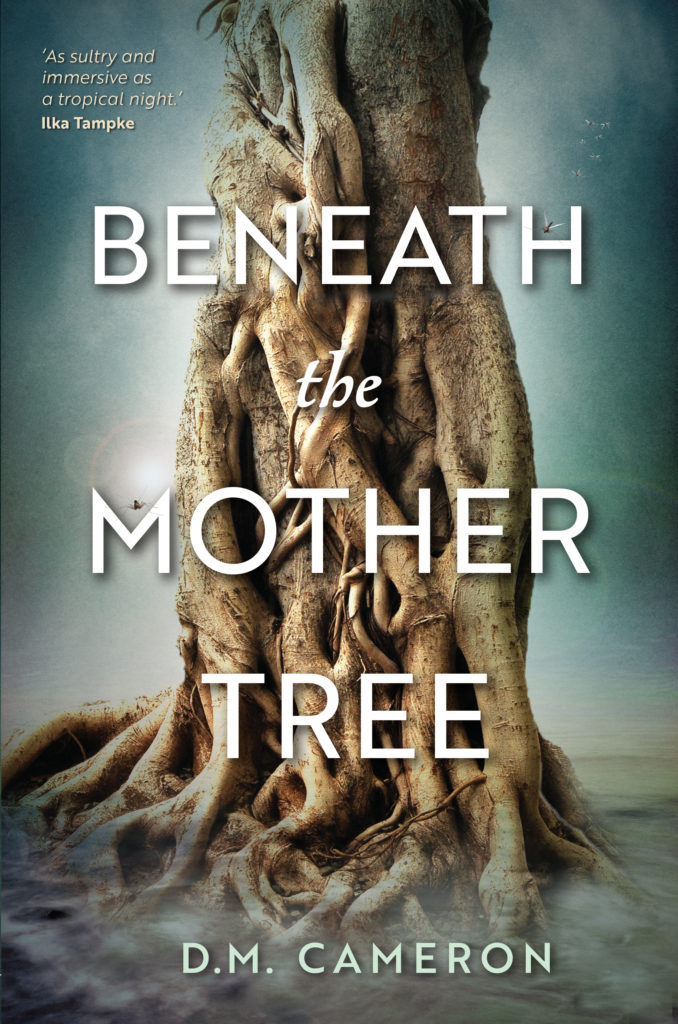
In D M CAMERON’s Beneath the Mother Tree, squashed mosquitoes serve as paragraph breaks, a dark mystery is afoot on an island off the coast of Queensland, and two ancient mythologies from opposite sides of the globe collide. The author tells us about the brutal history of colonisation in the Quandamooka region, the Elder she consulted in order to meld Irish mythologies with the Aboriginal Dreaming, and how The Secret Garden changed her life.
Beneath the Mother Tree begins with your character, Ayla, releasing an injured cormorant back into the wild. Why is nature so important to your writing?
I was quite a sick, asthmatic child who spent time in hospital with a collapsed lung when I was 10 years old. It was during this prolonged stay that my grandmother sent me The Secret Garden by Frances Hodgson Burnett, which is a story about a pair of sickly children who form a friendship and become healthy by spending time outside and hanging out with a local village lad who is at one with nature. That book affected me on quite a profound level. Not only did it turn me on to reading, it solidified a belief in me that being out in nature, among the trees and plants and birds and creatures, is healing on many levels. A sense of this deep love of nature is captured in Beneath the Mother Tree.
How does Indigenous Dreaming and Irish mythology collide in your book?
I started the book as a fictional exploration of a question that has been haunting me most of my life: how do I connect to this country, the only home I have known, when my ancestry is from a country on the opposite side of the world?
I am an Australian of mainly Irish descent, but I love this ‘bright scraggly’ landscape I grew up in, even though I wasn’t taught the myths that sprang from this landscape – the Aboriginal myths. I was taught to look for faeries in the trees and when the stone curlew cried its bloodcurdling scream in the middle of the night, I wondered if it was the banshee wailing.
I thought I would write a story exploring both Indigenous and Irish myths and somehow bring them together within this landscape, but when I started researching and yarning with some of the local mob on Minjerribah, the book took a whole new direction. Here I was, in my forties, hearing these awful facts for the first time – stories of the massacres and terrible atrocities that had occurred in this area. I suddenly saw that for the Ngugi, Noonuccal, and Gorenpul people of the Quandamooka, their connection to country was overlaid with this relatively new, tragic history. This took my contemporary tale into a much darker direction.
What insights did Ngugi Elder, Uncle Bob Anderson, provide to you during the writing of Beneath the Mother Tree?
As a non-Aboriginal person, I didn’t want to go near any kind of Aboriginal content in my book without the guidance of a respected community member, so I was delighted when Uncle Bob agreed to come on board. He was very interested in what I was trying to explore, in fact he embodies it, being Aboriginal on his mother’s side and Scottish on his father’s side. The Aboriginal characters in Beneath the Mother Tree are only ever seen through the gaze of the non-Indigenous characters, so I only wrote from my perspective, which Uncle was very comfortable with.
The insight I received from this beautiful, wise man is too complex and involved to describe here but one thing that shocked me was learning how ‘white’ I was in my expectations, on many levels.
How has your understanding of the Australian landscape changed over the course of writing Beneath the Mother Tree?
I had no inkling of the violent history of the Quandamooka region. Headlands, beaches, waterholes I have known most of my life, I now realise are death spots for the local mob – and for me too now. The Australian landscape is dotted with these unmarked sites.
I feel for us to move forward together as a nation, formal acknowledgment in the form of signage is essential, not only of massacre sites, but of the sacred sites and artefacts. That is simply respect.
My understanding of myth in relationship to the landscape has evolved also. It was Uncle Bob who answered my question in the end. He turned to me one day and said, ‘You know, it doesn’t matter about the name, faeries, rainbow serpents, whatever, it is about respect for the spirit of the land. All these myths are teaching us the same thing – respect for the spirit of the land.’
Paragraph breaks are denoted by mosquitoes in your book – why?
Unless you have experienced a summer on one of the islands in the Quandamooka area, all of which are peppered with mangrove swamps and tea-tree wet lands (wonderful breeding habitats for the mosquito) then you can’t begin to imagination the ferocity of these two-winged female killers.
I say ‘killers’ because pregnant female mosquitos are the biggest killers of humans on this planet due to the diseases they are able to carry.
With this in mind, I knew the mosquito was the perfect creature to allow me to explore the darker aspects of my story.
Although it is quite beautiful and whimsical in parts, Beneath the Mother Tree is, in fact, a tale of murder, and I have noticed in some book stores it is being shelved in the crime fiction section.
Ayla meets a flute player, Riley, down on the beach. Why are these characters drawn to each other?
The more I think about this question, the more I realise it is because they both share a love for the natural world. Ayla isn’t your typical 20 year old. She is a deep thinker who is worried about the state of the world’s oceans, the fact that species are dying out every day, climate change. Riley is like no-one she has met before. Because of his isolated upbringing, he is quite innocent on many levels, but he also is a deep thinker and well educated in scientific facts.
And then, of course, there is the obvious physical attraction between them, which becomes achingly unbearable at times.
ABOUT THE AUTHOR
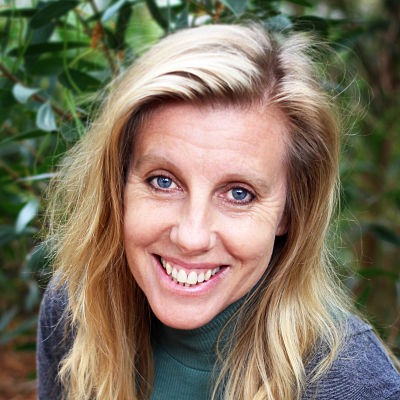
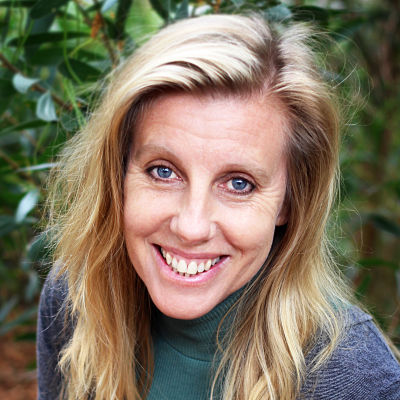 Donna M Cameron is an AWGIE nominated radio dramatist, award-winning playwright and short film writer.
Her first novel, Beneath the Mother Tree, (2018) was listed as one of 2018’s top Australian fiction reads by the Adelaide Advertiser, was a finalist in the Screen Queensland/QWC’s Adaptable program and longlisted for the Davitt Awards. The manuscript of her second novel – The Rewilding, won her a 2020 KSP Fellowship, was runner up in a 2020 Writing NSW Award and gained her a 2021 Varuna Fellowship. It will be published by Transit Lounge in March 2024.

0 Comments