


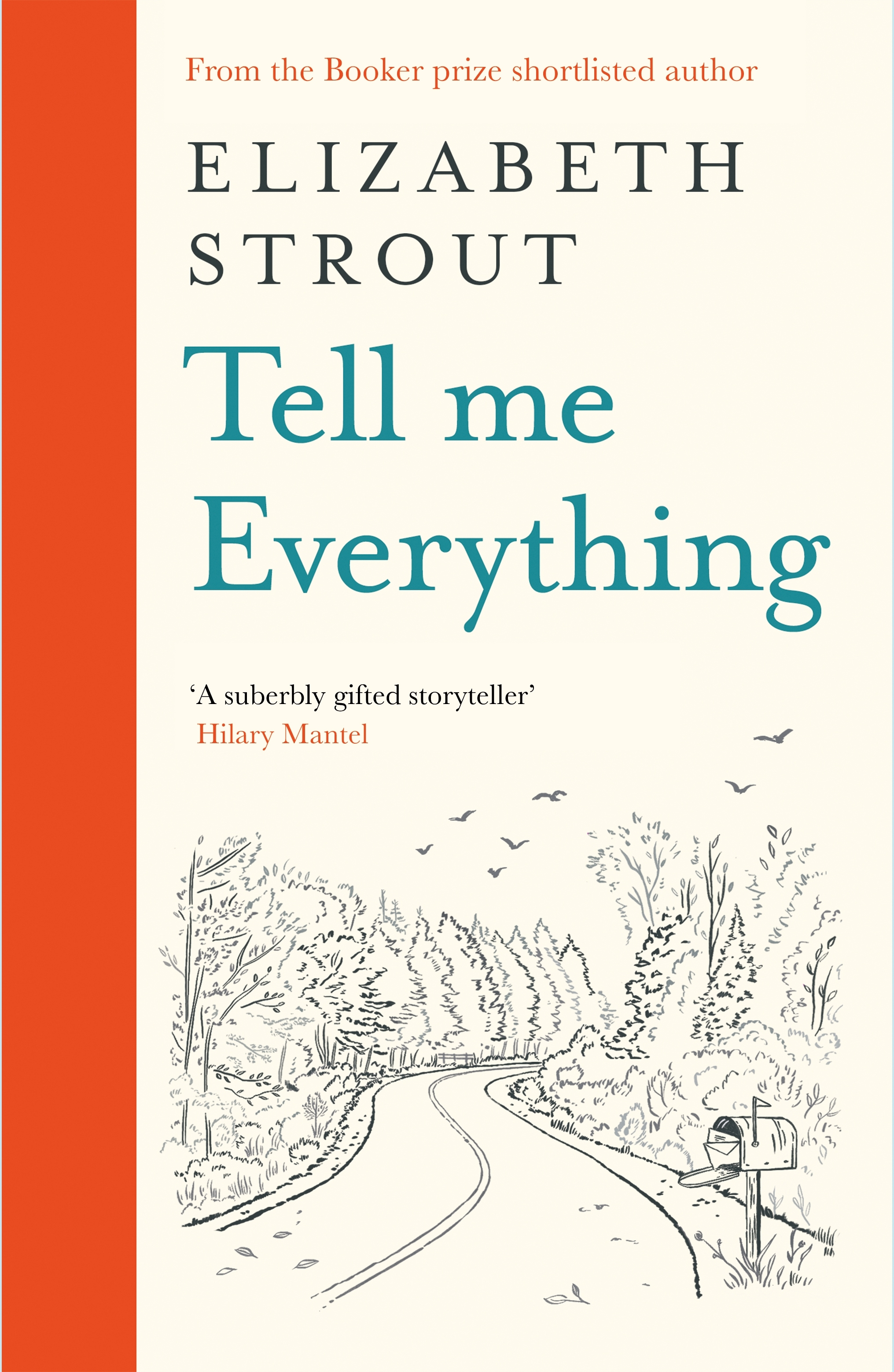
What a wonderful feeling it is to be wrapped in the warm embrace of Elizabeth Strout’s writing.
Familiar characters from prior novels return in Crosby, a smallish town in Maine. Ninety-year-old Olive Kitteridge finally meets the writer, Lucy Barton, and Bob Burgess is the conduit between the them. His lack of self-awareness, his friendship with Lucy, his relationship with his wife, Margaret, and his work as a criminal defence lawyer are central to the narrative.
Gloria Beach (aka Beach Ball, because of her obesity; aka Bitch Ball, because of her behaviour) has disappeared. Gloria’s son, Matt, is accused of her murder and Bob Burgess is hired to defend him. This incident is mentioned as an aside – this is not a crime novel; it’s a character study that happens to have a crime in it.
Crosby – and its trees – features as a distinct character. Its slower pace compared with NYC (the other location featured) is reflected in the pace of the narrative and of its characters. Bob has weekly walks with Lucy, and he wonders if their friendship will blossom into something more. Bob’s wife, Margaret, is the pastor at church yet he’s the one doing pastoral care in the community. Bob and his brother, Jim, share a fractious love. Jim’s wife, Helen, is diagnosed with an illness, Jim’s life is upended, and again Bob must provide the requisite care.
In a play-within-a-play trope, Lucy and Olive swap stories. This mirrors the overarching narrative style in Tell Me Everything. Strout shares this story of what it is to be human. It’s a magnificent rendering of love, ageing, and of loss and loneliness.
Reviewed by Bob Moore
ABOUT THE AUTHOR
 Elizabeth Strout was born in Portland, Maine, and grew up in small towns in Maine and New Hampshire. From a young age she was drawn to writing things down, keeping notebooks that recorded the quotidian details of her days. She was also drawn to books, and spent hours of her youth in the local library lingering among the stacks of fiction.
During the summer months of her childhood she played outdoors, either with her brother, or, more often, alone, and this is where she developed her deep and abiding love of the physical world: the seaweed covered rocks along the coast of Maine, and the woods of New Hampshire with its hidden wildflowers.
During her adolescent years, Strout continued writing avidly, having conceived of herself as a writer from early on. She read biographies of writers, and was already studying – on her own – the way American writers, in particular, told their stories. Poetry was something she read and memorised; by the age of 16 was sending out stories to magazines. Her first story was published when she was twenty-six.
Strout attended Bates College, graduating with a degree in English in 1977. Two years later, she went to Syracuse University College of Law, where she received a law degree along with a Certificate in Gerontology.
She worked briefly for Legal Services, before moving to New York City, where she became an adjunct in the English Department of Borough of Manhattan Community College. By this time she was publishing more stories in literary magazines and Redbook and Seventeen.
Juggling the needs that came with raising a family and her teaching schedule, she found a few hours each day to work on her writing.



0 Comments