


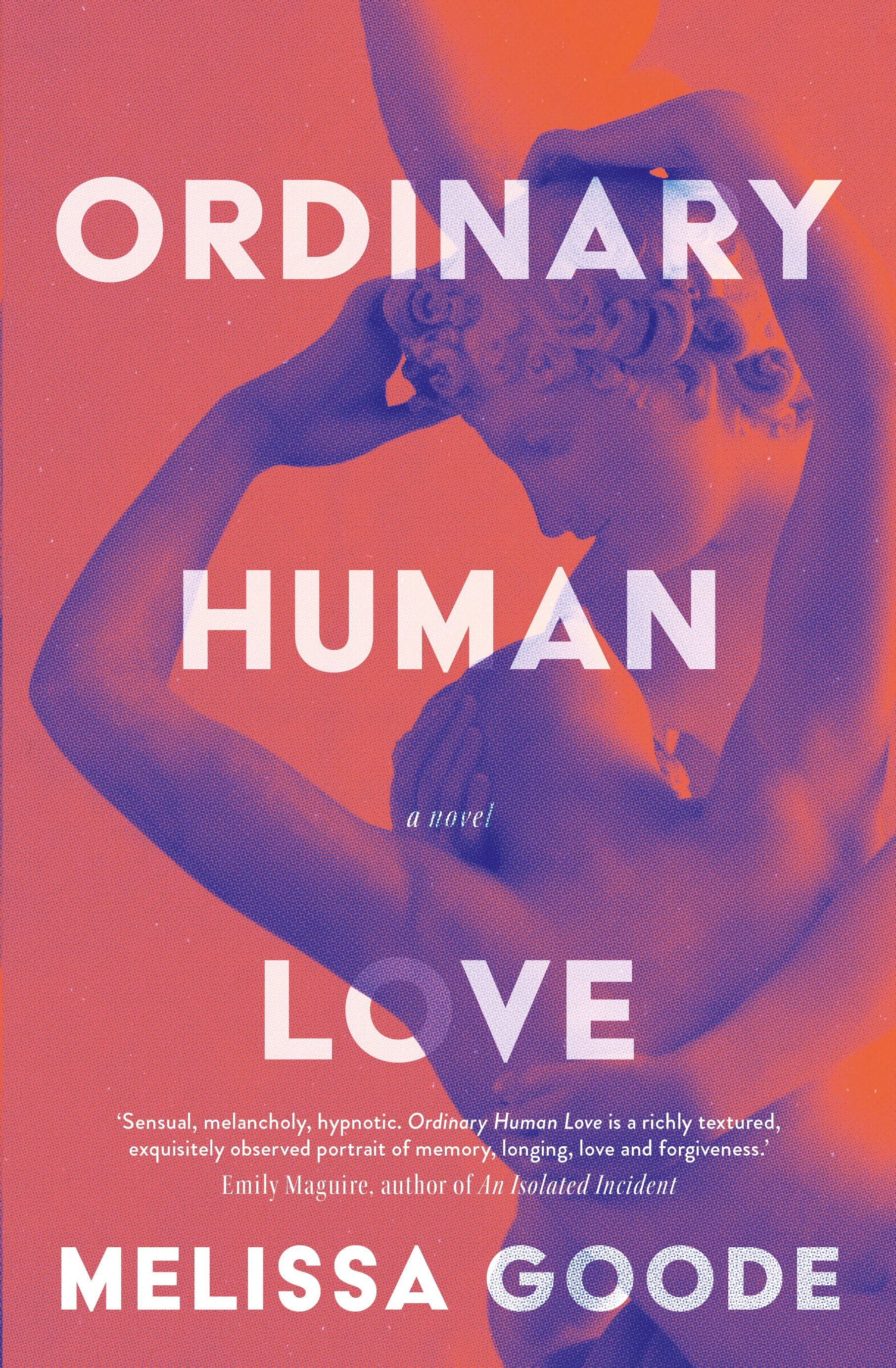
Ordinary Human Love depicts an on-again, off-again love affair, ordinary only in the sense that it succumbs to the pressures of uncommunicativeness, dishonesty, betrayal and abandonment. It’s a vivid story that demonstrates the fragility of love, both familial and romantic.
The story opens with Mardi’s return to her family home in Lithgow after some months travelling and working overseas. Her mother has died and she’s recently divorced her husband. She’s walked out on her former lover, Ian, she has no job, no money and zero sense of what she wants to do with her life.
Rather than making any real attempt at rebuilding or atoning for past mistakes, she drifts in and out of situations. She vaguely considering patching up her relationship with Ian, but doing everything possible to sabotage that possibility. Every encounter between them is clumsy and an inability to be honest about how they feel. Mardi is a frustrating protagonist, who in her self-centredness, self-pity and destructive behaviour, is difficult to empathise with.
While well written, the book is infused by a sense of futility, the feeling that these characters are, as one of them remarks, ‘their own worst enemy’. More critically, they will go on behaving self-destructively regardless. The somewhat contrived optimism of the final scene isn’t enough to convince me that Mardi and Ian have gained any more self-understanding than they had at the beginning, or that their relationship will overcome unhealed wounds
Reviewed by Anne Green
ABOUT THE AUTHOR
 Melissa Goode is an Australian writer living in the Blue Mountains. Her first novel Ordinary Human Love is to be published by Ultimo Press in May 2024.
Her work has appeared in Best Australian Short Stories, Griffith Review, Kill Your Darlings, The Penn Review and Best Small Fictions, among others.
One of her short stories has been made into a film by the production company, Jungle.



0 Comments