


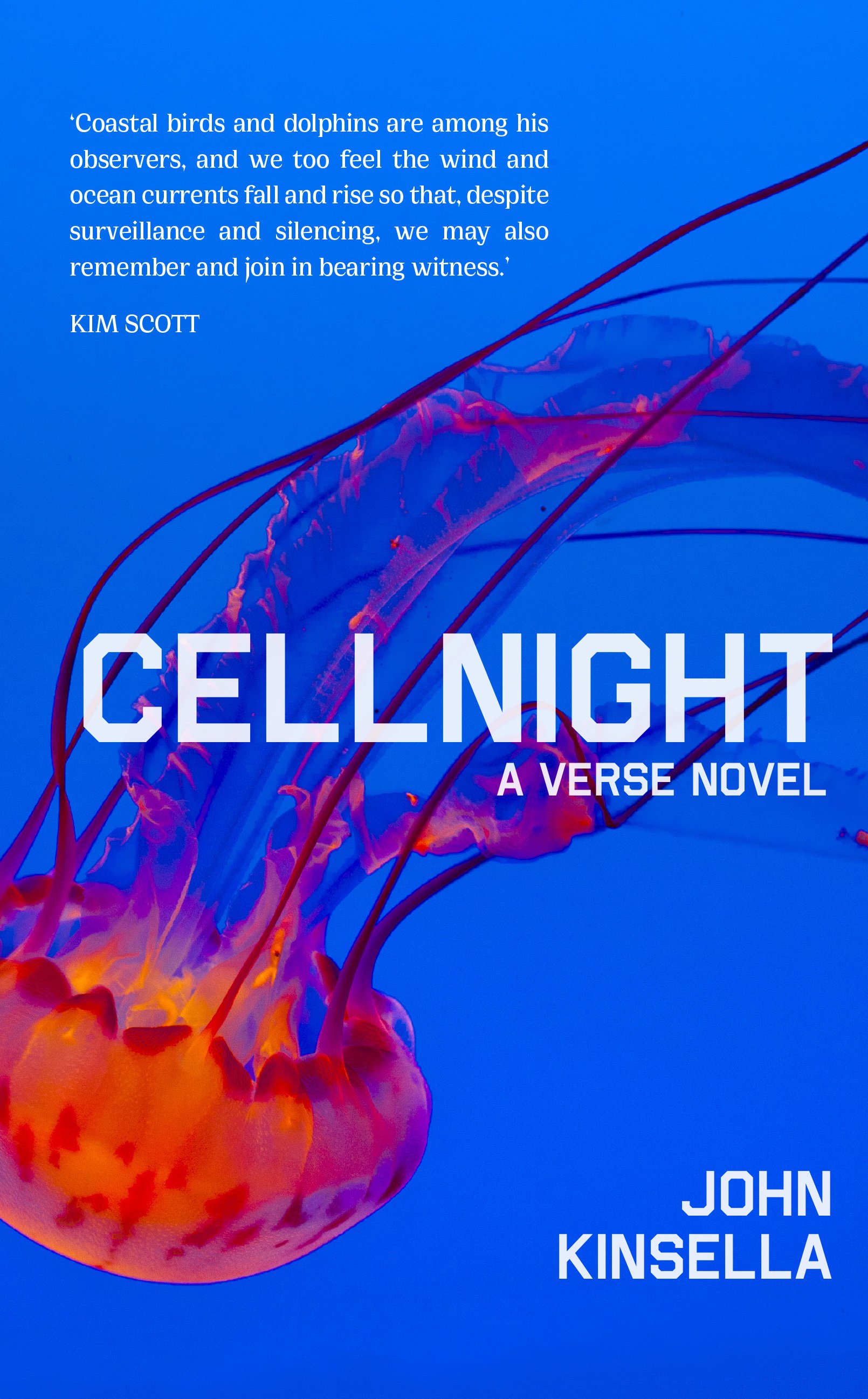
Western Australia’s John Kinsella is one of the nation’s most celebrated poets. This verse novel uses a singular poetic form, the ‘spindle sonnet’, and details the narrator’s protests against the visit to WA by USA’s 7th Fleet in the Reagan-era mid-80s, his subsequent incarceration, the politics of the era and the internecine battles within the protest movement itself.
During the Cold War the American navy were suspected of being equipped with nuclear weapons and US warships visited the WA coast in increasing frequency. Disparate groups, including Fremantle residents, staged protests against them. The narrator details the people protesting and their varied backgrounds and causes and it’s not long before he, along with many others, is arrested.
The title reflects his time in incarceration but his focus is on an Indigenous man’s assault. He is bearing witness to this, rather than his own anti-nuclear cause. Kinsella juxtaposes the two events, drawing comparisons between the nation’s responses: the protests against nuclear weapons gains traction; the racist treatment of Indigenous Australians meets stony silence. The narrator is an outsider – protesting but abandoned by the protest movement; and complaining about the Indigenous man’s treatment but being silenced by the authorities.
A spindle is a tool for tightening fibres into a concentrated yarn. Each sonnet is long and thin – spindle-shaped – with some lines containing only one or two words. No words are wasted. Mostly, this enjambment is a potent tool; only occasionally does it feel disjointed. Kinsella also uses repetition to great effect, honing each concept into a tighter form. Each sonnet is left-aligned; the page is predominantly white space. This blankness invites the reader to respond. Cellnight is a wonderful, timely, powerful narrative.
Reviewed by Bob Moore
Read an article about Displaced by John Kinsella
 John Kinsella is the author of over 40 books. His many awards include the Australian Prime Minister’s Literary Award for Poetry, the Victorian Premier’s Award for Poetry, the John Bray Award for Poetry, the Judith Wright Calanthe Award for Poetry and the Western Australian Premier’s Award for Poetry (three times). He is a a Fellow of Churchill College, Cambridge University, and Professor of Literature and Environment at Curtin University, Western Australia. He lives on Ballardong Noongar land at Jam Tree Gully in the Western Australian wheatbelt. In 2007 he received the Christopher Brennan Award for Lifetime Achievement in Poetry. Apparently Kinsella has described himself as ‘a supporter of worldwide indigenous rights, and an absolute supporter of land rights.’ He has been a‘vegan anarchist pacifist’ for 33 years.



0 Comments