


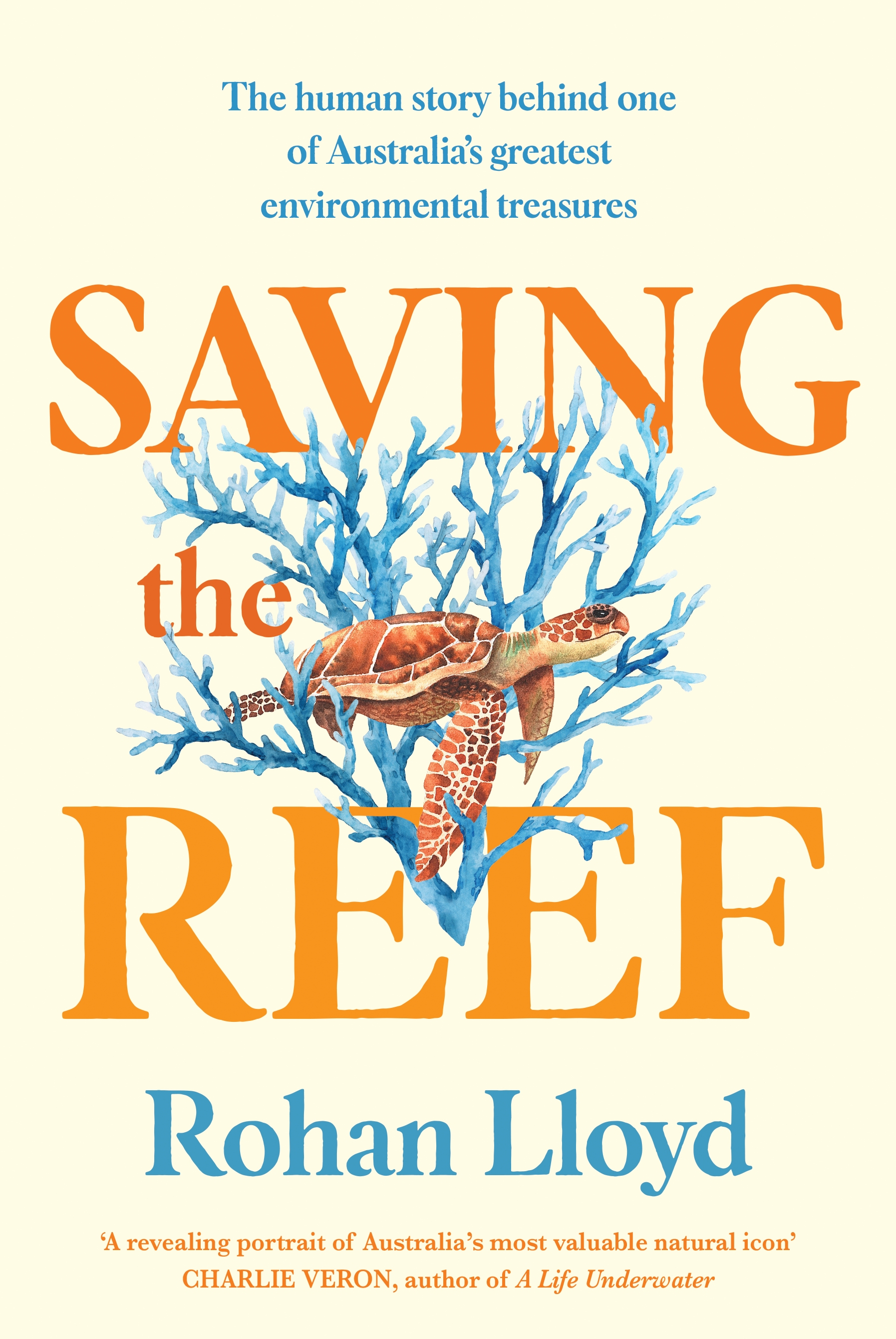
Australians generally are enormously proud of the Great Barrier Reef. Visible from space, it is the world’s largest coral reef system, with more than 2900 individual reefs and 900 islands, stretching for more than 2300 kilometres over an area of about 344 400 square kilometres.
This author, an historian rather than a marine biologist or conservationist, started his research more than 10 years ago. He was curious about protests regarding port expansion, coal mining and the threats to the reef, and wondered if that kind of activism had happened before.
He wondered what the earliest settlers thought about the Great Barrier Reef, or if they thought about it at all. His research, ranging from settler and explorer journals, to old newspapers, tourist guides and government archives, helped him understand how the reef has been viewed since European settlement.
His book does not ignore the role of First Nations people in the reef’s history, but Lloyd states that the primary concern of this book is to consider how settler Australians have come to be ‘saving’ the reef.
A common thread in the history of the Great Barrier Reef is that the Save the Reef campaign, from 1967 to 1975, has been the greatest reef story. Spurred by an application to mine a coral reef east of Innisfail for limestone, conservationists around Australia raised objections, fearing that approval would lead the way to mining the entire reef.
It was one of the most protracted campaigns in Australia, involving populist appeals through media, constitutional law, a trade union black ban, a royal commission, the establishment of the Great Barrier Reef Marine Park Authority, and ultimately, the reef’s protection from oil and mineral exploration.
Lloyd has looked back even further, to the first settler involvement in the reef, and provides the reader with an alphabet soup of acronyms for bodies involved in its care, ranging from AAS (Australian Academy of Science), through GBRC (Great Barrier Reef Committee) to WPSQ (Wildlife Preservation Society of Queensland).
He explores the way the Queensland and Commonwealth governments viewed the reef, tourism activities, and why mining exploration licences had been granted. His view is that reef science is political, and always has been.
Lloyd assiduously follows the paper chain through national and State archives in this highly readable account to show that the battle to ‘save’ the reef still continues.
Reviewed by Jennifer Somerville



0 Comments