


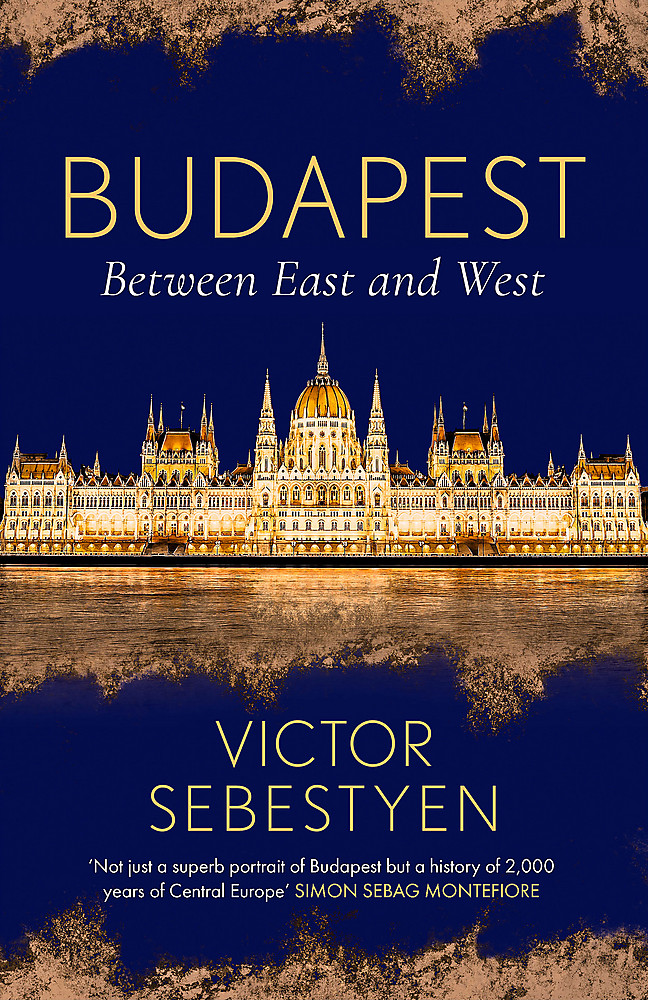
You don’t get much more Central European than Hungary, and Budapest sits in the middle of Hungary on the Danube. As a result, you might think this is the most European of cities, but it’s geography masks a much more interesting – meaning difficult – past.
In Budapest, Sebestyen gives us a straightforward account of Budapest’s history, from the arrival of the Magyar from the Steppe in the 10th century and their occupation of the old Roman fortress city of Acquincum (where Marcus Aurelius penned The Meditations between cross border bashing German and Scythian tribes), to the collapse of the Communist regime in the late 1980s.
Hungary is one of those European countries that used to be way bigger than it is now. Denmark springs to mind as a comparison but the outcome has been far less benign. Back in the Middle Ages it embraced much of Croatia and Romania, but that didn’t help when the Ottoman Turks gave the conquest of central Europe a red-hot go. For a century and a half Budapest was a rather shabby Turkish border town – why invest in real estate that could be blown up at any moment – and from 1683 it was part of the Hapsburg Empire.
Somehow, notwithstanding grinding feudalism, periodic rebellions, and a stubborn adherence to a language with no relationship at all to other European tongues, Budapest prospered. In 1867 the Hungarian aristocracy was able to negotiate a position of constitutional equality with the German Hapsburgs and the Empress Elizabeth – Sisi – became besotted with the place (you can stream a series of movies about Sisi on SBS but I don’t recommend it). This was the era where the Budapest of coffee shops, impressive architecture and music came into its own.
The Hapsburgs had their faults, but what came next was far worse. After a brief and bloody Communist insurrection and Romanian occupation, the regime of Admiral Horthy took Hungary far to the right. Victor Orban, the right-wing prime Minister of Hungary since 2010 can draw on a rich vein of right-wing authoritarianism (Hungary was an ally of Nazi Germany in World War II) and hatred of Socialism – the Communist regime which took power in the late 40s was one of the most brutal in Europe until the failed revolution of 1956, and then 30 years of ‘Goulash Socialism’ left the country mired in foreign debt.
It is comforting to know, however, that throughout this history of political bloodshed it has always been possible to get a decent coffee and listen to some accomplished violin music. Budapest is certainly worth a look if you are planning your post-plague European getaway.
Reviewed by Grant Hansen



0 Comments