


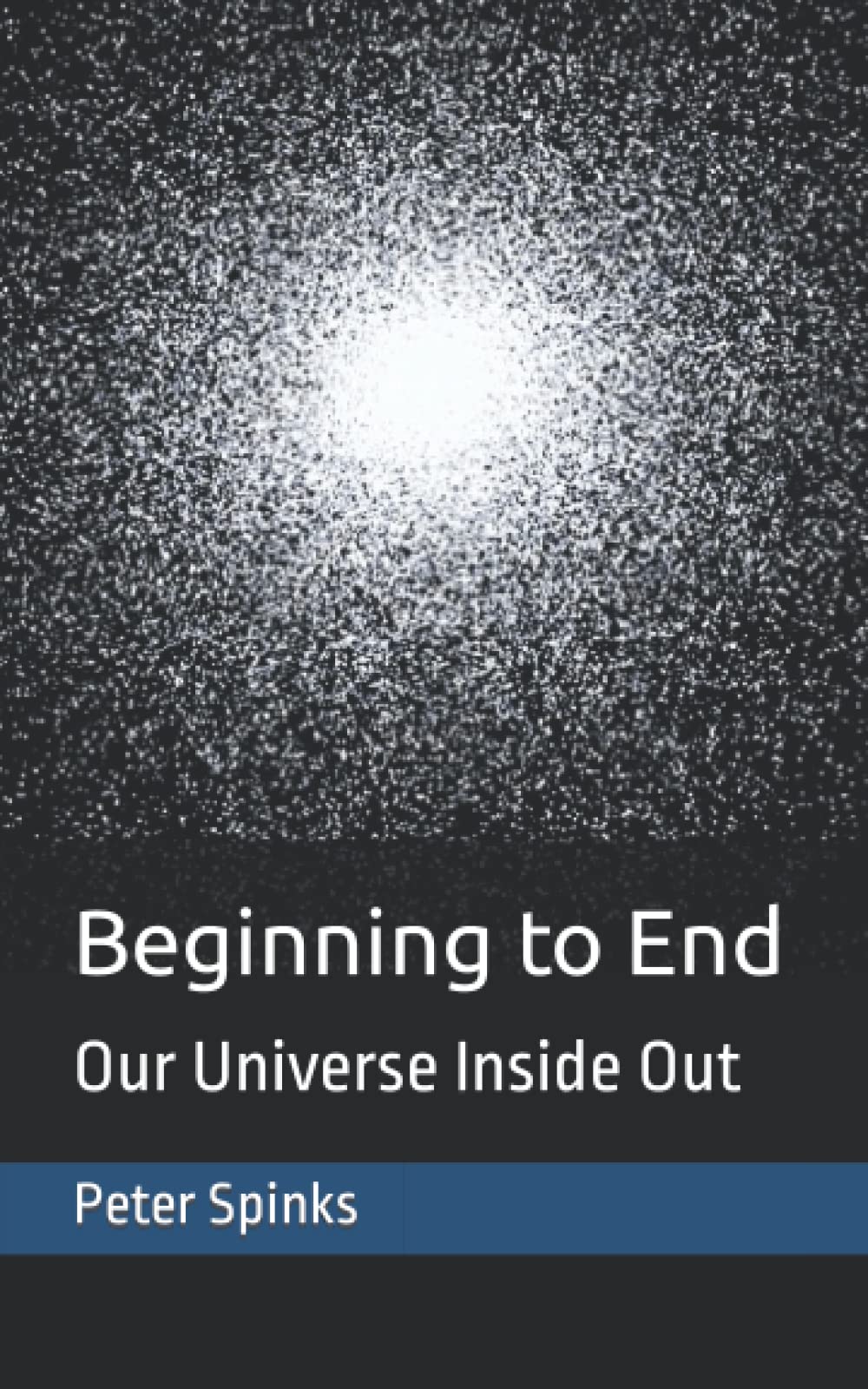
This e-book’s style is a combination of a conversational narrative with complex scientific theories and jargon. The book begins with the big bang. The speed and numbers involved are almost impossible to process. (There’s a reason the word ‘astronomical’ is used as an adjective.) The cosmic evolution is mirrored in our own chronology: there was the time of the cosmic Dark Ages (in this instance, no light at all) followed by the Enlightenment (the ‘great ignition’ in cosmic terms, when the density of stars increased, producing heat and light).
Spinks describes the formation of our galaxy, and here the numbers are more digestible (yet still gargantuan). The Sun’s mass is 745 times greater than all its orbiting planets combined. As big as this is, the dark matter at the centre of our galaxy is four million times greater again.
Dark matter is one of many unexplained mysteries. Antimatter – the corresponding negative particle to positive elements, such as electrons, may be the ultimate energy source. That technology remains elusive, but the evolution of space telescopes has vastly changed our ability to study space. Looking deeper into space allows scientists to see back further in time and forms the basis for predictions of Earth’s future (hint: it won’t end well). Despite this, however, it’s now apparent that much is not known, or even able to be envisaged.
The conversational style aims at a general audience, but sometimes assumes knowledge that may not exist without a understanding of physics. The concepts are difficult to grasp, so this book will suit those with both an interest in, and existing knowledge of, the cosmos.
Reviewed by Bob Moore



0 Comments