


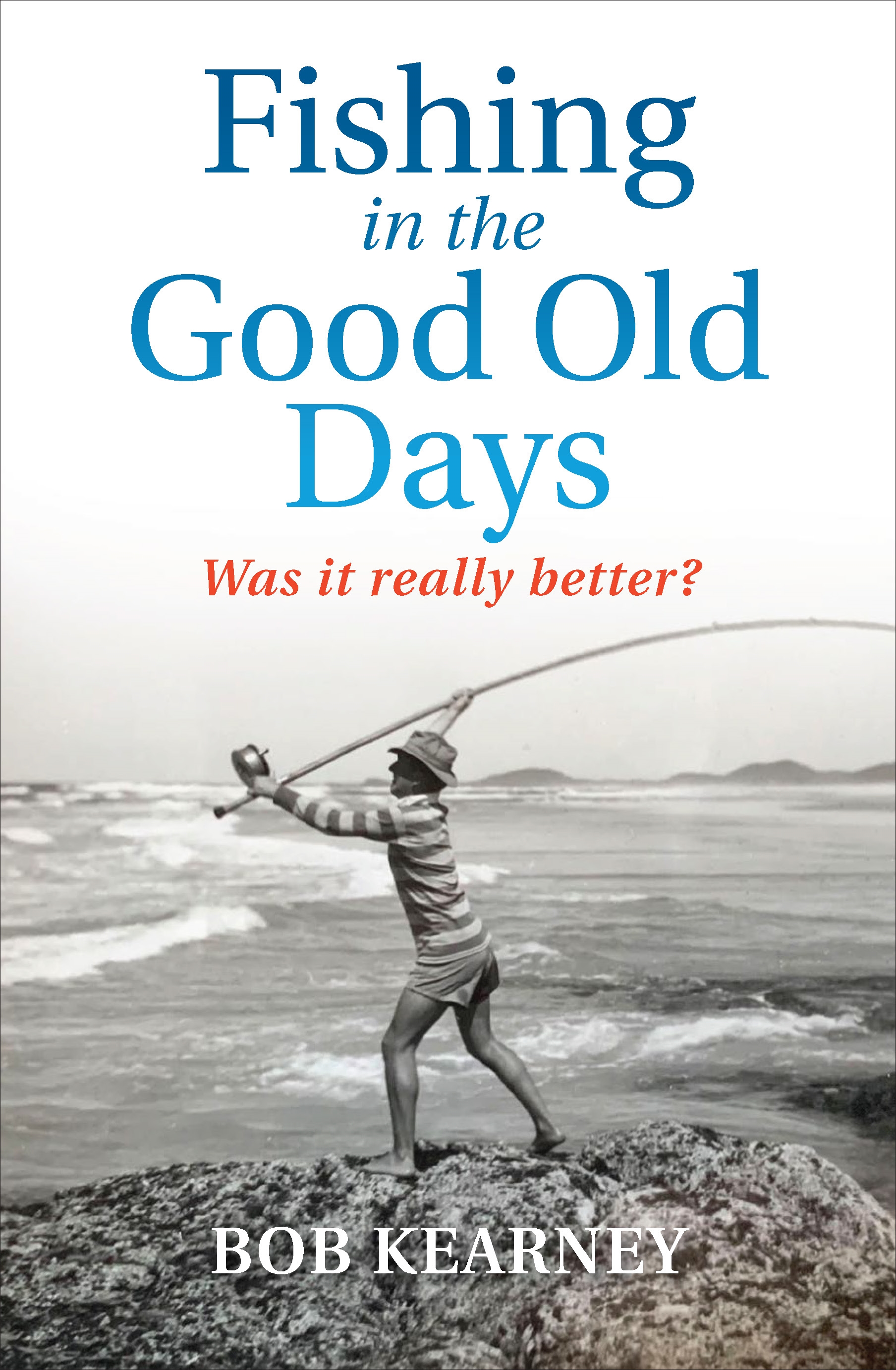
Ah, the ‘good old days’ – when everything was always better, because the rose-tinted glasses of nostalgia make it so. Could fishing have been better then, too? Fishing stories, however, tend to be taken with a grain of salt. (‘You should have been here last week’, etc.) So, could any discernable improvement (or not) be accurately determined in fishing between the 1960s and the 2020s?
Fishing in the Good Old Days is an eclectic mix of science, memoir and anecdotal local history. The parameters Kearney sets for his thesis question are, at times, very narrow and at others quite broad. ‘Fishing’, as he refers to it, is confined to beach or rock fishing. If, perhaps, you were looking for information relating to freshwater fishing in our vast inland waterways, or deep sea fishing, you’ll need to look somewhere else. Also, the region for comparison is confined to Kingscliff – on the Far North Coast of NSW – and its close environs. On the other hand, Kearney’s definition of ‘better’ is quite open. He also ponders how best to compare one era with another and on whom any betterment might be bestowed. (Certainly not the fish.)
The language is more rooted in the ’60s than now, with yards, inches and pounds dominating. Kearney also refers to jewfish, rather than the now more accepted mulloway. Tales of catching tailor, mullet, bream, snapper, etc. feature Kingscliff locals. This reads like a slideshow of the holiday you didn’t go on.
The book could have been significantly improved (in my opinion) with the addition of images of the fish in question and less of the author with rod in hand. Kearney tells a good story, but the interested audience might be small.
Reviewed by Bob Moore



0 Comments