


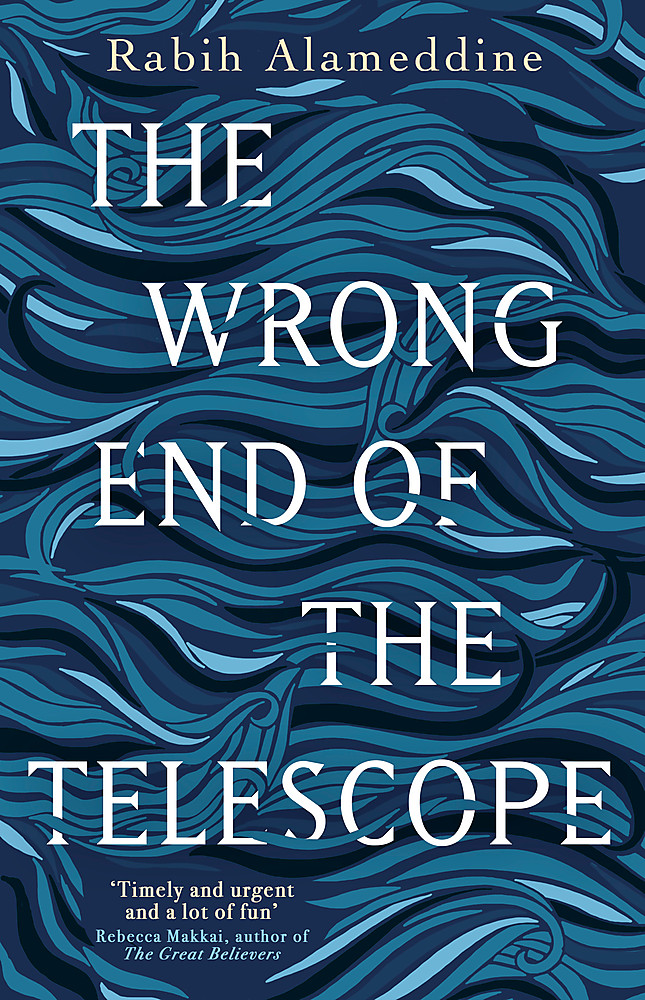
When you look through the wrong end of a telescope, everything appears small and far away. Maybe that is how many people see the plight of refugees, particularly from the Middle East.
The author, a Lebanese-American, has interestingly made the narrator a middle-aged transgender Lebanese-American woman surgeon, Mina. She travels from Chicago to help on the Greek island of Lesbos where boatloads of refugees have arrived from Turkey.
She claims an unnamed writer persuaded her to write about her experiences, because he could not. That writer had written about Syrian refugees in the US, came to Lesbos to help, but found it overwhelming.
Alameddine has confided in interviews that he had been on Lesbos and found it confronting, so this book is both a story about himself and the refugees. His portrayal (through Mina) of some of the volunteers is quite acerbic.
Most telling of the stories in The Wrong End of the Telescope is that of Sumaiya, arriving from Syria in the final stages of liver cancer with her family, and reliant on Mina for help. Mina and the unnamed writer’s life story intersect with these painful details of the refugees’ lives on Lesbos. Mina has maintained a loving relationship with a brother, who travels from Lebanon to Lesbos to meet her. His character becomes one of the most delightful in the novel, brightening this tale of desperate people who have lost everything.
Alameddine has brought the refugees’ stories into sharp focus, anything but small and far away.
Reviewed by Jennifer Somerville
ABOUT THE AUTHOR
 Rabih Alameddine is the author of the novels An Unnecessary Woman; I, the Divine; Koolaids; The Hakawati; and the story collection, The Perv. In 2019, he won the Dos Passos Prize.
Alameddine was born in Amman, Jordan to Lebanese Druze parents (Alameddine himself is an atheist). He grew up in Kuwait and Lebanon, which he left at age 17 to live first in England and then in California. He earned a degree in engineering from the University of California at Los Angeles (UCLA) and a Master of Business in San Francisco.



0 Comments