


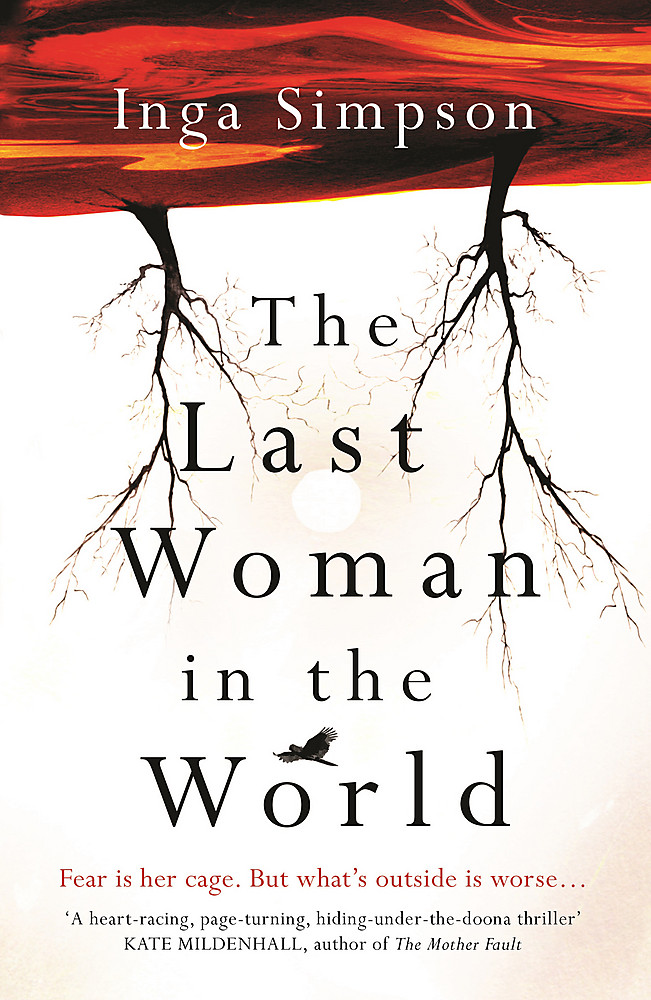
The cover of this novel says it all. Everything is upside down.
Simpson has previously written superb books about nature (Nest and Where the Trees Were), and this speculative fiction is positively dystopian and chilling in its warnings.
Rachel, a glassworker, lives alone by choice, in an isolated valley in southern NSW, occasionally seeing her older sister, a doctor in their home town of Nimmitabel.
Rachel reluctantly admits a young mother, with a sick baby, who are running from a mysterious death sweeping the nation, with people dying in the streets, and at the wheels of their vehicles.
After escaping this mysterious death, the women trek to Nimmitabel to seek help from Rachel’s sister – only to find that her sister has gone to Canberra where her scientist partner is working.
The decaying bodies, attacks by dogs and even survivors forming aggressive militia groups all hint at a dystopian future, after a season of bushfires, followed by several pandemics. Sound familiar?
Dystopia, as a genre, is usually grounded in reality and typically reflects a lack of harmony in society. Margaret Atwood, one of literature’s most celebrated authors of dystopian fiction, thinks about it like this: ‘If you’re interested in writing speculative fiction, one way to generate a plot is to take an idea from current society and move it a little further down the road.’
Simpson has certainly done that, writing about driving through fires on the trio’s way to Canberra with knowledge surely gained from having to evacuate twice during Australia’s Black Summer of 2019, while writing the first draft of this book.
The context of this book is powerful. One can only hope it does not predict what happens next in this plague-struck world.
Reviewed by Jennifer Somerville



0 Comments