


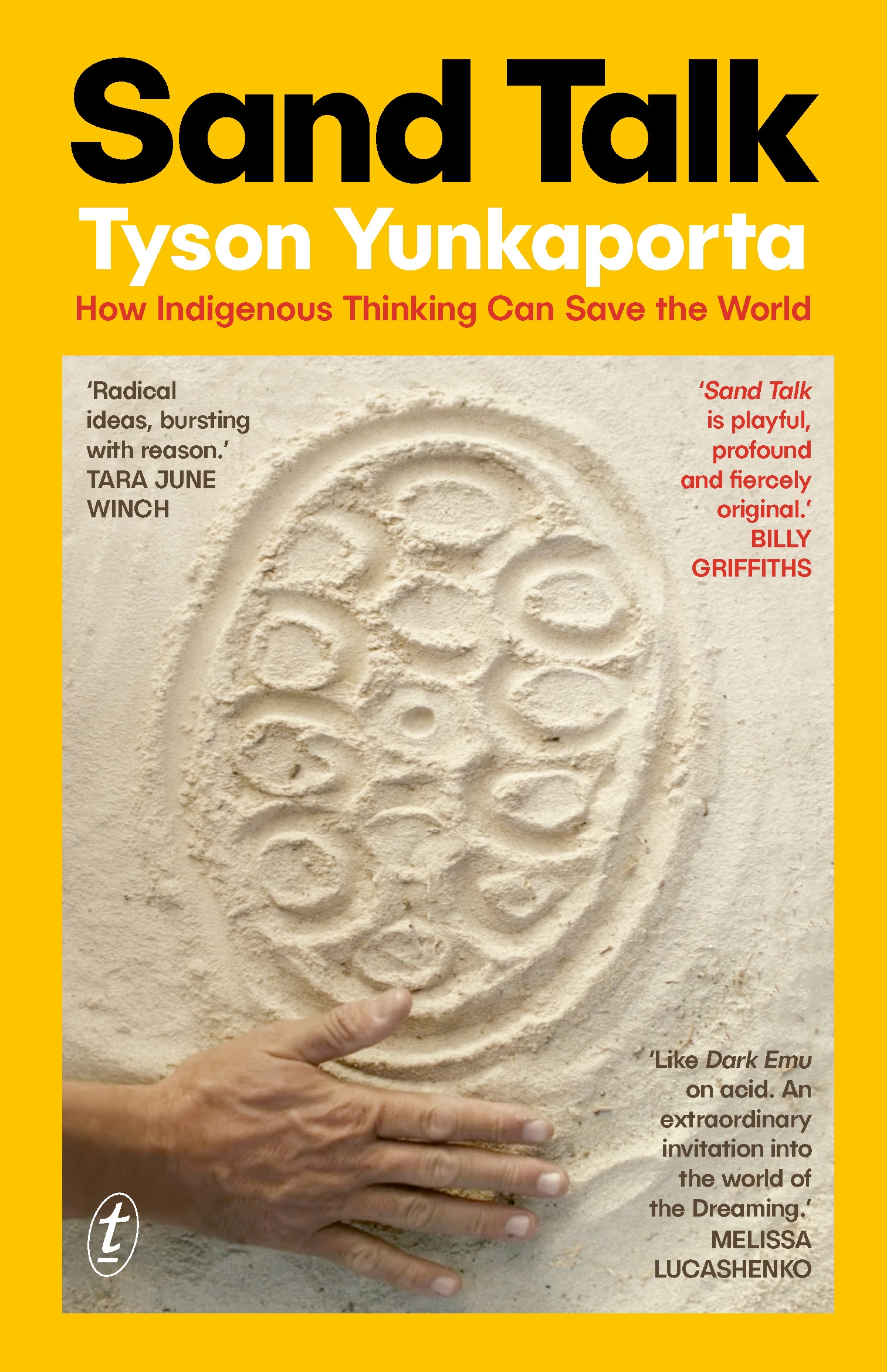
This book of ideas from a senior lecturer in Indigenous Knowledge at Deakin University takes quite some digesting. Although he writes in an easy manner, sprinkled with humour, down-to-earth suggestions and even some scathing comments about how some people portray ‘Indigenous culture’, Yunkaporta is chiefly a man who shares his philosophy and ideas in such a way that each chapter needs to be thought about before progressing to the next.
Freely admitting that he is ashamed by his life story until he was adopted into the Apalech clan from Western Cape York, he became a Wik Mungkan speaker with ties to many language groups on the continent.
In forming close bonds with elders and knowledge-keepers across Australia, he learned about the old law, the law of the land, and came to realise that it was the Indigenous ways, not the Indigenous things that grounded and sustained Australian Aboriginal people. Writing to provoke thought, he confesses that many English terms are inadequate. For example, he does not like the term ‘Dreaming’ but it is used by a lot of the old people who have passed on knowledge to him, and whom he respects.
‘I know and they know what they mean, so we might as well use those labels,’ he writes. And, in any case, it is easier to say ‘Dreaming’ than ‘supra-rational interdimensional ontology endogenous to custodial ritual complexes’.
Yunkaporta lists writers ranging from Aristotle, Plato, Gibbon, Keating, Pilger and Greer to Henry Reynolds among those who have helped him with his thinking. Each chapter includes examples of ‘sand talk’, involving an Aboriginal custom of drawing images on the ground to convey knowledge.
Settle back to be informed about global systems from an Indigenous knowledge perspective, with Yunkaporta yarning to Indigenous people around the world. He reveals five different ways of thinking. First there is kinship-mind, about relationships and connectedness; story-mind about the role of narrative in memory and knowledge transmission; dreaming-mind, using metaphors to work with knowledge; ancestor-mind, about deep engagement and an optimal neural state for learning; and pattern-mind, about seeing entire systems and the trends and patterns within them.
There is much, much more. It is fascinating and detailed yet written with a wonderful clarity. At last I understand why Aboriginal people often will not say the names of the deceased, or look at photos or images of that person. It’s all about the narcissistic shadow spirit … but you will have to read the book to find out more.
Reviewed by Jennifer Somerville



0 Comments