


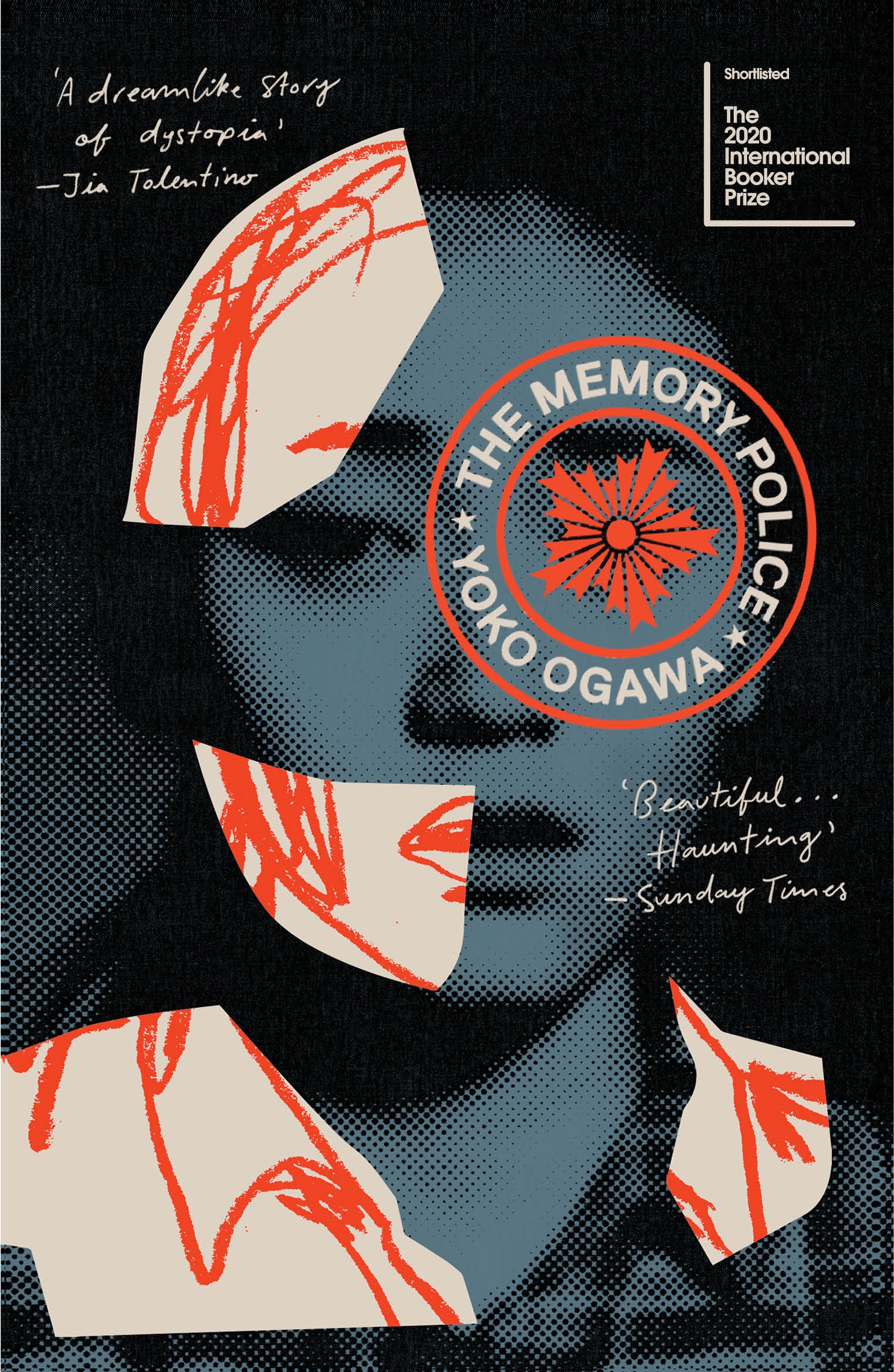
While it is common for actors to employ method acting to get into a role, it is rare to see a writer employ ‘method writing’ to complete a novel.
Such was the depth of feeling that Yōko Ogawa held for the capacity of Anne Frank to write her diaries under duress, that she deliberately wrote this book while in confined spaces. Out of that method comes a powerful and unnerving narrative dealing with secrets, memory and loss.
Our memories ensure that if something has disappeared we are still able to recall it. This doesn’t happen on the unnamed island manned by the Memory Police. These police prohibit seemingly random objects. The inhabitants are then forced to relinquish these same things, and their memories of the forbidden objects disappear as well.
Not everyone suffers this obligatory amnesia, though. Some actively resist it.
The unnamed narrator is an author. In a ‘play-within-a-play’ device, her new novel is entwined within this as both parallel to and mirroring the main narrative.
The narrator’s mother was ‘disappeared’ by the Memory Police for not forgetting. Her editor is another who refuses to forget. After losing her mother, the narrator decides to hide the editor in a secret and confined space within her home. More objects vanish, along with people.
Analogies to authoritarian secret police – and the resistance to them – are self-evident. In the hands of a lesser writer, this magical realist world might seem ridiculous and outlandish.
Ogawa is not a lesser writer. Not only is this fable very believable, it is a pure joy.
Reviewed by Bob Moore



0 Comments