


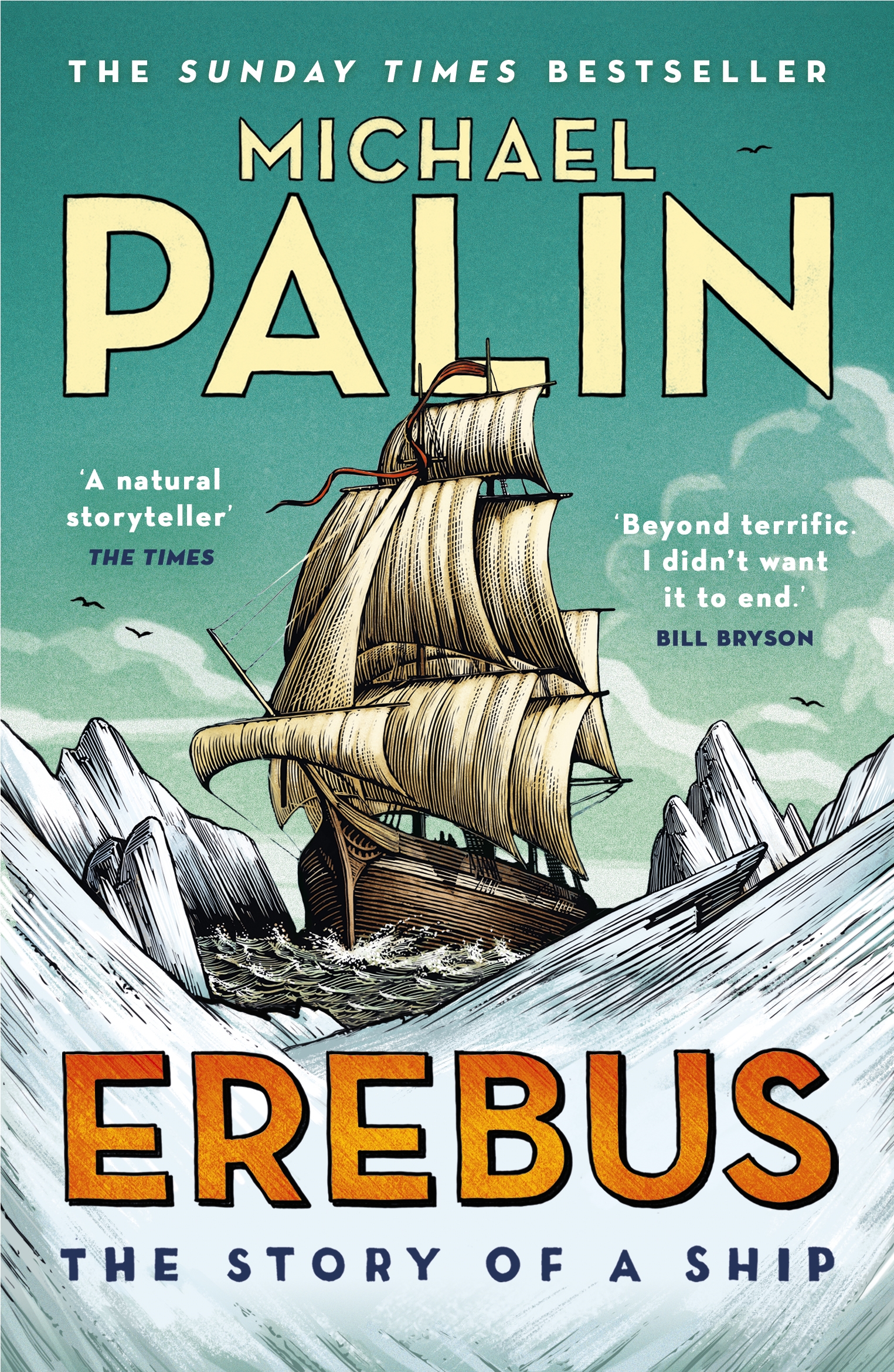
He’s known as an entertainer, a TV globetrotter and an author. Michael Palin strengthens that latter reputation with his account of HMS Erebus, launched in Wales in 1826 as a warship, and eventually used in epic voyages of discovery to the Antarctic and the Arctic.
It was from those northern regions that Erebus and its sister ship, Terror, failed to return in the 1840s.
Palin first became interested in these ships when he gave a talk at the Athenaeum Club in London on one of its past members, Joseph Hooker, who had run the Royal Botanic Gardens at Kew for most of the 19th century. His research showed that, as a young man, Hooker had spent four years as assistant surgeon and botanist on a Royal Navy expedition to the Antarctic . . . aboard HMS Erebus.
So Palin was enormously excited when a Canadian archaeological expedition in 2014 found Erebus sunk in relatively shallow water, almost 170 years after it was last sighted.
There is a strong Australian link with the history of that ship. During its Antarctic voyages it visited Hobart several times. The ship’s captain, the dashing James Clark Ross, and his crew were feted by Hobart society, particularly the governor of that colony, Sir John Franklin, and his wife, Lady Jane Franklin.
On a recent visit to Hobart Palin discovered that Ross Cove, where the two ships had anchored just below Government House, is undeveloped, and looks much the same as when those maritime visits were made in 1840 and 1841.
Sir John had already carried out some Arctic exploration by ship and land, becoming famous (or notorious) as the man who ate his boots to survive when trapped in ice. After being bundled out of his job in Tasmania and returned to England, at the age of 59 he became leader of the latest expedition to search for the elusive Northwest Passage in the Arctic, linking the Atlantic and Pacific oceans. He was to captain the Erebus, accompanied by Terror. The ships left London in 1845, never to return.
Palin has carried out immense research to write this book. As well as many other books written on aspects of polar exploration, he consulted letters, captains’ logs, stokers’ journals, drawings, maps, novels and diaries. He travelled to many of the places visited by the Erebus on its polar voyages, including the bleak, icy area in which it and Terror still lie underwater, and around which various human remains and articles had been found over the years by Inuit parties and Europeans trying to trace the last days of Franklin and his crews.
It’s a ripping read. Not only is the history of the Erebus brought to life, but Palin’s light touch personalises the many men who crewed her. The most striking photograph is that of one of three expeditioners buried in 1846 on an Arctic island, exhumed in 1984 in an almost perfect state of preservation before being re-buried.
This book has preserved the memory of an ill-fated expedition that ended the polar explorations of a tough little ship.
Reviewed by Jennifer Somerville



0 Comments