


There is a world-wide movement underway to minimise waste. To only buy what we need and to revive the age-old nose-to-tail eating, where every bit of an animal is used instead of only selecting and eating the choicest cuts.
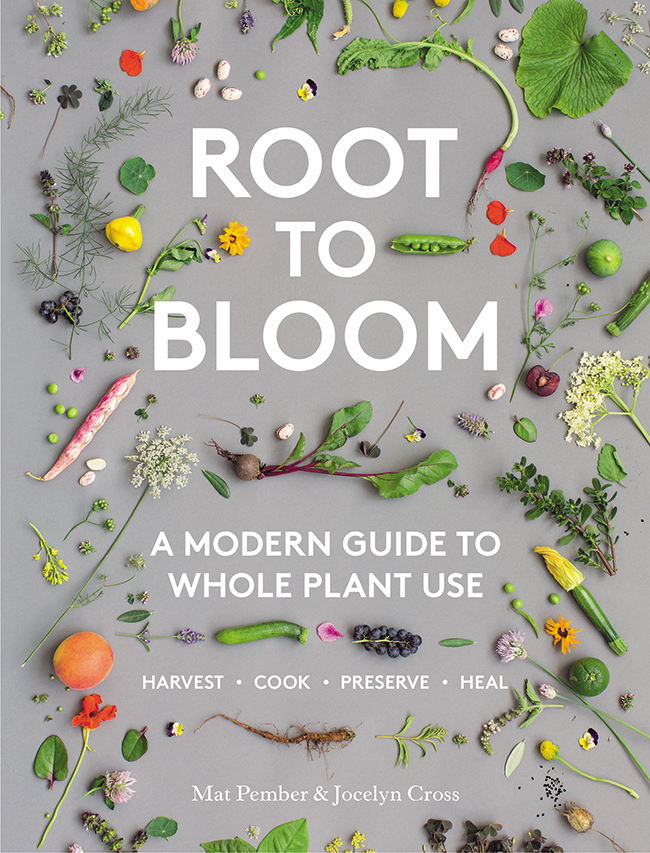
In support of this, Root to Bloom showcases plants that we can safely consume from the root to the blooms. The usual suspects of root vegetables make an appearance; carrots (did you know they originated in Afghanistan?), beetroot (ancient Romans considered it an aphrodisiac) and onions (apparently Greek athletes ate large quantities and rubbed it on themselves to strengthen their bodies before competition). Stem and stalk plants such as asparagus and fennel feature, as well as green leafy plants including the most difficult herb I find to grow, coriander. If you can keep it from bolting (then carking it) every part of this plant can be used. There is a section on seeds and pods, fruit and flowers too.
On weeds and foraging, I discovered that the milk thistle has value as a laxative. Purslane helps with constipation too and even haemorrhoids. Toss oxalis, chickweed or dandelions through a salad to increase your vitamins and aid digestion. Did you know the family of nightshades, which include tomatoes, capsicums and eggplants are so named because they do their growing in the shade of night, rather than the light of day? Recipes are included throughout the book for curries, pastas, pickles, syrups, teas, oils, skincare, and even a fennel and dill seed breath freshener.
This book would make a lovely gift. It’s full of interesting information and recipes for parts of plants we previously may have tossed in the compost or even the bin.
Reviewed by Jane Stephens



0 Comments