


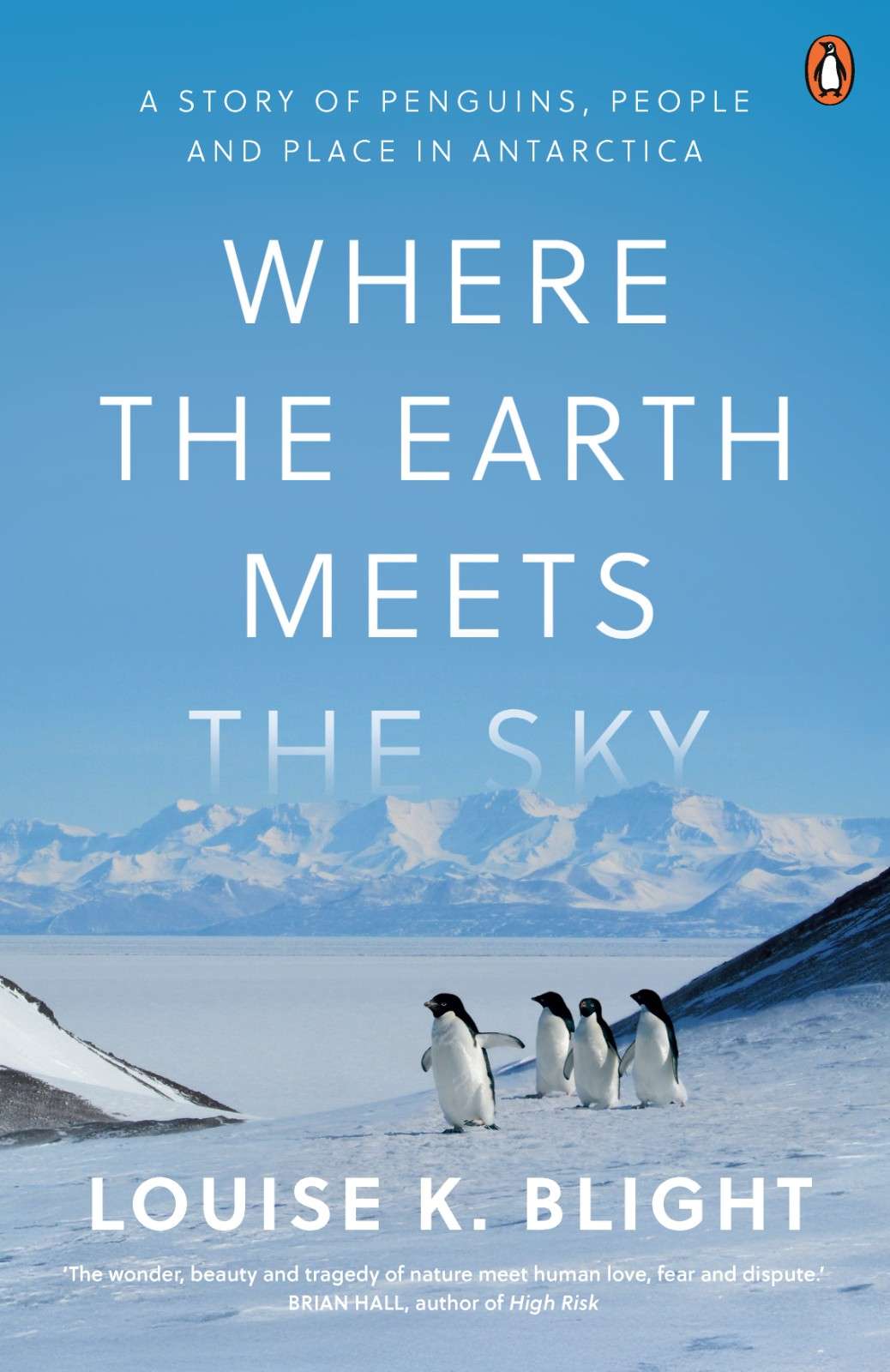
LOUISE K. BLIGHT is a conservation scientist with a PhD in zoology, and Where the Earth Meets the Sky is her stunning chronicle of her time in Antarctica – studying Adélie penguins and braving the freezing temperatures.
Read on for an extract.
ABOUT THE BOOK
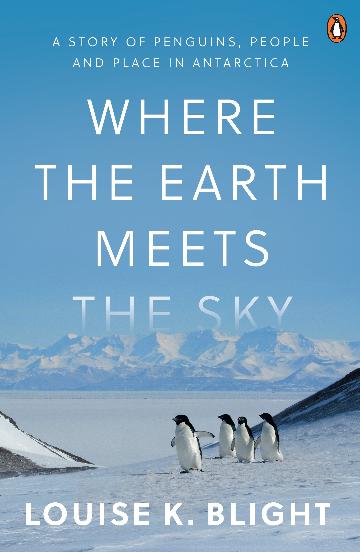
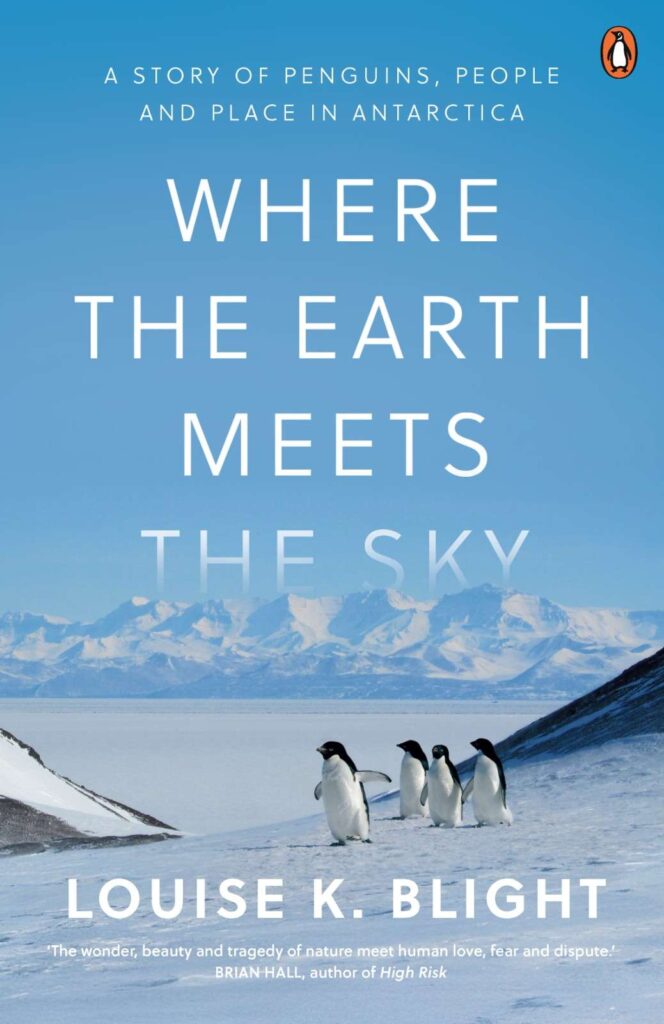 Antarctica is the coldest, windiest and most inaccessible part of our planet – and now one of the places most troubled by climate change. In this moving narrative, conservation scientist Louise K. Blight recounts her summer studying Adélie penguins.
On isolated Ross Island, Louise K. Blight and pioneering penguin biologist David Ainley document how the region’s penguins are being affected by the world’s largest-ever iceberg. The iceberg’s impact is geological in scope and life-changing for the breeding penguins rushing to mate and rear their young.
The researchers record details of penguin courtship, incubation, and chick-rearing against a backdrop of the mental and emotional impacts of extreme weather, ongoing isolation and twenty-four hours of daylight. Interwoven with stories of early explorers and modern-day Antarcticans, Blight conveys the solitude and the endless silence that ultimately allows her to explore the grief that has lingered since the untimely deaths of her father and sister.
A stunning work of natural history, science and polar travelogue, this is a story about a female scientist navigating Antarctica’s extreme conditions and quirky human subculture. It is a story about how the world’s most unforgiving environment has shaped the psyches of Antarctica’s human visitors, past and present – and how nature can heal the human soul.
**********
EXTRACT
At the military airbase in Christchurch, we had all been made to change into our regulation Extreme Cold Weather gear, or ECW: big blue puffy polar boots that lace up to the knees, with soles ten centimetres thick; insulated windproof coveralls; oversized red parkas with a faux-fur fringe around the face and a white nametag with black lettering Velcroed onto our chests. Back in New Zealand someone had said the name tags were all the better to identify each other under our glacier glasses and all that ECW, but I suspect that really we have to wear them so they can identify our bodies if anyone steps outside into a whiteout, or gets unlucky with a crevasse before we get to our field safety training. On the flight, parkas doubled as pillows and necks of undershirts gaped open. Now, as we press together on the plane’s gangway, our excessive clothing is welcome, even necessary.
We disembark down the ramp onto the sea ice, frozen McMurdo Sound beneath our feet. Once off the plane we mill about like a flock of young penguins, disoriented by the newness. My first impression was right. Everything is brilliantly white.
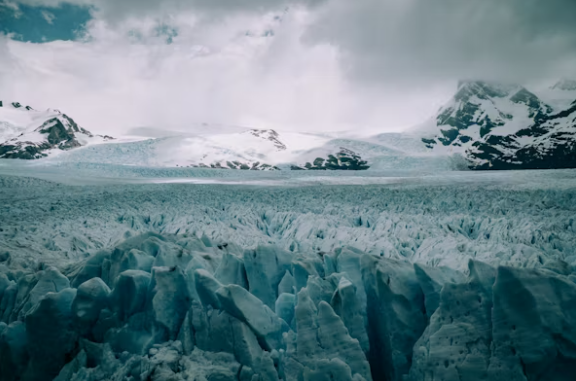
 To be sure, there are McMurdo Station personnel in matching red parkas; a few people from New Zealand’s Scott Base in earthier tones, there to pick up the handful of Kiwis on board; and a collection of bizarre orange vehicles with big wheels or massive tracks, clearly ready for whatever weather extremes the continent can throw at us. A colourfully flagged route leads from the sea ice runway toward McMurdo, with its utilitarian collection of drab buildings crouched just a few hundred metres up the slope, and black electrical cables snake back down toward us to feed the aircraft operations. But apart from these insignificant objects we are in a vast monochromatic frozen world. Smooth sea ice underfoot, the surface of a frozen ocean. Hummocky fast ice, lumpy against the nearby shore. A thin layer of snow dusting the ground around the buildings of McMurdo. A luminous sky of high cloud hiding the twenty-four-hour-a-day sun. And surrounding us, glaciated mountains and the continental ice sheet stretch to the horizon. For a moment I feel we’ve been transported via a time warp to the ice caps of Mars, trapped on the surface of an inhospitable planet.
We are herded toward a massive six-wheeled people-mover that is waiting nearby with “Ivan the Terra Bus” lettered on its sides. Most of us bumble along, unaccustomed to feeling the icy surface beneath our feet, encased in their unfamiliar field-issue boots with the double-thick soles. Everyone’s parka hoods are pulled tight against a bitter wind from the south, blinkering our vision and causing us to bump into each other as we slowly turn our heads to see this new world through a narrow red field of view. The shapeless red girl in line in front of me is distinctive because she’s carrying a plastic lunchbox in the shape of a sandwich in her gloved hand. Perhaps sensing me checking out the lunchbox, she turns around.
‘Hi, my name’s Sandwich,’ she says, introducing herself from within her hood.
‘Hi,’ I say. ‘I recognized your lunchbox. I saw you in the departure lounge in LA. What are you going to be doing here?’
‘Working in the Galley,’ she replies. ‘You?’
‘Working on the penguin project at Cape Royds,’ I say.
‘Oh great!’ she says. ‘I know Grant and Viola. Not my first year here.’
I’m reminded of the saying in Antarctica: The first time you go for the adventure, the second time you go for the money, and the third time you go because you no longer fit in with the rest of the world.
 From the super-heated interior of the Terra Bus there is nothing to see through the windows, encrusted as they are with sheets of frozen condensation, and some of us get off again to linger outside, gawking, until we are yelled at to get back on board for the short trip over the sea to the station. I breathe a hole in the window ice to look at the scenery and futilely scan the frozen ocean for signs of penguins or seals. At this time of year, however, the edge of the sea ice is at least thirty kilometres to the north and the nearest penguins are likely no closer than Cape Royds, so a sighting is unlikely until we move out to the field. Here at Antarctica’s largest logistics hub we are mostly too far south even for these birds. Though everybody in the world who hasn’t been here equates Antarctica with penguins, for most of the people stationed at McMurdo these are creatures that are rumoured to exist out where they don’t get to go, except very rarely, on a so-called boondoggle.
In fact, it begins to dawn on me that even here in Antarctica our group is considered to be supremely lucky to be out in the field and studying these birds. I find out later that the occasional appearance of a lost Adélie out on the sea ice runway will prompt a massive downing of tools at McMurdo and a rush to the site for photo-documentation of this element of the “real” Antarctica. Of course such penguin envy excludes the deep nerds of the more obscure branches of polar science, those here to study nematodes or glaciers or phytoplankton or muons. None of these scientists are much impressed by the banal higher life forms represented by penguins or seals. One of my companions on the Terra Bus is a biomedical researcher who is here to study the effects of extreme cold and lack of daylight on human physiology. She barely seems to know that penguins are in the animal kingdom.
To be fair, she’s not alone in her confusion about their taxonomy, for with their flightless behaviour and phenomenal swimming and diving ability it is natural to wonder if penguins are more fish than fowl. In the year 1620, the French commodore Augustin de Beaulieu said of the African penguin that “they have nothing of the taste of flesh, and I take them to be feathered fish.” But with their combination of feathers, beaks, warm-bloodedness, and egg-laying, penguins are decidedly in the same taxonomic class as ostriches and hummingbirds, and like other families of birds, they come in a variety of colours and sizes. The emperor and king penguins – both by far the largest of the penguin species – have a pinkish lower bill, and an attractive flush of yellow and orange on their head and neck feathers. Crested penguins, such as the macaroni, royal, and rockhopper, have fat, bright orange beaks and foppish yellow plumes atop their heads. The smallest species of penguin, which is variously known as little, blue, or fairy, is as diminutive as its names suggest, and with dorsal plumage that’s an attractive blue-grey in colour.
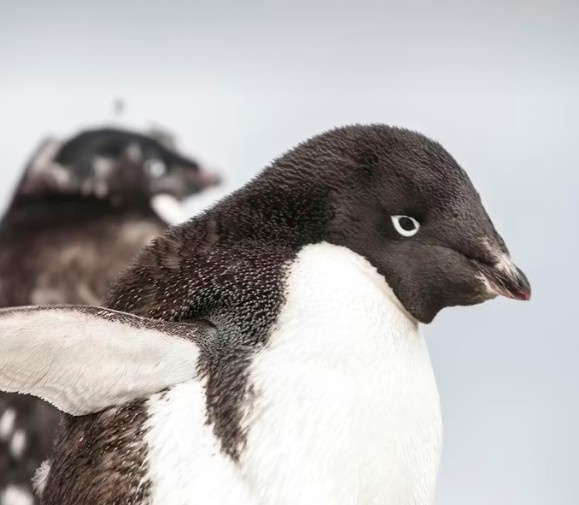
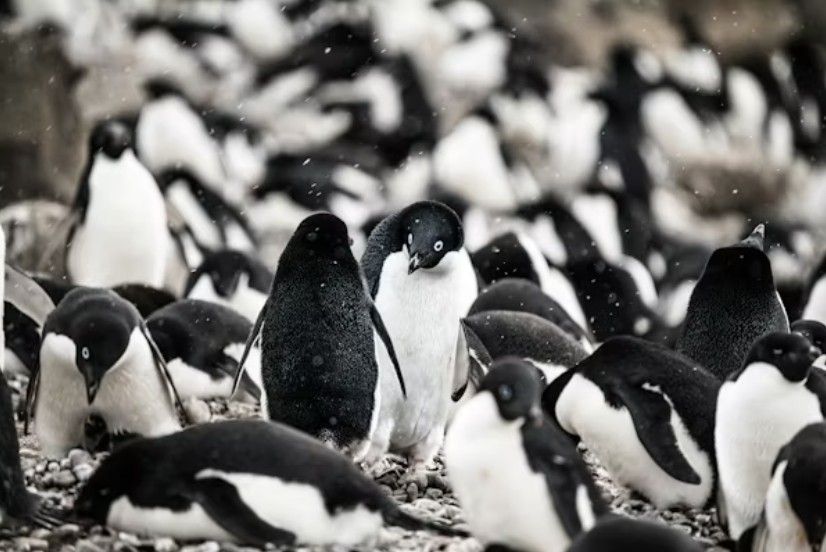 On Ross Island, the focal penguin for our research will be the Adélie, a basic knee-high, black-and-white variation on the penguin theme. Adélie penguins were named in the 1800s after the wife of French explorer Jules Sébastien César Dumont D’Urville, Adèle, and were the first member of the penguin family to receive widespread public attention. The ubiquity of this species in the Ross Sea meant that the expeditions of Scott, Shackleton, and other Antarctic heroes of the early twentieth century exposed Adélies to positive press early on. In 1936, in his classic book The Oceanic Birds of South America, the great seabird biologist Robert Cushman Murphy wrote that “with singular unanimity, explorers have likened the Adélie penguin to a smart and fussy little man in evening clothes.”
Adélie penguin breeding distribution follows the coastline of the Antarctic continent, with our study site at Cape Royds described in the literature as the species’ most southerly nesting location in the world – although in recent years a few breeding pairs have sometimes taken up residence at neighbouring Cape Barne, a few kilometres further south still. Cape Royds has been occupied by Adélies for about one thousand years, from the time that this tiny point of land became free of the West Antarctic Ice Sheet. Ross Island, in its entirety a mere 2,500 square kilometres, is home to about 8 percent of the world’s Adélie penguins—with the vast majority breeding on its eastern shore at the giant Cape Crozier colony, which is home to literally hundreds of thousands of Adélies at the height of the breeding season. Anticipation at being in their midst is building in me; I would much rather be in the field in their penguin city than here at McMurdo, an isolated but very human village.
ABOUT THE AUTHOR
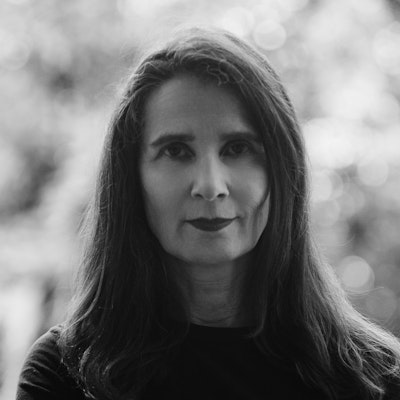 Louise K. Blight is a conservation scientist with a PhD in zoology from the University of British Columbia. An adjunct professor at the University of Victoria’s School of Environmental Studies, she is also co-chair of the birds specialist group of the Committee on the Status of Endangered Wildlife in Canada, the expert national body that assesses threatened species. Louise lives on Salt Spring Island, British Columbia, with her partner, their dog, and two indoor cats.
Read more about Louise Blight’s work.
Visit the publishers website here.

0 Comments