


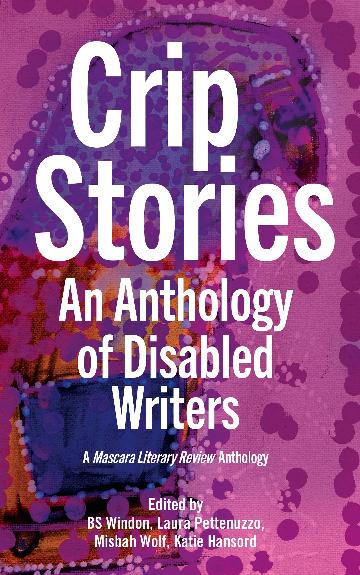
Crip Stories is a collection of short works from disabled people, combining memoir, essays and poetry.
GOOD READING spoke to LAURA PETTENUZZO about her experiences editing the collection, and how the word ‘crip’ is now reclaimed and celebrated.
MEET LAURA PETTENUZZO
What initially drew you to this collection?
When Michelle (from Mascara Literary Review) first approached me with the idea for this anthology, several years ago now, I’m pretty sure I squealed with excitement. I know that I jumped on board wholeheartedly, because I am a fierce advocate for disability representation in books and firmly believe that our stories can change the world.
Crucially, this collection amplifies multiply marginalised disabled writers, with a focus on disabled Aboriginal and Torres Strait Islander writers and writers of colour. In this way, it strives to embody disability justice. Disability justice is a framework for access, inclusion and advocacy that actively includes those who have been most marginalised within the disability rights movement: people of colour, Indigenous people, LGBTQIA+ people and those of a lower socio-economic background. This collection aligned so well with my values and it’s everything would have needed as a teenager who didn’t understand my disability.
You are an author, but also an Easy Read writer. Could you explain what this profession is and why it is so important.
 Easy Read is written communication that uses a particular structure and design to make information more accessible for people with low literacy. For instance, Easy Read uses images on the left and text on the right. Easy Read text should have one idea per sentence, wide margins and lots of white space to reduce cognitive load for the reader.
At All for Access, I work with a team of accessibility professionals to translate information such as annual reports, inclusion plans, forms and policies into a format that more people can use. Our world is built on the assumption that we can understand the barrage of written information that surrounds us every day, from public transport timetables and restaurant menus to bills, forms and emails. When that information is not accessible, people with low literacy are excluded and alienated. On the other hand, with Easy Read and other forms of accessible information, equitable participation becomes a reality.
And low literacy is far more common than you might think. The most recent available ABS statistics reveal that 44% of Australian adults, (7 million people) struggle with basic literacy. This could be for any number of reasons, such as an interrupted education, intellectual disability, or speaking English as an additional language. Easy Read is one way to even the playing field for those 7 million people.
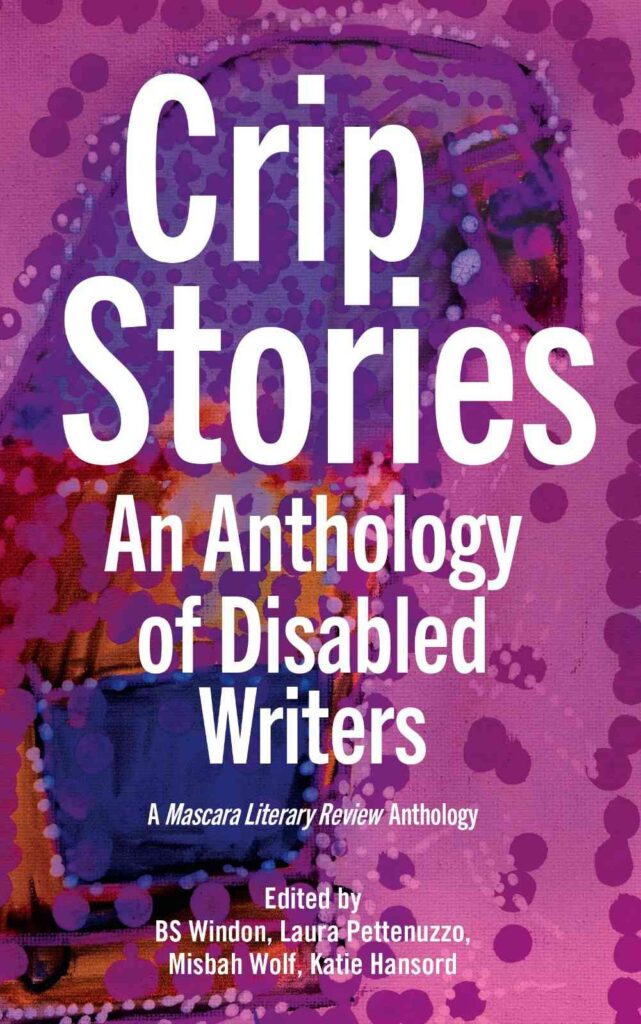 What are your thoughts on the title? Why is it so important to reclaim words like ‘crip’?
I absolutely adore the title! The other editors (Beau Windon, Misbah Wolf and Katie Hansord) and I had many discussions about what the title might be, and we were adamant that we wanted it to include the word ‘crip’ in some way. When we reclaim a word that was once used against us, we’re taking our power back. This collection is all about flipping assumptions, stereotypes and power dynamics, so it was essential for us that the title did that too. It was so affirming that New South (the publishers) understood and supported our use of the word ‘crip’ from the moment we suggested it.
This anthology features over thirty disabled writers and includes poetry, essays, personal writing and more! As one of the editors, were there any reoccurring themes that stood out to you across the huge variety of works in Crip Stories?
There is such a variety of work in this collection, which we deliberately chose and placed in a certain order to reflect the depth of the disabled experience. We received far more submissions than we could accept and across those and the pieces that made it into the anthology, the main theme that emerged was disability pride. So many of the writers, in their own ways, explored how their understanding of disability and themselves shifted over time, and how they learned to challenge their own internalised ableism.
What do you have to say about casual ableism in everyday life, and what are the biggest changes that you would like to see?
Casual ableism in everyday life is far too common, and to be constantly on the receiving end is exhausting. One of the most common examples for people with visible disability, like me, is invasive questions from strangers. Every time I use a rideshare service or visit a new place, I feel my body tense in anticipation of the words, ‘What happened to you?’ or ‘What’s wrong with your legs?’ The answer is that I have cerebral palsy, and the answer is none of their business. I’d like to see an attitudinal change, where we understand disability as a natural part of human diversity, rather than reducing disabled people to objects of pity, inspiration or curiosity. As a COVID-cautious person, I’ve lost count of the number of times people have told me I don’t need to wear a mask any more, or when I’ve asked for COVID precautions as part of my access needs and been ignored. I’d also like to see recognition of the ongoing impact of the pandemic.
What do you hope readers take away from this anthology?
I hope that readers can learn something new about disability through this anthology, but I don’t want it to end there. I hope they can turn that learning into action, however big or small that might be. Perhaps it’s a shift in the language they use about disability. Perhaps they speak up about accessibility at work or school or in their community. Perhaps they stay home if they have COVID symptoms or wear a mask on public transport. I hope they know that whatever action they take to learn about accessibility and elevate disabled voices and stories makes a difference.
 Can you recommend some artists or creatives who write about disability that you think everyone should read?
I love this question! There are so many people I want to recommend, including:
- Leah Lakshmi
- Fiona Murphy
- Kay Kerr
- Carly Findlay
- Alice Wong (may she rest in peace)
- Robin Eames
You worked as an editor on Crip Stories and also feature in this anthology. Can you give us a sneak peak of what your piece is about?
My piece is about how disability pride changed and enhanced my writing process, and it’s an expression of gratitude for all the disabled writers who have come before me. It’s a celebration of crip community and creativity.
ABOUT THE AUTHOR
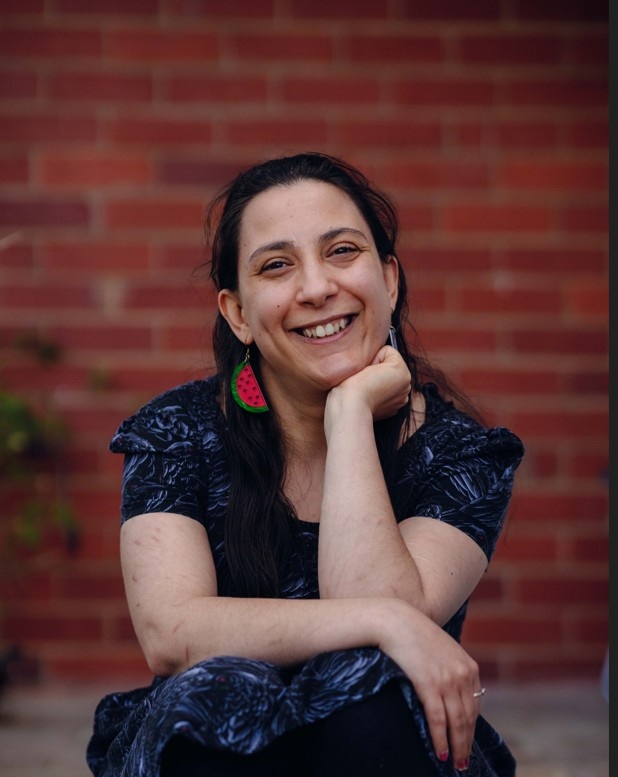 Laura Pettenuzzo (she/her) is a disabled writer, speaker and accessible communications professional living on Wurundjeri land. Her work explores disability pride, systemic and internalised ableism as well as the power of self-acceptance. Her reviews, memoir and opinion pieces have been published in places such as Griffith Review, Archer Magazine, Meanjin and The Age.
Visit Laura Pettenuzzo’s website here
Follow Laura Pettenuzzo on Instagram here
Visit the publishers website here

0 Comments